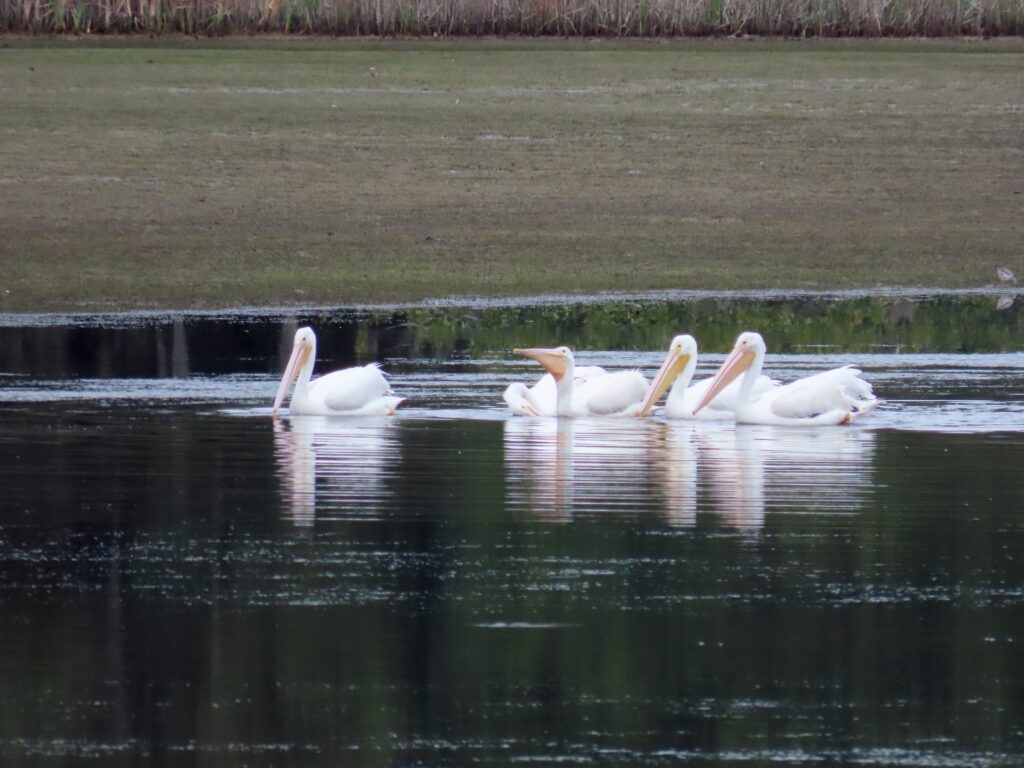
This week for Flora and Fauna Friday we’re admiring the seiner of the shoreline and trawler of the tidewaters, the American White Pelican (Pelecanus erythrorhychos).
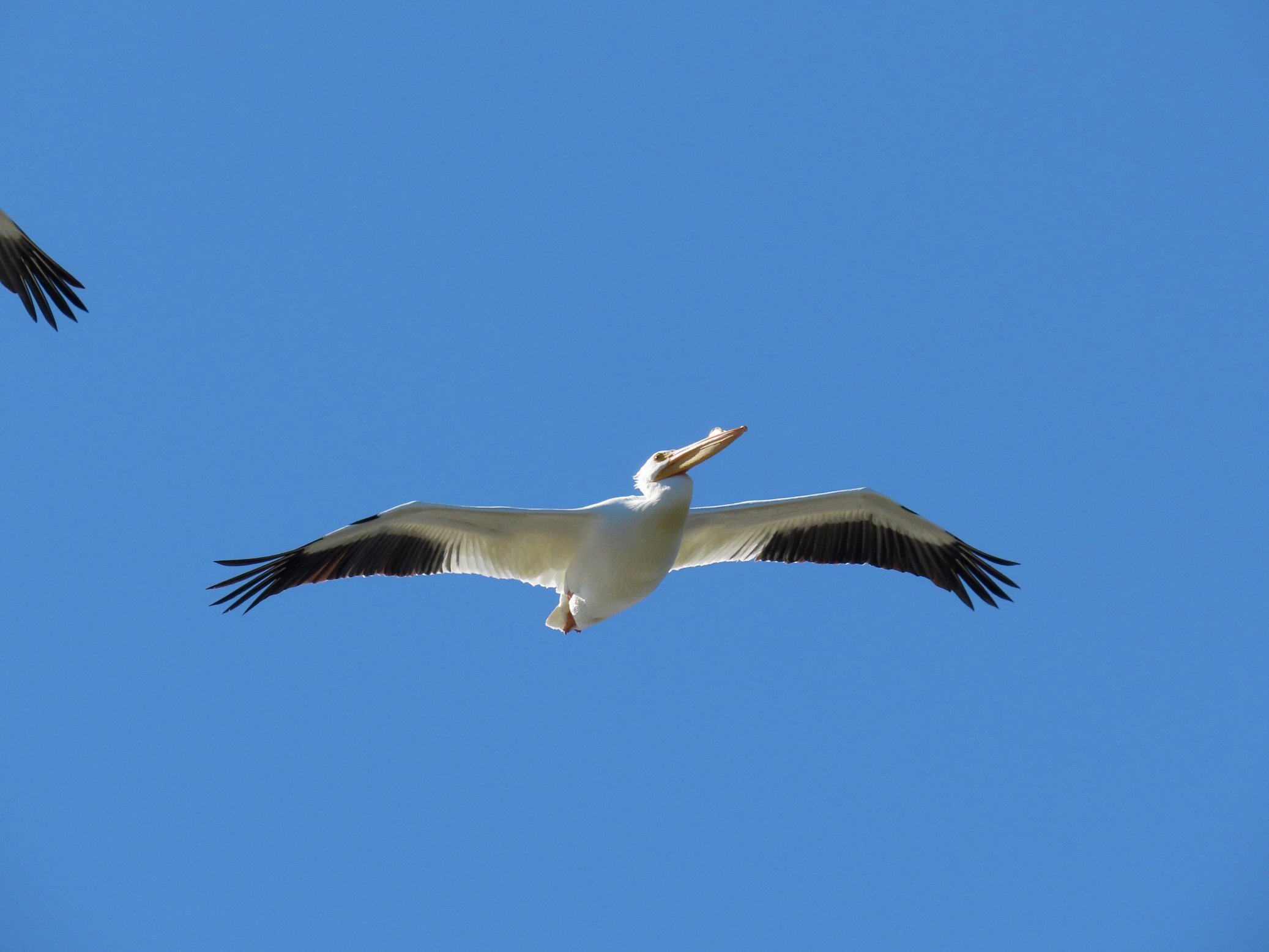
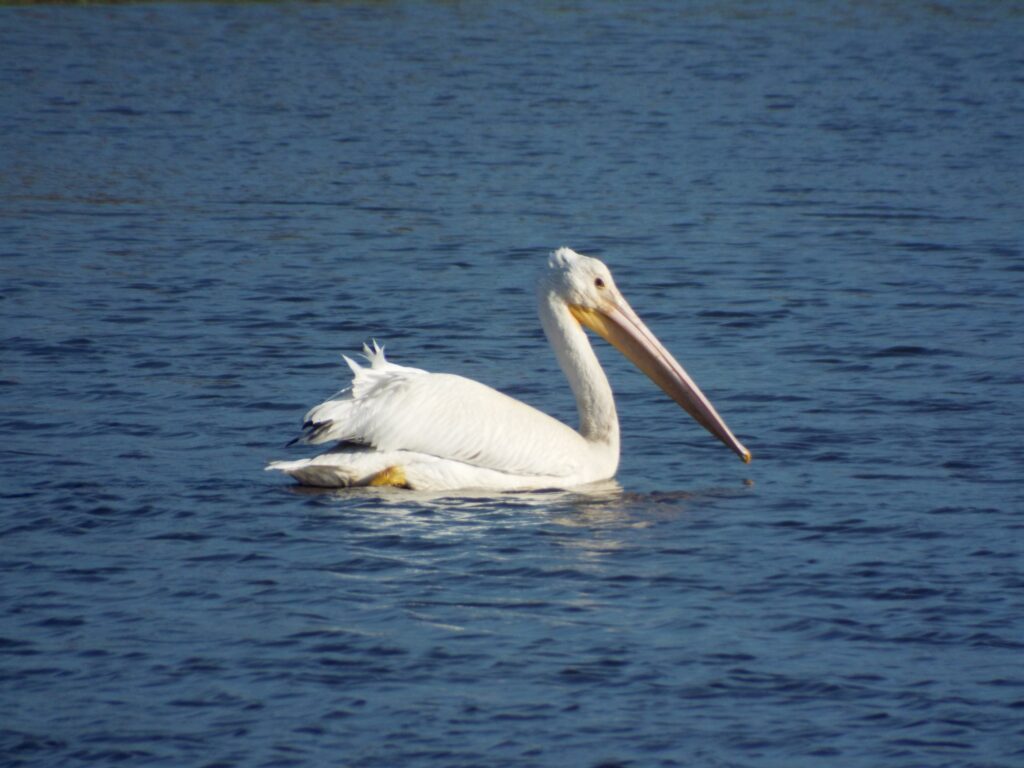
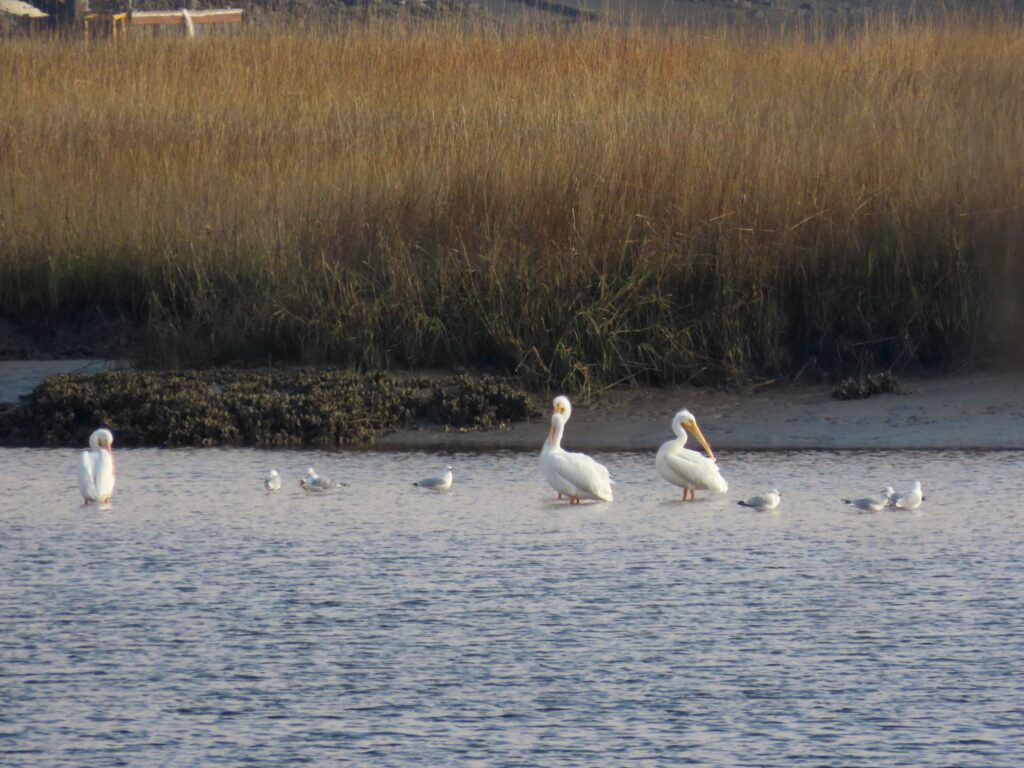
The American White Pelican, whether sighted in formation floating high in the sky on Sea Island thermals, puttering about in a flotilla atop a flooded rice impoundment, or looming large and statuesque upon a low estuary sand bar, is an impressive bird to behold. They have the largest wingspan of any bird in the Eastern United States, measuring in at eight feet on the small side and up to ten feet in the largest birds. In flight, they resemble the American Wood Stork (Mycteria americana) with their solid white underside and wings trimmed with black primaries. However, the primary feathers closest to the body on the White Pelican are white instead of black, their short orange legs don’t extend beyond their tail, and they keep their neck tucked against their body rather than fully extended like a Wood Stork. On the ground or on the water they are a hard bird to misidentify. They have the same shape as our more locally common Brown Pelican (Pelecanus occidentalis) only larger in size and lighter in color. White Pelicans are a heavyset, solid-white bird standing on short orange legs with webbed feet and bearing a long neck with an equally long yellow-orange bill. That bill, come spring, sprouts a unique sail-like horn about two-thirds of the way down its upper length that is used for display during the breeding season.
American White Pelicans are found around the Sea Islands primarily in winter and disappear in the warmer months to return to their breeding grounds in the West. They’re a relatively new addition to the Lowcountry’s retinue of avifauna, having spread northward from their wintering grounds in Florida over the last few decades to take advantage of the bountiful provisions of the ACE Basin’s well-kept duck fields. We’re at the northeastern extreme of their wintering grounds here in the South Carolina coastal plain and the species is far more abundant along the Gulf Coast. They’re also becoming more abundant in beach side lagoons, shallow estuaries, golf courses, unmanaged stormwater impoundments, and even the hydroelectric lakes further inland.
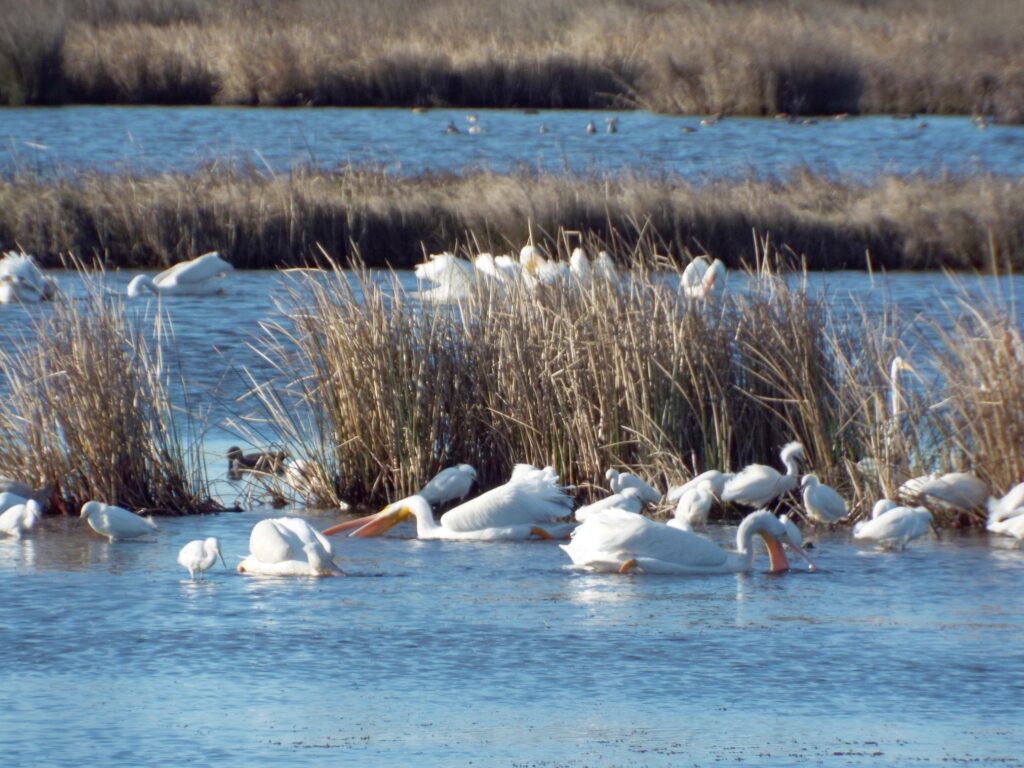
Despite having the same body plan and expanding throat pouch as our local Brown Pelican, the White Pelican acts like a different beast altogether. Rather than plunge diving like a dip-net to take a scoop from the middle of an unsuspecting school of fish, the White Pelican instead makes mealtime a group exercise. White Pelicans will paddle shoulder-to-shoulder together in shallow waters with their beaks extended forwards. As they putter along they corral fish together into an ever-growing school, like a seine net dragged between two fishermen. Once the team of Pelicans hit a limit they encircle they fish and scoop them up in a feeding frenzy. Then they turn around and make another pass. Sometimes you can find flocks of White Pelicans over a hundred birds strong on especially productive waterfowl impoundments. But most often, they’re seen soaring past overhead in flocks of about a dozen or twirling about on a small impoundment in groups of two to twenty.