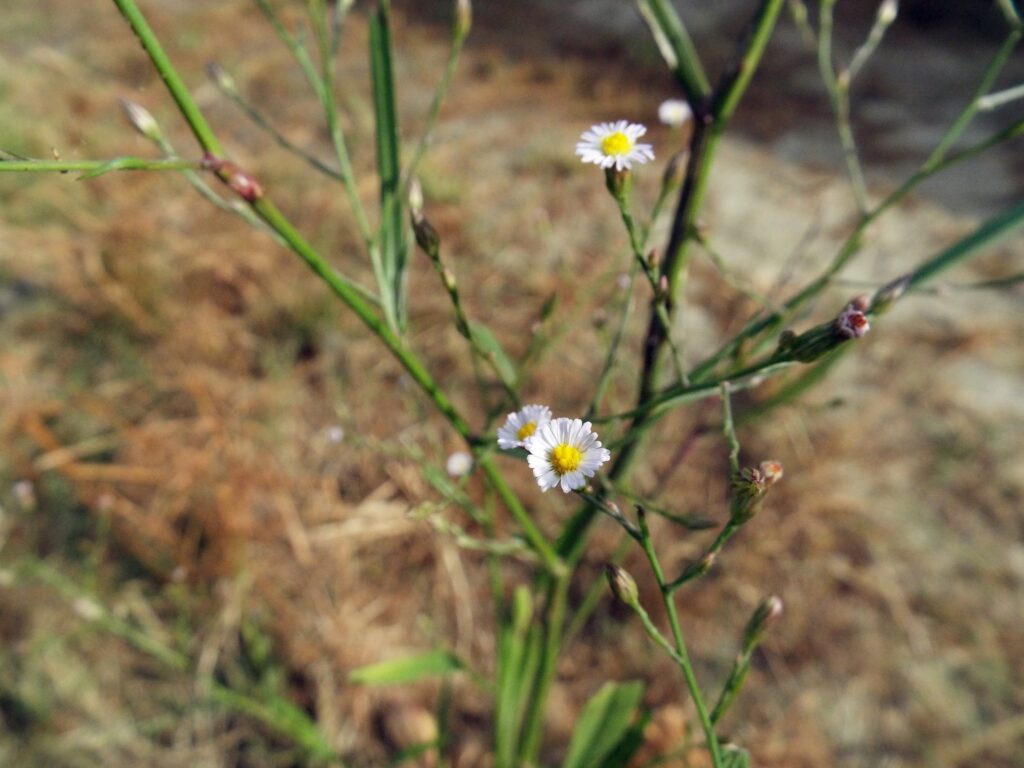
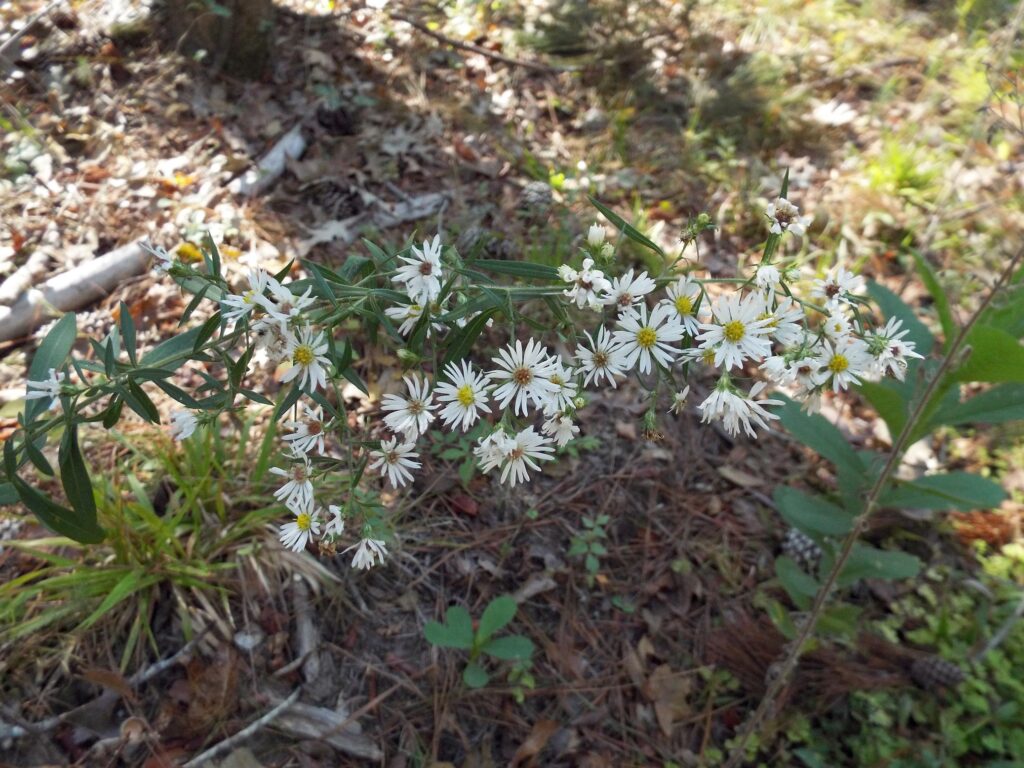
This week for Flora and Fauna Friday, we have a genus of shrubby wildflowers on the docket. This week we’re looking over the North American Asters, genus Symphyotrichum.
There are about 24 species of this Aster genus found in South Carolina. Just over half of those are found in our area. All of our dozen or so species are similar in a few key ways. They’re all small herbaceous shrubs, they all have many-petalled white and pink flowers that bloom in later summer and fall, and they all have wind dispersed seeds. This makes this genus easy to identify from other wildflowers. Conversely, that means it’s difficult to tell the individual species apart. Thus, I’ve only highlighted three species of Aster that are unique or important in some way.
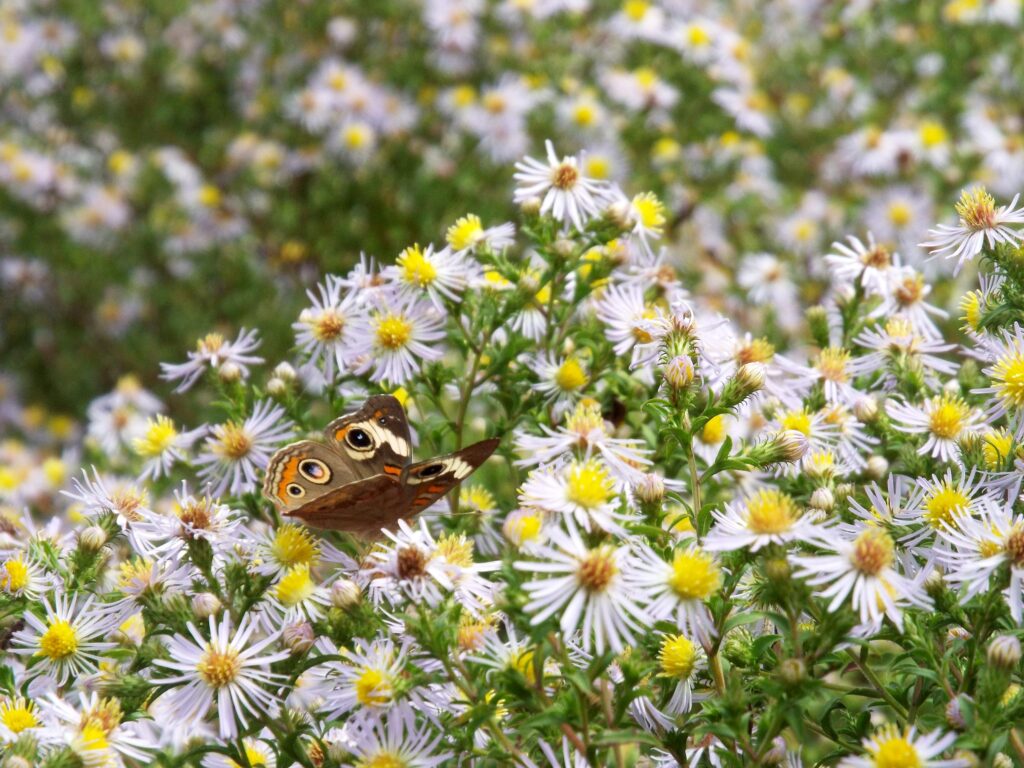
Elliott’s Aster (S. elliottii) is a wetland species of Aster that’s rare in the Lowcountry. It’s quite large, stout, and prolific perennial Aster that spreads rhizomatically, or by its roots. Rhizomatic growth allows the plant to form dense clumps in its native wetland habitats. These wetlands are highly competitive for light and space and hard for seedlings to take hold in. So spreading through its roots gives the plant access to more resources, to produce more seeds, to have a better chance of one floating to a good habitat. Its flowers bloom at the end of September and are quite large and prolific in both volume and nectar. They are a tremendous nectar source for pollinators of all shapes and sizes. This is the same species found at Roxbury Park that draws in thousands of migrating butterflies every Fall.
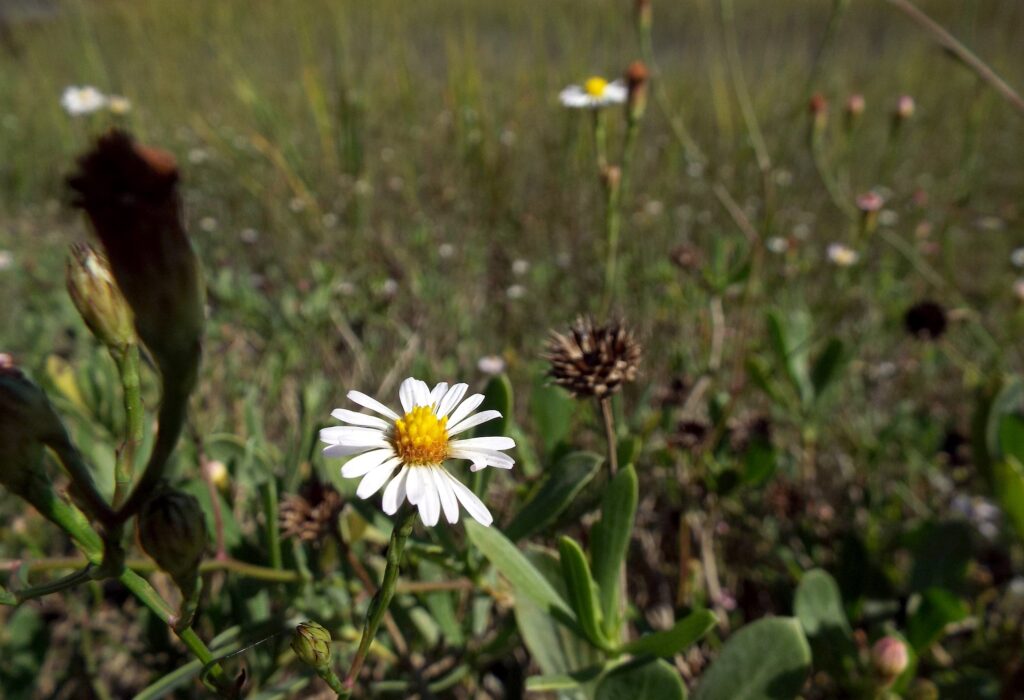
Perennial Saltmarsh Aster (S. tenuifolium) is one of those very few wildflowers that grows exclusively in the saltmarsh. It’s particularly thin and wiry in appearance. It’s glimmering white flowers can be found strewn throughout the high saltmarsh in late September through October. Opalescent gems floating on a stagnant sea of Spartina and sand.
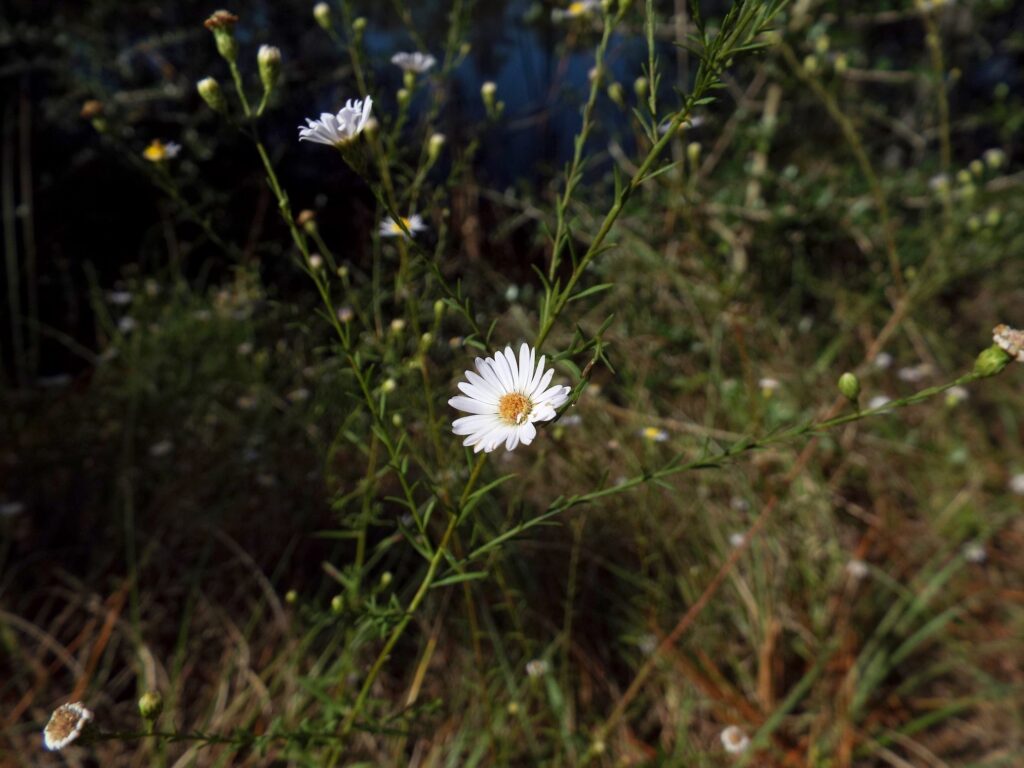
Bushy Aster (S. dumosum) is our most common Aster. This perennial species can grow five feet tall and is found in open sunny habitats. Its stems are stiff and thin, its leaves are thin and small, and its flowers are small but numerous. Bushy Aster is an important nectar source for smaller pollinators, like miner bees and skipper butterflies. The flowers are perfectly sized for these diminutive insects. Larger bees, wasps, and butterflies usually won’t visit these tiny flowers because, to them, they’re more of a hassle than they’re worth. That means these small pollinators don’t have to compete with the larger insects for nectar and can feed without being driven away by the bigger bugs.

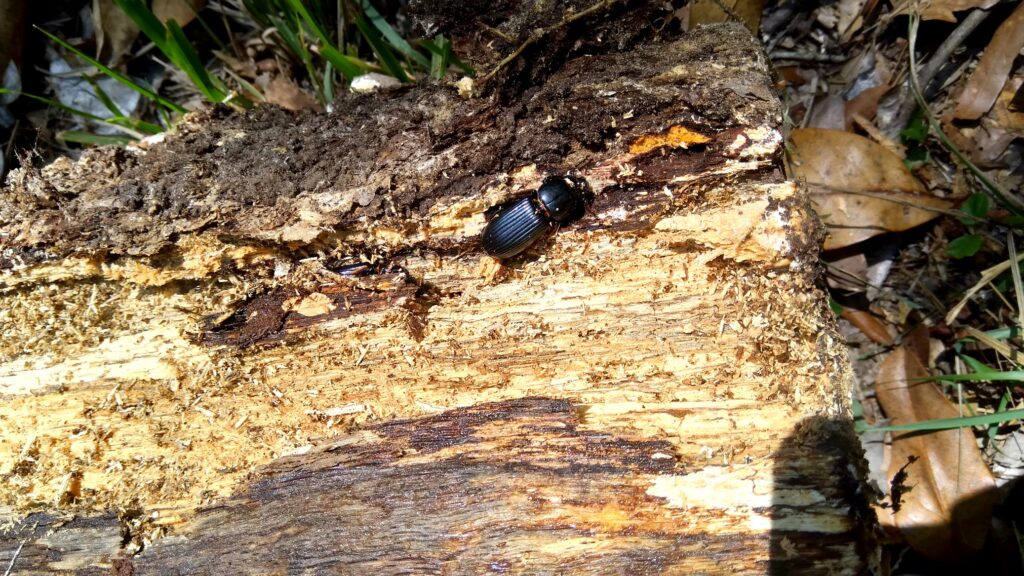
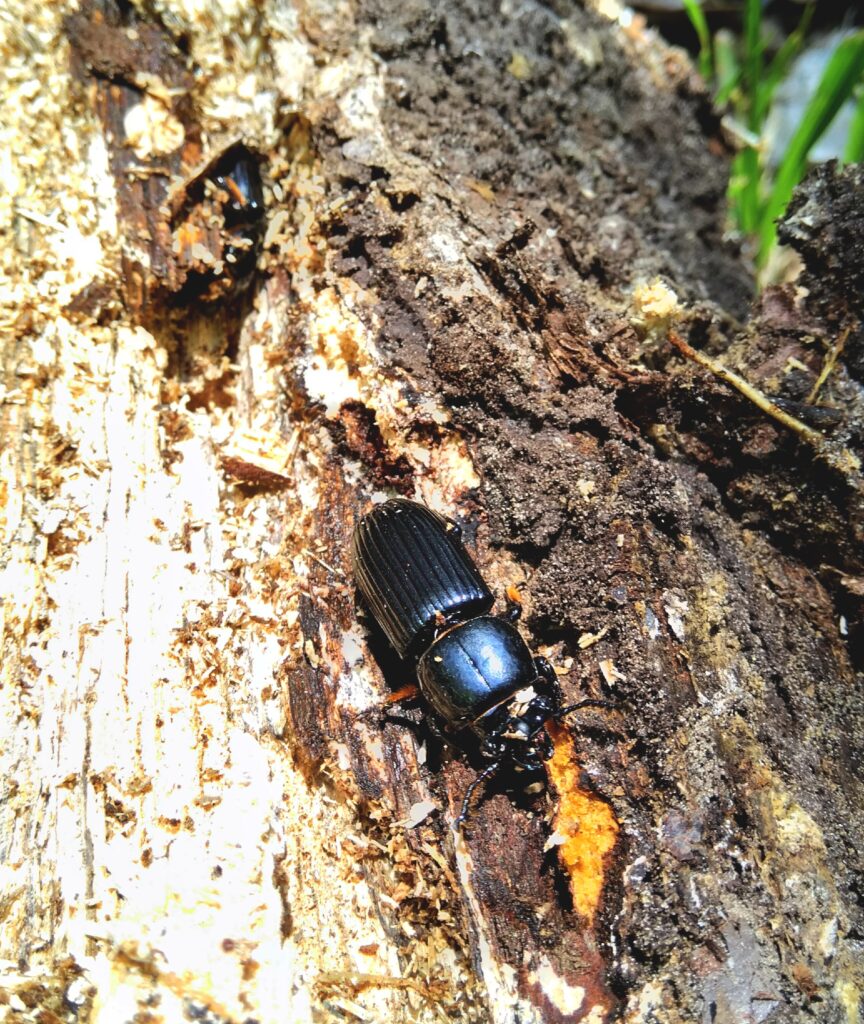
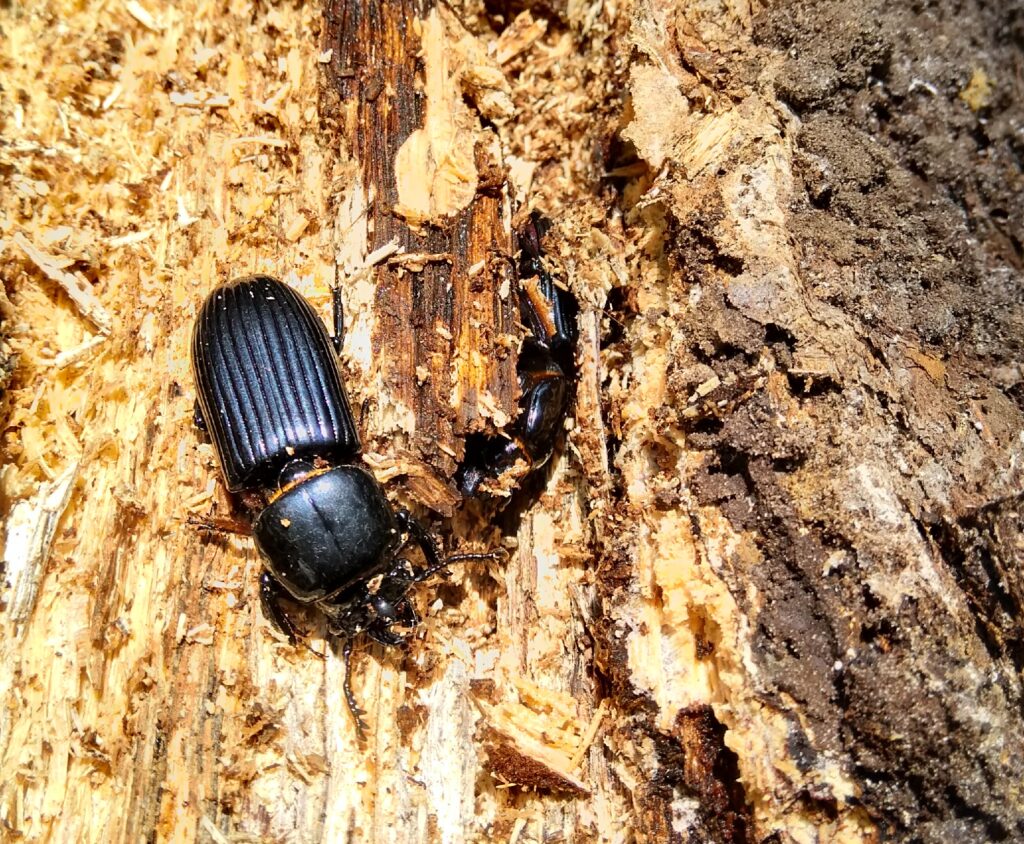
This week for Flora and Fauna Friday, we have a big and brilliantly black beetle. This week we’re examining the Horned Passalus Beetle, AKA Patent Leather Beetle or Bess Bug (Odontotaenius disjunctus).
Bess Beetles are large beetles that can reach almost 2 inches in length. They are long and stout but rather flat. They are a common beetle in our hardwood forests. If you maintain a stack of firewood, or were a critter collecting kid like myself, you’ve undoubtedly stumbled upon them beneath an old log. Bess Beetles feed on rotting wood. Any hardwood log that’s in contact with damp dirt is fair game. These beetles chew burrows through the wood, where they will spend their entire life. Here they feed on rotting wood and fungus, mate, lay eggs, raise offspring, and die. The cycle repeats until the log is finally reduced to a pile of mulch and soil. Then the remaining beetles crawl their way to the next log and restart the cycle.
These beetles have a variety of names due to their abundance, size, and presence in collected firewood. (A once necessary chore for every man, woman, and child.) The scientific name “Odontotaenius disjunctus” translates to “disjunct ribbon-like teeth”. The name “Horned Passalus” references the small horn-like protrusion on the head of the beetle, above the mouth. Passulus refers to the family name Passalidae, of which the root means “Peg”. The family got that name because the beetles fit rather snuggly into their excavated log burrows like a, carpentry peg into a wooden board. The name “Patent Leather Beetle” refers to their color. It’s just like the glossy black, polished patent leather used in dress shoes. The last name, “Bess Beetle”, is a little more of an archaic stretch but highlights another interesting trait of the species. Bess references the French and Middle English words for “kiss”. When harassed, Bess Beetles make a noise that sounds vaguely like a smooch. (They sound more like the whining of a baby bird to me.) Bess Beetles make this sound by rubbing their wings against their abdomen. A process called stridulation or making sound by rubbing body parts together, like a cricket or cicada. Unrelated fun-fact, Bess Bugs smell like a clean hog-bristle paint brush, for some reason.
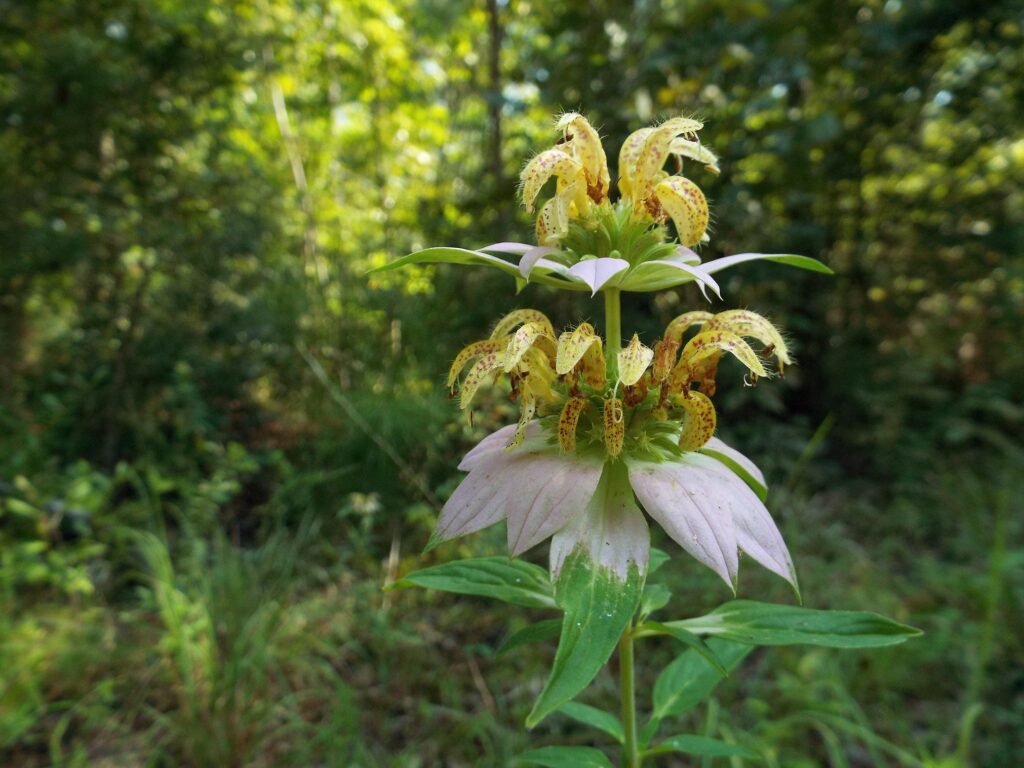
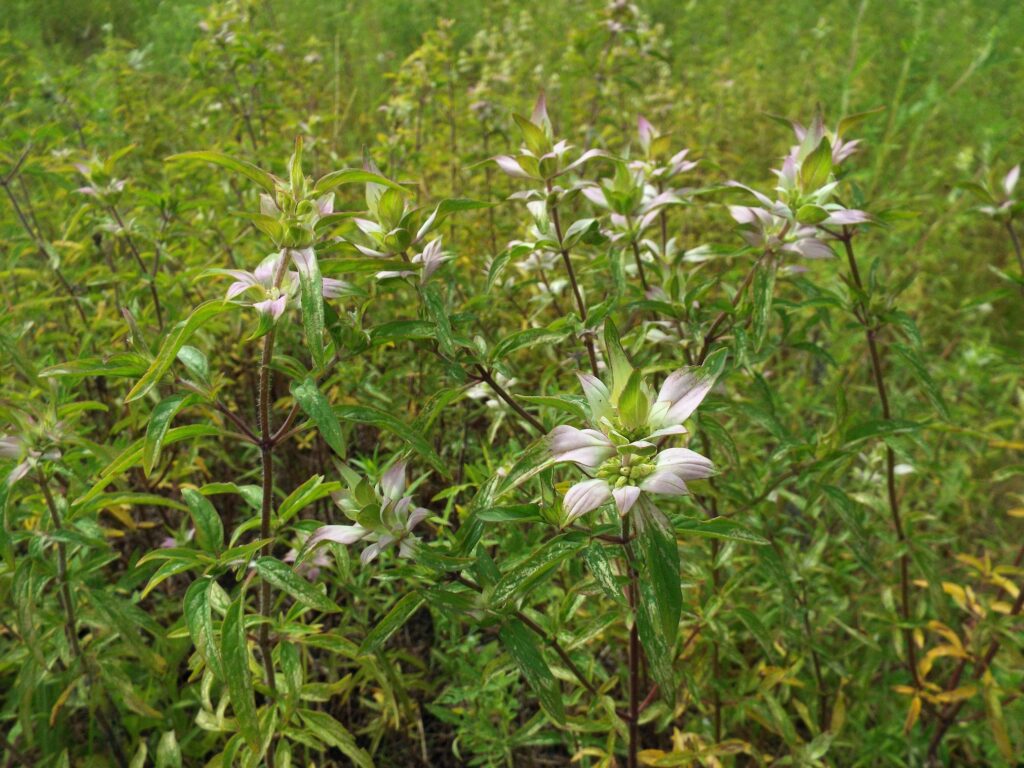
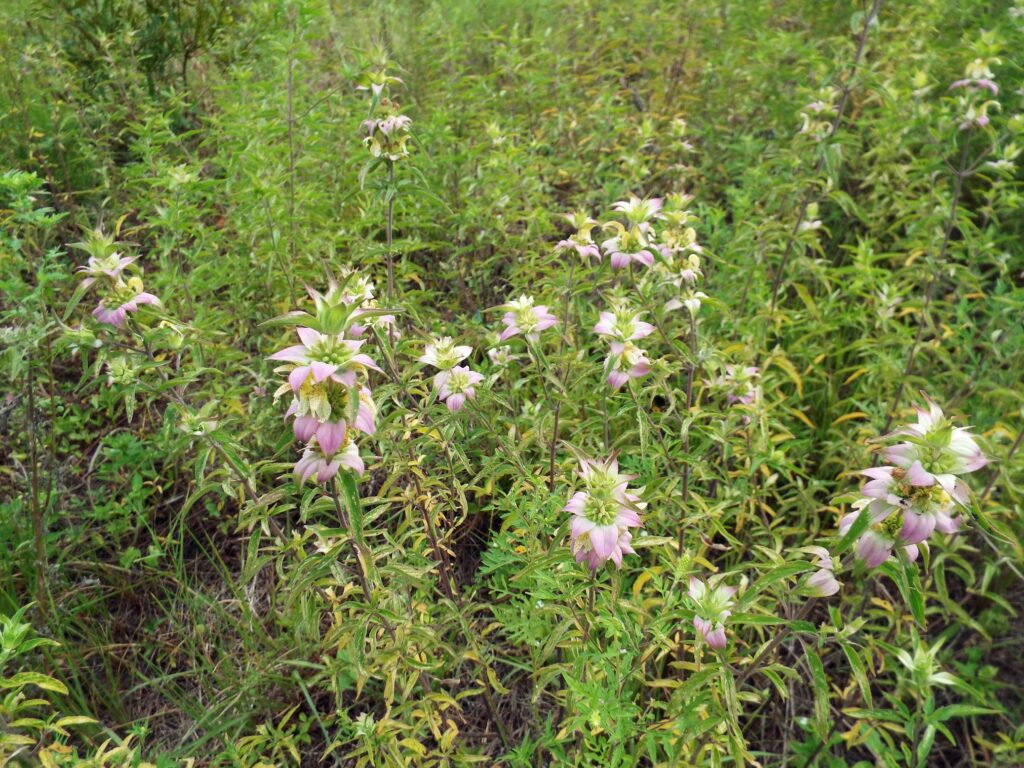
This week for Flora and Fauna Friday we have an important native nectar plant. This week we’re shining the spotlight on Spotted Beebalm or Horsemint (Monarda punctata).
Spotted Beebalm is a perennial member of the Mint family, Lamiaceae. Many other important nectar plants that bloom around Edisto this time of year are also members of the mint family. Mints have opposite leaves, laterally symmetrical flowers, and tend to produce flowers in several clumps at the nodes of a stem. Spotted Beebalm is no exception. This plant grows in clumps that can reach three feet in height and several feet around. It prefers to grow in sandy soil with plenty of sun. In late summer, Spotted Beebalm blooms, producing a rather busy looking flower. From each node of the flower stalk a whorl of pink-white bracts forms a stage. In the middle of this stage is a ball of buds from which a choir of purple speckled of golden to bone-white flowers. There can be three or more of these flower clusters stacked on top of each other and there can be dozens of flower stalks per clump of plants. Spotted Beebalm and the other members of the Monarda genus are huge draws for pollinators, especially native bees. The flowers are very abundant and produce nectar continuously. This is because Spotted Beebalm relies on pollinators to spread its pollen and bring pollen in from other plants. You can see this in the shape of their flowers. Both the pistil and stamens are located at the top of the flower and they curve inward. This forces pollinators like Bees and Wasps to rub against the stigma and anthers when they drink nectar, depositing pollen on or picking it up from their backs.
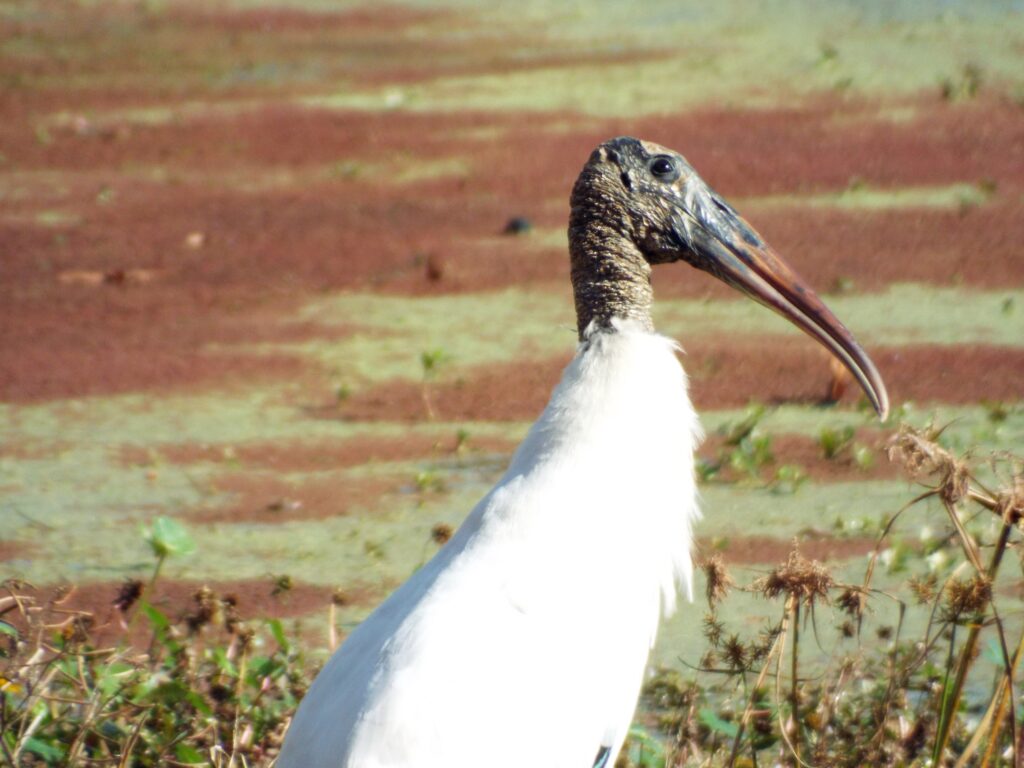
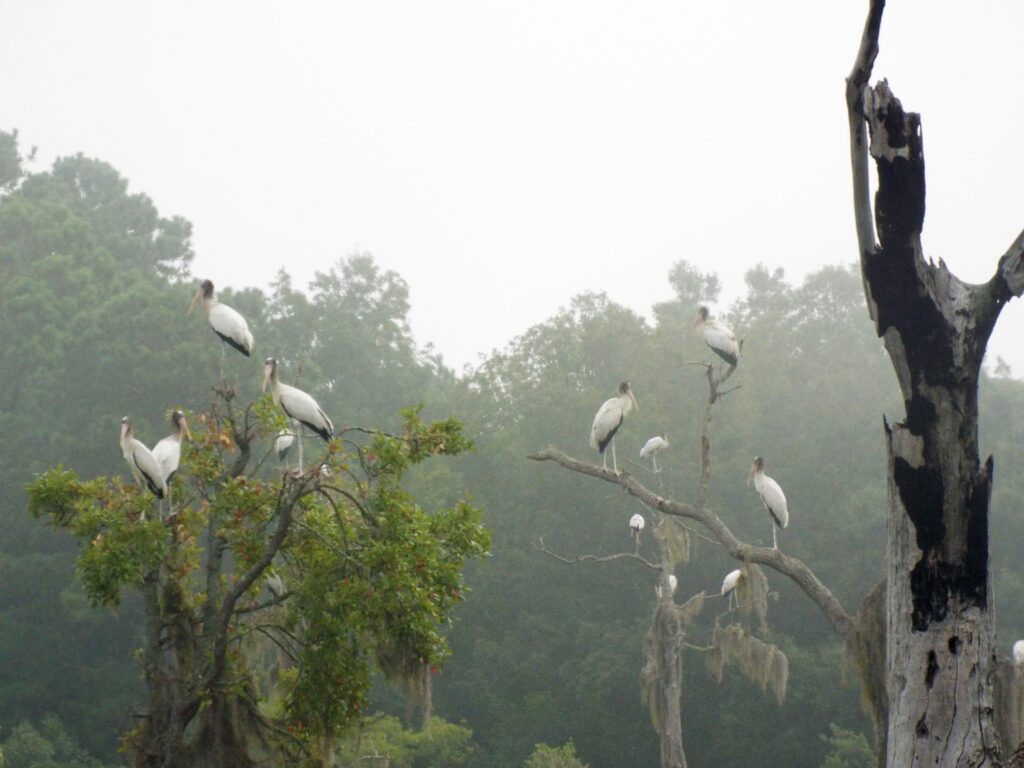
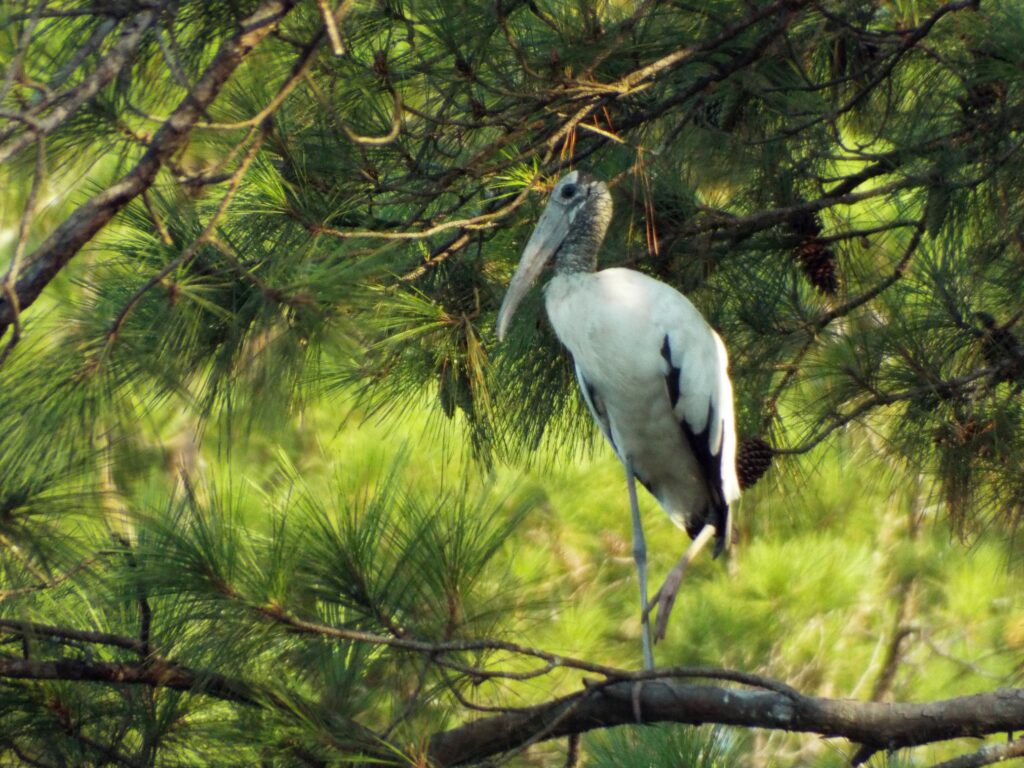
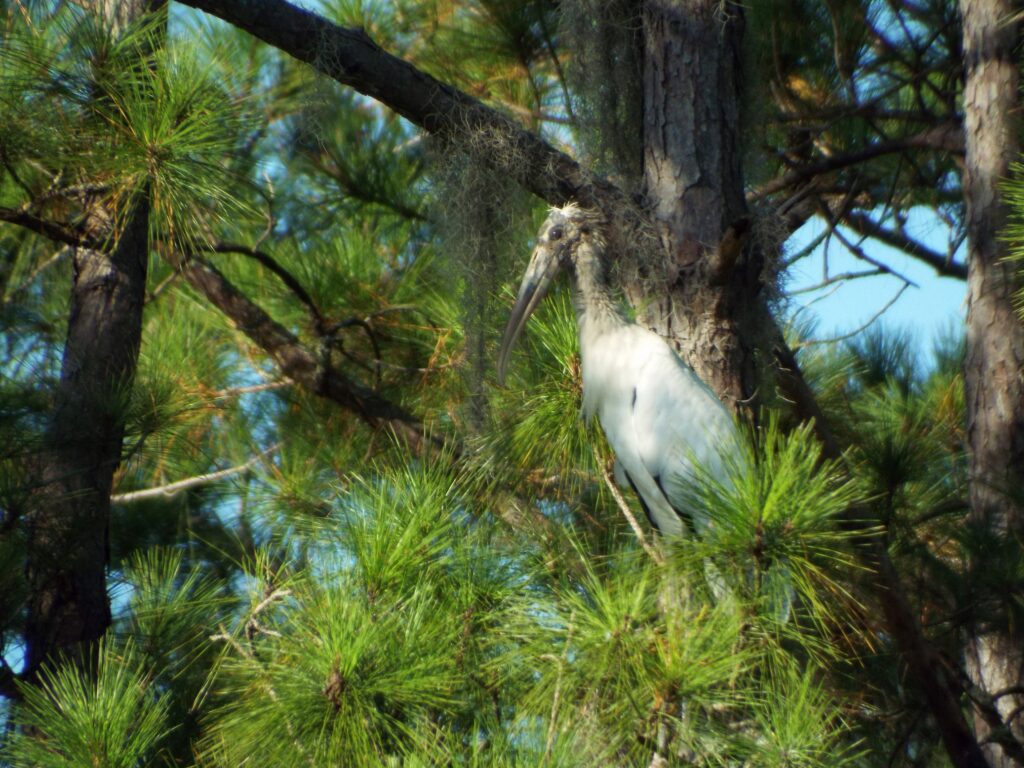
This week for Flora and Fauna Friday, our focus is on the Wood Stork (Mycteria americana).
Wood Storks are a regular sight here on Edisto. Those wrought iron legs, shin deep in tide, supporting a cottony coat broken by black hemmed wings of snow below a stone studded neck that mantles a bust hewn from flint and granite. A bird of statuesque presence and prehistoric appearance. Wood Storks stand out and above the blackened backwaters and pluff muddened bluffs, hunting fin-fish and shellfish at both. In flight, their broad wings smother the sky, spearheaded by a bony bill and trailed by stick-like legs. They’re by no means our most common wading bird but they are a dependable diner in our watery wilds throughout the year.
Despite their solid presence on Edisto today, Wood Storks were not always so prolific on our island. With the turn of the 20th century, breeding populations were restricted to Florida. These populations dwindled throughout the 1900s due to habitat destruction. The draining of wetlands in Florida pushed many birds to relocate into Georgia and SC by the late 1970s. In 1984 the Wood Stork was federally listed as an endangered species. This afforded the birds and their critical habitats special legal protection and provided funding for rigorous federal and state conservation efforts. Thanks to these efforts, the Wood Stork has made a strong recovery and its status was changed from endangered to threatened in 2014. Wood Storks have specialized nesting requirements and every spring they return to rookeries, like the nearby Donnelley Wildlife Management Area or Dungannon Plantation Heritage Preserve, to nest. However, they feed and roost on Edisto for most of the year and immature birds may be present throughout the spring. Tidal marshes, swamps, and impoundments are their preferred feeding grounds on the island. These are ecosystems of high conservation concern that the EIOLT strives to protect. These important ecosystems, and the animals that need them, deserve preservation for future generations to experience.
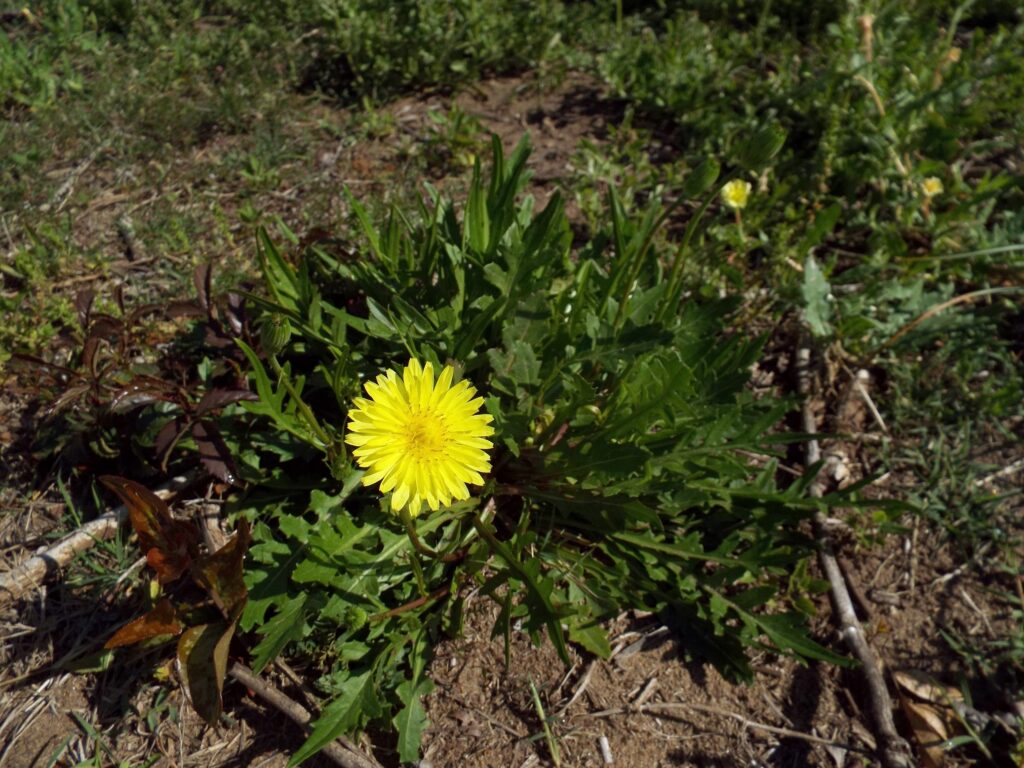
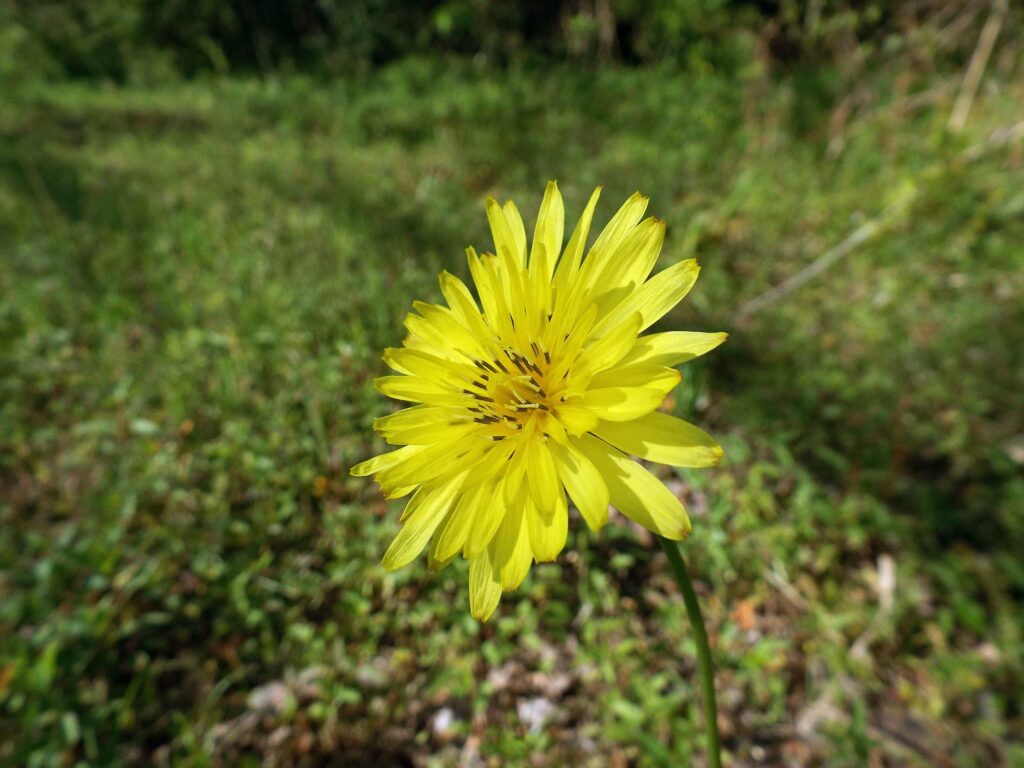
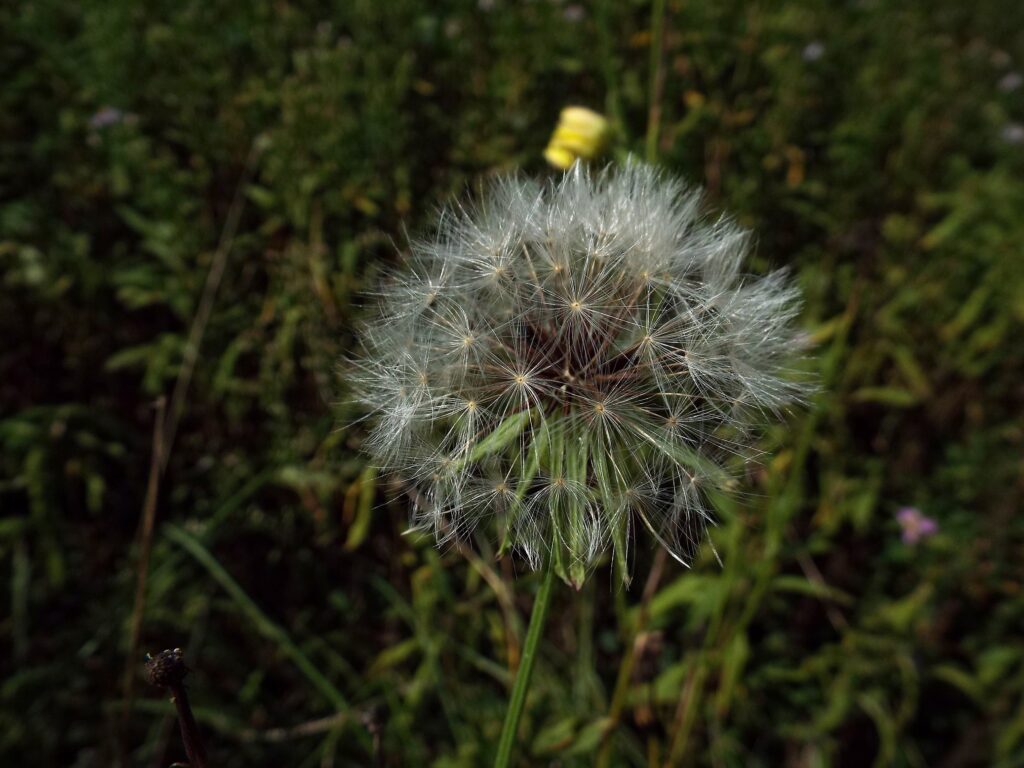
This week for Flora and Fauna Friday, we’ve got another common lawn and garden weed. We’re examining Carolina Desert-Chicory, or Carolina False-Dandelion, (Pyrrhopappus carolinianus).
Carolina Desert-Chicory is a native wildflower that blooms from early spring until late fall. It grows as a rosette of long, simple leaves that are sometimes lobed. It produces singular bright yellow flowers one to two inches across. These are a compound flower made of dozens of tiny ray florets. A ray floret is a small flower, unique to the Aster family, that has only a single long petal. Many of these ray flowers are combined to create a larger compound head-flower. These flowers are not the biggest pollinator magnet but they are a reliable and dependable source of nectar for bees and butterflies throughout the year. The fruit is a cluster of achenes. An achene is a dry fruit with a single seed inside a solid hull. Just like a Dandelion, each seed sports a fluffy sail-like tail that ensures the wind will carry them far and wide. Carolina Desert-Chicory is found in a variety of sunny habitats including lawns, fields, roadsides, meadows, forest edges, and glades. Their wind dispersed seeds make them one of the first species to establish on cleared land.
Carolina Desert-Chicory is often mistaken for the invasive Common Dandelion because the two species are quite similar. Luckily, there are a few features that distinguish them. The leaves of the two plants are the best distinguishing feature. The leaves of Dandelions are always lobed and look jagged along the edges, like a barbed spearhead. Carolina Desert-Chicory is either a simple elliptical leaf or a smoothly lobed leaf like a White Oak. Dandelions are low growing and their flowers only get about 6 inches above the ground. Desert-Chicory is typically taller and, although it will bloom relatively low to the ground, can reach up to two feet in height. This is because Dandelions don’t form stems. They flower directly from the rosette. However, Desert-Chicory does form stems and will often have one or more leaves below the flower. Also, the flowers of Desert Chicory are a paler yellow.
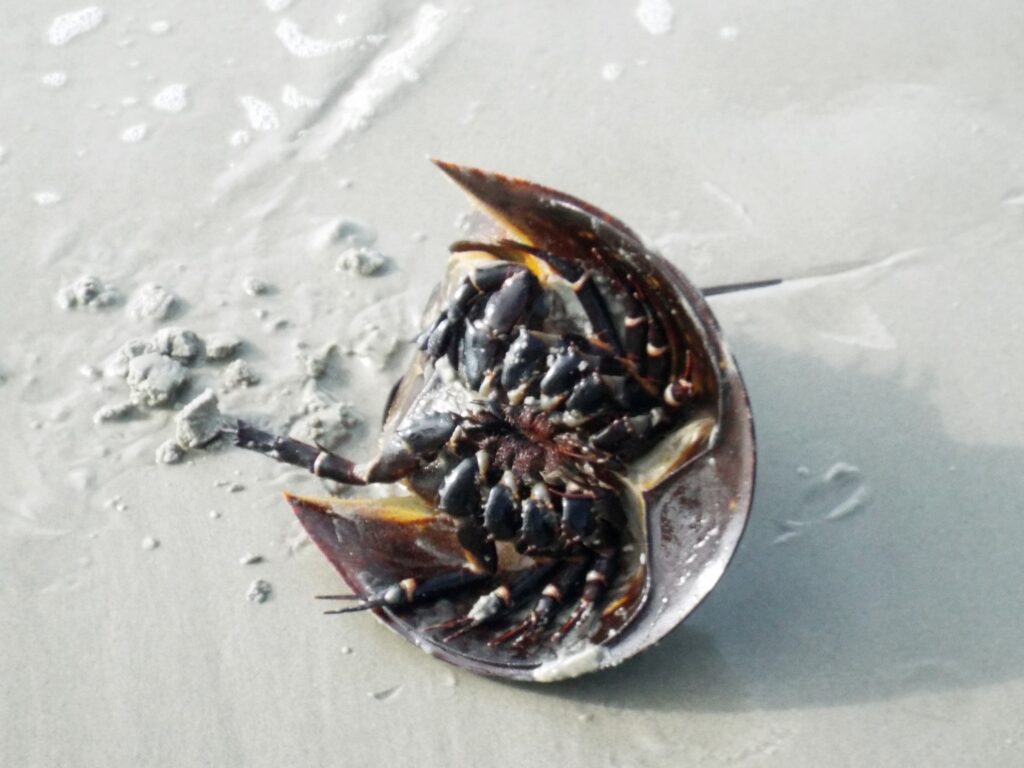
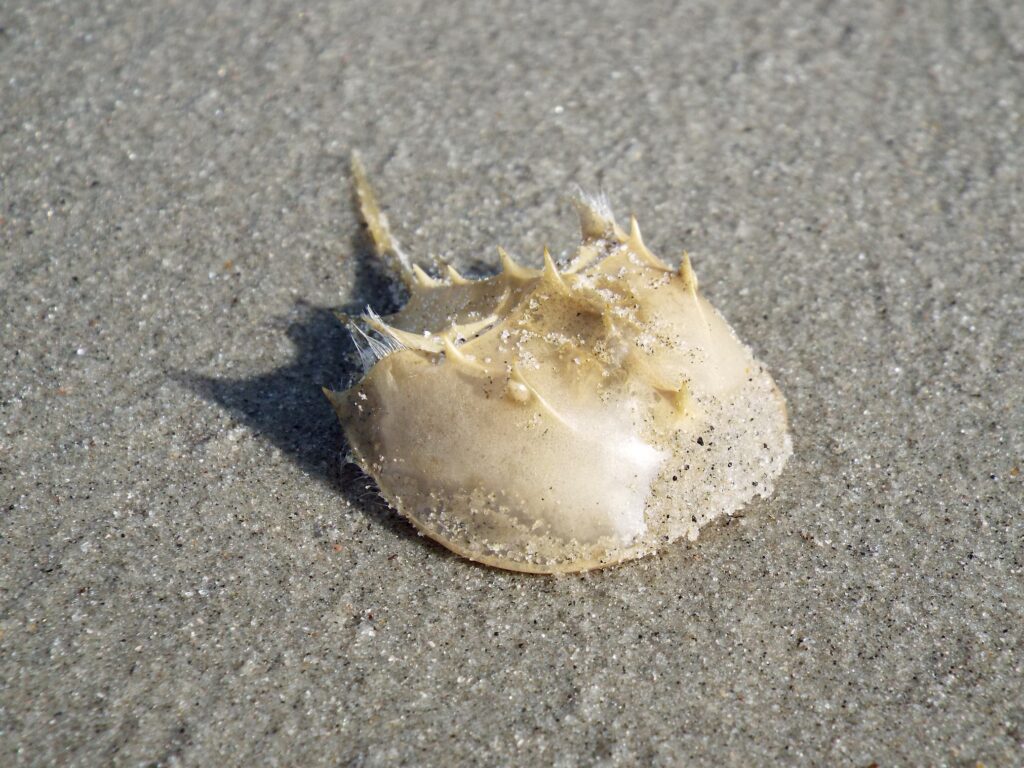
This week we’re looking at an oddball arthropod whose secretions are vital to modern medicine as well as shorebird conservation. This week we’re examining the Atlantic Horseshoe Crab (Limulus polyphemus).
Horseshoe Crabs are undeniably weird and interesting. They are living fossils that belong to the oldest surviving arthropod order, Xiphosura. They are more closely related to Scorpions and Spiders than Crabs and other Crustaceans. Their body is covered in a thick carapace that’s divided into 3 parts: the head, the abdomen, and the telson. In arthropods, the telson is simply the last segment of the body. In Horseshoe Crabs, the telson has developed into a long, tail-like spine on the back of the abdomen. Although it looks quite formidable, this telson is not used for defense. It’s merely used by the Horseshoe Crab as a rudder and to flip itself over on land. Horseshoe Crabs have 9 eyes in total, two large compound eyes on top and 7 simple eyes around the body. They also have the ability to regenerate lost limbs.
Horseshoe Crabs spend their days feeding on mollusks, invertebrates, and detritus on the sea floor of the continental shelf. Come summer and warmer waters, Horseshoe Crabs flood the beaches of the East Coast to spawn. The smaller males attach themselves to the abdomen of the female with a specialized claw and can remain like this for days or even weeks before spawning. Horseshoe Crabs produce a huge volume of eggs every year and the species breeds all up and down the east coast. Each female lays several thousand eggs before returning to the sea. This seaside bounty of arthropod eggs is a critical food source for migrating shorebirds, especially the Red Knot. The eggs that survive this shorebird buffet hatch a few weeks later as free swimming larvae. Like other arthropods, Horseshoe Crabs molt as they grow and you can often find the molted exoskeletons of young Horseshoe Crabs along the beach. It typically takes a Horseshoe Crab 10 years to reach adulthood and they can live to be almost 20 years old.
Horseshoe Crabs are also unique for having blue blood. Horseshoe Crabs, along with many Mollusks and Crustaceans, use Hemocyanin in their blood instead of Hemoglobin. Hemocyanin contains copper and is thus blue when oxygenated. The hemoglobin in our blood contains iron, which turns red when oxygenated. Horseshoe Crab blood is of great medical importance. This blue goo contains a chemical called Limulus amebocyte lysate, or LAL for short. This chemical coagulates when exposed to blood or cerebrospinal fluid that contains Gram-Negative Bacteria. In other words, it can be used to test both human and animal patients for bacterial infections. Because of the importance of their blood in the modern medicine, horseshoe crabs are collected from the wild each year and bled to extract this chemical. The Horseshoe Crabs are not killed by this process and are returned to the wild shortly after bleeding. Research indicates that they are able to totally regenerate this lost blood in 2 to 3 months.
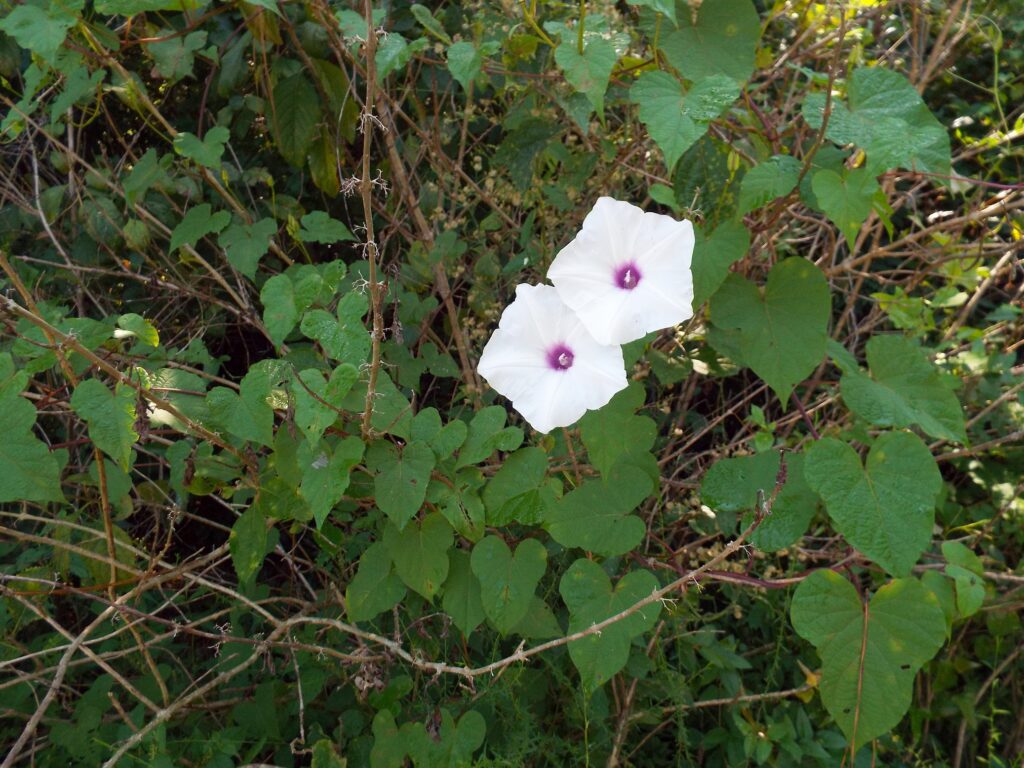
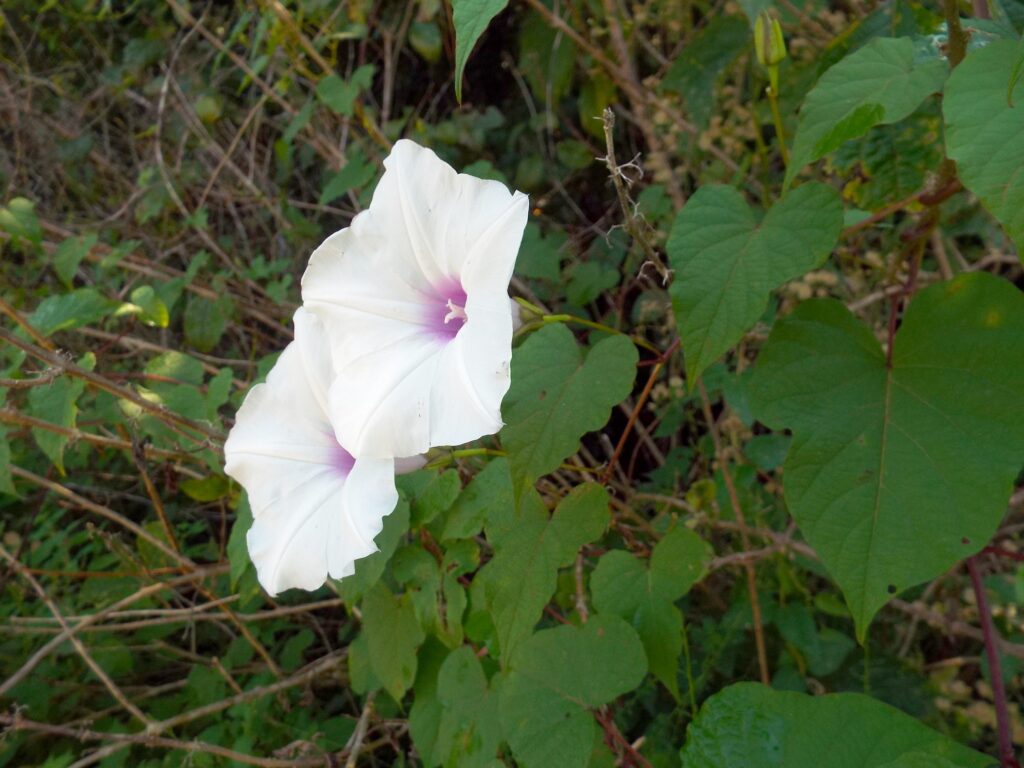
This week for Flora and Fauna Friday, we have a beautiful, and edible, wildflower. This week we’re getting a taste for Wild Sweet Potato (Ipomoea pandurata), also known as Man-of-the-Earth or Bigroot Morning-glory.
Bigroot Morning-glory is a perennial twining vine in the Morning-glory family, Convolvulaceae. They prefer partial shade but can tolerate full sun and heavy shade. Everything about Bigroot Morning-glory is big. Bigroot Morning-glory climbs up shrubs, bushes, and trees and can reach over 25 feet in height. Their leaves are quite large and heart-shaped on a thin vine. The best way to recognize this vine is by its flowers. In the summer, it bears huge, white, funnel-shaped flowers with a magenta center. These flowers are often over 6 inches in diameter and provide nectar to both bees and butterflies. In the winter, the vine dies back to its roots and then returns in mid-spring. These roots form large tubers that can weigh over 20 pounds!
Wild Sweet Potato belongs to the genus Ipomoea, which contains most of our native species of Morning-Glory. Ipomoea also contains most of our exotic and ornamental Morning-Glories, including the real Sweet Potato (Ipomoea batatas) which is a native to South America. Just like true Sweet Potato, Wild Sweet Potato has edible, tuberous roots. However, they don’t taste nearly as good and require some more preparation to be palatable.
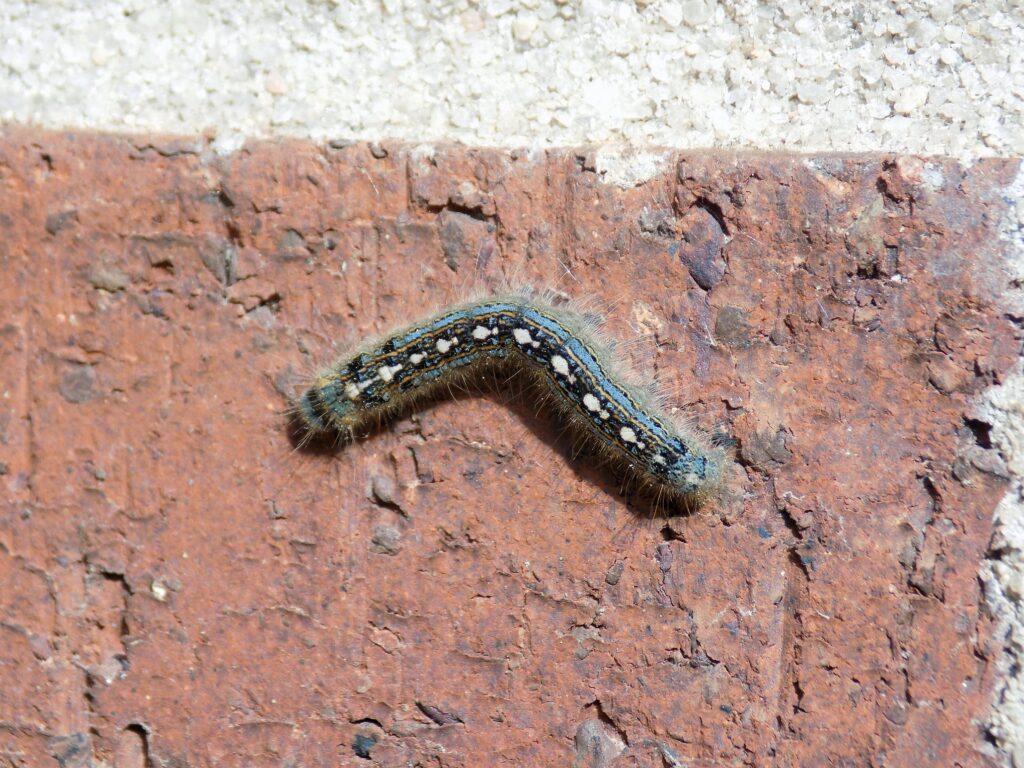
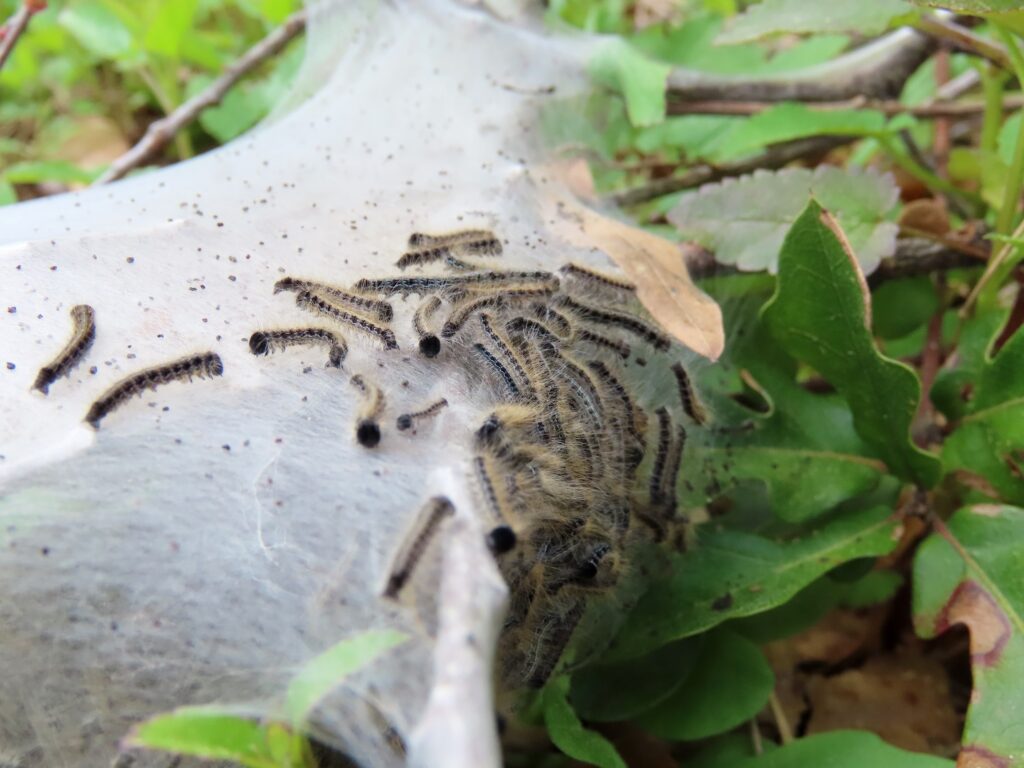
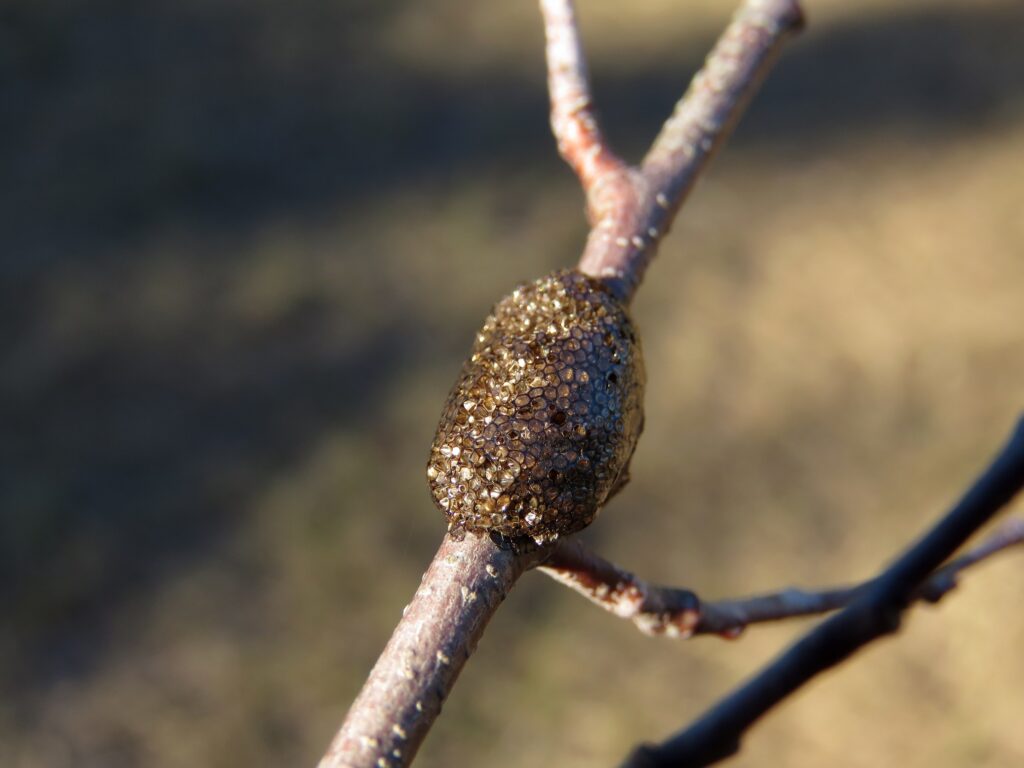
This week for Flora and Fauna Friday, we have another little bug with a bad rap. This week we’re talking about Tent Caterpillar Moths (Malacosoma spp.), or what’s commonly known as Tentworms.
There are two species of Tent Caterpillar Moth in SC, the Eastern Tent Caterpillar Moth (M. americana) and the Forest Tent Caterpillar Moth (M. disstria). The two species are easy to tell apart. Eastern Tent Caterpillars build tents, their caterpillars have a solid white stripe down their back, and the Moths have white stripes on their wings. Forest Tent Caterpillars don’t build tents, their caterpillars have white spots down the back, and the Moths have dark lines on their wings. However, both species have similar life histories. In summer, adult moths deposit eggs in dense masses surrounding a small hardwood tree branch. These eggs masses turn dark and shiny as the eggs overwinter. The following spring, caterpillars emerge and begin to feed on leaves. Caterpillars of both species live in colonies but in a different way. Eastern Tent Caterpillars form a tent where the caterpillars can rest and molt, protected from predatory insects and birds. Forest Tent Caterpillars forgo the tent and form a silk mat lower down on the tree’s trunk or larger branches. This mat affords little protection but, being deep in the canopy, is much less visible and obvious to predators. By midsummer, the caterpillars have finished growing and descend from the trees en masse to pupate. The caterpillars eventually find a place to pupate and spin a silken cocoon. In a few weeks an adult moth will emerge, reproduce, and die. Restarting the cycle.
Eastern Tent Caterpillars are the species with the bad rap. A lot of people find their large silk tents and the leafless branches they leave behind unsightly. Many believe their eating habits are harmful to the host tree but that’s really not the case. Tent Caterpillar damage is superficial and they are no more harmful to the tree than a seasonal pruning. In fact, most trees typically regrow any lost leaves before the end of the summer. However, the Eastern Tent Caterpillar does have a preference for Cherries, Apples, and Peaches, where excessive leaf damage can reduce yields. Despite any perceived slight to human aesthetic preferences, Tent Caterpillars are an important link in the food chain. They are a prolific herbivorous insect, making them a large part of the diet of many wasps, lizards, and birds in the summer. In fact, they’re the primary food source of our Yellow-billed Cuckoo in summer. Cuckoo’s use their long, stout beak to reach into their tents and pluck out the larva inside.
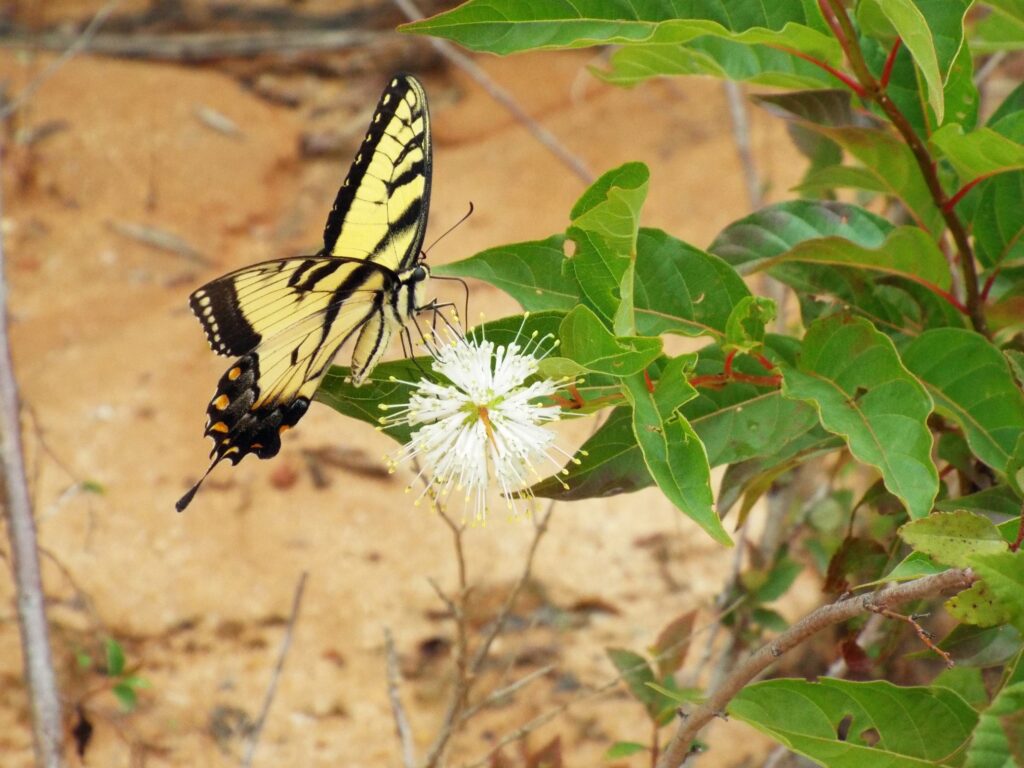
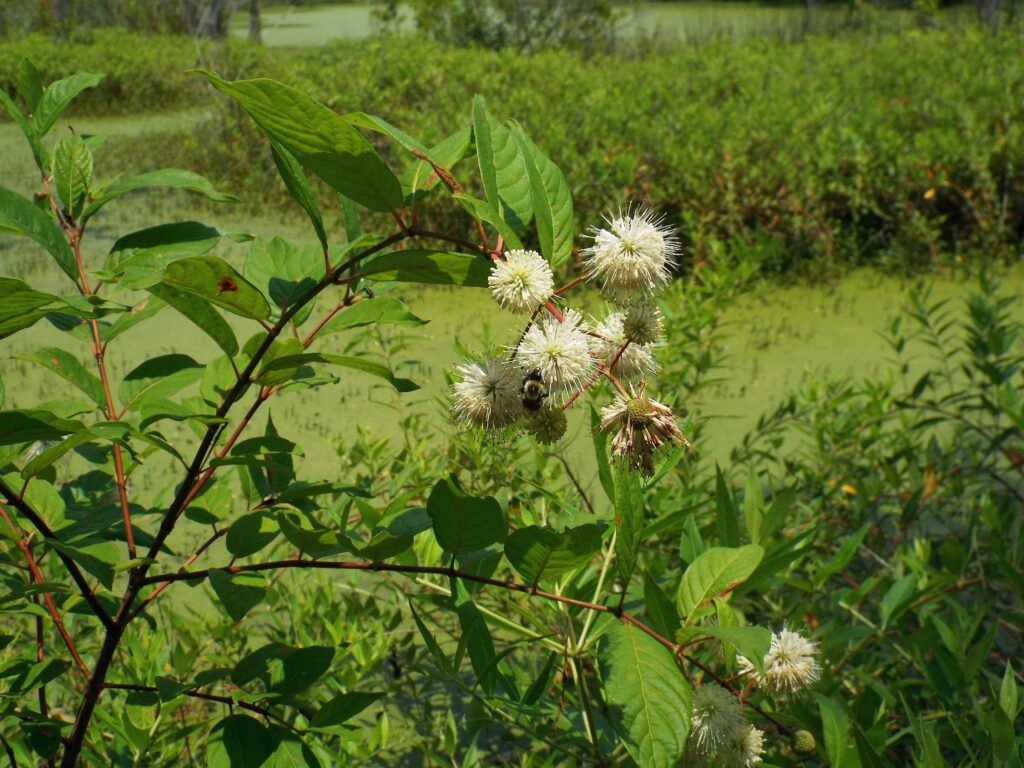
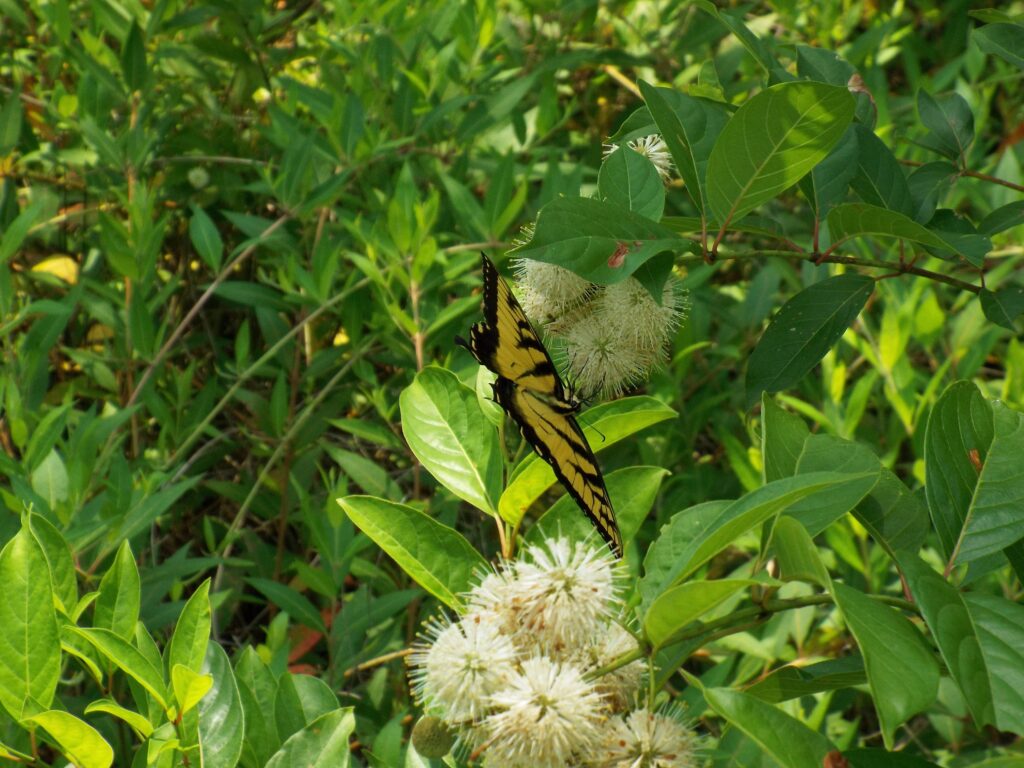
This week for Flora and Fauna Friday, we’ve got another wetland wildflower. This week we’re looking at the Buttonbush (Cephalanthus occidentalis).
Buttonbush is a resident of our freshwater marshes, ponds, riverbanks, and swamps. It’s well adapted to sunny wetland habitats and is most often found growing in standing water. It’s a common sight along riverbanks and ditches or poking up above the sedges and rushes of freshwater marshes, where it can bask in full sun. It typically grows as a short shrub but can reach over 10 feet in height. It has somewhat large, simple, and oppositely arranged leaves. Its stems are a reddish-pink and the leaves usually have a prominent midrib of a similar color. In early summer, Buttonbush begins to flower. At the end of each branch, it produces a cluster of white spherical flowers. Each one of these flowers is actually a ball of dozens of smaller flowers. These flowers are a massive draw for pollinators. Eastern Tiger and Palamedes Swallowtails are particularly fond of Buttonbush, along with many other species of butterflies and bees. Once their flowers are pollinated, fruits begin to form. As the fruits mature, they turn red and bumpy before drying out and turning a dark brown. Each bump is a tiny nut that is eventually shed and may float to dry ground or a hummock of grass and sprout. Others, not so lucky, get eaten by ducks, rails, and sparrows as they float on the water. Buttonbush is a deciduous perennial, shedding its leaves each winter and leafing out again in spring.
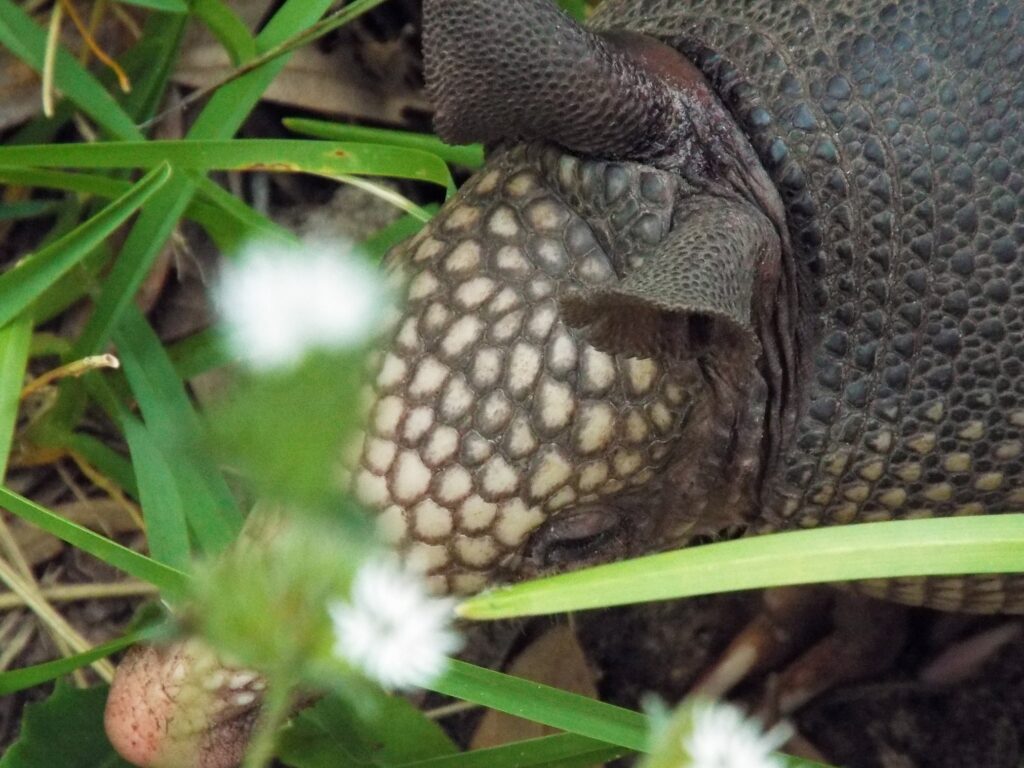
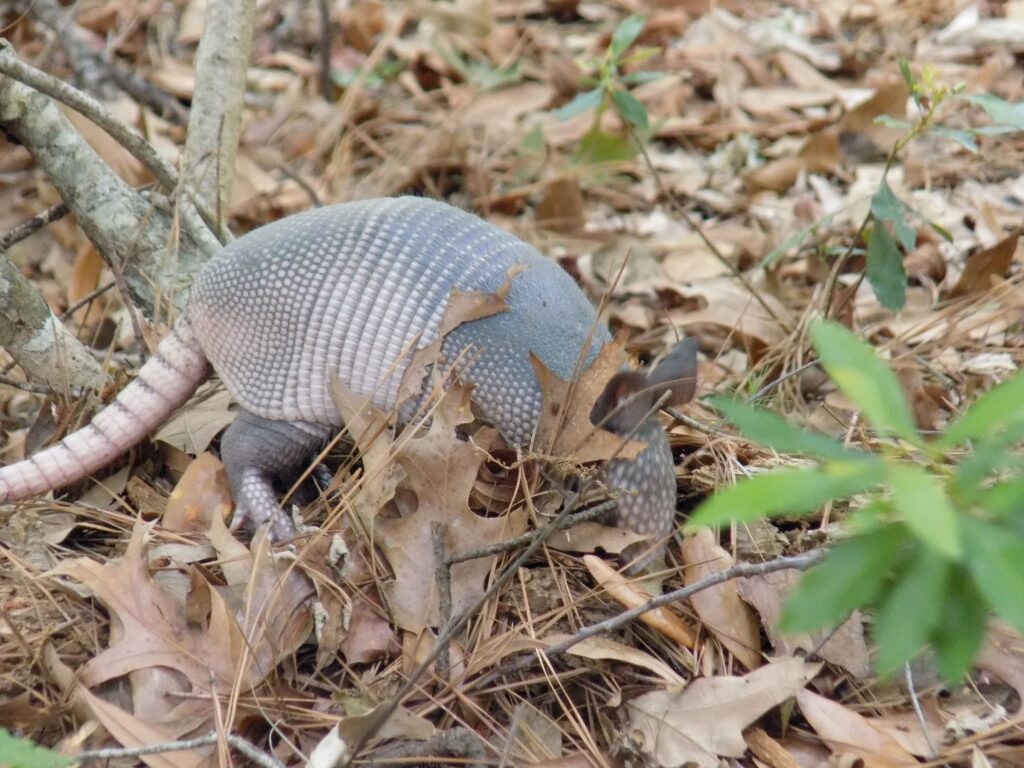
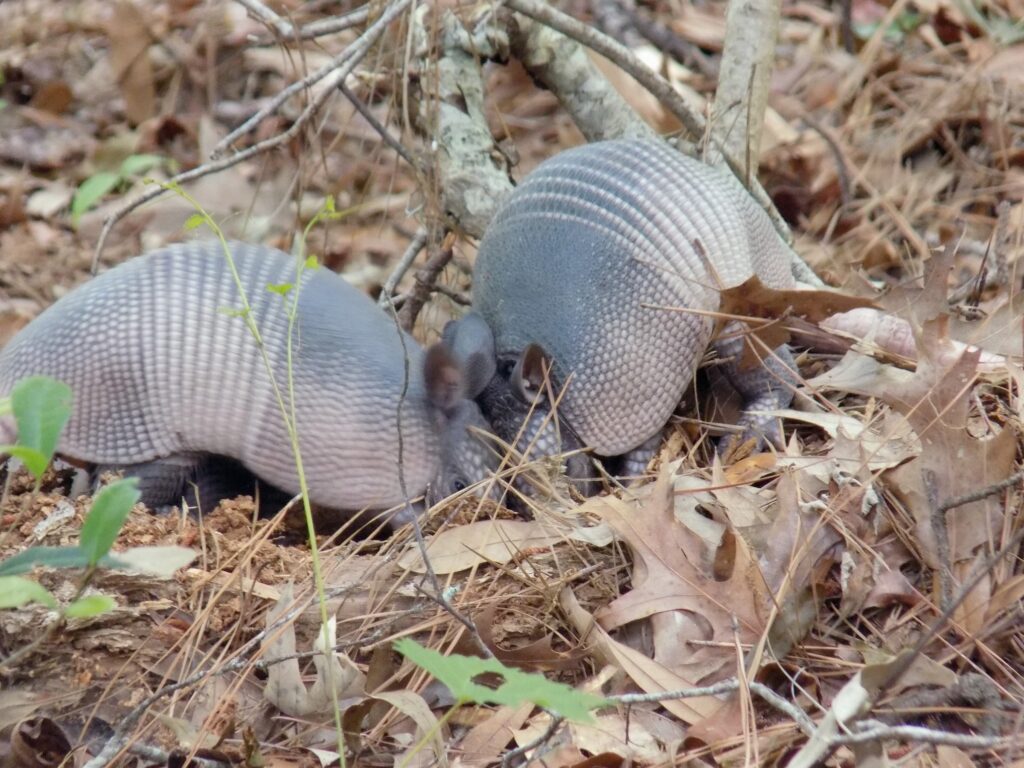
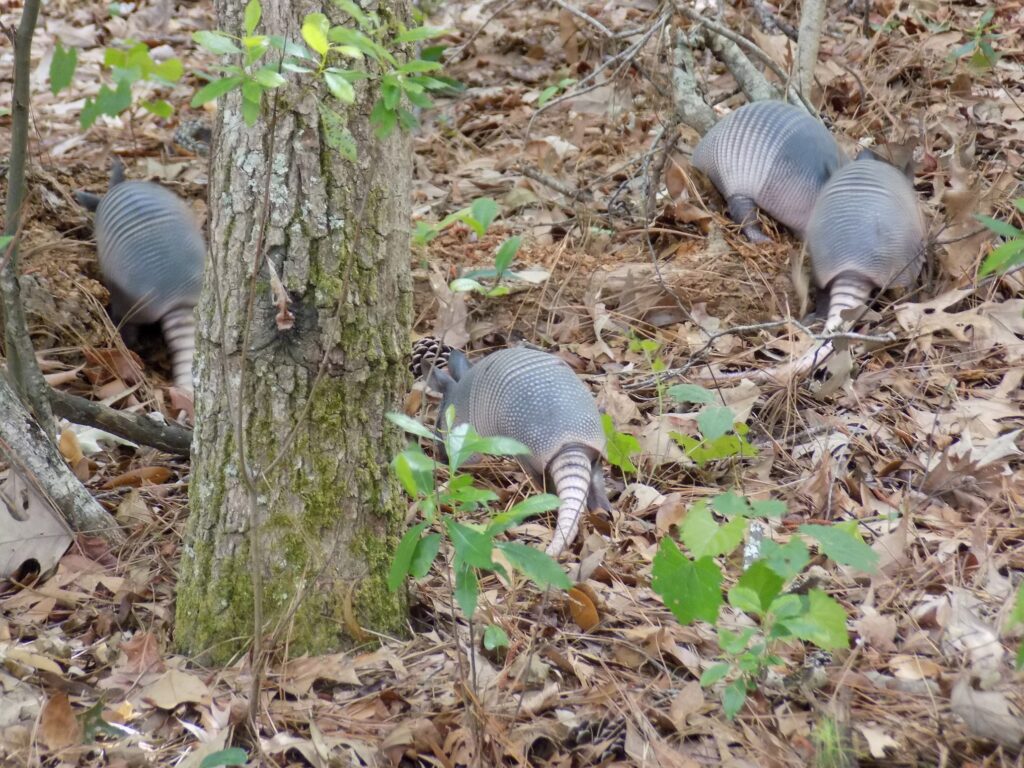
This week for Flora and Fauna Friday, we have an interesting mammal on the docket and one with quite the poor reputation. This week we’re talking about the Nine-banded Armadillo (Dasypus novemcinctus). The Nine-banded Armadillo is very unique among our mammals. I don’t think I can cover all the weird facts in one post, but I’ll try and hit the high notes.
Nine-banded Armadillos are a medium sized mammal that specializes in digging. Armadillos belong to the superorder Xenartha, which also includes Anteaters and Sloths. Members of this group have extra protrusions on their vertebrae that stiffen and strengthen the spine and greatly facilitate their digging ability. Their front claws are massive and put to good use in digging up food. They are insectivorous and feed mainly on worms and subterranean insects. Armadillos use their strong sense of smell to detect prey through the soil. Armadillos have a pretty good sense of hearing but their eyesight is abysmal. (I’ve stood in a field and had them step onto my boots on more than one occasion.) They make up for being practically blind by being covered from head to toe in armor. This armor is actually some of the most impressive in the animal kingdom as it shares the best features of fish scales and turtle shells. Their overlapping, interlocking bony scutes form a flexible yet rigid series of plates and bands along their back. These bony scutes are then covered in a layer of flexible, waterproof keratin. The same stuff that makes up horns, nails, and hair. This makes the armor impervious to all our predators except the powerful teeth and jaws of the American Alligator. However, the belly of the armadillo is unarmored and, unlike some other species, the Nine-banded Armadillo can’t roll into a ball. When attacked, the Nine-banded Armadillo launches forward, its shell deflecting both teeth and claws, and barrels into the nearest thicket. Armadillos are primarily nocturnal and sleep in burrows during the day. Here, female Armadillos raise their young. Nine-banded Armadillos are unique in that their litters are always identical quadruplets.
Armadillos in South Carolina are considered invasive pests by many. Their burrowing damages berms and foundations. Their hunt for worms often draws them into flower beds, where they wreak havoc night after night. They are known to carry leprosy. Their near blindness, nocturnal nature, and defense mechanism of launching themselves forward and upward sends them careening into wheel wells and radiators by the hundreds every night. However, this rate of roadkill doesn’t even make a dent in their population as they lack natural predators in SC. Just like the Coyote, the Nine-banded Armadillo falls into a gray area where they’re not quite exotic but not quite native. Their range has been naturally expanding northeast from Mexico for over a century and, I’m sure as many of you know, they’ve only established themselves SC in the last two decades. However, unless we develop a taste for possum-on-the-half-shell, I can say for certain that, just like the Coyote, the Armadillo is here to stay. Whether we like it or not.