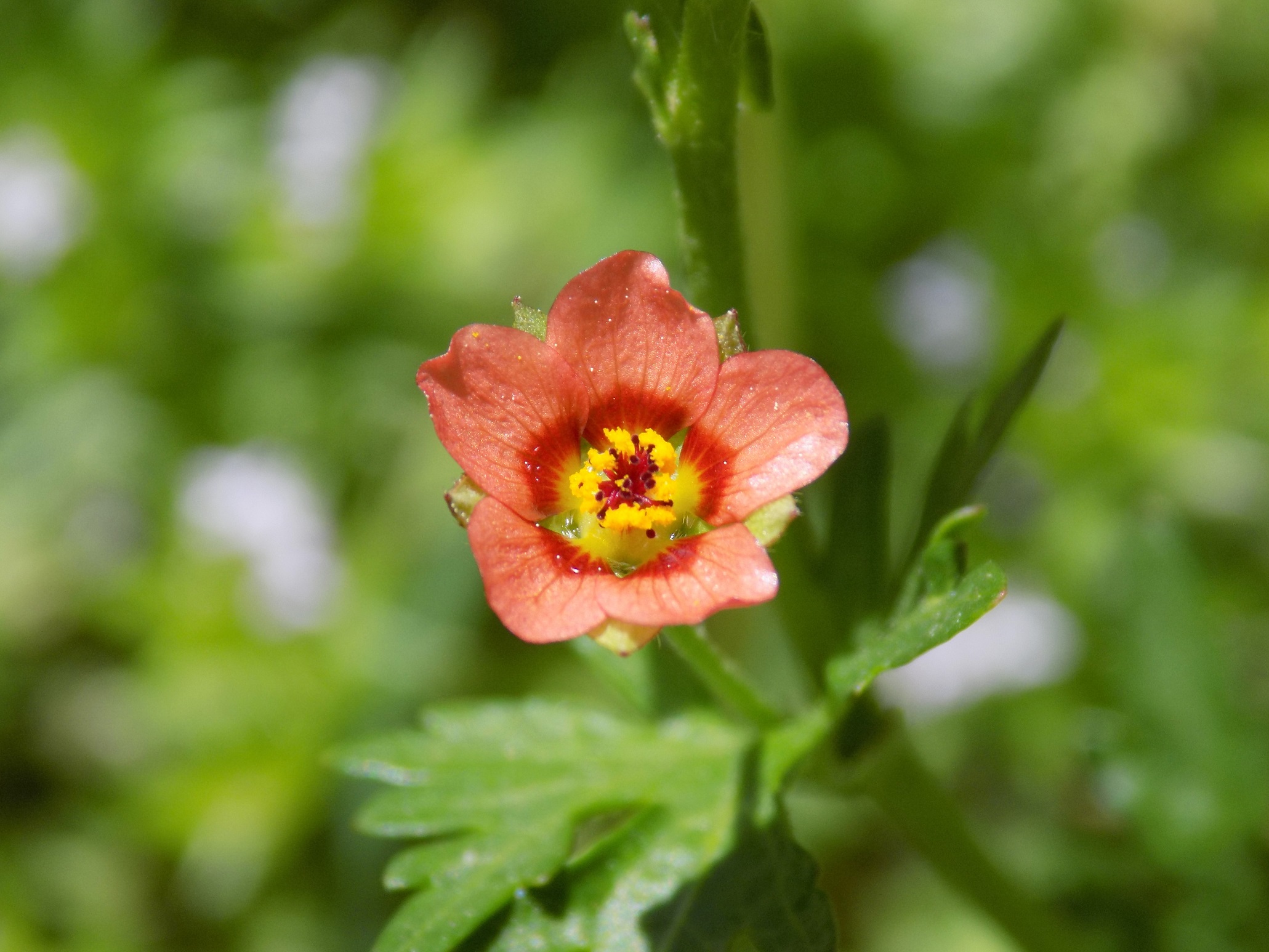
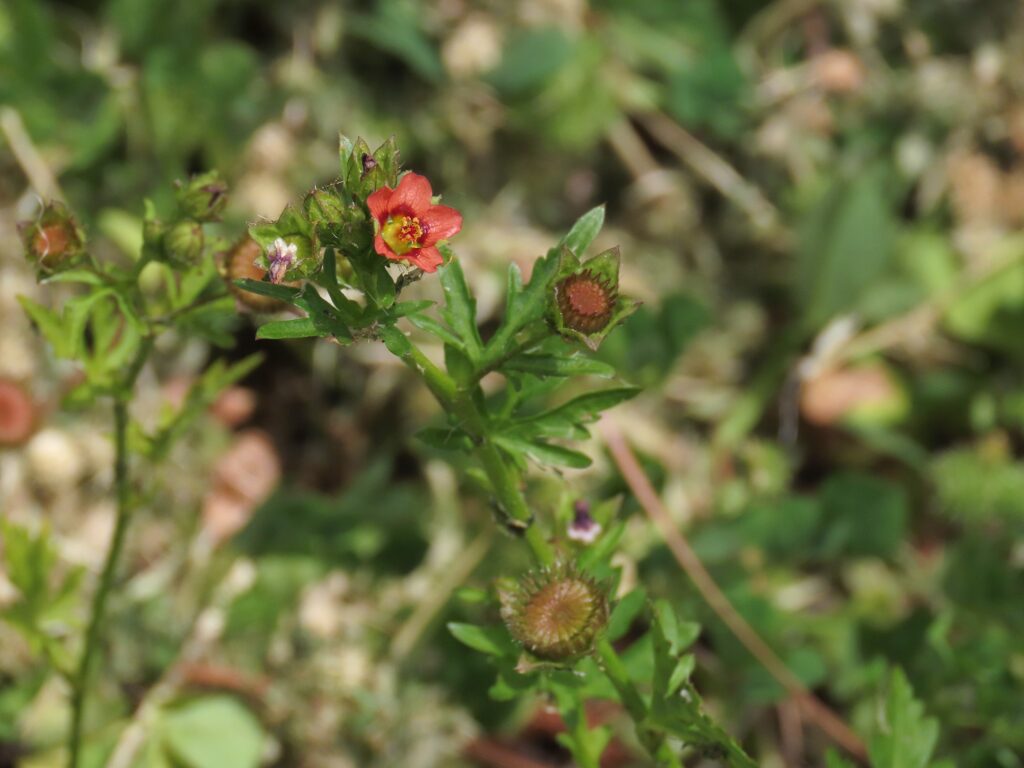
This week for Flora and Fauna Friday we have a miniature mallow, Carolina Bristle Mallow (Modiola caroliniana).
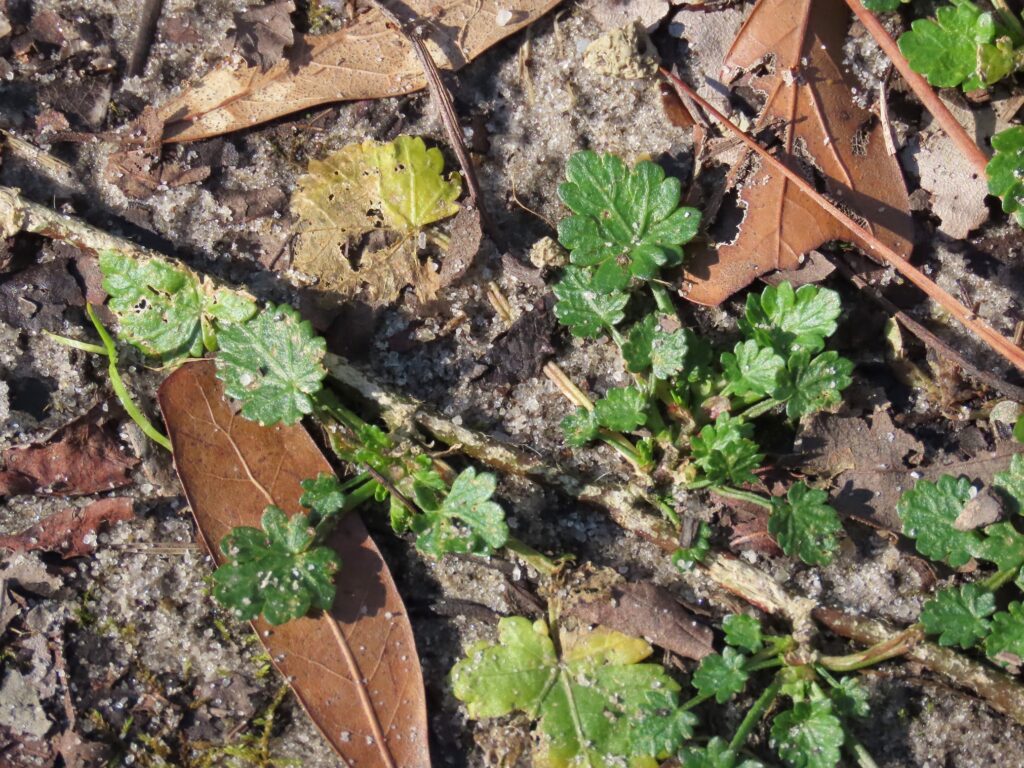
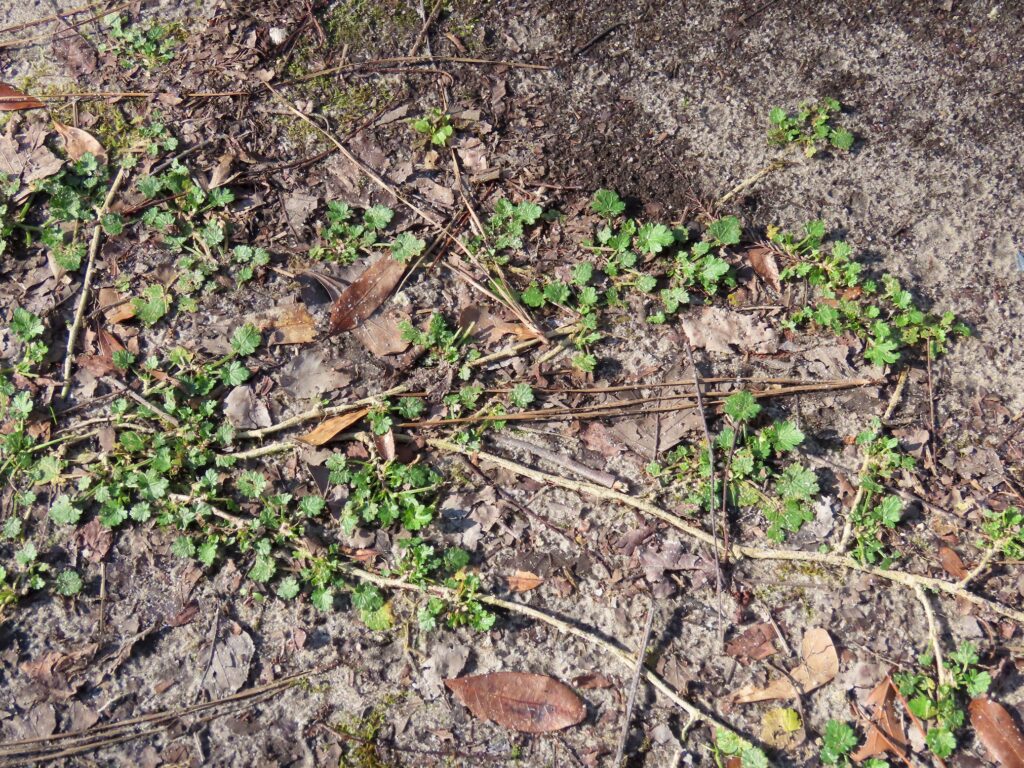
Carolina Bristle Mallow is a perennial wildflower that flattens itself across the ground with a prostrate growth form. As the common name implies, it is indeed a Mallow and it has many of the typical characters one expects from that lineage. It has emerald-green, inch-wide leaves with coarsely serrate margins and usually three to five lobes in an overall palmate-shape that is quintessential to Mallows. Its stems and leaves are covered in hairs. Its foliage can serve as the host plant for a handful of native butterflies, chiefly the 3 species of Checkered-Skipper (Burnsius spp.) found in the Carolinas. Carolina Bristle Mallow blooms throughout April with a small, 5-petalled, bowl-shaped flower coral-pink in color with a yellow center ringed in crimson. Its flowers mature into a flattened fruit of a dry capsule containing about 1-2 dozen seeds.
Carolina Bristle Mallow is most often found interspersed in lawns, along roadsides and trails, on parking lot margins, in agricultural fields, and about other disturbed areas dominated by sparse, low growing vegetation. It can be encountered throughout the southern US but is rather sporadically scattered around the landscape. Despite the “Carolina” in its common name, Carolina Bristle Mallow is more than likely an adventive species from South America that hitched a ride across the hemisphere on the coattails of humans. Carolina Bristle Mallow is a fairly innocuous herb here today in the Lowcountry that rarely, if ever, causes an issue in our natural landscapes. Thus it falls squarely into the “naturalized” bucket and doesn’t achieve that infamous entitlement of “invasive” species. Most often, it’s found making bedfellows with the other non-native herbs and grasses that have come to dominate the botanical witch’s-brews of suburban and urban landscapes, where the harm is already done and only the plants most tolerant of the mower deck can persist.