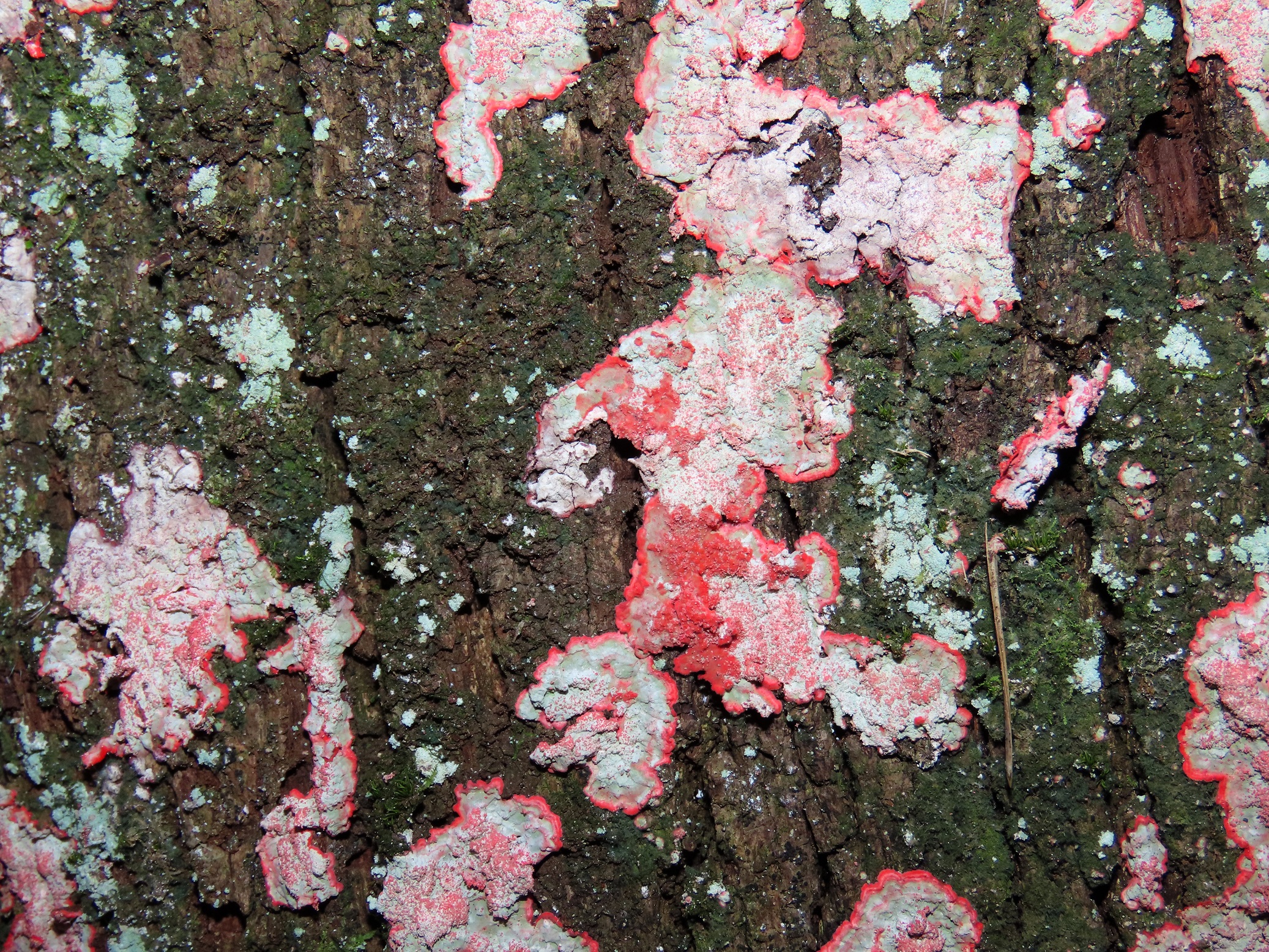
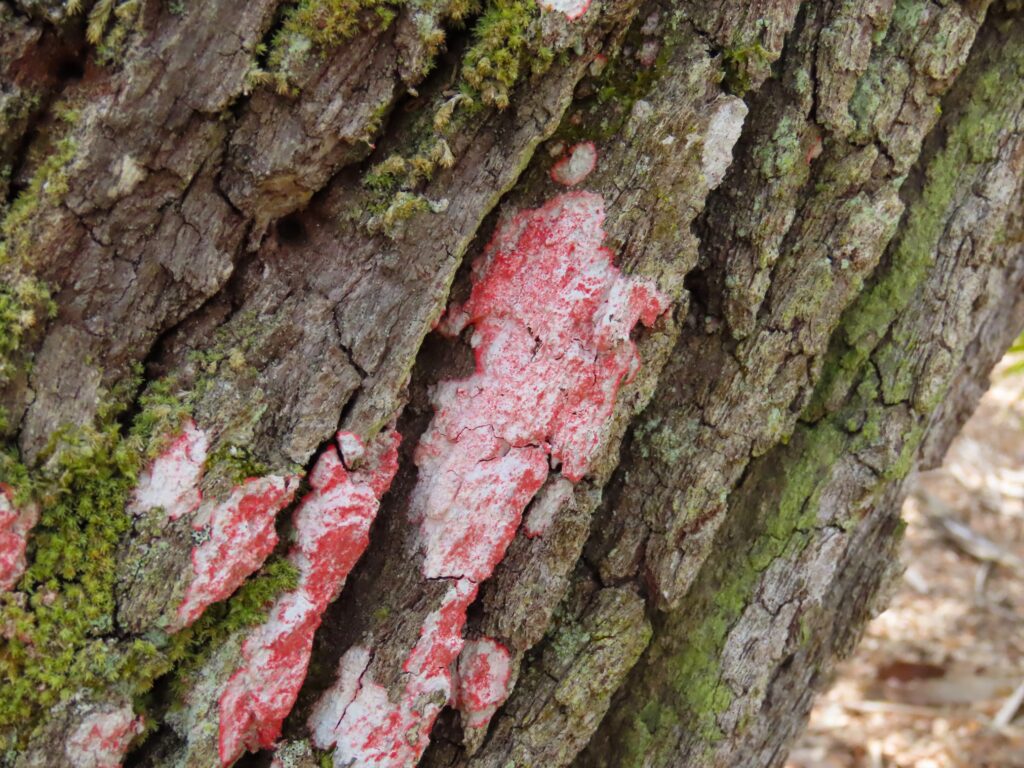
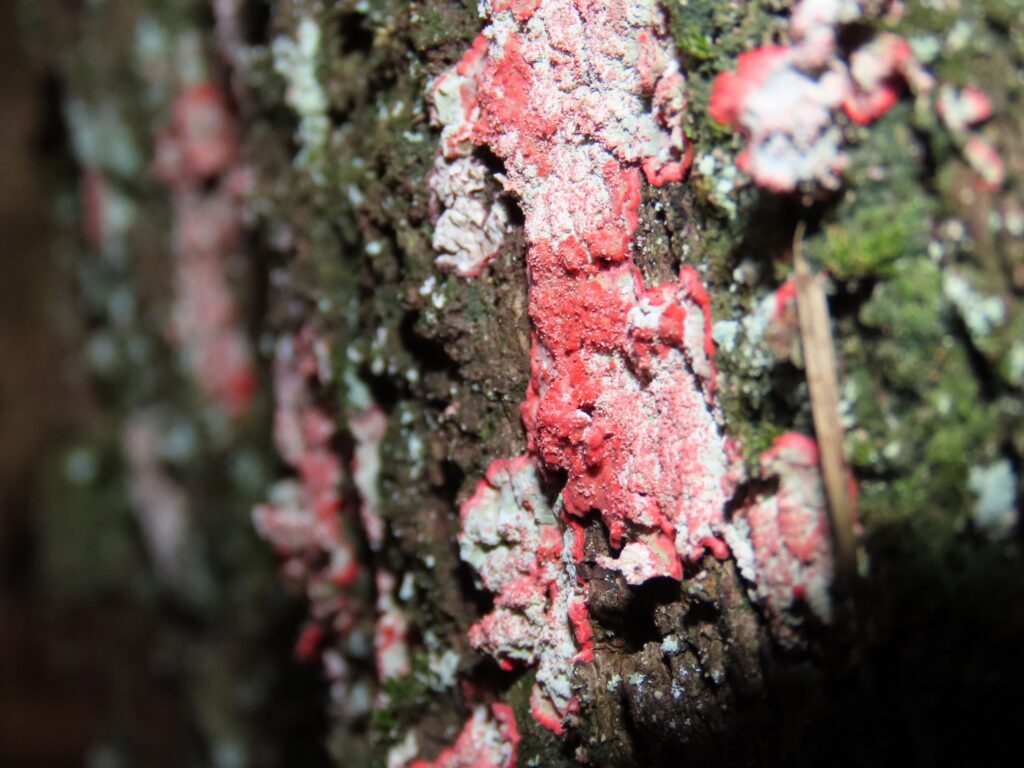
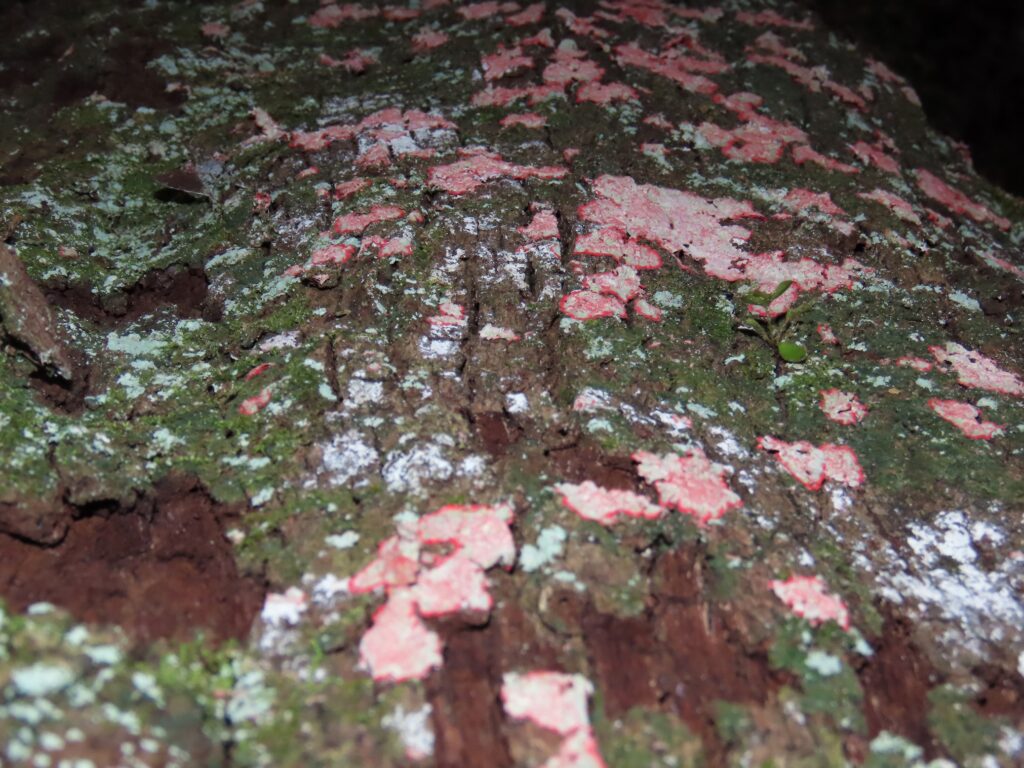
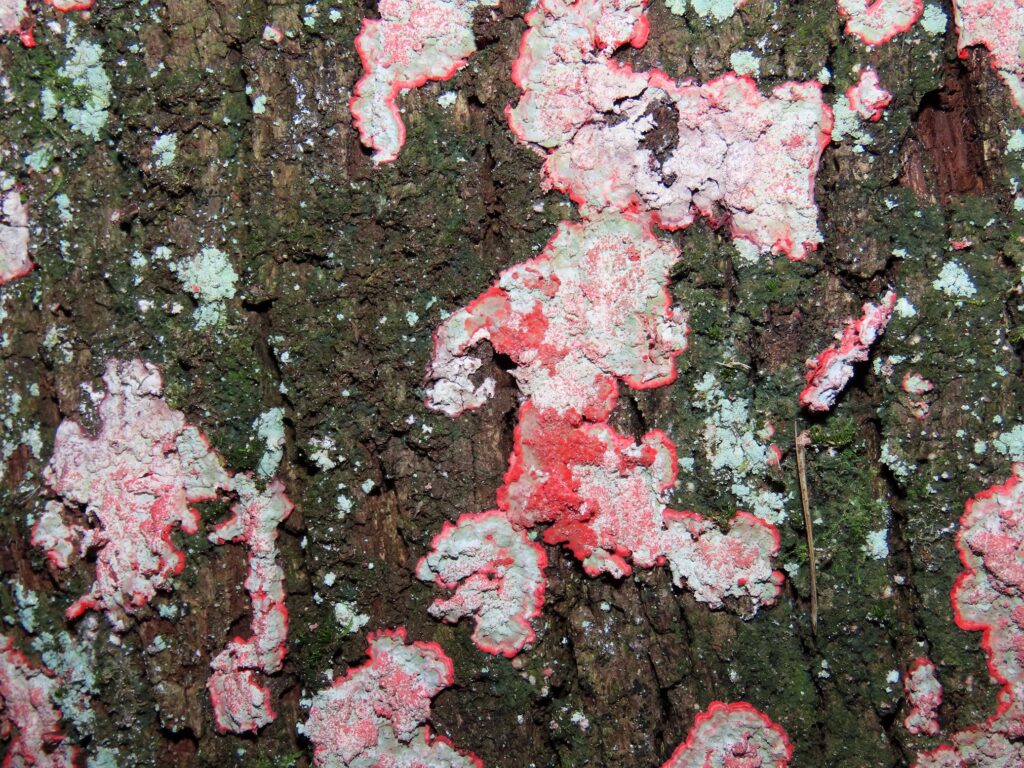
This week for Flora and Fauna Friday, we’re getting to know a delightfully festive fungus, the Christmas Lichen (Cryptothecia rubrocincta).
Christmas Lichen is found all along the coastline of the Deep South and across the Lowcountry. It’s a species that thrives in the humid and subtropical maritime forests of our Sea Islands. Christmas Lichen, like many lichens, is an epiphyte. It grows on the surface of a plant, using them as both scaffold and abode. Here on the Sea Islands, Christmas Lichen is most often encountered encrusting the bark of Live Oak, Water Oak, or Southern Magnolia limbs and trunks in deeply shaded forests, vying for real estate below the phoenix fronds of Resurrection Fern and between the swaying beards of Spanish Moss. Despite the oft crowded crowns of our maritime evergreens, it’s an easy species to spot. On smooth bark Christmas Lichen appears as a vibrant rose-red ring with a blush of red between on a palette of platinum-white, a clear and obvious bullseye for any eye to fall onto. On the blocky bark of Live Oaks, this pattern dissolves into a more uniform wash of white, like broad brushstrokes of paint, frosted with a dusting of rosy flakes.
Christmas Lichen is a fungus, but not just any fungus, it’s a lichen. Lichens are a special category of life. They are not one organism, but two unrelated walks of life, a fungus and an alga, living in deep symbiosis with each other. The alga photosynthesizes food and the fungus provides shelter and nutrition to the alga. We generally classify Lichens based on their fungal half, as it’s the organism we can actually see and measure, apart from variations in color and pattern. Lichens are almost always epiphytic and generally don’t produce “roots” (hyphae) into the surface they cling to. Lichens can grow practically anywhere and are extremely hardy to natural environmental extremes. Many grow on tree bark but others will grow on rocks and atop barren mineral soils. They absorb water from rain, dew, or fog and sponge nutrients from their surface, be that from detritus, dust, rain, or dissolved directly from raw rock. This epiphytic nature makes lichens extremely sensitive to air pollution. Many species, including Christmas Lichen, are almost impossible to find in urban areas and along major roads due to vehicle exhaust and smog. But in the secretive and shaded forests of Edisto Island, Christmas Lichen still provides a flush of hearty festive color to those who wander our woods in winter.