
This week for Flora and Fauna Friday we have the tiller in the turf, the Eastern Mole (Scalopus aquaticus).
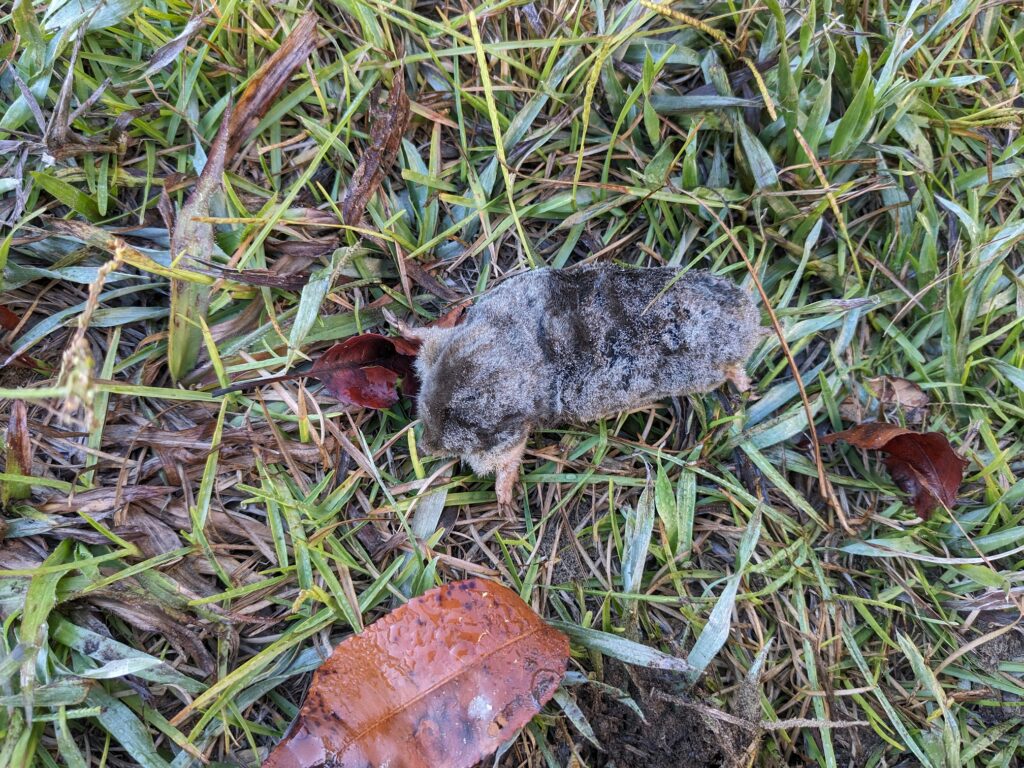
The Eastern Mole is a small mammal, about the size of a small rat. It belongs to a rather small order called Eulipotyphla, the “True Insectivores”, which contains Shrews, Hedgehogs, and Moles. The Eastern Mole is found across the eastern United States and throughout all of South Carolina. They inhabit a wide range of habitats from fields to forests to lawns but generally prefer sandy soils. They subsist on a diet of underground invertebrates, especially beetle grubs, earthworms, crickets, termites, and cranefly maggots. Eastern Moles are nocturnal and also fossorial, spending their lives almost entirely underground. They are covered in a dense coat of short dark brown-gray fur from head to stubby tail, excepting their hairless pink pointy nose and broad feet.
Eastern Moles have a suite of adaptations for life underground. They lack any visible eyes or ears. Eyes are near useless liabilities in the pitch black below ground. So the eyes of the Eastern Mole have shrunk and their eyelids fused shut over them. Their ears are still present and have limited function but, similar to a bird’s, Mole ears lack external features and are hidden under their fur in order to keep their body streamlined and sand out their ear canals. What our Moles lack in sight and sound, they compensate for with touch and smell. They have a highly refined sense of touch that allows them to feel both the footsteps of approaching predators and the echoes of burrowing insects. They also have an acute sense of smell for parsing out the paths of potential prey crisscrossing through the soil. For locomotion, the Eastern Moles possesses a pair of large paddle-shaped front paws that they use to swim through the earth. Their bodies are also torpedo shaped, allowing them to readily tunnel through their tilth. Lastly, their short fur is dense, oily, water repellant, and can lie flat in any direction, which allows it to act like a lubricant to slide through the soil.
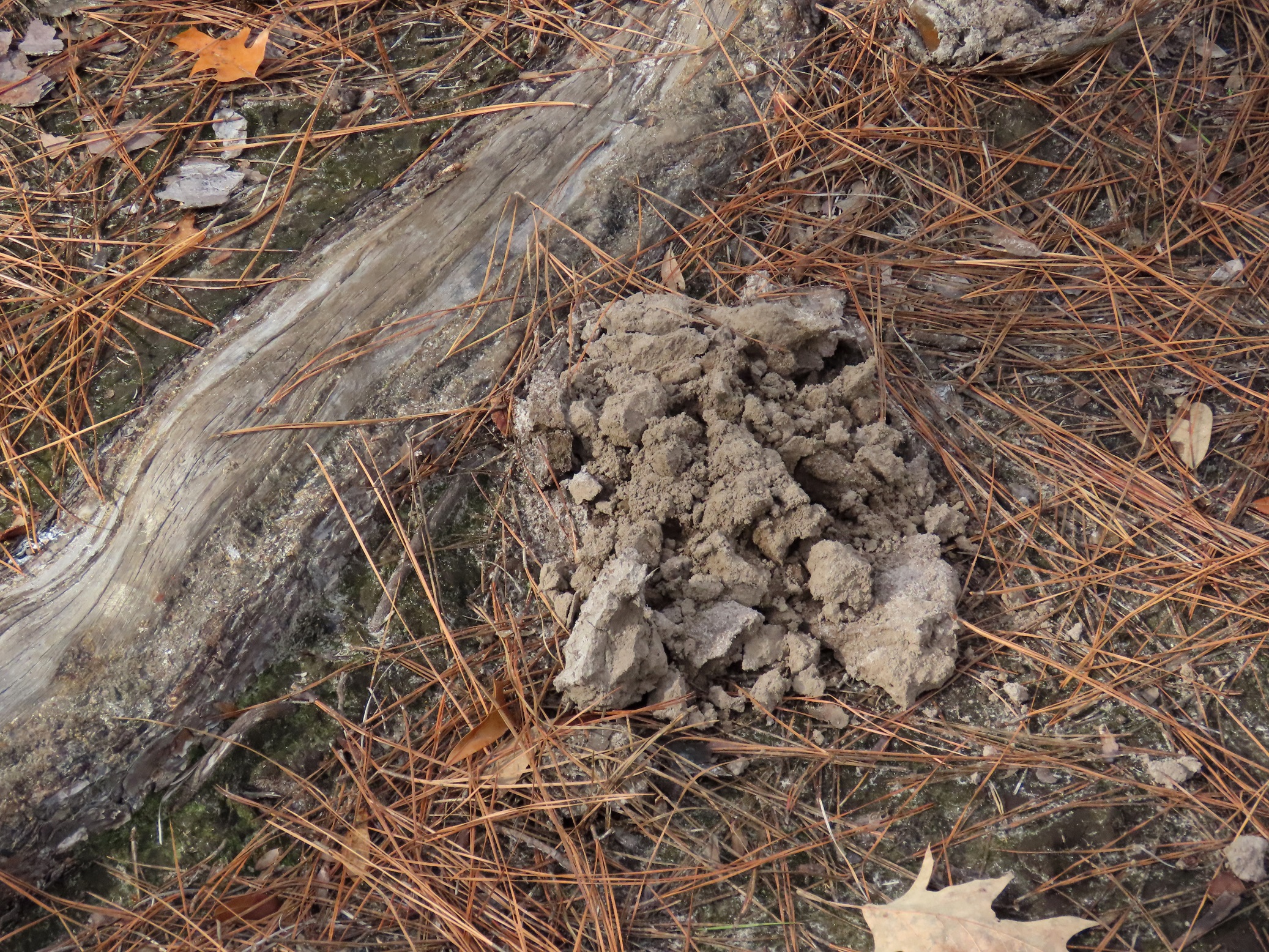
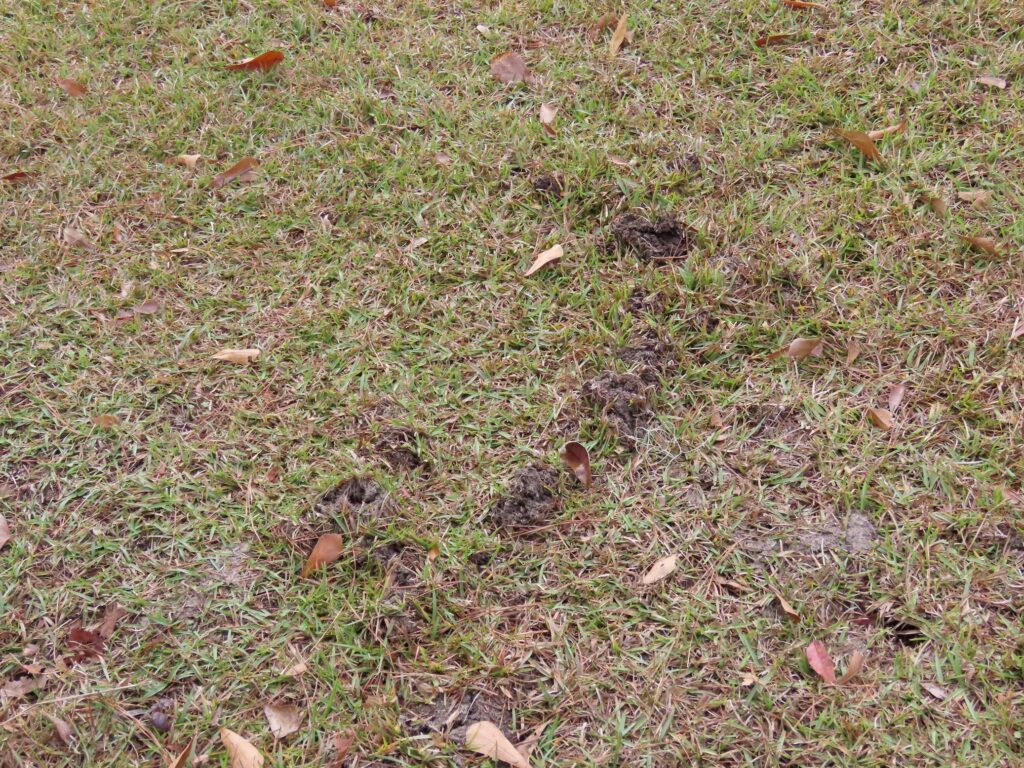
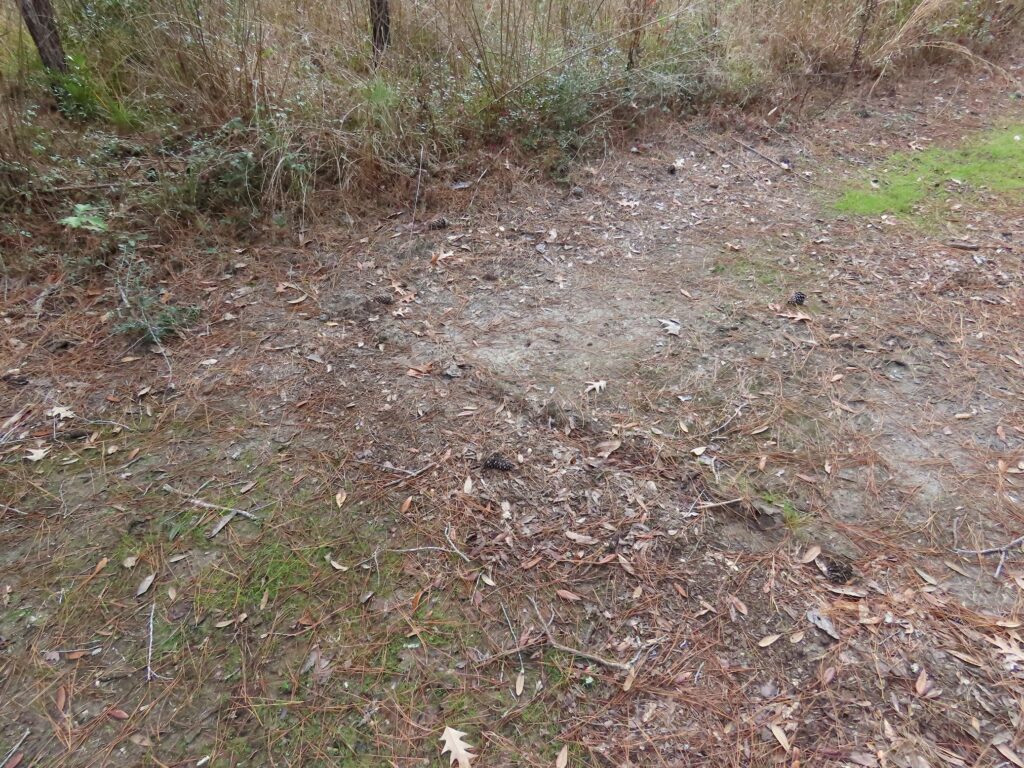
Seeing an Eastern Mole alive and above ground in the wild is an exceeding rare sight. Most often we only detect their presence through the arches and mole hills of dirt they push to the surface as they tunnel through the soil or when lovingly pitched on the doorstep by a family pet. Eastern Moles can inhabit a home range of an acre or more and will regularly return to the same areas and tunnels each night on nightly rounds in search of food. They often show up under bird feeders, not in search of seed, but following the detritivorous insects who chow down on the waste seed hulls beneath. Moles can become a pest to those who like to keep a neat lawn, as they leave raised burrows in their wake when tunneling through topsoil. However, I assert that such lawn enthusiasts are just making mountains out of mole hills. Eastern Moles are actually beneficial to soil and lawns in the long run, as they aerate compacted topsoil, improve water infiltration, and help keep turfgrass pests, like cranefly (Tipula spp.) and may beetle (Phyllophaga spp.) larva, under control. Moles also serve as an important link in the food chain, being a food source for bobcats, foxes, coyotes, and other small predators, and play a role in proper nutrient cycling, as they help sequester nutrients deeper into the soil, further improving soil health and water quality. Moles are a fascinating facet of our local ecology and a good neighbor to have if you like to keep a bit of nature close to home.