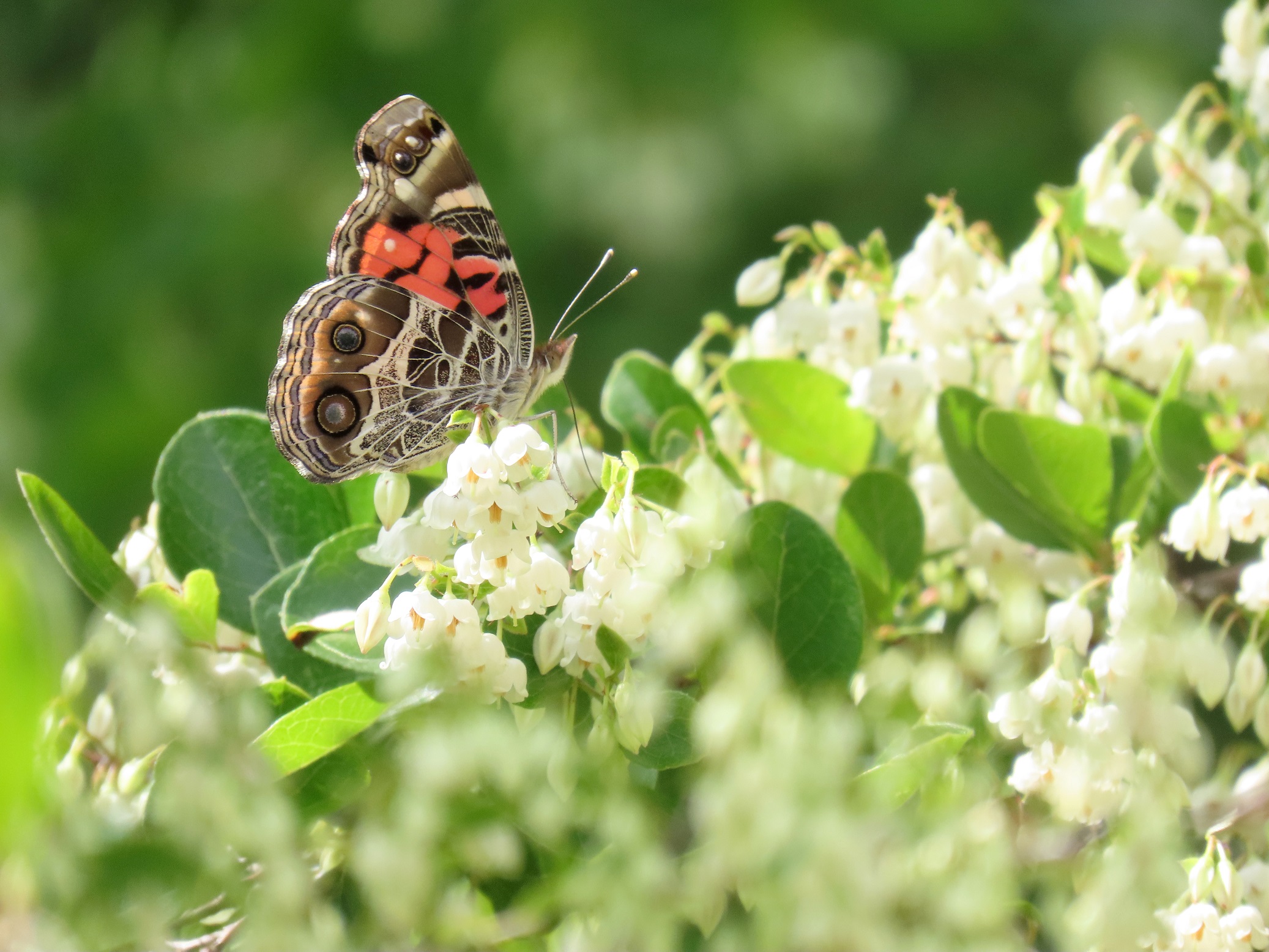
This week for Flora and Fauna Friday we have a pair of feminine flutterbys that share their face but live worlds apart, the Lady Butterflies (Vanessa spp.).
Here in the Southeast we have three species of butterfly in the genus Vanessa: the American Lady (Vanessa virginiensis), the Painted Lady (Vanessa cardui), and the Red Admiral (Vanessa atalanta). Today we’ll be giving the local Ladies their due attention, and we’ll host the Admiral for conversation at a later date.
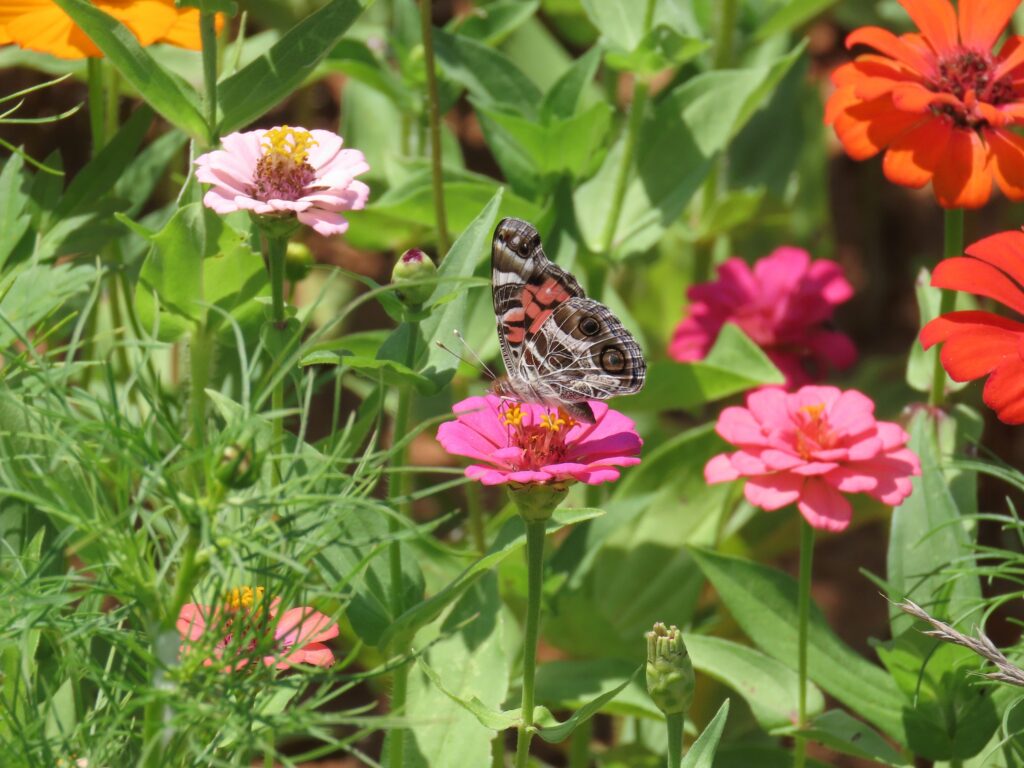
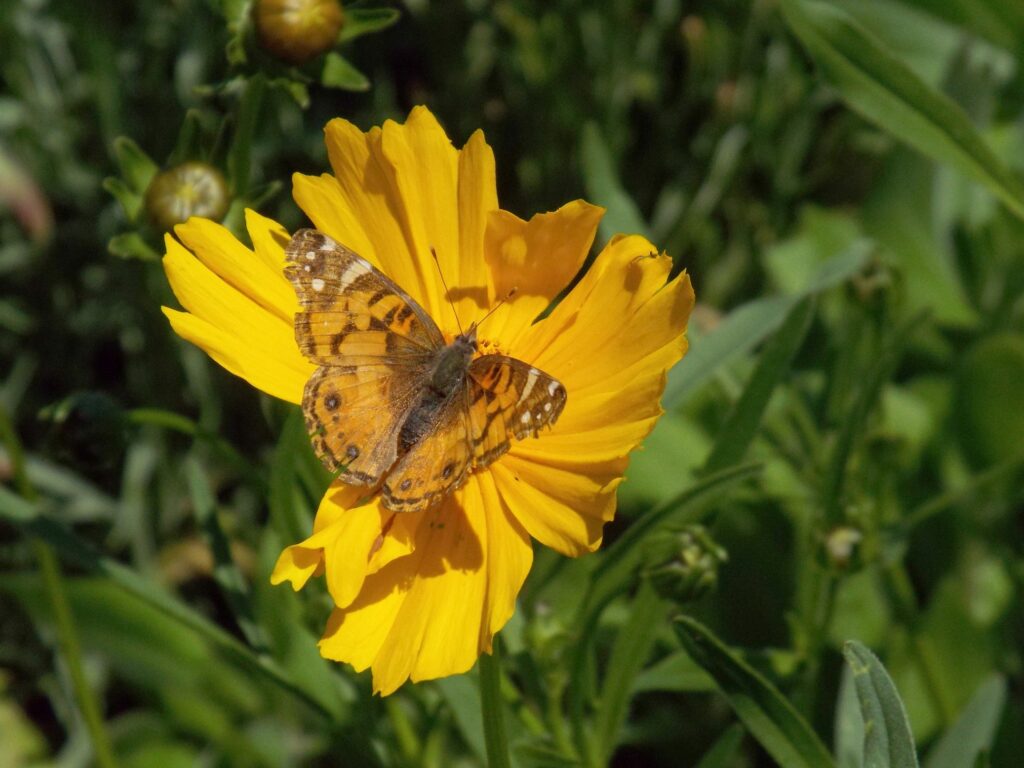
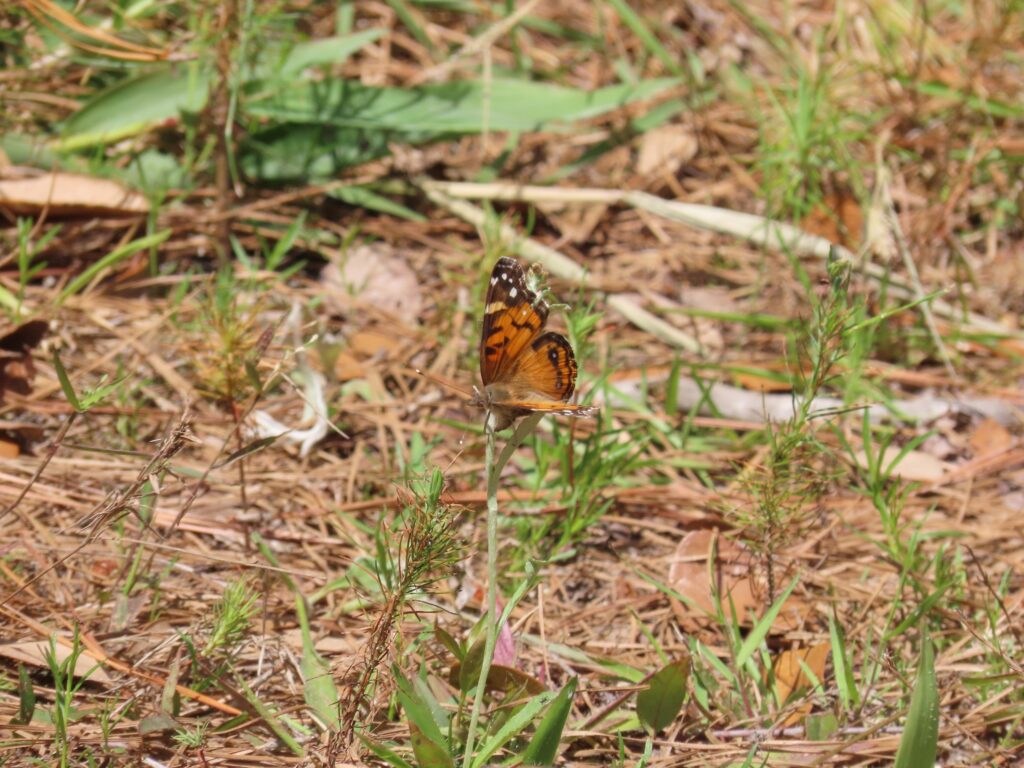
Both the American Lady and Painted Lady are well traveled throughout the Southeast and can be encountered most anywhere in either of the Carolinas. They are often found in open, sunny areas such as field margins, forest edges, brushy lawns, roadsides, meadows, and prairies. Ladies are members of the diverse Brushfoot family, Nymphalidae, and share many of its familial traits, like standing on only four feet, having elongated forewings, and being equally likely to perch with wings either outstretched or tucked upward. Both butterflies have a wingspan of two to two-and-a-half inches and share the same wardrobe. With wings folded, they are predominantly a cryptic pattern brown and white with black accents, but with a hidden wash of salmon-pink on the forewing. With wings unfurled, they are mainly a warm-orange around the body but with black forewing tips peppered with white spots and four small dark spots at the edge of the hindwing.
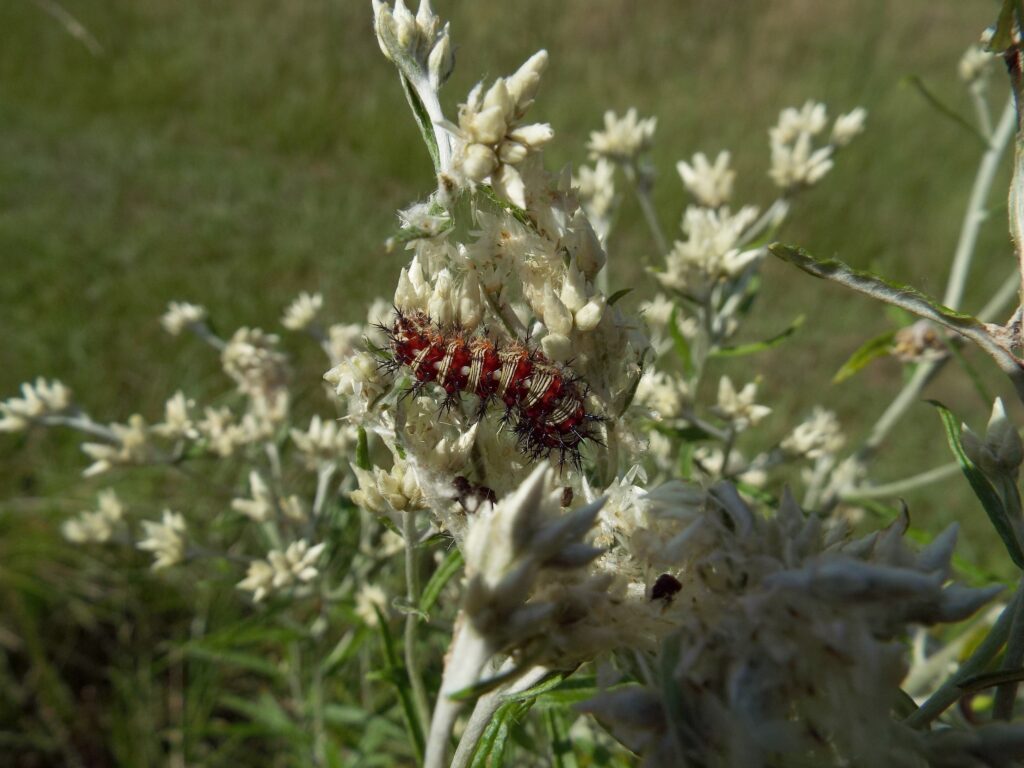
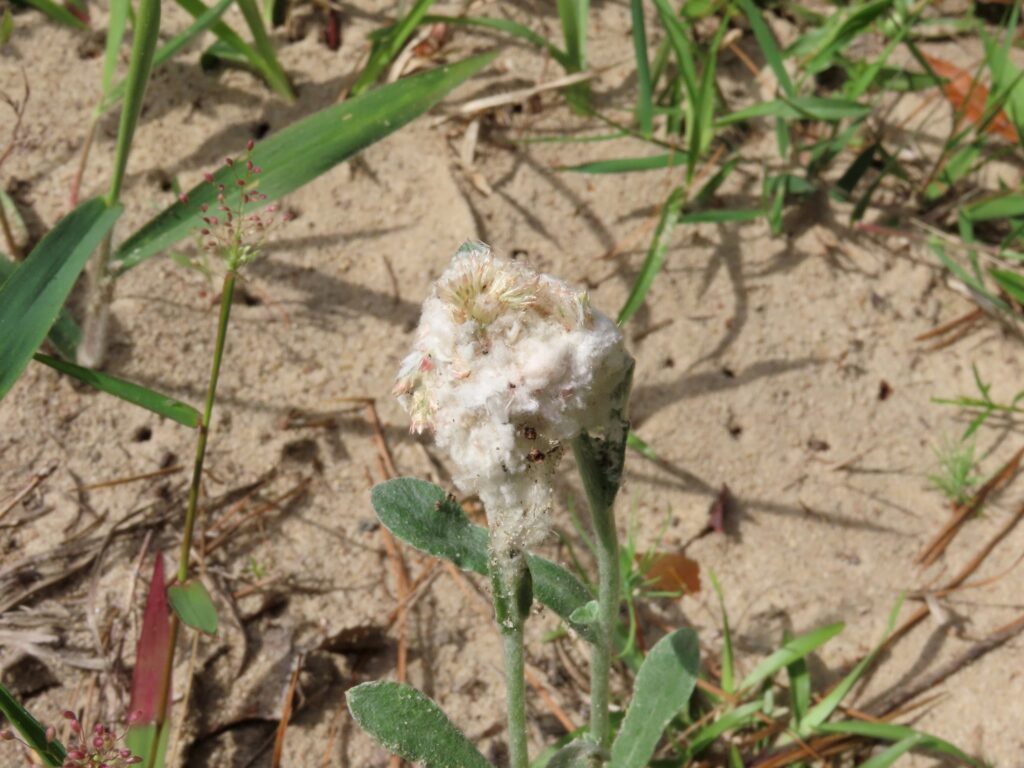
To be more specific, the American Lady is the more widespread and abundant of the two here in the Lowcountry. They begin to fly at the doorstep of spring and can be encountered all the way into December. Their caterpillars host on a handful of low-growing annual wildflowers, most often Rabbit Tobacco (Pseudognaphalium obtusifolium) but also Cudweeds (Gamochaeta spp.) and Annual Trampweed (Facelis retusa). Their caterpillars are strikingly colored with alternating bands of bone-white pinstripes or a calico of black, white, and cinnabar-red and with each of those red blotches bearing a black jagged thorny spine. Their caterpillars have a unique way of feeding too. They’ll bend the tip of a flower stalk or twig from their host plant over and tie it back onto itself before encapsulating the arch in silk, to form an upside-down sleeping bag for themselves. The caterpillar will hide inside for protection and emerges only to feed on foliage and flower buds, often in the morning. Adult butterflies of both species look very similar but can be told apart with either wings closed or spread. With wings open the differences are subtle. On the American Lady, look for a small white dot in the center of the top orange cell on the edge of the forewing. With wings open, that same spot may also be visible but look instead to the hindwing where you’ll find two large eyespots and an obvious jagged white band across the whole hindwing.
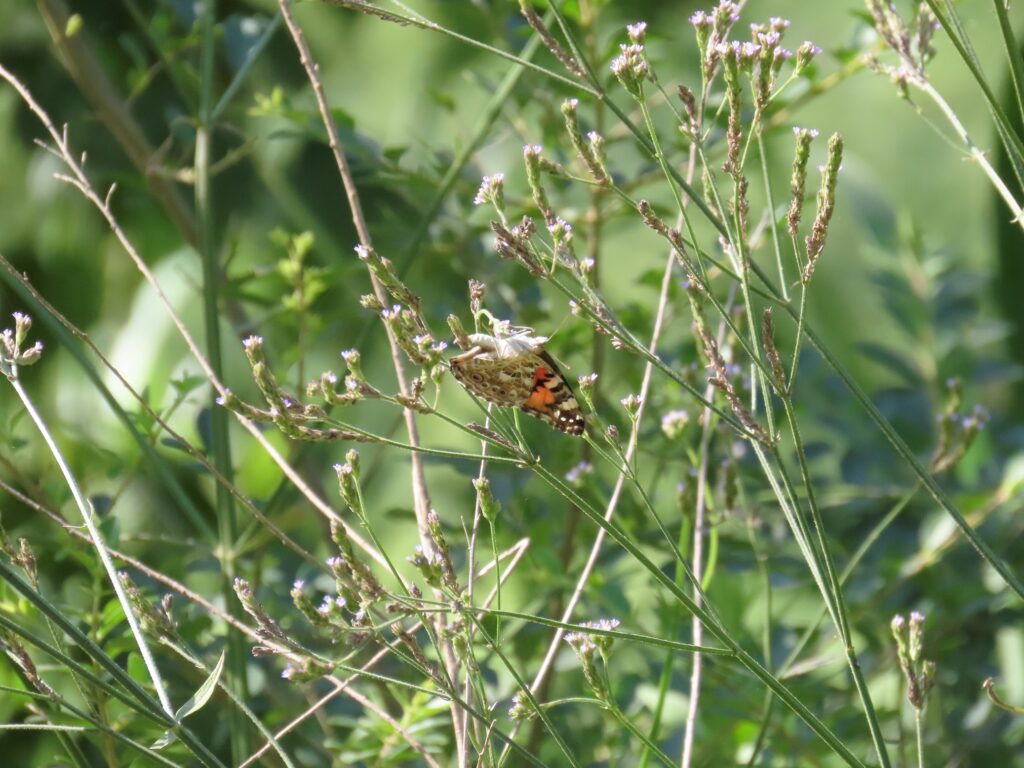
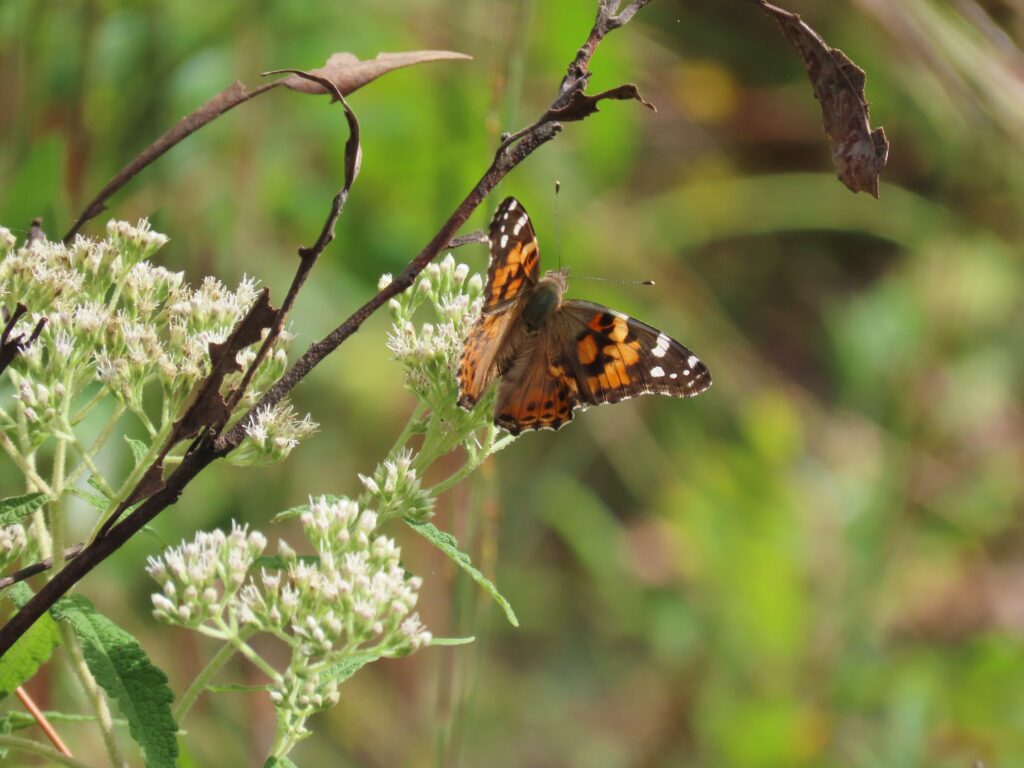
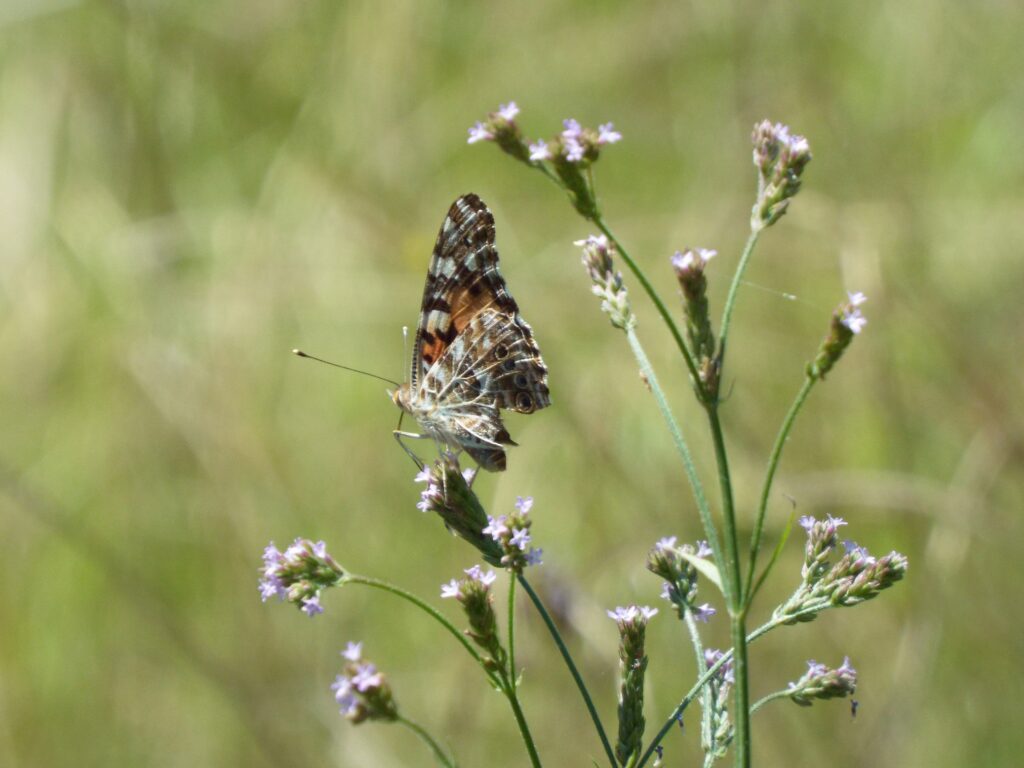
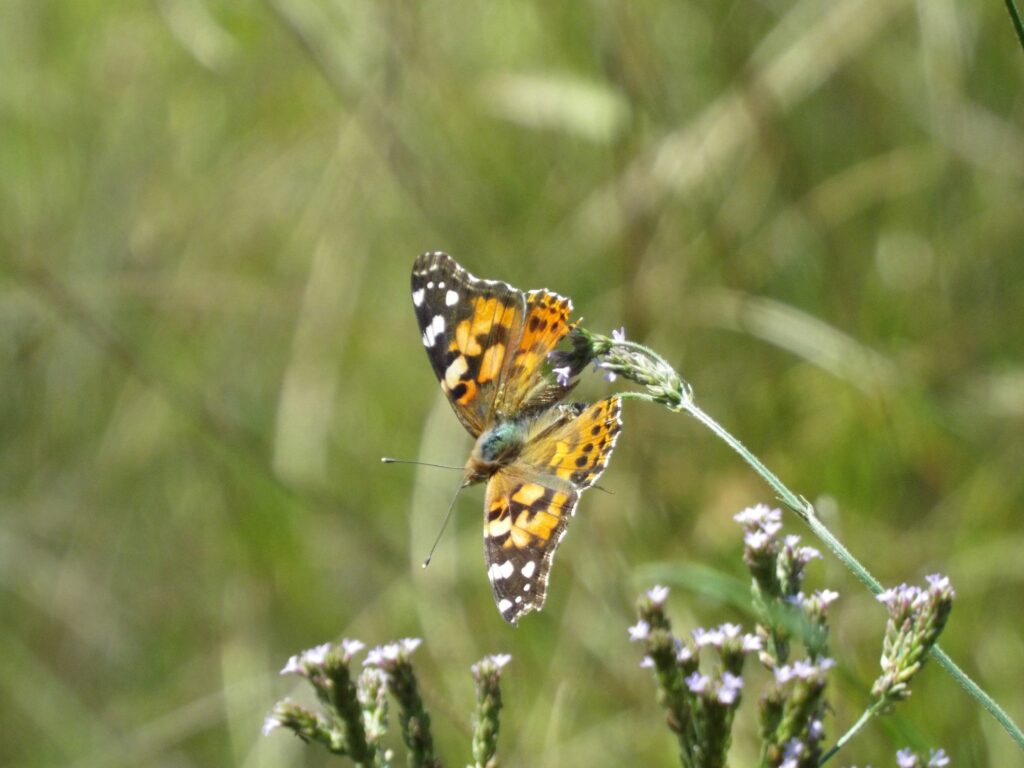
The Painted Lady is a cosmopolitan species, being found across Europe, Asia, Africa, and North America. They are not frost hardy. So their core populations are found only in the tropics. To compensate for this limitation, they are a tropical migrant. Tropical migrants are butterfly species that overwinter in the tropics but migrate north into temperate regions in the spring and summer to take advantage of a much larger territory, before retreating towards the equator in fall. This is an arduous but not uncommon strategy employed by many of our “local” butterflies and takes multiple generations to complete the circuit in a year. As a tropical migrant with a regional core population in Mexico and the Caribbean, the Painted Lady is more sporadic in its abundance. It is most often encountered in South Carolina from August through October, as its abundance swells across the United States in summer and northeastern butterflies fly south to escape the winter. This species has a propensity for getting a wild hair of wanderlust too. Painted Ladies will be swept up in the trade winds of the Atlantic and have been flung to nearly every remote island in the Atlantic Ocean at some point, and some with great regularity. This is almost assuredly how their North American population was established. The Painted Lady’s caterpillar hosts on Thistles (Cirsium spp.) most often and they also form a silken sleeping tent from their host’s foliage up above the ground. Their caterpillar is just a spiny as their American sister but is more variable in their coloration. Sometimes they’re mainly black with yellow and orange accents, sometimes they’re a frosty-gray with orange bands, and other times they’re a custom palette somewhere in between. The adult Painted Lady butterfly lacks the white spot on the outer center of the forewing, which is seen in the American Lady. On the underside of the hindwing they have four eyespots on the outer edge, with the inner two being about half the size of the outer two, and their overall wing pattern is a uniform cobweb of white on brown with no obvious bands. Further, their overall coloration below tends to be a warmer brown and the color showing on their forewing tends to be closer to orange than pink.