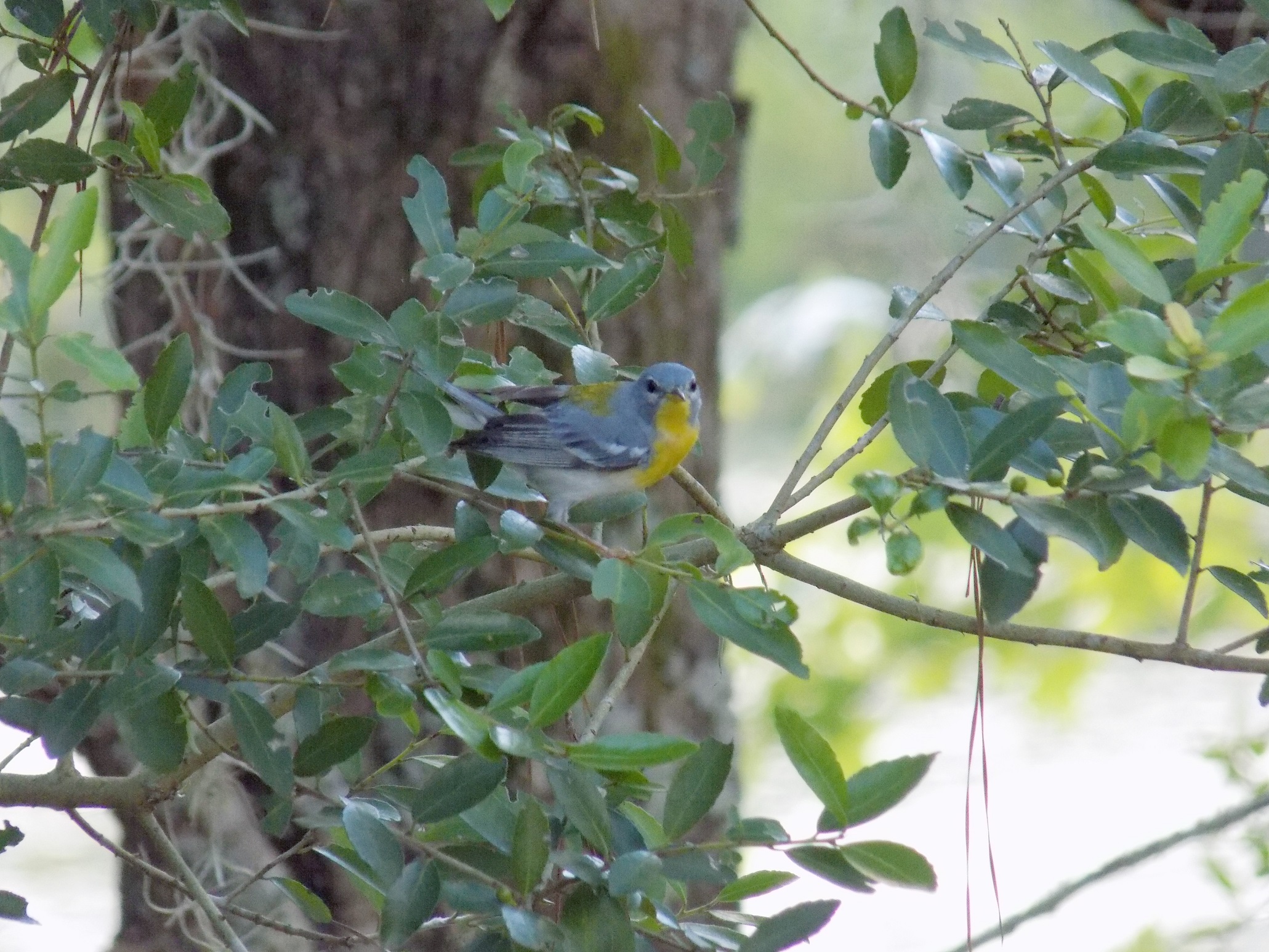
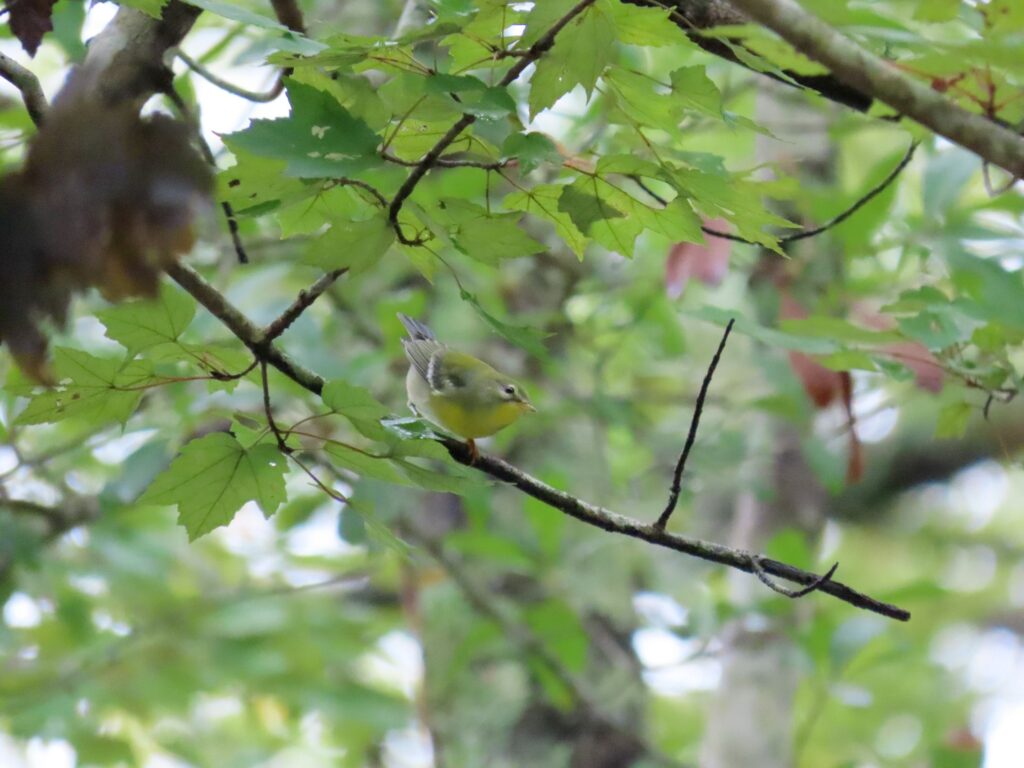
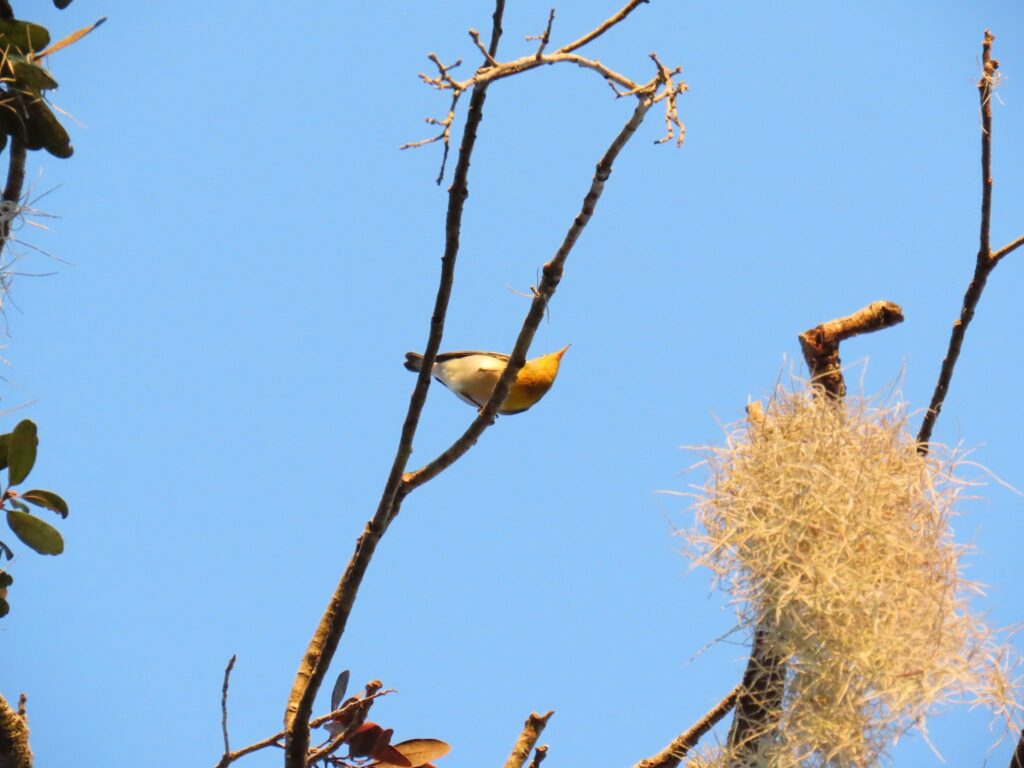
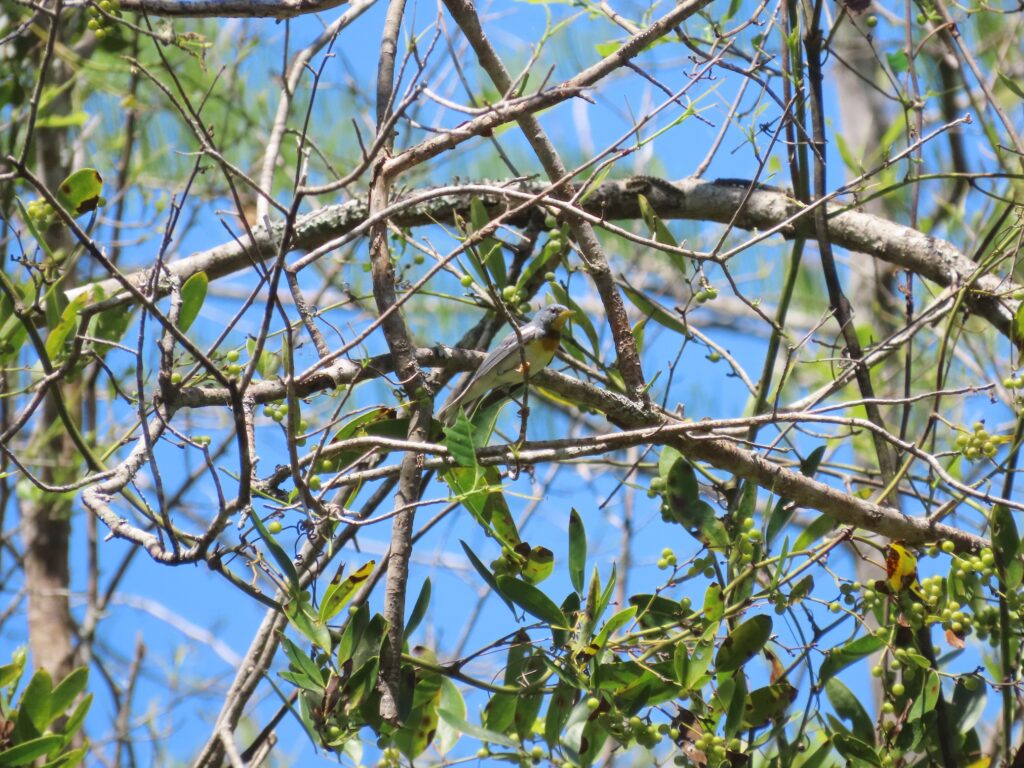
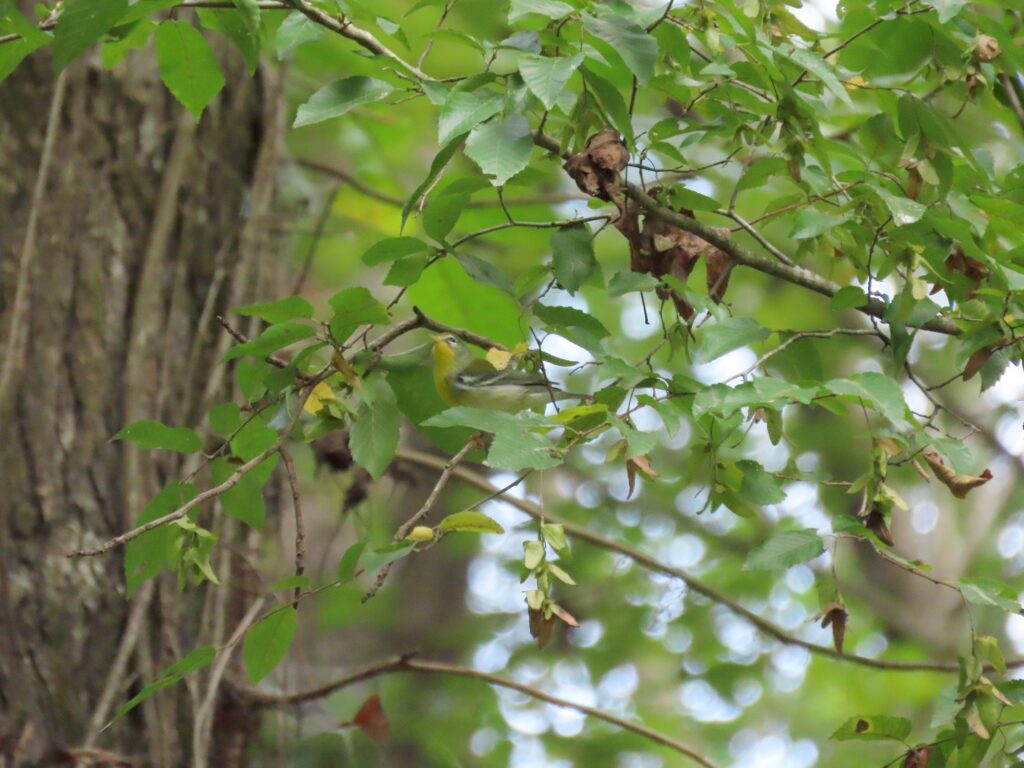
This week for Flora and Fauna Friday we have our skyward soprano songster of summer, the Northern Parula (Setophaga americana).
The Northern Parula belongs to the Wood Warblers, family Parulidae, and is one of thirty-six species of warbler, give or take depending on how you count, that can be spotted here in South Carolina. Further, it is also one of only about a dozen species that consistently nest in the Lowcountry each year. The Northern Parula is very abundant and can be seen across not just the whole of South Carolina each summer but nearly all of the Southeast. They are most abundant in hardwood and maritime forests, especially the maritime forests of the Sea Islands and the floodplain and bottomland forests of our Lowcountry river systems. Here they nest in the abundant Spanish Moss strewn throughout the trees and forage for insects and spiders nestled within the interlocking crowns of the forest canopy. Because they spend so much time up in the treetops, Parulas are heard much more often than they are seen. Yet they still fairly regularly drop down to the midstory, especially in maritime forests, to forage for sustenance as well as to gawk and squawk, alongside alarmist wrens and tits, at any shady character that happens to stroll by below.
Warblers, overall, are a highly varied and diverse clade of small songbirds. Each species has its own unique song and plumage, and often a distinct plumage between males, females, and immature birds. This has brought the family much admiration, and ire, from bird watchers for their beauty and complexity.
The Northern Parula is, blessedly, one of the easier species to identify by both sight and sound. Males are white beneath with orange legs. Above they don a rich blue-gray cowl, back, tail, and shoulders but with a brassy greenish-gold mantle between their wings. Their wings show two bold white wing-bars. Their eye has a partial white eye-ring with a black smudge between it and their two-tone bill. Their most prominent feature is a golden-yellow throat and breast divided by a necklace of orange-bronze. Female and immature Parulas both look much the same in pattern but show a neutral gray above, possess a greenish-yellow wash to their crown, ditch the bronze necklace, and have a more washed-out-yellow breast and throat. The song of the Northern Parula is quite distinct as well, a rising, high pitched trill, sometimes wavering, that crescendos with a single emphatic note.