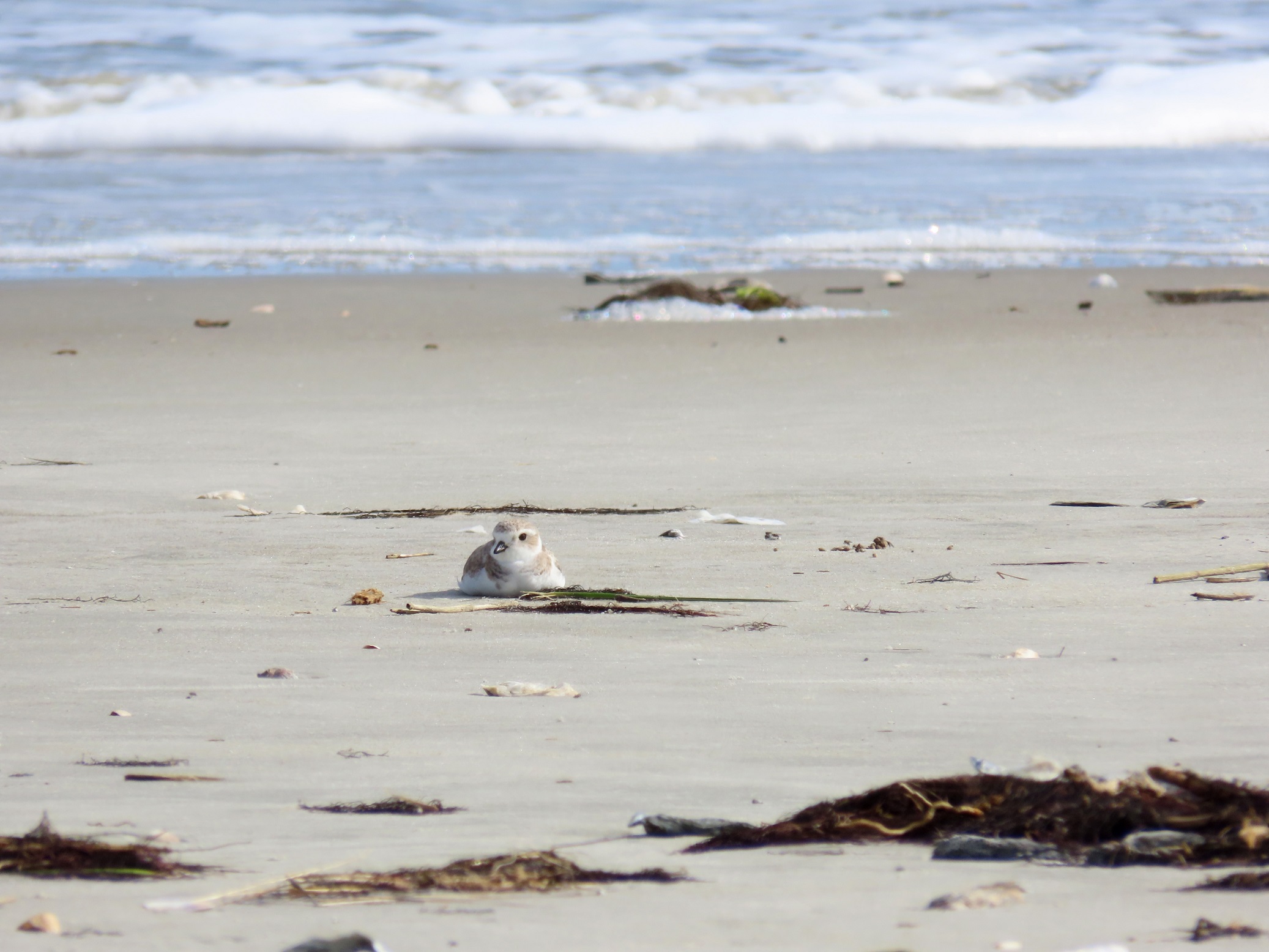
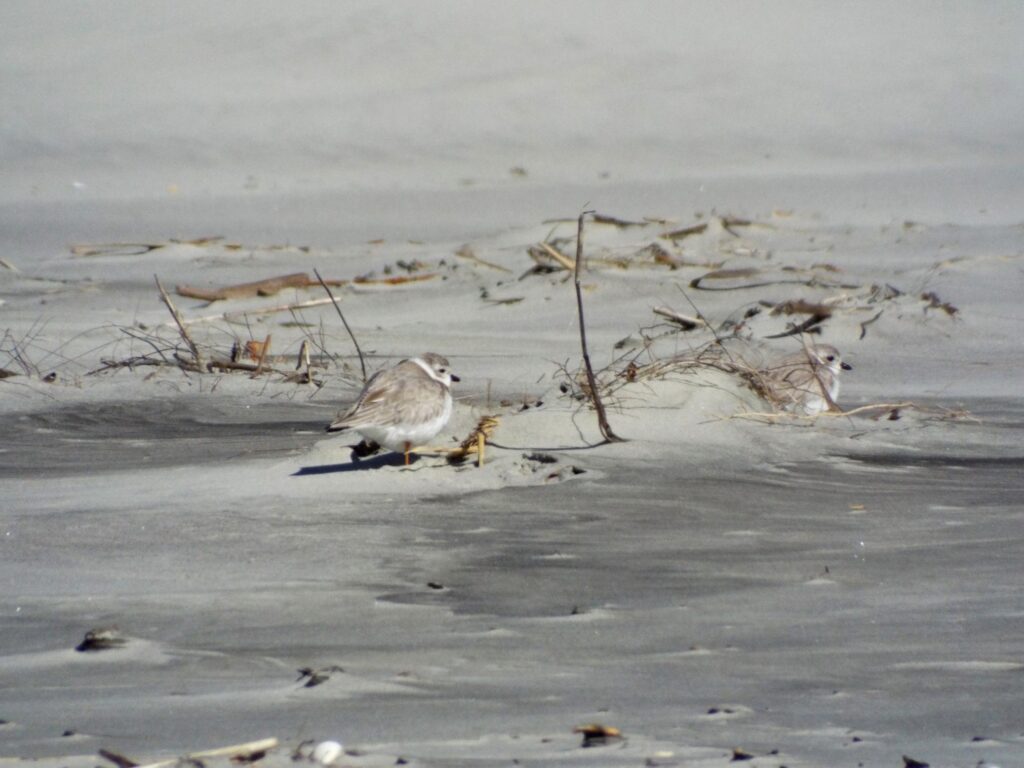
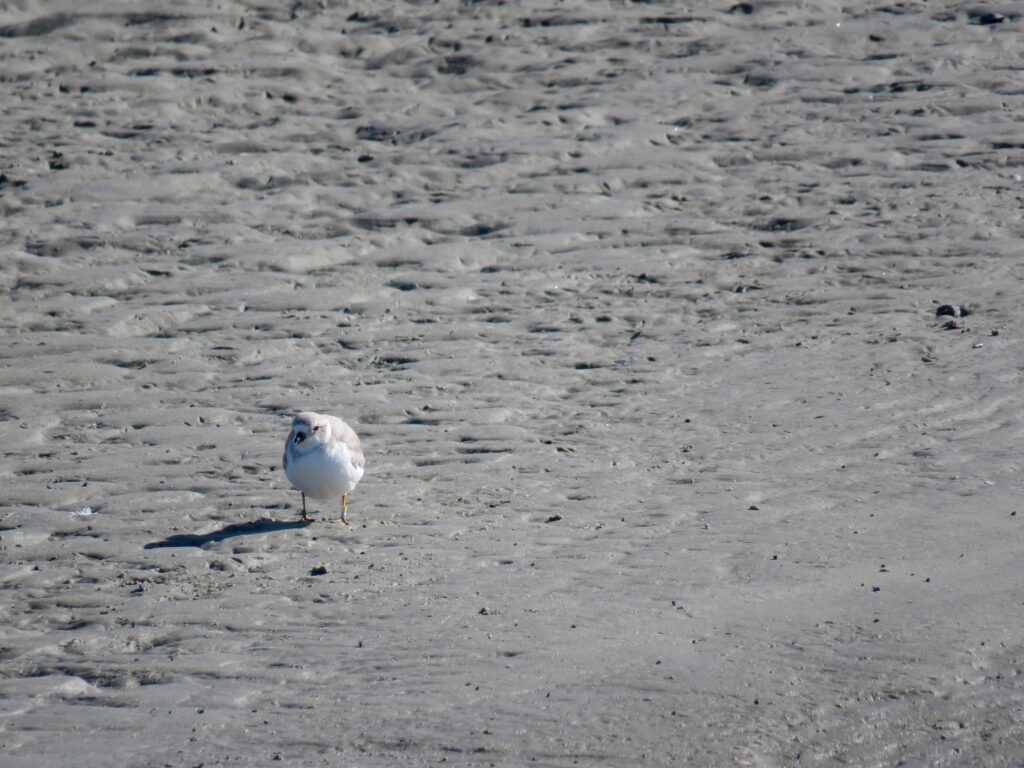

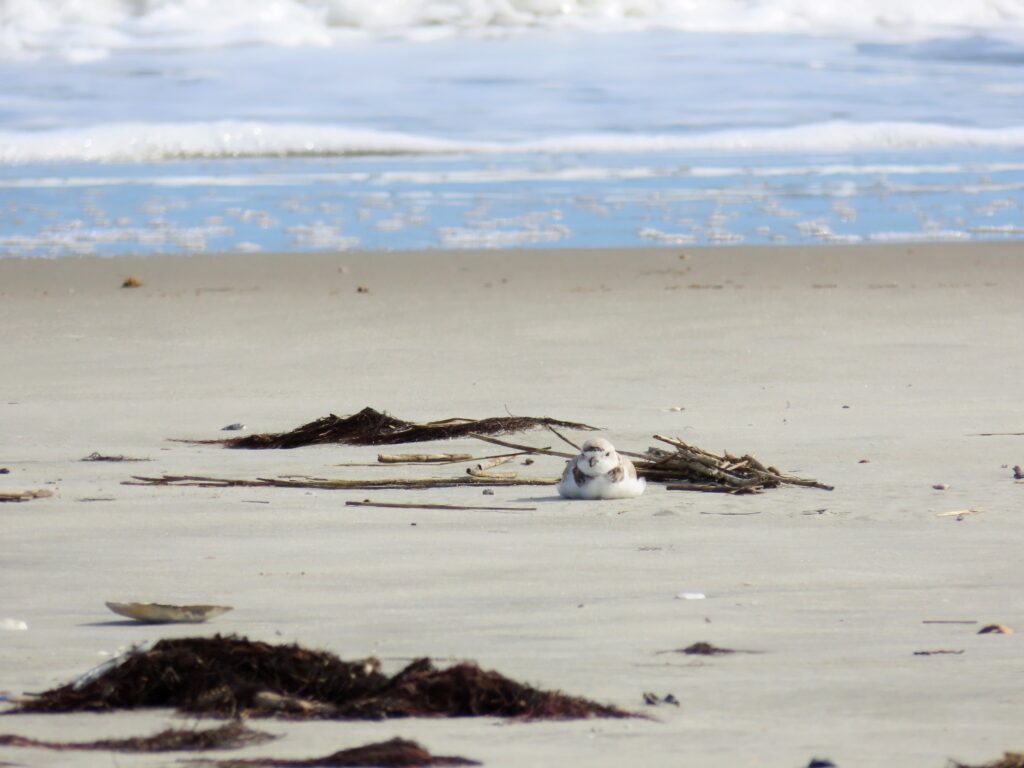

This week for Flora and Fauna Friday it’s a bird on the brink, the Piping Plover (Charadrius melodus).
On the edge of the world lives a bird without a place. An animal that thrives where old becomes new, where the past and future ever intermingle into the twisting, roiling present. It’s a liminal space, a subduction of place. Upon this shifting land of sea and sand persists a piper at the gates of dawn: the Piping Plover.
The Piping Plover is a small shorebird found all along the East Coast of the United States. Piping Plovers spend their summers on the beaches north of the Carolinas as well as the shorelines of lakes in the northern Great Plains and the Great Lakes. Come winter, they fly south to the beaches of both the Gulf Coast and the East Coast, up into both Carolinas. Here on the South Carolina Sea Islands, Piping Plovers are a scarce bird to sight but not hard to recognize. Like our other Plovers, they prefer to hold a perpendicular posture and pace in pulses between pecking, picking, and pulling polychaetes and other sundry invertebrates from the sand. Piping Plovers look much like our resident Semipalmated Plover (C. semipalmatus). They have a white belly, orange legs, black eyes, petite bill, and a compact body of similar size. However, their back is a far paler beach-sand-tan and the normally black band across their breast a similar shade in winter. This provides them excellent camouflage on our windswept winter beaches. Yet they’re hard to see not just because they blend into the sand, but because they are few and far flung across the beaches of our coast.
Piping Plovers occupy a very narrow niche here in the Lowcountry. They bide their time on only the youngest of our beaches. Most often their haunts are the northern points of barrier islands, where shoals drift south beneath the waves of an inlet to collide with the beachfront to birth new land. It’s a continuous cycle of sand rolling and flowing, building and eroding, a process powered by longshore drift that creates the most dynamic and chaotic environment in South Carolina. This ever-churning conveyor belt of sand creates a unique environment that fosters great biodiversity beneath the ground in the intertidal zone and has hence become the perfect hunting ground for the Piping Plover. As this environment is very rare within our Lowcountry landscape and, with not all our beaches being equal, Piping Plovers exhibit very strong site fidelity for both their wintering and nesting grounds. If they find a suitable winter home, they cling to it for dear life and will return to the same beaches year after year for their entire lifespan, if they can. This level of site fidelity makes them extremely vulnerable to coastal development, rising sea levels, and any major changes in sedimentation on our coast.
Thus, it may not be a surprise for me to tell you that Piping Plovers are listed as a federally threatened species range wide. Piping Plovers will return to the same beaches every year, even if conditions become unfavorable. This means they won’t relocate and chronic, low-grade disturbances can quickly mount into life threatening danger for the species. Here in South Carolina, they’re feeling pressure from all sides. The construction of the Charleston harbor jetties in the late 1800s fundamentally altered the volume and flow of sediment on our coastline south of Charleston. This has caused many barrier islands, like Morris Island and Edisto Island, to contract and heavily erode. In combination with this, rising sea levels over the last century have forced barrier islands to contract even further. At the same time, rapid coastal development throughout the latter half of the 1900s damaged the quality of much of their wintering habitat. The last few decades, the level of human disturbance on our winter beaches has increased dramatically here in South Carolina, providing little respite for the weary shorebirds clinging to our winter coastline. These factors all compound to squeeze many of our other shorebirds into a life on an ever more narrow slice of land. For a species like the Piping Plover that naturally resides on the very brink of the earth, its perch on this precipice is particularly precarious. Today, they are scarcely seen along our coast and often only found on the most remote of barrier islands.