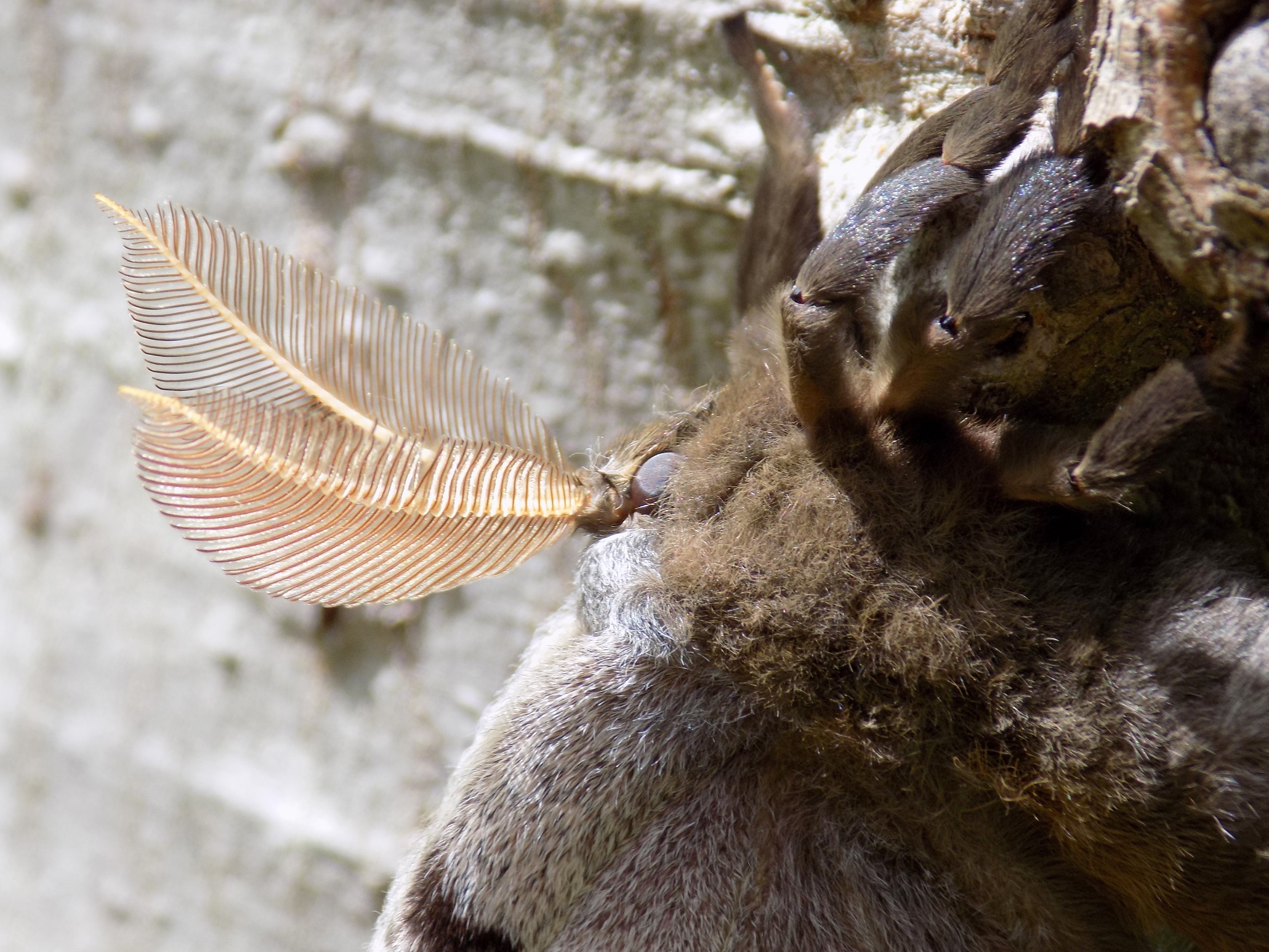
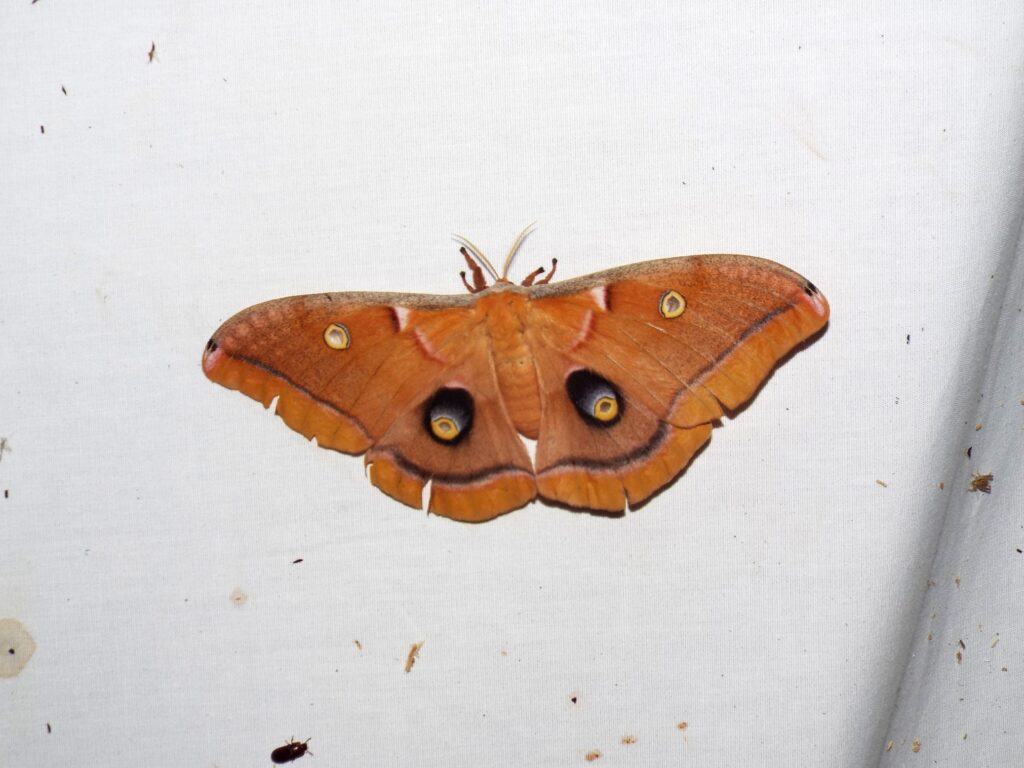
This week for Flora and Fauna Friday, it’s the façade of the forest’s eyes watching from the night, the Polyphemus Moth (Antheraea polyphemus).
Warm spring day. Cool spring night. Saturated air. Land slicked with dew. Wrapped in the cloak of dark. Tucked beneath the canopy. The forest yet stirs restlessly. The excitement of spring. Crickets chirp, toads shuffle, raccoons squabble while rodents skitter to and fro. Through that thick air frolics forward a specter. Like a leaf loosed from the lead of the wind and the fetters of gravity, it floats any direction it may please. It settles and re-adheres itself to the surety of a tree. Two ochre eyes gaze back outward as a Polyphemus Moth greats the night, its world, wide-eyed.
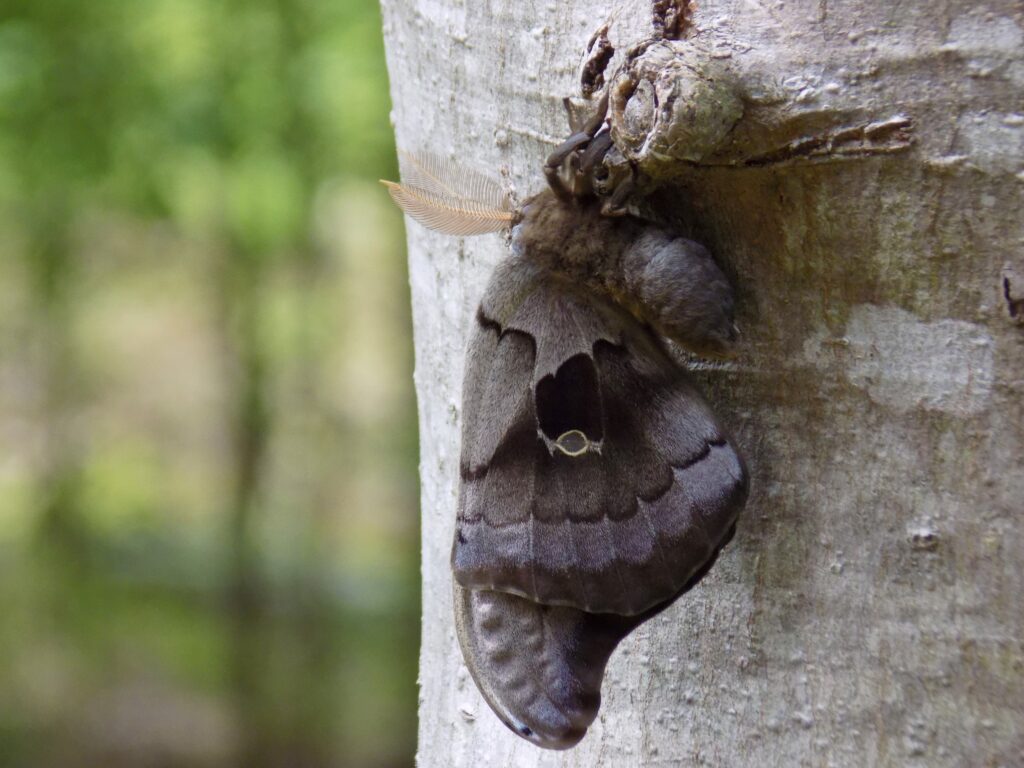
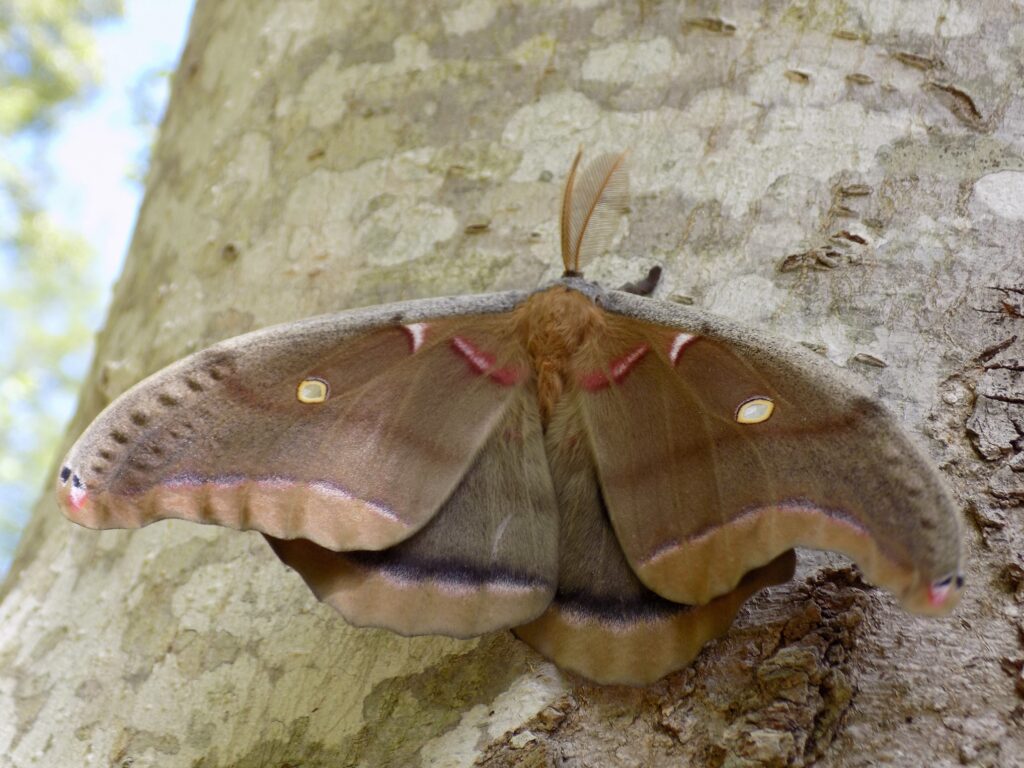
The Polyphemus Moth can be found in hardwood forests throughout the Eastern United States and much of the west. It’s a large moth, growing to about six inches in wingspan. From below its wings are a ruddy-brown with a wash of silvery variegation for camouflage. From above, it’s a warm brown across most of its wings but bearing a thick outward fringe of orange-brown with an inward border of black and white. Peering out from the middle of all four wings is a single eyespot. The forewing eyespot is a single translucent circle ringed with gold. The hindwing eyespot is the same design but larger and with silvery frosting gradating out from above into the large black oval it is set within. They are a hard moth to mistake in the Lowcountry. Their name “Polyphemus” is Greek and comes from Homer’s Odyssey, it’s the name of the demigod cyclops that was blinded by Odysseus.
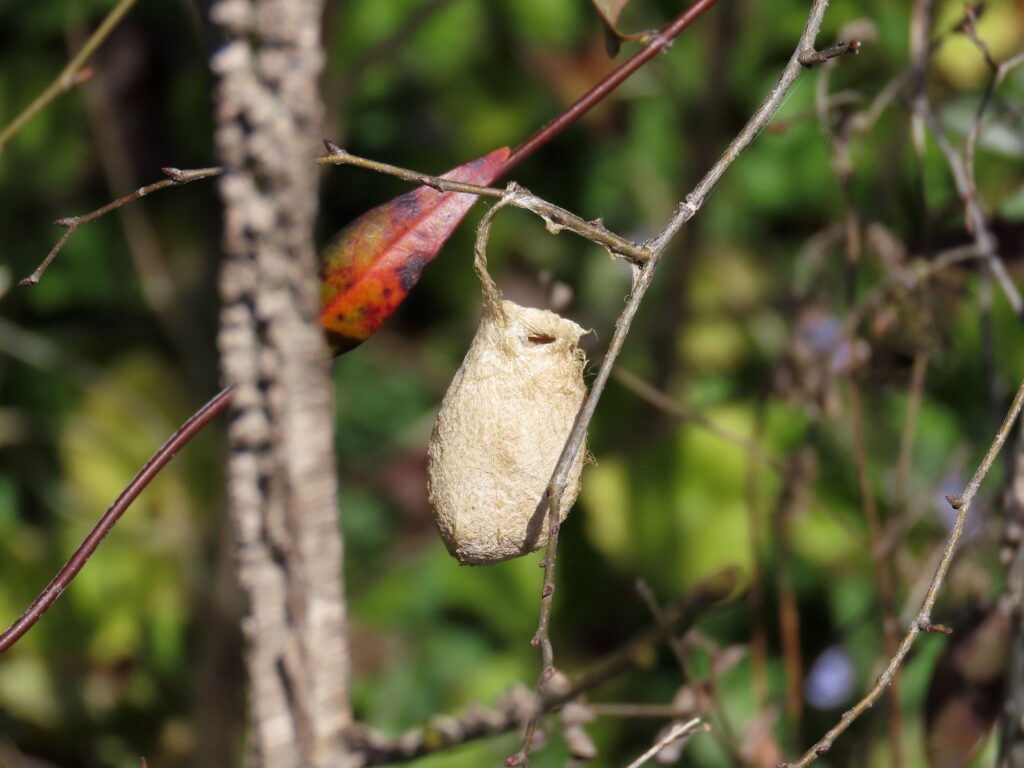
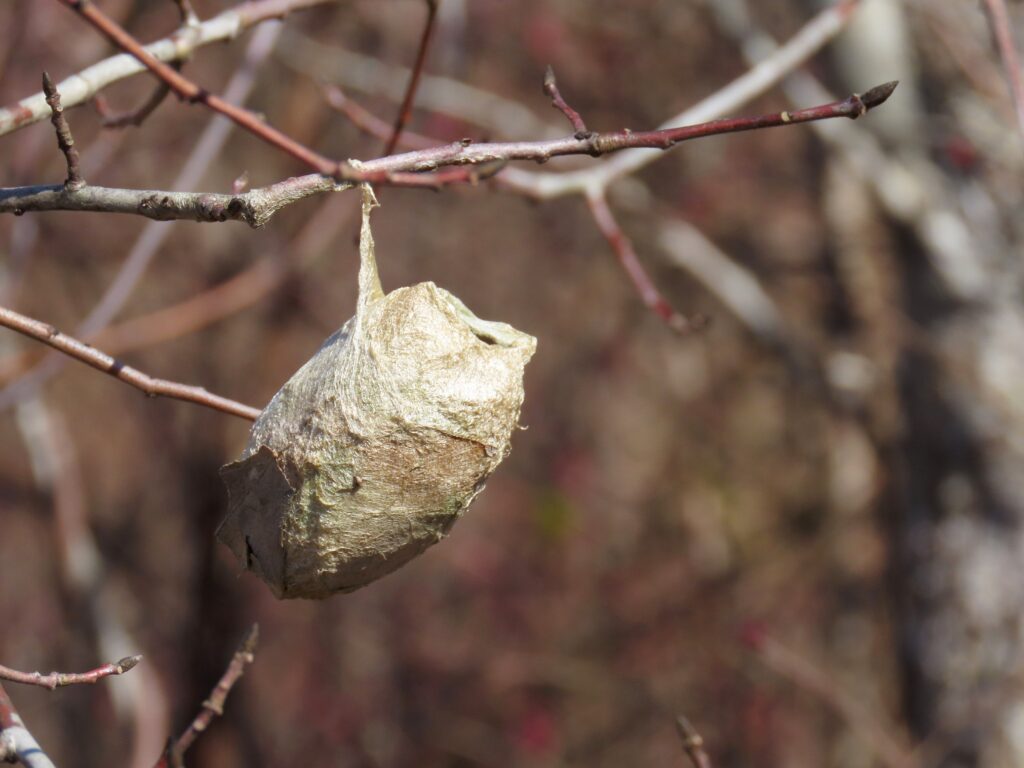
Polyphemus Moth caterpillars are large, heavy-bodied, and bright-green with a brown face and fine vertical slashes down their side with narrow red spots amidst them. Their caterpillars feed on the leaves of many genera of hardwood trees, including birches, maples, willows, hickories, and oaks. The Polyphemus Moth is a member of the family Saturniidae, the Silk Moths. This family contains our largest moth species here in the Southeast, but actually doesn’t include the domestic Silk Moth (Bombyx mori). Although all moth and butterfly caterpillars can spin silk, many Saturniids use a gracious plenty of it when they construct the cocoons that protect them as a pupa. The Polyphemus Moth is a particularly noteworthy silk spinner. They spin a thick walled, pale-brown silk cocoon that’s about two inches long and just under an inch wide. They secure this cocoon with a broad tether to the limb of their host tree. Adult Polyphemus Moths are most abundant in April, May, and July. But their silk cocoons can often be spotted high above in winter, or empty and strewn about the forest floor throughout the year.