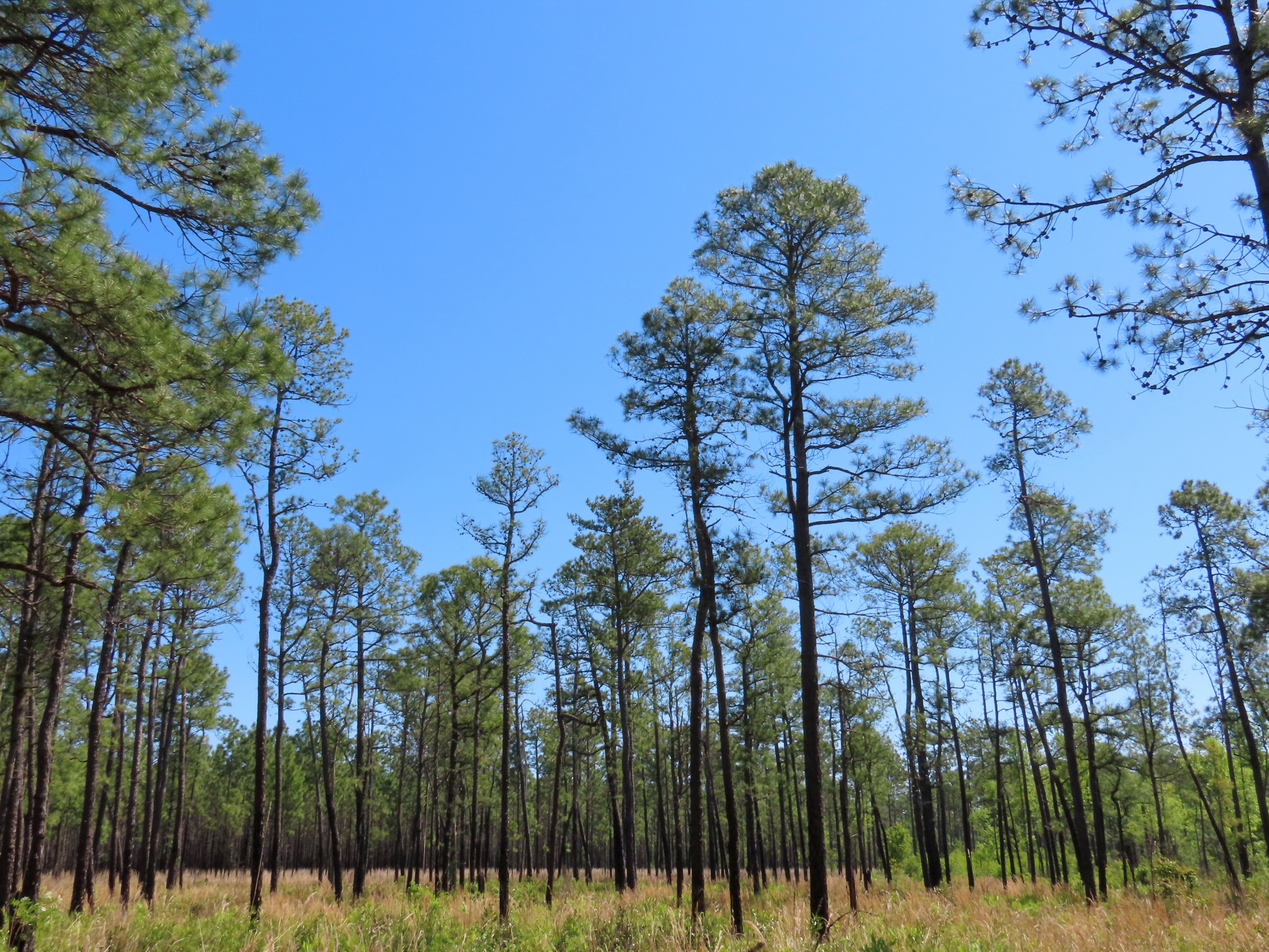
This week for Flora and Fauna Friday we’re picking out the pH particular pitch-packed pyrrhic pyrophyte of the pocosin, the Pond Pine (Pinus serotina).
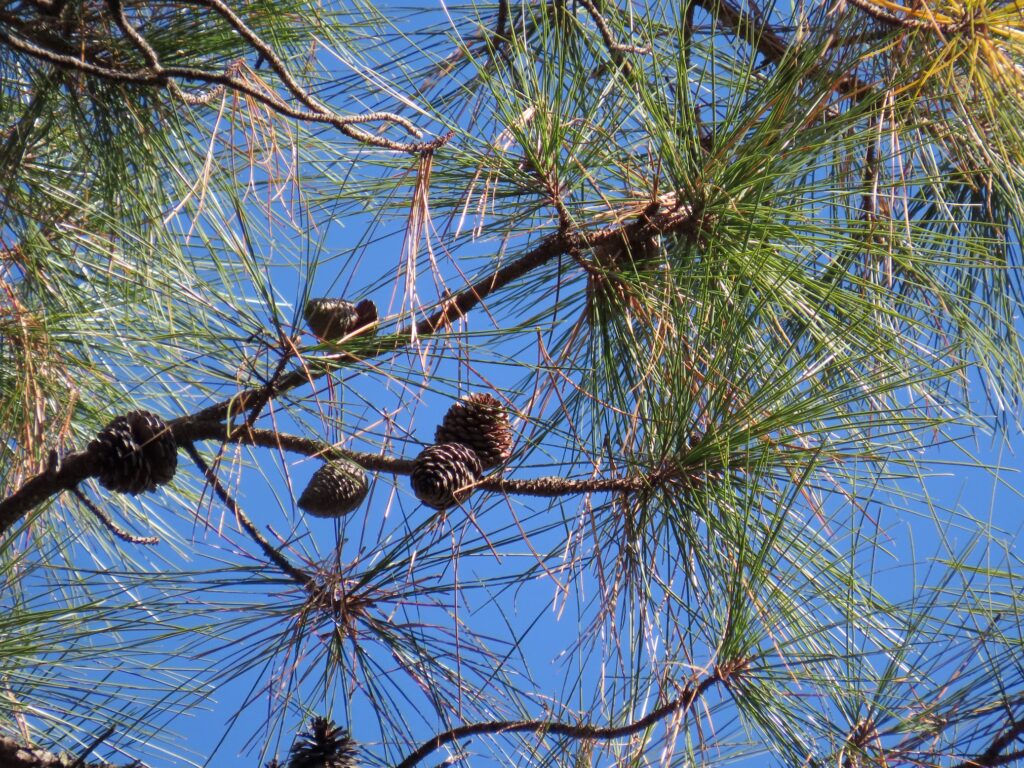
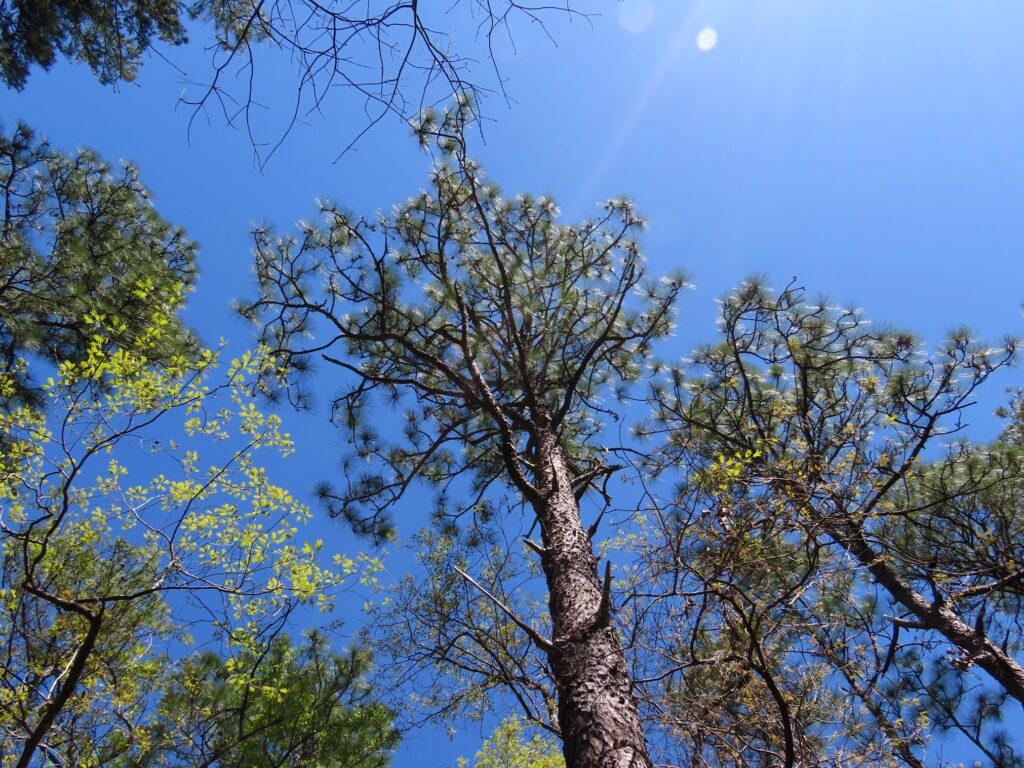
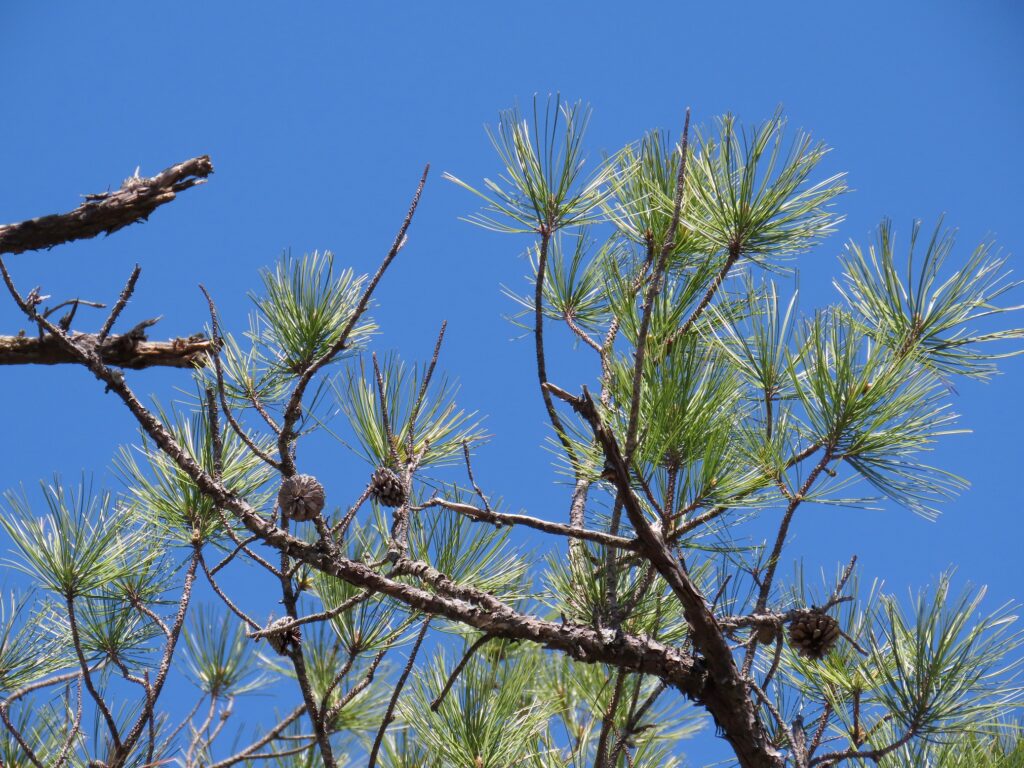
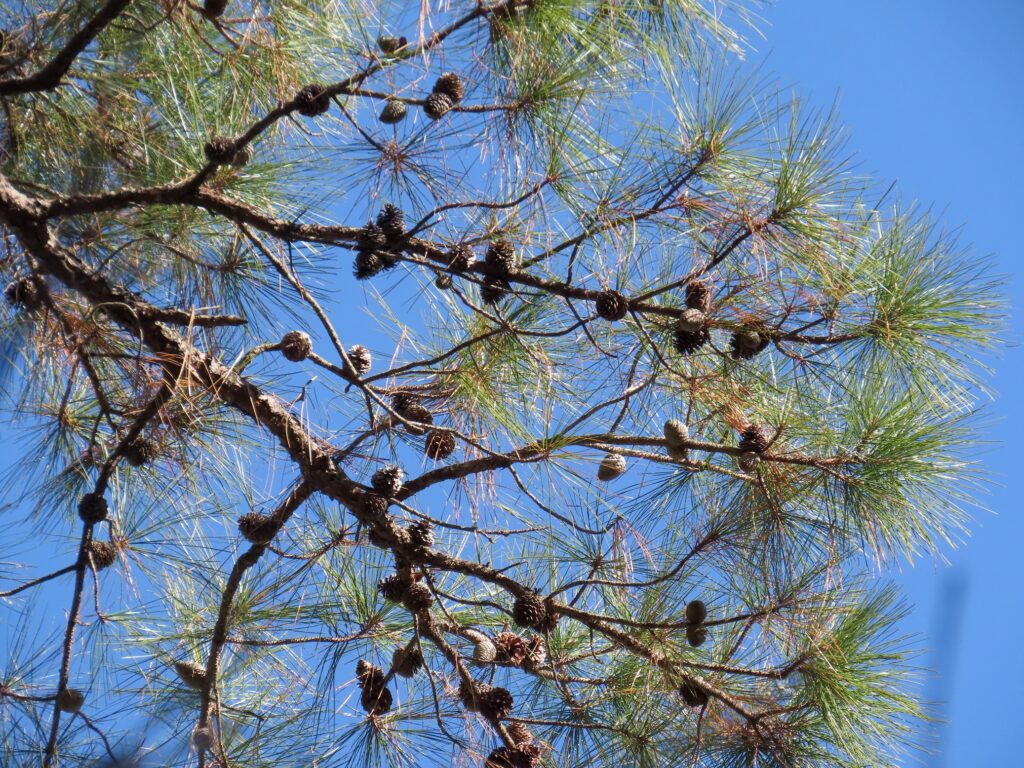
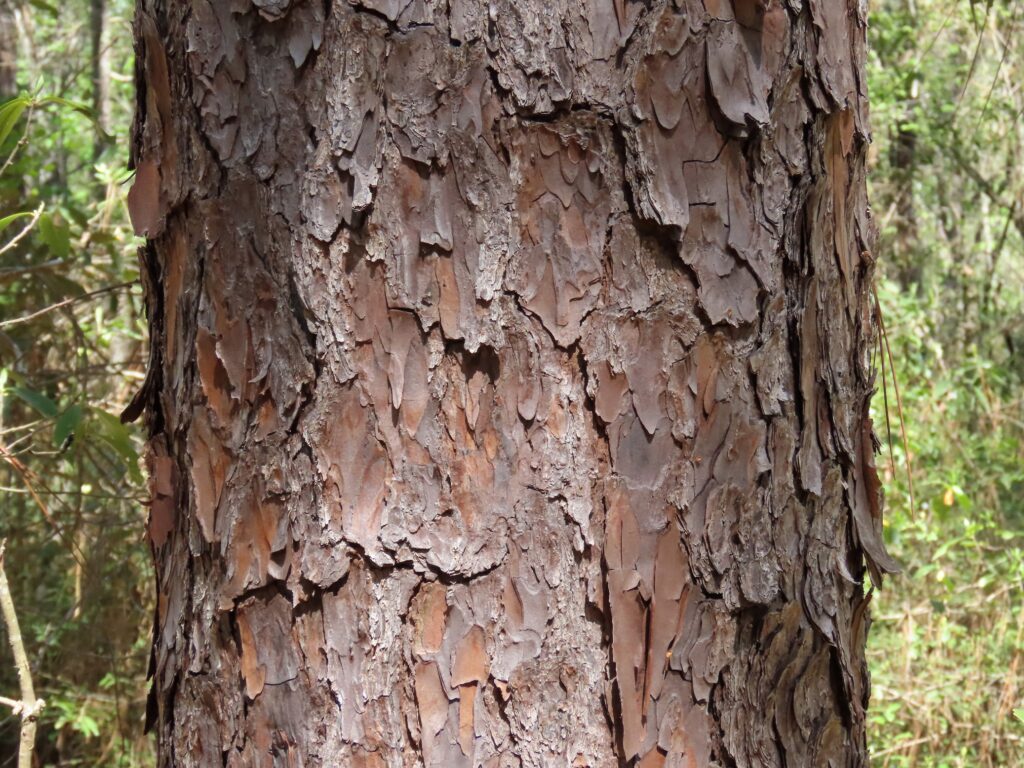
Pond Pine is found across the coastal plain of the South Atlantic, from the panhandle of Florida north to the bottom end of New Jersey, and here in South Carolina it resides below the fall line. Pond Pine is one of our more diffuse pines, growing mainly in scatter clusters around the landscape where habitat conditions are most suitable. Pond Pine strikes a keen resemblance to many of our other pine species, sharing ruddy brown and mottled flaky bark, hand-length deep-green needles, and a tall straight posture. It’s often a dead ringer for Loblolly Pine (Pinus taeda) and takes a sharp eye to pick it out of the canopy. But thankfully, Pond Pine has a few traits that help differentiate between these two native pines. The most distinguishing characteristic of Pond Pine is its cones. Unlike our other Lowcountry pines species, Pond Pine’s cones are nearly spherical and about two-and-a-half inches across, a width somewhere between a golf ball and a tennis ball. These cones usually stay tightly closed for a season and cling to the tree for multiple years, making them a dead giveaway you’re looking at a Pond Pine. The crown of Pond Pine is usually quite messy to boot, with numerous short stods from old dead branches erupting out of the trunk and trailing below the live limbs, and often a bent, warped, or twisted character to its upper trunk and major limbs. Further, Pond Pine is one of the few pine species that can regenerate from its trunk. So, you’ll occasionally spot individuals with needles or twigs growing directly out of bark fissures on the lower half of the trunk. Lastly, Pond Pine needles, when shed, are noticeably a paler shade of orange, an almost sickly looking jaundiced-yellow, compared to shed Loblolly Pine or Slash Pine (Pinus elliottii) needles, at least in my own experience around Edisto Island. This difference in duff color is a rather subtle distinction but in mid-winter, when pines shed their oldest needles, it can appear like a circle of chartreuse highlighter around the base of a lone Pond Pine poking through a canopy of Loblolly Pines.
Pond Pine is a habitat specialist and encountered most frequently in and around pocosins, Carolina Bays, peat bogs, and acidic streams or swales on sandy soils that are low in pH and most nutrients. Pond Pine is able to tolerate the acidic, nutrient impoverished, and saturated soils of these habitats better than any other pine, or really any other tree, and has come to dominate these habitats. It’s thus quite abundant up in the Sandhills and down here in the lower coastal plain where these conditions are more prevalent, but they’re not particularly common on the Sea Islands where our relatively young soils are often still enriched with the remains of oysters and marshes, and thus bolstered in their pH and nutrition. Their preferred habitats are often prone to catastrophic wildfire in times of drought, when their organic heavy or peat soils dry out and the accumulation of resinous plant material in the understory becomes a literal litter tinderbox. All of Pond Pine’s standout identifying features are direct consequences of their adaptations to life in these lands of extremes. Its ability to regenerate needles and limbs from its trunk lets it rise like a phoenix from the ashes of devastating crown fires, fires that would eradicate a stand of any other pine species. Its messy crown, with twisted boughs and the remains of dead limbs, is a side effect of its easy-come easy-go mindset. It doesn’t make sense investing great time and energy cleanly callousing off old limbs and neatly ordering and expanding your crown over decades when a drought and chance lightning strike could change your fate tomorrow. In that same vein the sour, sodden soil it subsists on is meager. So, Pond Pine invests its resources more strategically into its needles, leaving their husks shed as duff with a different hue. Lastly, those spherical cones are locked shut with resin and compact in shape to best maintain that sticky seal. When a fire rips through the understory and its hot winds rise and lap at the limbs of Pond Pine, this resinous wrapper over its cones softens and melts, allowing them to pop open and sow their seeds downward into the freshly fire fertilized soil below, now neatly cleared of competing vegetation. This ensures the would-be Pond Pine seedling gets a fighting chance to establish in a normally overcrowded and underfed understory. Because of these specialized adaptations, Pond Pine is one of our many, many native plants in the southeast that is dependent on receiving regular fire on the landscape, preferably low-intensity human prescribed fires, to complete its life cycle and reliably recruit its next generation.