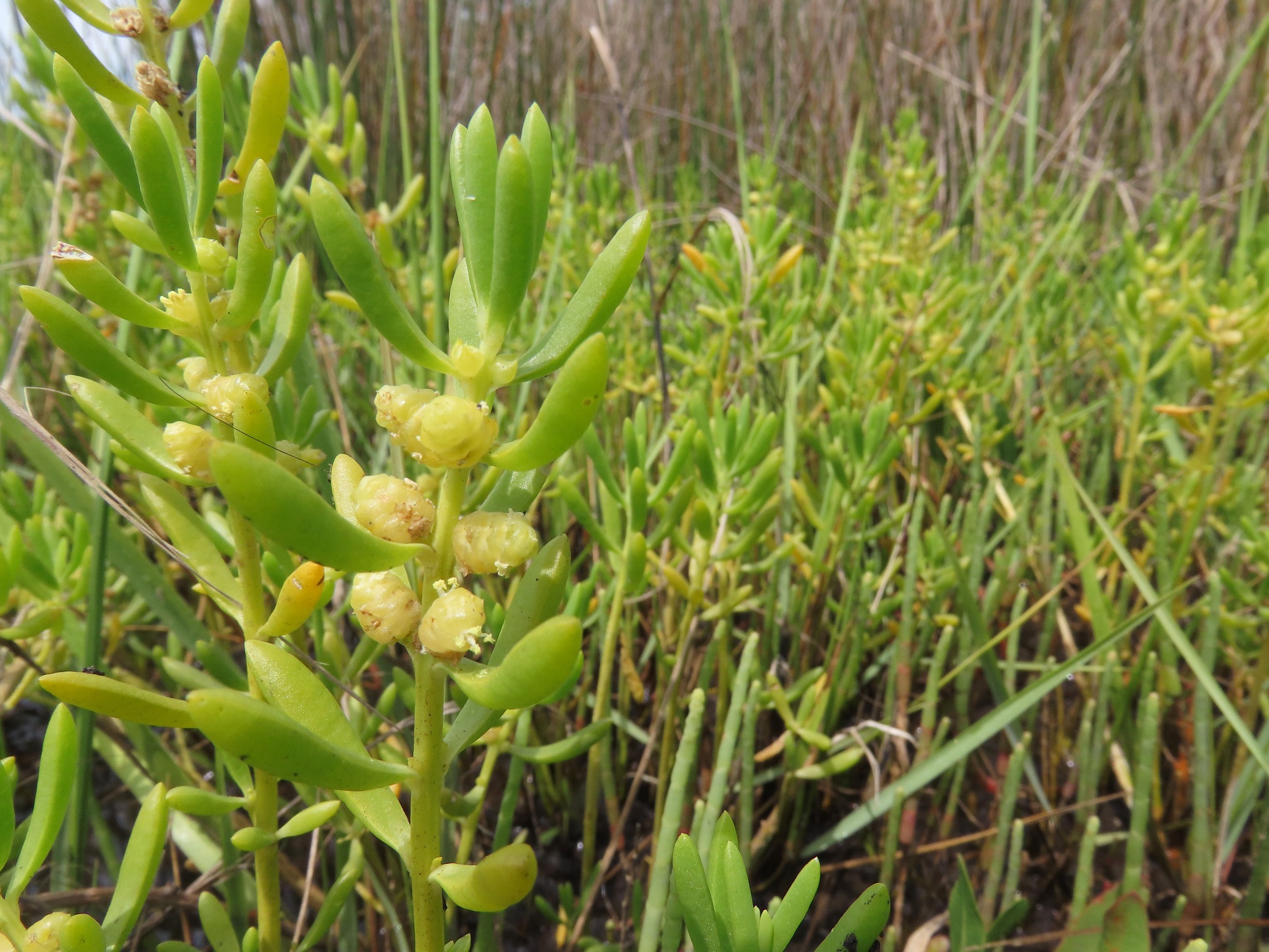
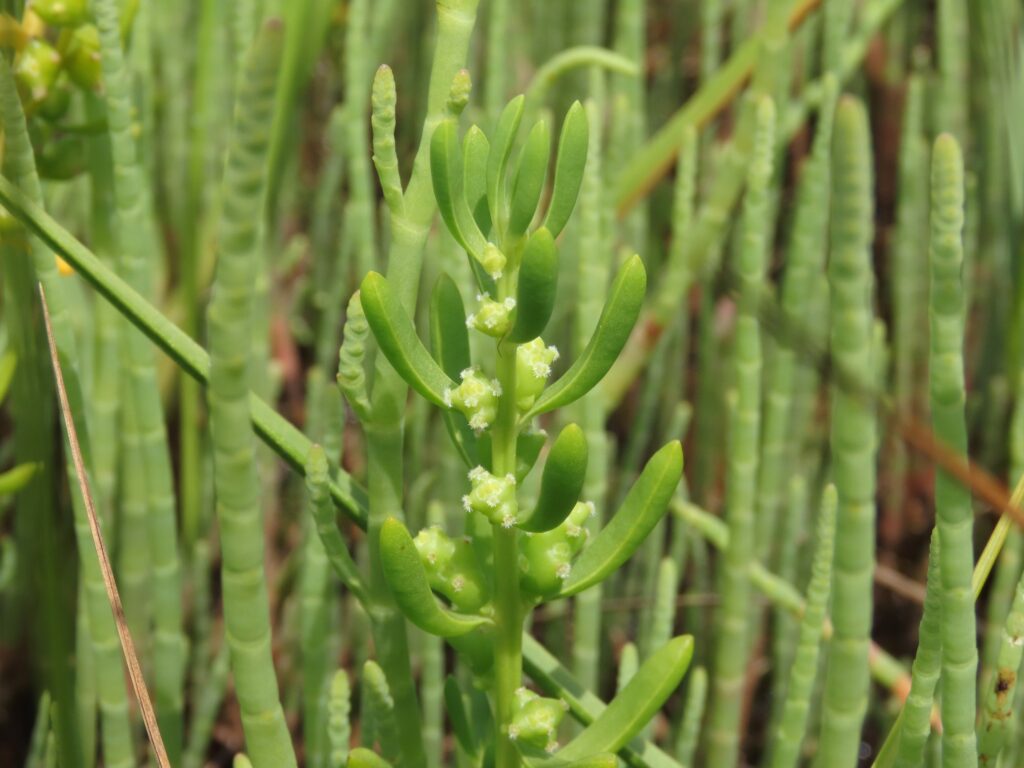
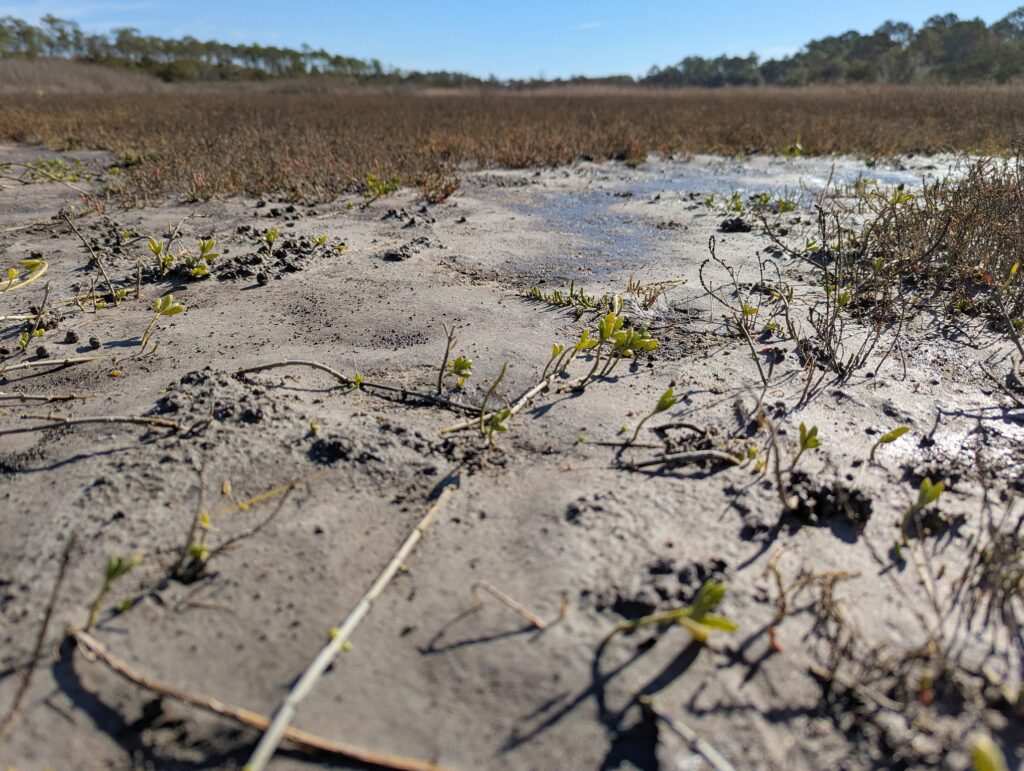
This week for Flora and Fauna Friday it’s a subtropical, salt-loving, seaside, succulent shrub, Saltwort (Batis maritima).
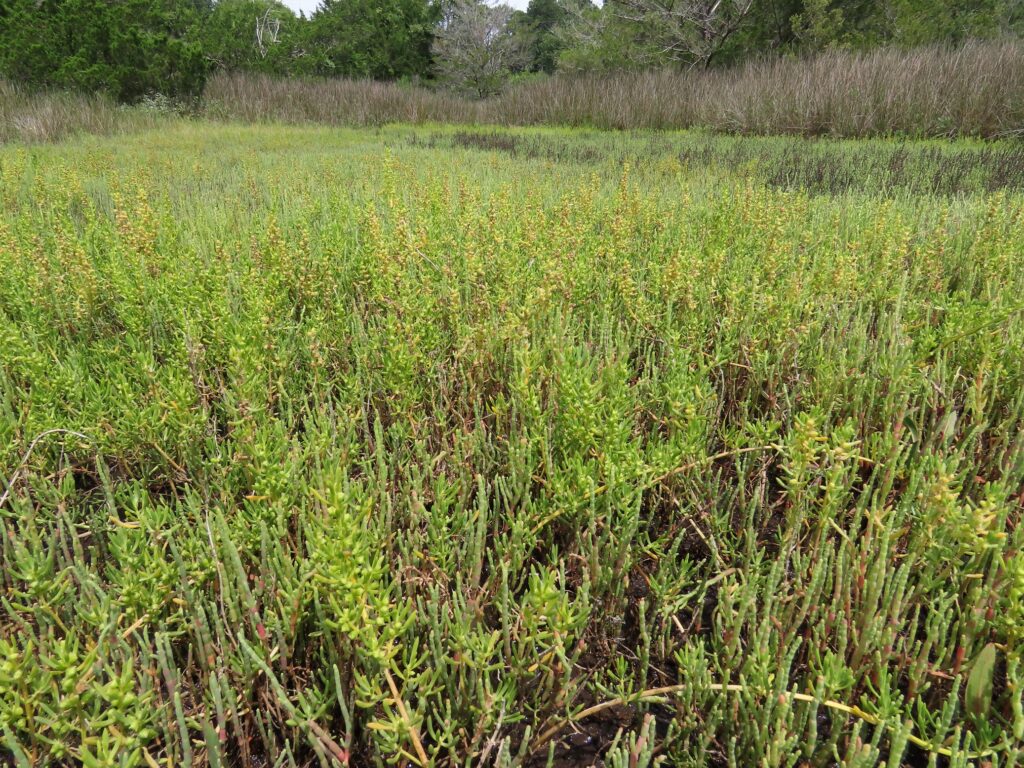
Saltwort can be sighted along the Gulf Coast of the United States and ranges naturally up the East Coast to just below the Santee River here in South Carolina. It’s mainly found behind our barrier islands, growing in the sand flats of their back marshes. Saltwort is a halophyte, a salt-lover, and grows in much the same habitat as our common Perennial Glasswort (Salicornia perennis). These two salty succulents often grow together, but Saltwort clings to the oceanfront much more tightly. This is because Saltwort thrives in a subtropical climate and in very high salinity. The sand flats of South Carolina’s barrier island back marshes check both those boxes. Their proximity to the Atlantic Ocean ensures both a regular supply of full strength seawater and a tempering tropical micro-climate throughout the winter.
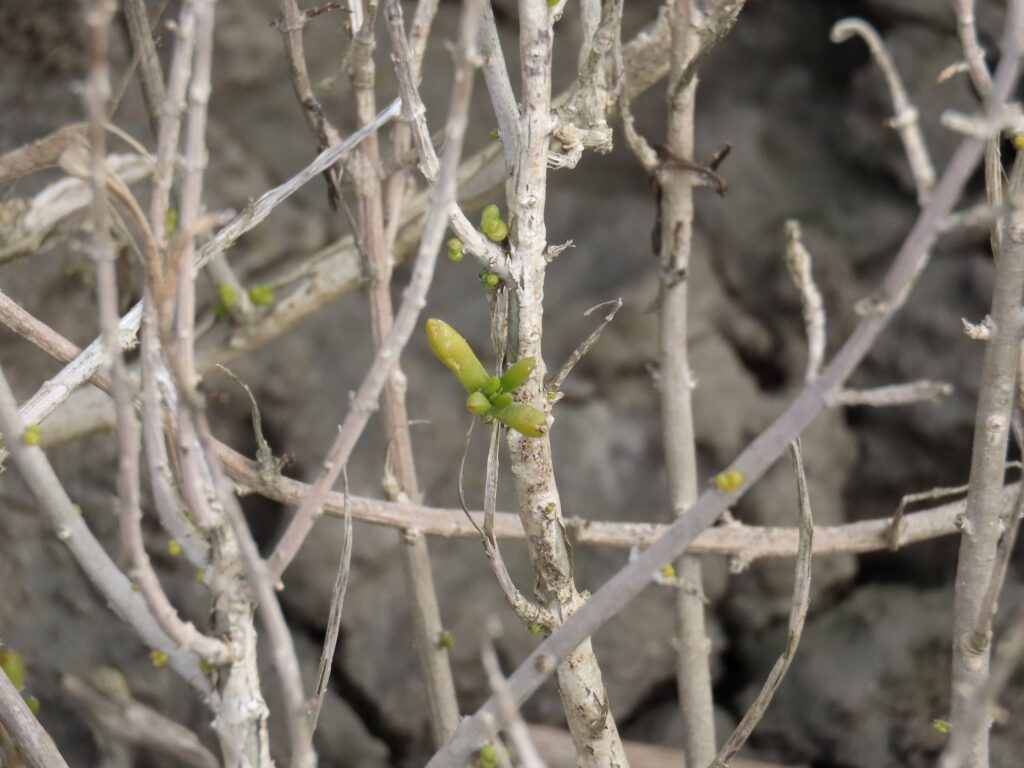
Saltwort is a unique looking plant found in a unique habitat here in the Lowcountry. So it’s an easy one to pick out in the wild. Its leaves are opposite, yellow-green, succulent, cylindrical in cross-section, and often curve upward. Overall they’re about one-half to three-quarters of an inch in length and shaped somewhere between a tiny banana and a tiny green bean. Young Saltwort stems are also green and succulent but, as they age, they become woody and turn a pale gray-brown. These stems can either run along the ground or arch upward to about a foot in height. Saltwort blooms at the end of April and bears inconspicuous pale-green flowers in swollen, cylindrical clusters.
Similar to our Glassworts, Saltwort leaves are edible but taste quite salty. Its seeds are also high in oil content. Given these uses and its high salt tolerance, it has some experimental promise as a specialty oil crop in regions of the world with excessive soil salinity and saltwater intrusion. Saltwort is also a host plant for the Great Southern White butterfly (Ascia monuste), a tropical butterfly whose range is slowly expanding northward into the South Carolina coast.