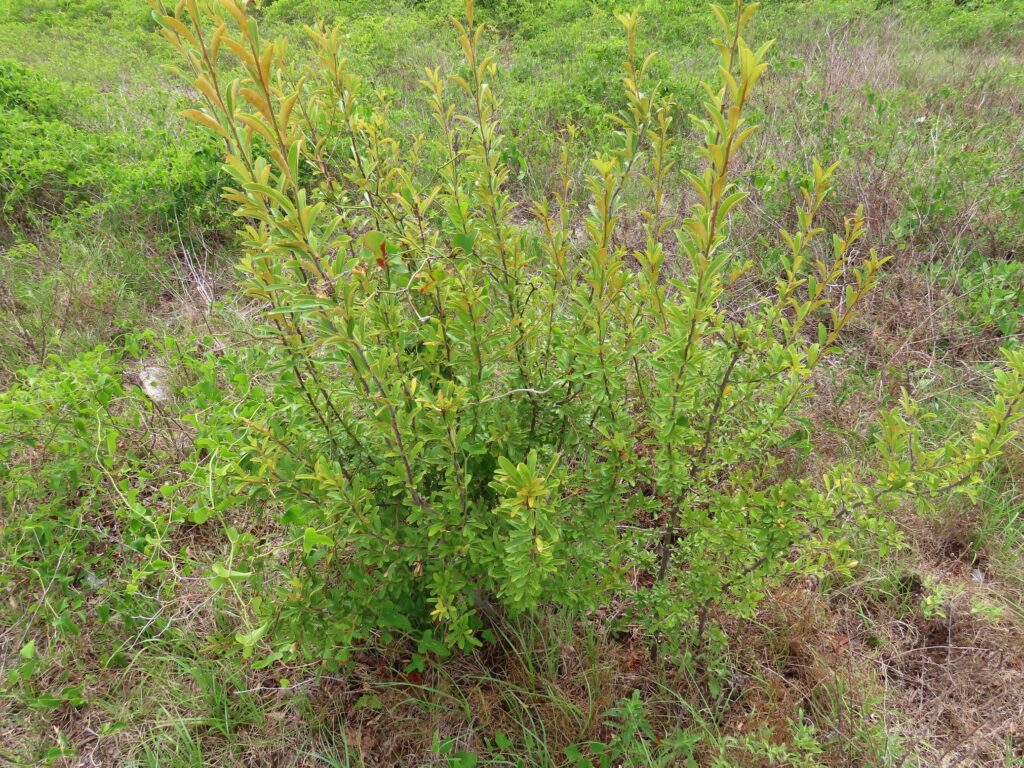
This week for Flora and Fauna Friday it’s a bronzed bush of the barrier islands, Tough Bully (Sideroxylon tenax).
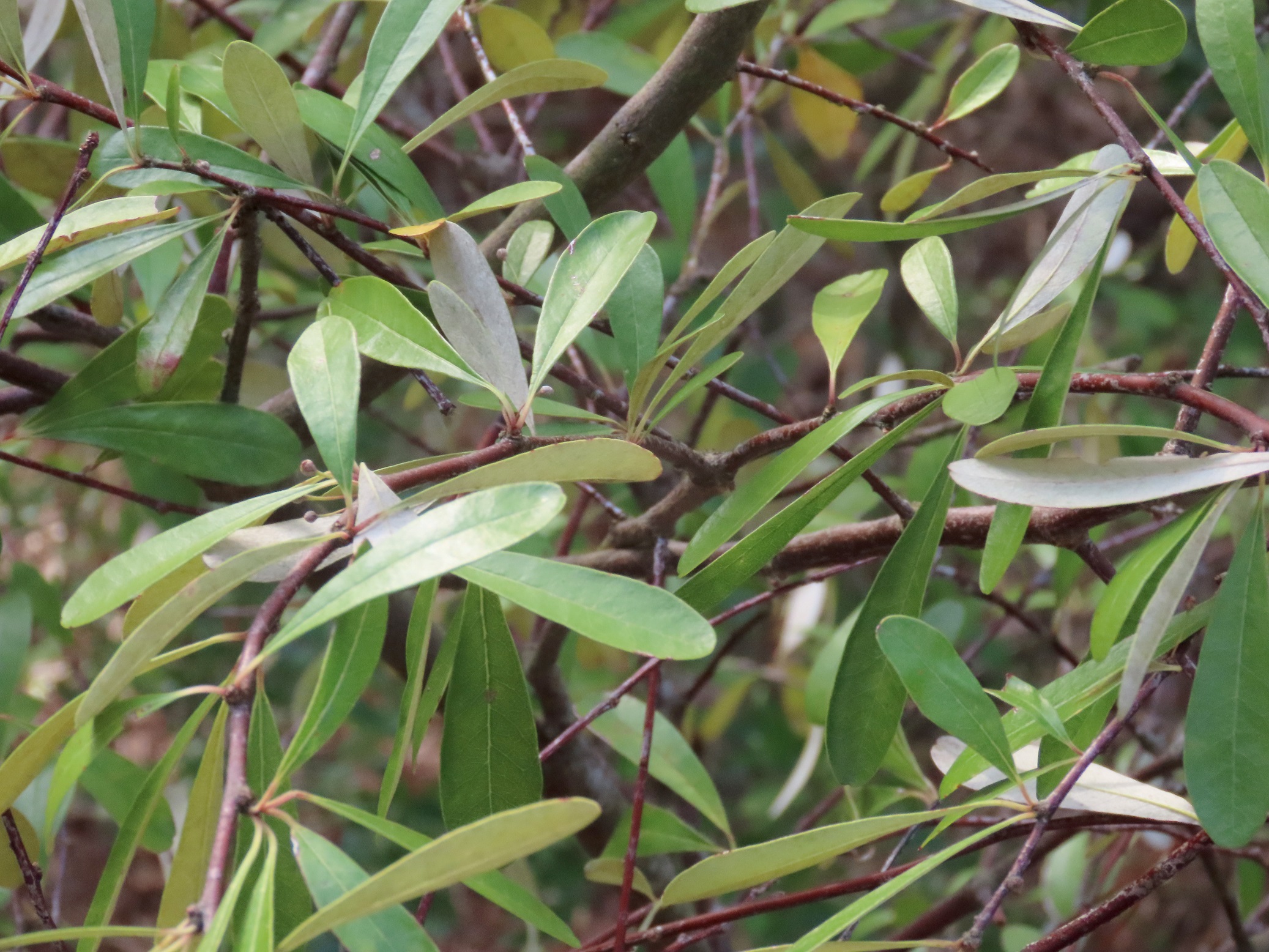
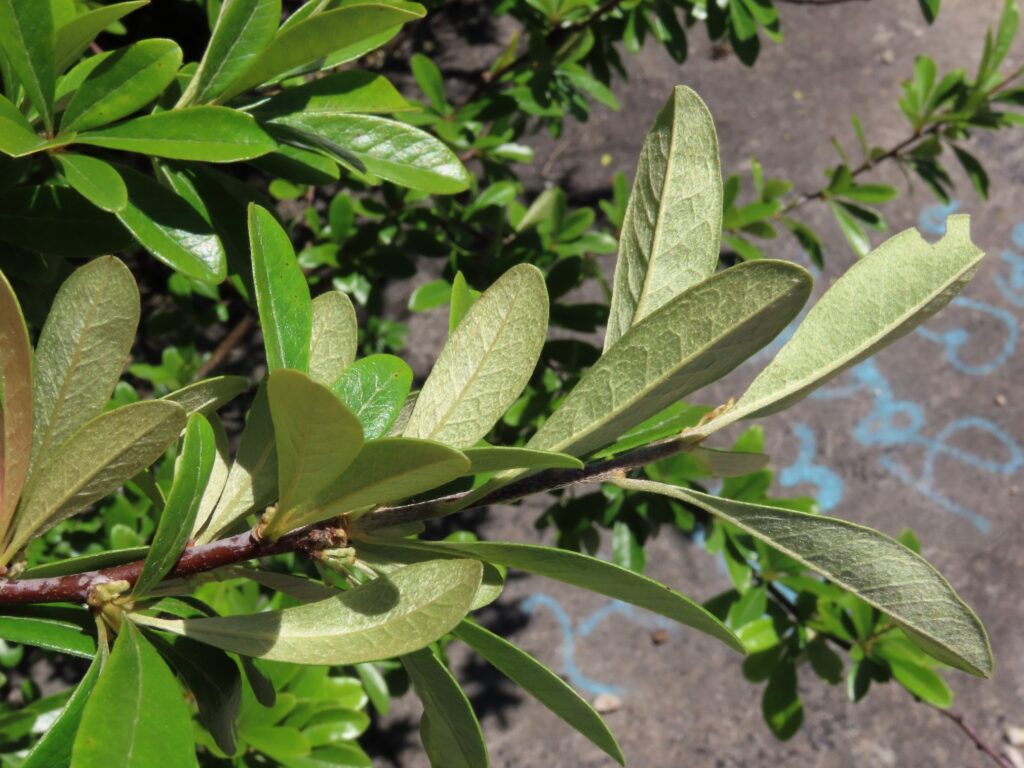
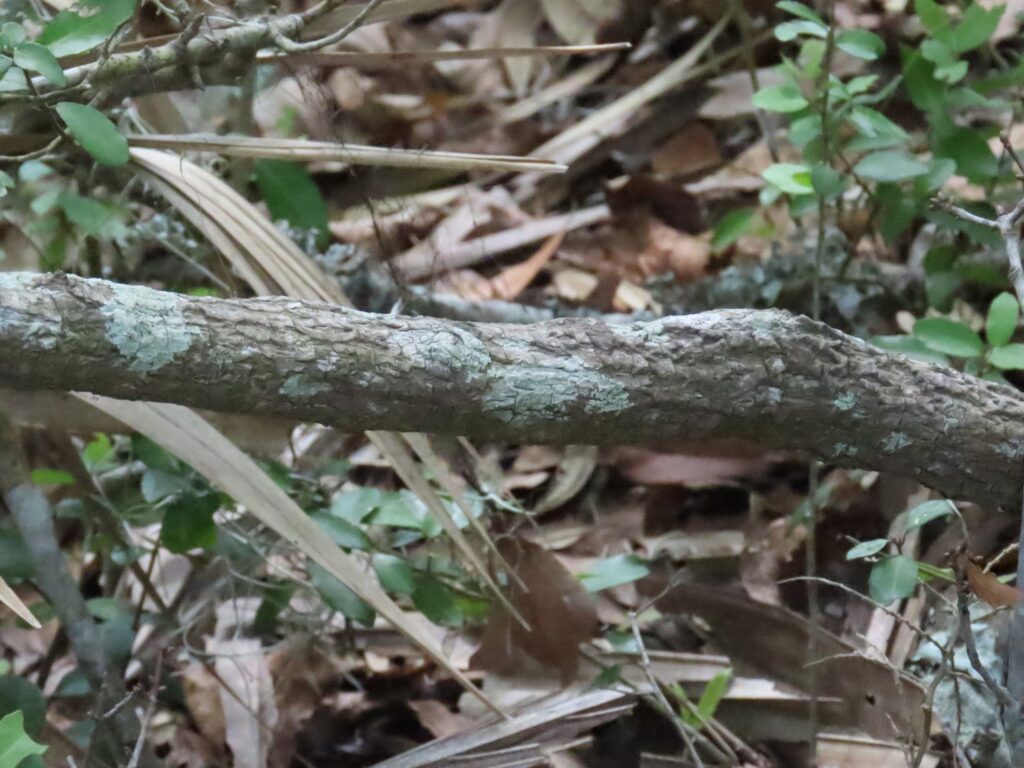
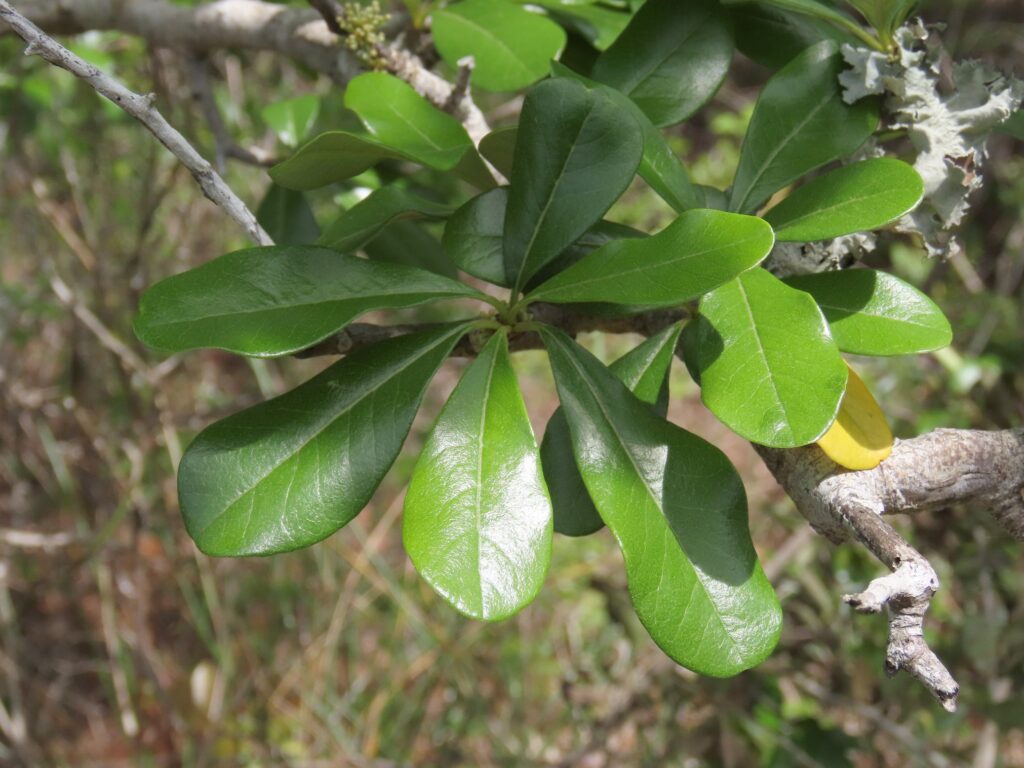
Tough Bully is found on the immediate coast of South Carolina and Georgia and down into peninsular Florida. It’s a denizen of the dunes and maritime forests of our Barrier Islands and Sea Islands throughout the Lowcountry and it thrives in subtropical climate and dry sandy soils of our coast. Tough Bully is a mid-sized shrub that grows as either a squat bush in the blustery windswept dunes of our barrier island beaches or as a multi-stemmed arching shrub in the more shaded sea island maritime fringe forests. Its trunks are often gnarled and twisted with a roughly fissured, dark-gray bark while its stems are conversely a smooth, pale-gray. These twigs are lightly zig-zagged and bear short thorns at each node. The leaves of Tough Bully are its most distinguishing feature. Their alternate evergreen leaves are simple, leathery, and shaped like an elongated teardrop. Turn them over and you’ll be greeted by a carpet of reflective, near metallic-colored hairs that range in shade from platinum to brass to a deep bronze. These velvety hairs, called indumentum, perform a suite valuable services to plants that live in dry, sandy, open environments, including both insulating their leaves from wind and reflecting sunlight bouncing up from the sand below, away from the delicate leaf underside.
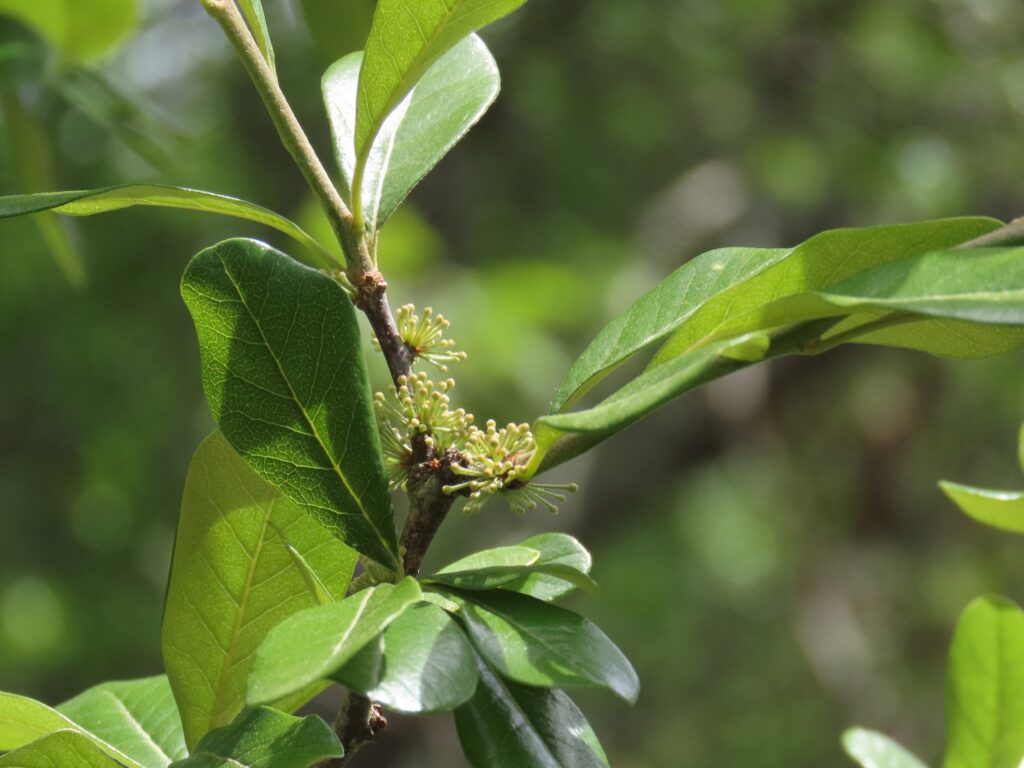
Tough Bully, and its relatives in genus Sideroxylon, also have some ethnobotanical merits. When broken, the leaves and twigs of Tough Bully exude a milky sap. Some Native American tribes would cut the bark of the tree to allow this sap to ooze out and dry. They could then collect this dried gum to use as a chewing gum. Tough Bully blooms in early summer with a spherical cluster of small white flowers along its twigs. These flowers are well-loved by native pollinators and, once pollinated, give rise to oblong, purple-black drupes about the size of a blueberry. These fruits are edible for humans and sweet in flavor.