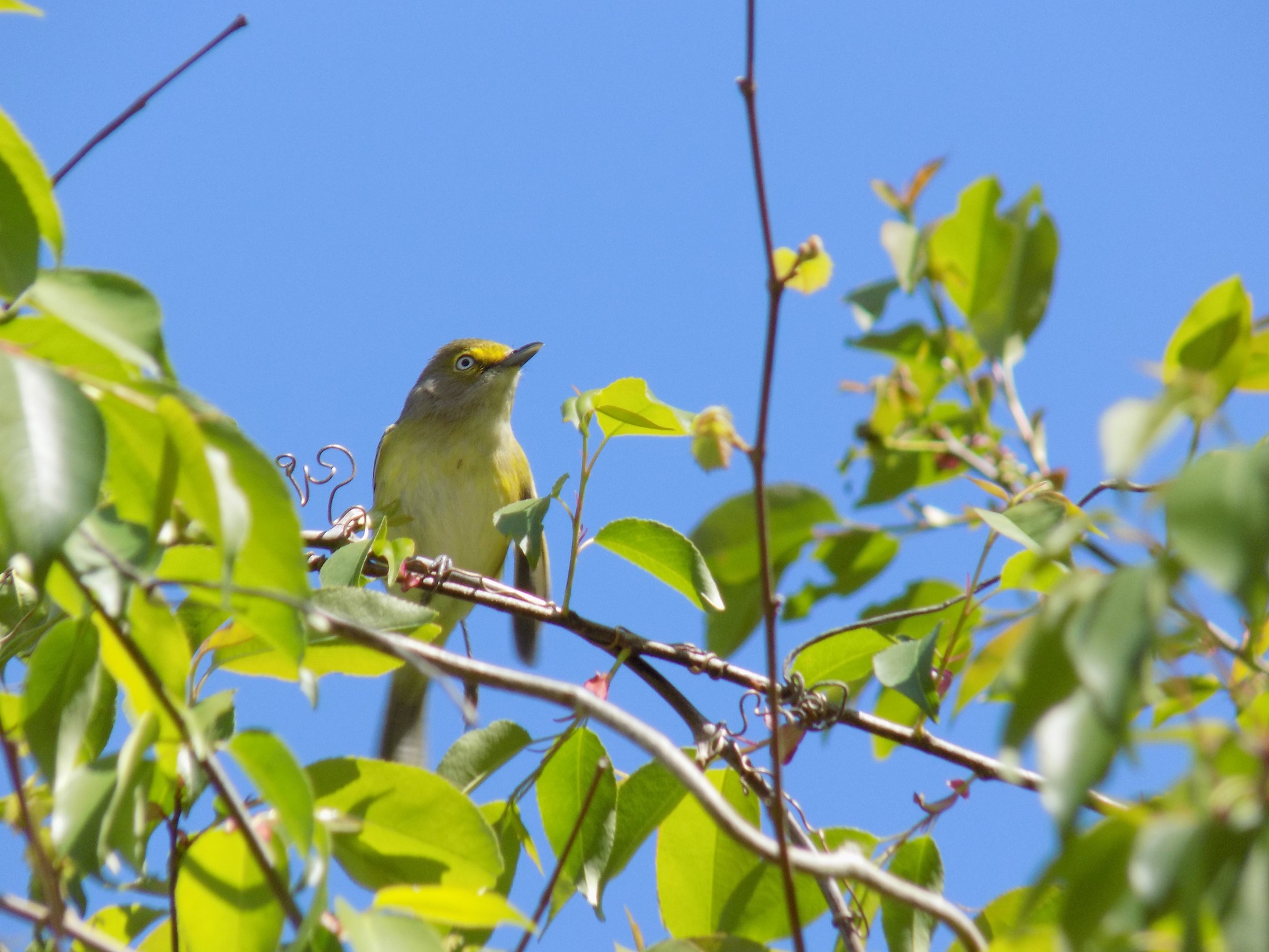
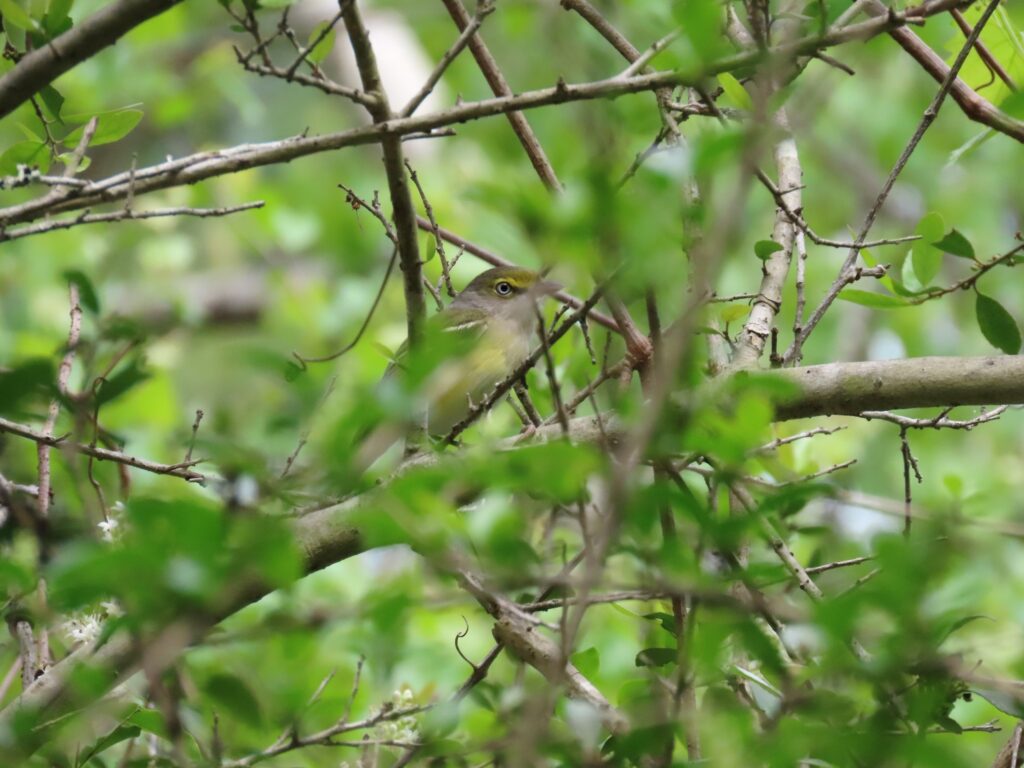
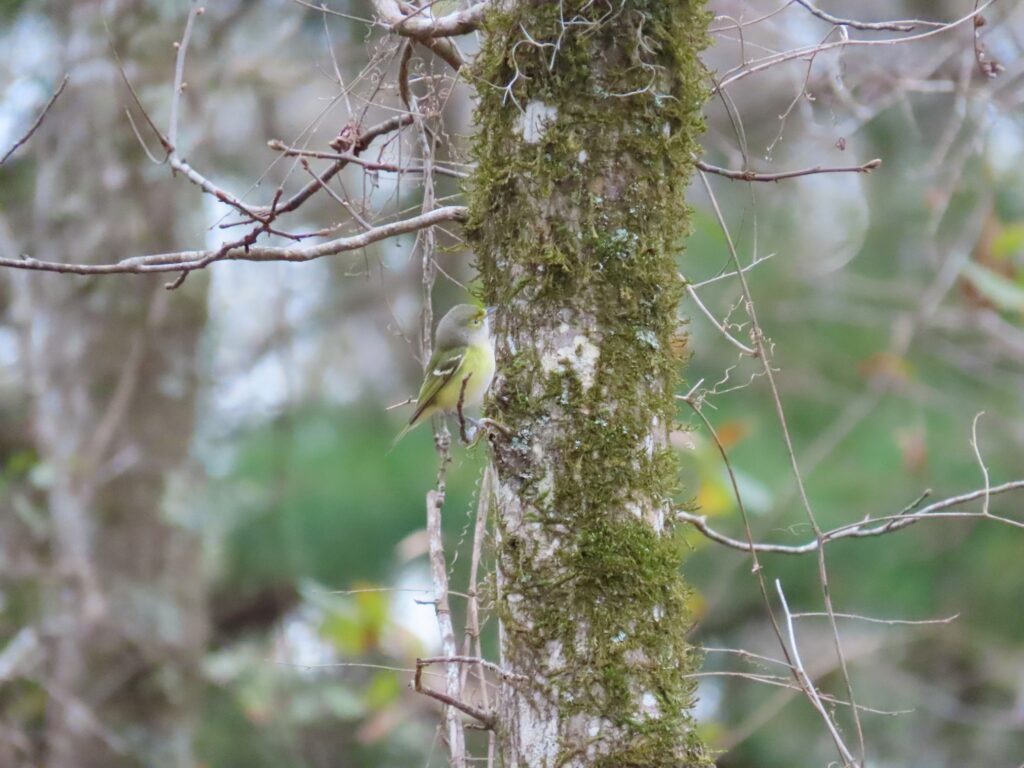
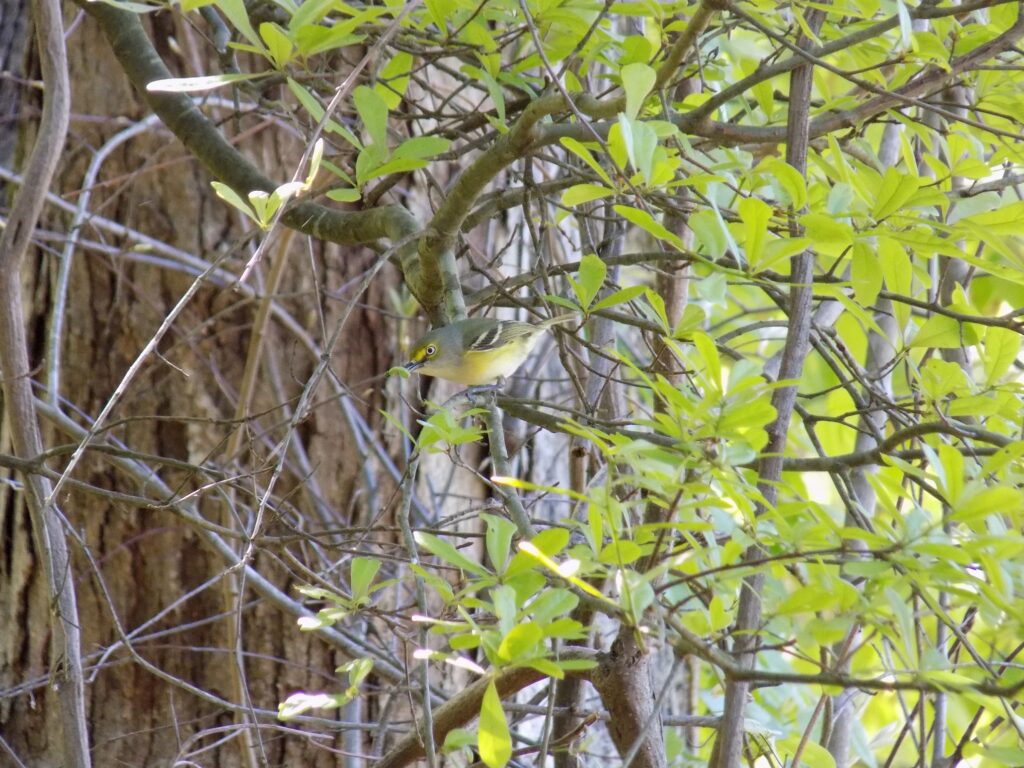
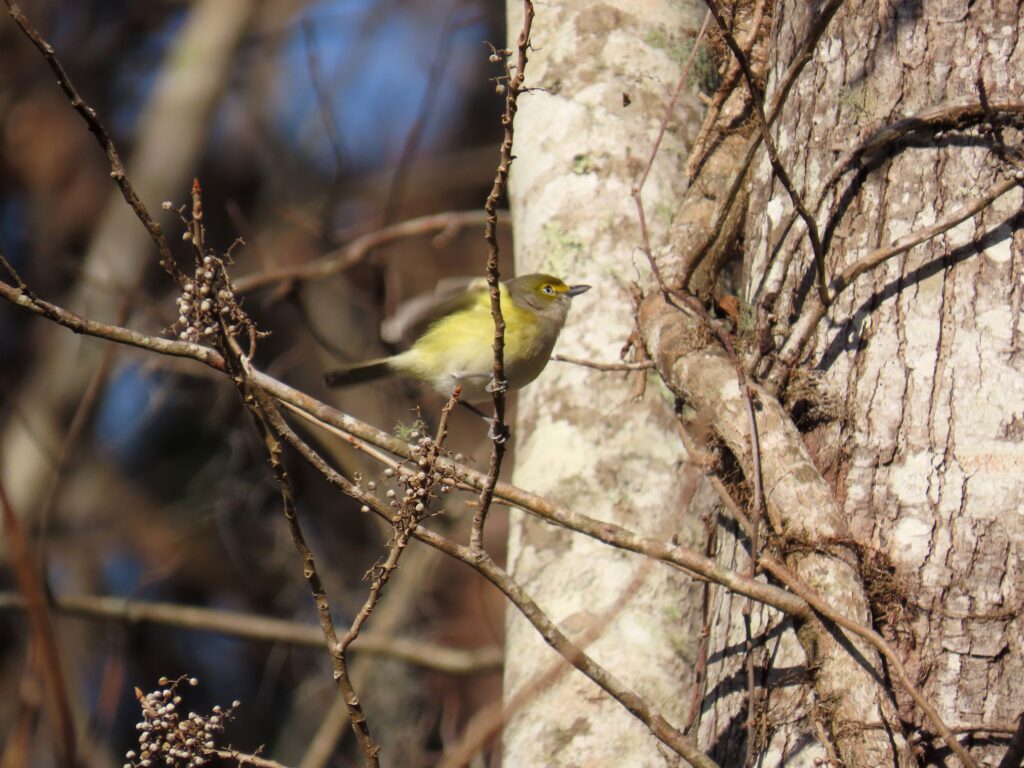
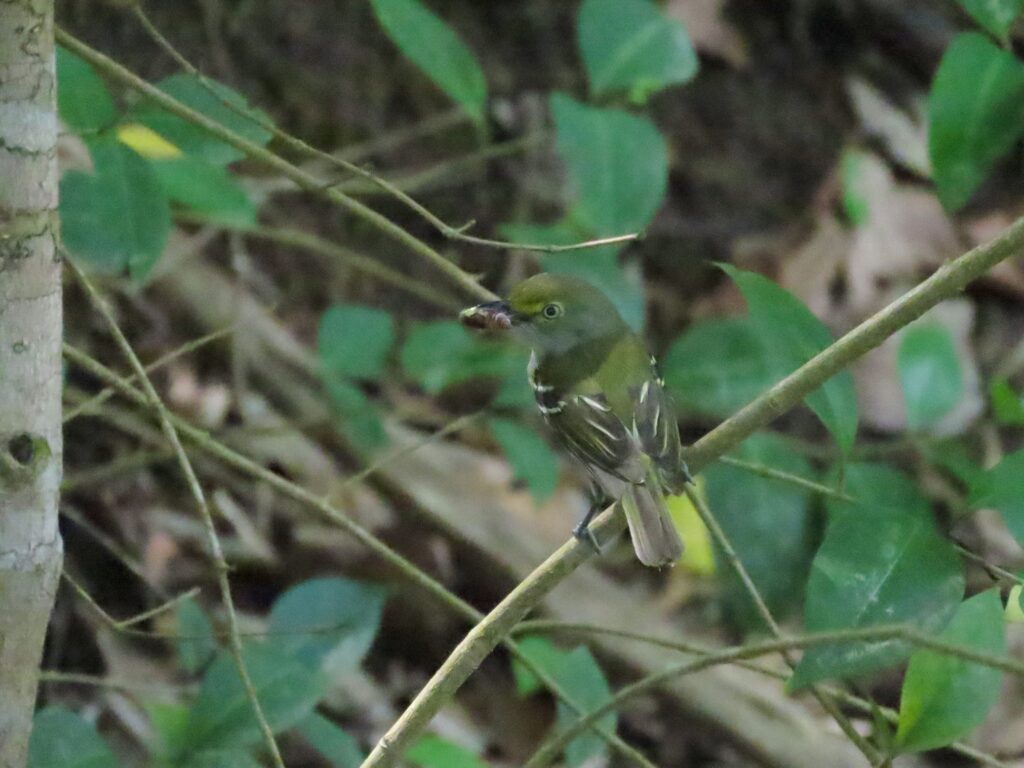
This week for Flora and Fauna Friday, it’s our pearly-eyed perching bird, the White-eyed Vireo (Vireo griseus).
The White-eyed Vireo is a small songbird found throughout the southeast. Although many of them migrate to Central America for winter, a small sect of the species hangs out year-round in the coastal plain of the Deep South, including the South Carolina Lowcountry. White-eyed Vireos are specialized for life in heavy brush and thickets. You’ll find them commonly on forest edges, pond banks, hedgerows, pocosin rims, and in old clearcuts. They’re a common bird, and they’re commonly found anywhere there are dense shrubs. White-eyed Vireos, as well as most other Vireos, are insectivorous leaf gleaners. They get their daily bread by moving from branch to branch combing leaves and twigs for arthropods to eat. They’ll also scarf down small fruits, especially in winter when insects are scarce.
Vireos, in general, are small perching birds in the same size bracket as the warblers, and the White-eyed Vireo is no exception to that generality. They’re an easy bird to identify, if you can land your eyes on one through the brush. Dark tail feathers and wings with a wash of olive-green along the margin and two heavy white bars on the shoulder of each wing, a pale belly with a belt of yellow wash across the breast and down the flanks, a white throat, an olive-green mantle to the back, an aluminum-gray hood over the head, a blue-black faintly hooked bill, a lemon-yellow mask, and a namesake striking ice-white eye, all these traits come together to style a bird that’s an unmistakable sight across much of the Eastern United States. The White-eyed Vireo’s vocalizations are also quite unique, with calls a nasally resonant scolding “cluck” or “mew”. Their song is a phrase that is both hard to describe and hard to mistake, at least once you have an ear for it. The song is usually four to six notes that blend together like a sentence. It starts sharp and loud and then bounces up and down in volume, then either trails off in a mumble or ends in a decisive note as loud as the first. It kind of has an iambic pentameter character to it. There are many mnemonics out there to better remember the White-eyed Vireo’s calling card, but most birds haven’t read the field guides and are prone to going off script. So it’s best to learn it by ear and make your own memory of it, at least in my opinion.