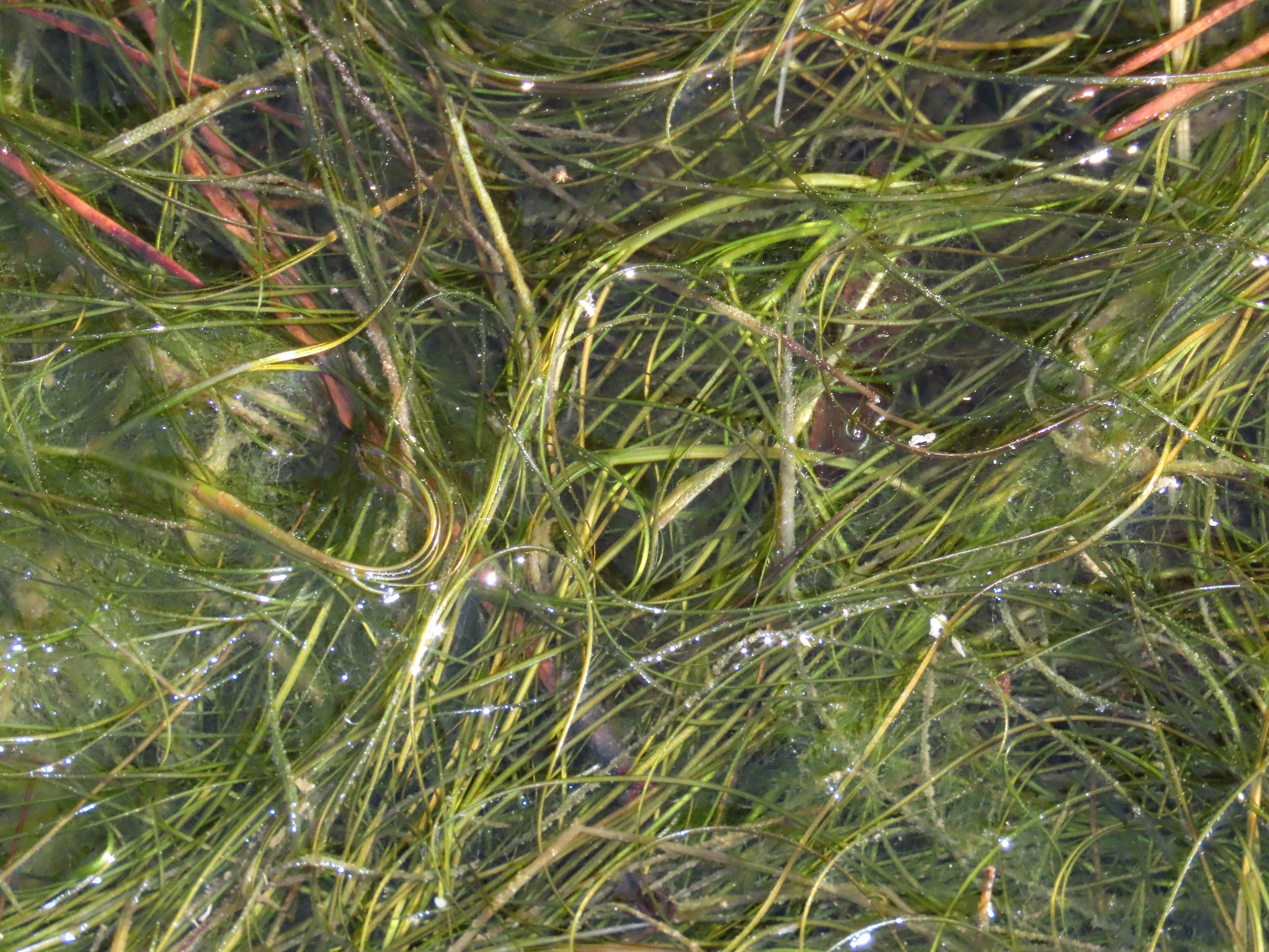
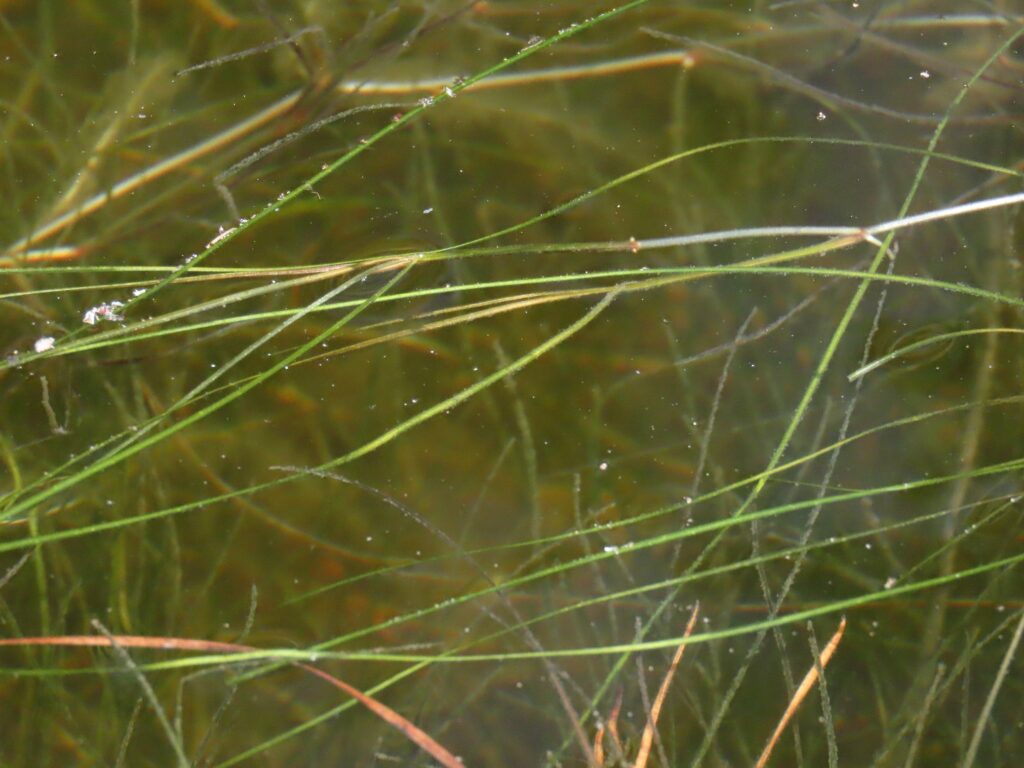
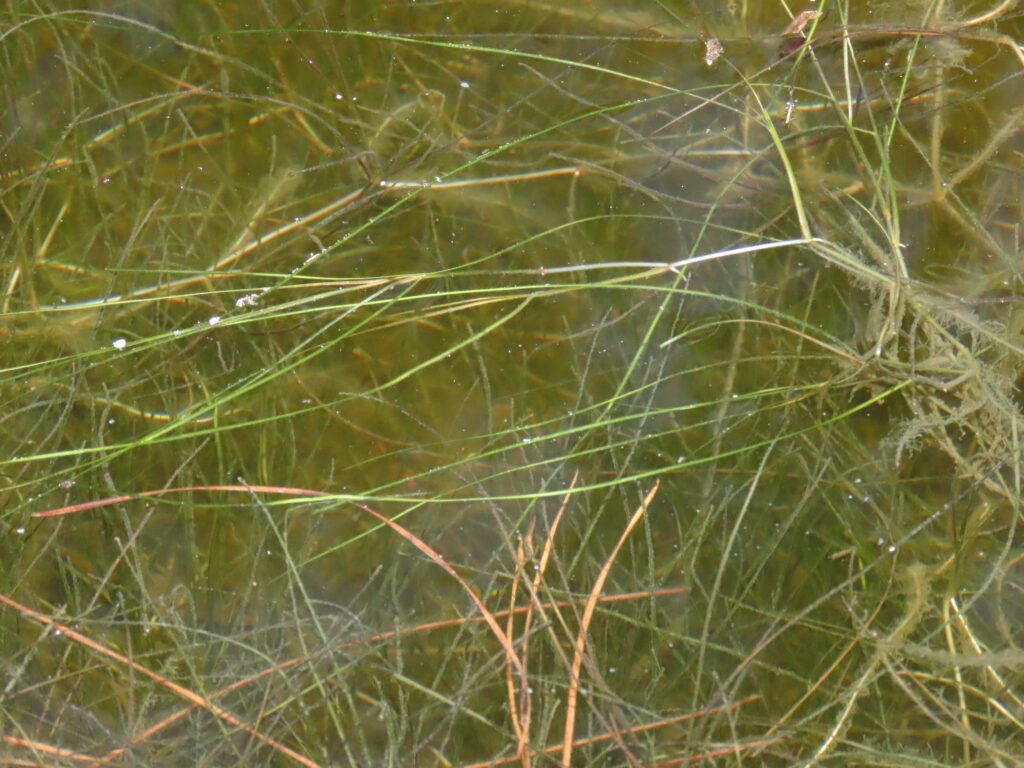
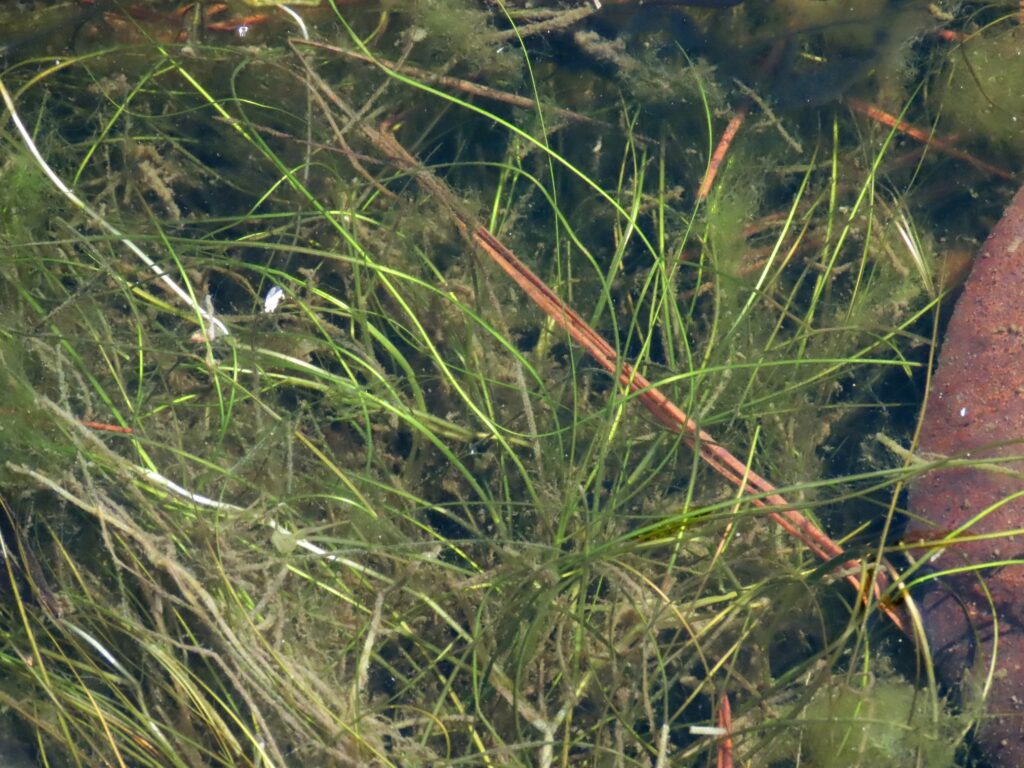
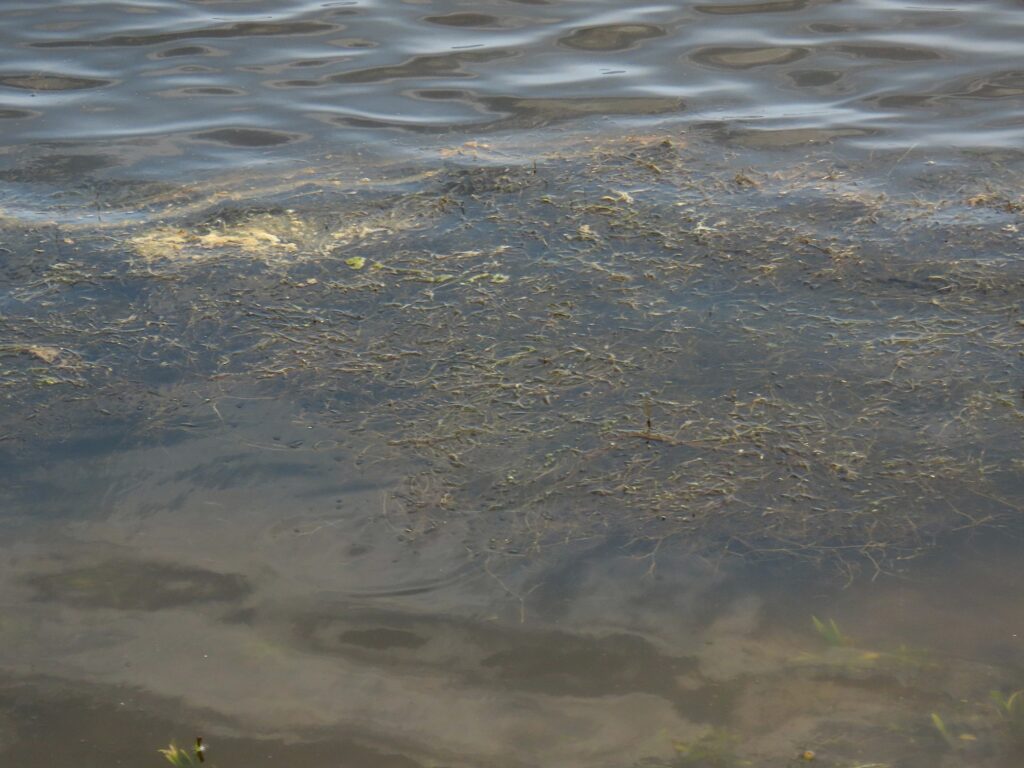
This week for Flora and Fauna Friday, we have the wild, wiry workhorse of waterfowl wetlands, Widgeongrass (Ruppia maritima).
Widgeongrass is neither a grass, nor is it a widgeon. It’s a member of the monocots clade of plants and belongs to a small family, Ruppiaceae, containing just the one genus of Ruppia, with only eleven species contained within it. Widgeongrass is found in coastal waters all throughout the United States and much of the globe. It thrives in saline and brackish ponds, ditches, lakes, lagoons, and impoundments that hold water year-round. It a submergent aquatic plant, growing from the saturated soil of a wetland but staying entirely beneath the water’s surface. The plant grows in wiry, forking fans of zigzagging threads that hue a dark pine to emerald-green in color. The plant spreads through underground rhizomes and its many stems grow together to create a dense wall of stringy vegetation around the shores of brackish ponds or coalesce into heavy mats all throughout more shallow impoundments. These mats help stabilize shorelines, create underwater habitat, and the plant itself sequesters excess nutrients from the water column.
Widgeongrass is an incredibly important plant in these shallow and relatively stagnant brackish systems. It forms a network of interlinked stems that provide structure and refuge for aquatic algae, crustaceans, insects, and other invertebrates to cling to, eat, and live within. These organisms, alongside Widgeongrass, provide abundant food for fish, gastropods, shorebirds, and waterfowl who in turn are food for turtles, alligators, otters, mink, raptors, terns, and even people. In particular, Widgeongrass is a vital and dependable food source for many species of waterfowl in the vast network of tidal rice impoundments managed throughout the ACE Basin, and especially so in permanently flooded and highly saline impoundments and ponds. The entire plant is edible to ducks and its lingering vegetation and prolific seeds are a staple food source for many species of waterfowl across the Lowcountry each winter.