This week for Flora and Fauna Friday it’s a three-leaved weed of spring, Wood-Sorrel (Oxalis spp.).
Here in the Lowcountry we can expect to find six species of Wood-Sorrel. Three of those are native species: Slender Yellow Wood-Sorrel (Oxalis dillenii), Common Yellow Wood-Sorrel (Oxalis stricta), and Violet Wood-Sorrel (Oxalis violacea). The other three are exotic species: Creeping Wood-Sorrel (Oxalis corniculata), Large-flowered Pink Wood-Sorrel (Oxalis debilis), and Pink Wood-Sorrel (Oxalis articulata). All six of these Wood-Sorrel species share a few common features, making this genus easy spot out in the wild. Our Wood-Sorrels are low growing forbs, often not getting more than three to six inches tall. They have five-petalled, funnel shaped flowers and they bloom mainly in early spring. Most notably, Wood-Sorrels have symmetrical compound trifoliate leaves. Each of its three leaflets are heart-shaped with a seam down its middle. In response to light or heat stress, their leaves can both fold upward and lower downward into a unique shape, kind of like a paper fortuneteller. Their overall three-way leaf shape resembles that of Clover (Trifolium spp.), which is another common group of, low-growing, spring wildflowers. However, Clover leaflets usually aren’t heart-shaped and are rarely ever all symmetrical in size and shape.
The Irish term “Shamrock” generically refers to Clovers, but it also was historically applied to Wood-Sorrels on occasion. I won’t here attempt to decant a multi-century Irish history lesson down into two sentences, but just know Shamrock is an old term that symbolized Clovers and came to represent St. Patrick, and eventually Ireland at large. However, here in America, we have collectively decided to represent the term with an imaginary plant that is a curious amalgamation of both Wood-Sorrel and Clover. Our modern Shamrock has the leaf arrangement of a Clover but the leaflet shape of a Wood-Sorrel. It’s a strange fake plant which we plaster all about the place every St. Patrick’s Day and is a curiosity most people don’t recognize, nor care about after their seventh Guinness of the morning. Yet it drives pedantic botanists (like me) mad every March.
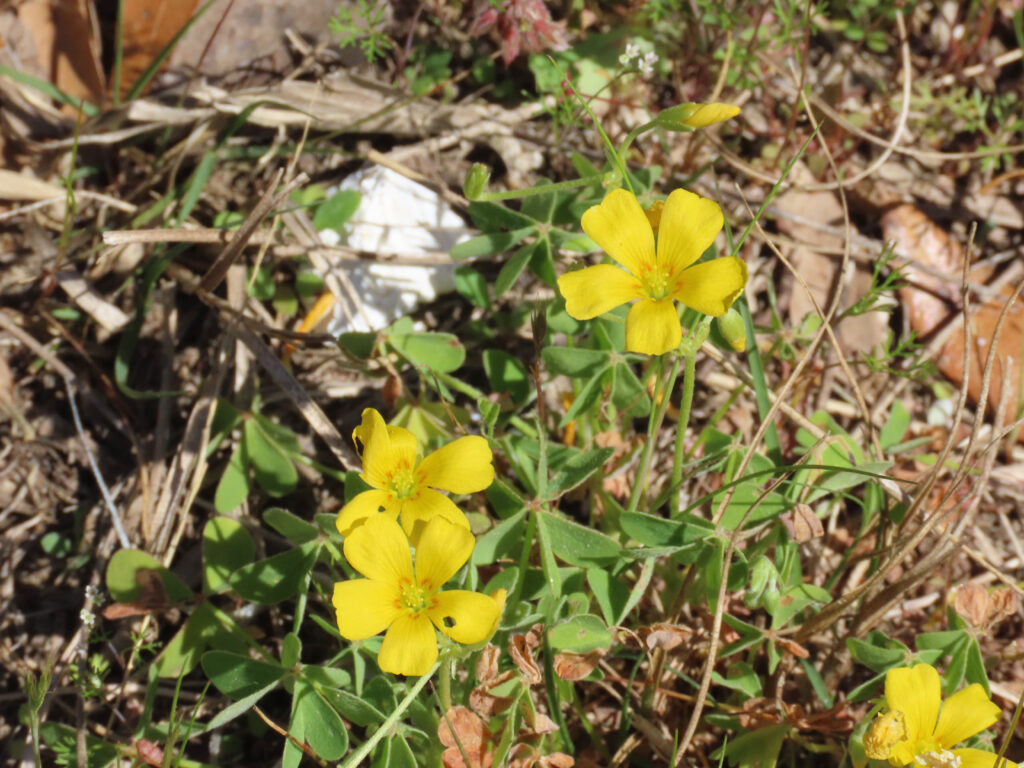
Slender Yellow Wood-Sorrel is by far our most common Wood-Sorrel in South Carolina and also a native species. It grows as an annual most often, but can survive as a perennial with some irregularity. It has a single stem and a bushy, upright growth form. Its leaves are small and emerald-green and its flowers a pure lemon-yellow. Its stems, upon close examination, have sparse, fine hairs that lay flat upward against the stem, an important feature to note. It is found commonly in lawns, garden beds, forest clearings, roadsides, and other disturbed areas.
Common Yellow Wood-Sorrel is native and, ironically, not all that common in the Lowcountry, instead being more abundant in the Northeast and Midwest. It looks nearly identical to Slender Yellow Wood-Sorrell: a single stem taking on a bushy, upright growth form, small emerald-green leaves, and small lemon-yellow flowers. However, its stems have a profusion of fine hairs that extend perpendicular from its stems. Its flower clusters also tend to have double the number of flowers and fruits. It’s also a weak perennial and found in disturbed, sunny areas as well as forest clearings.
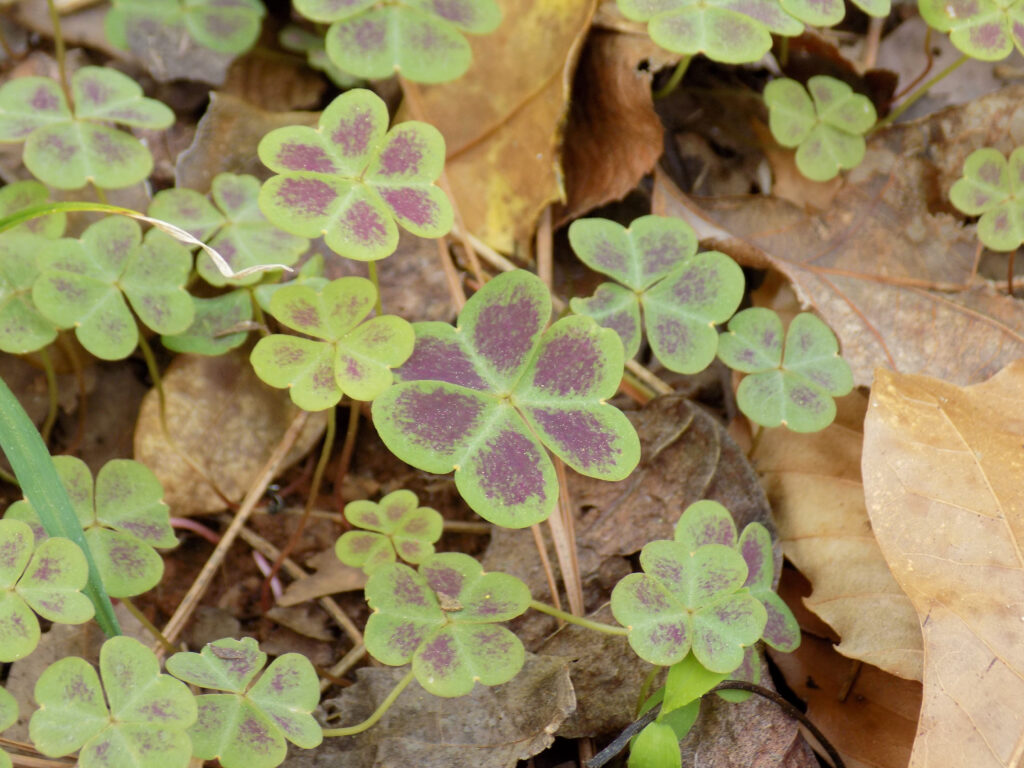
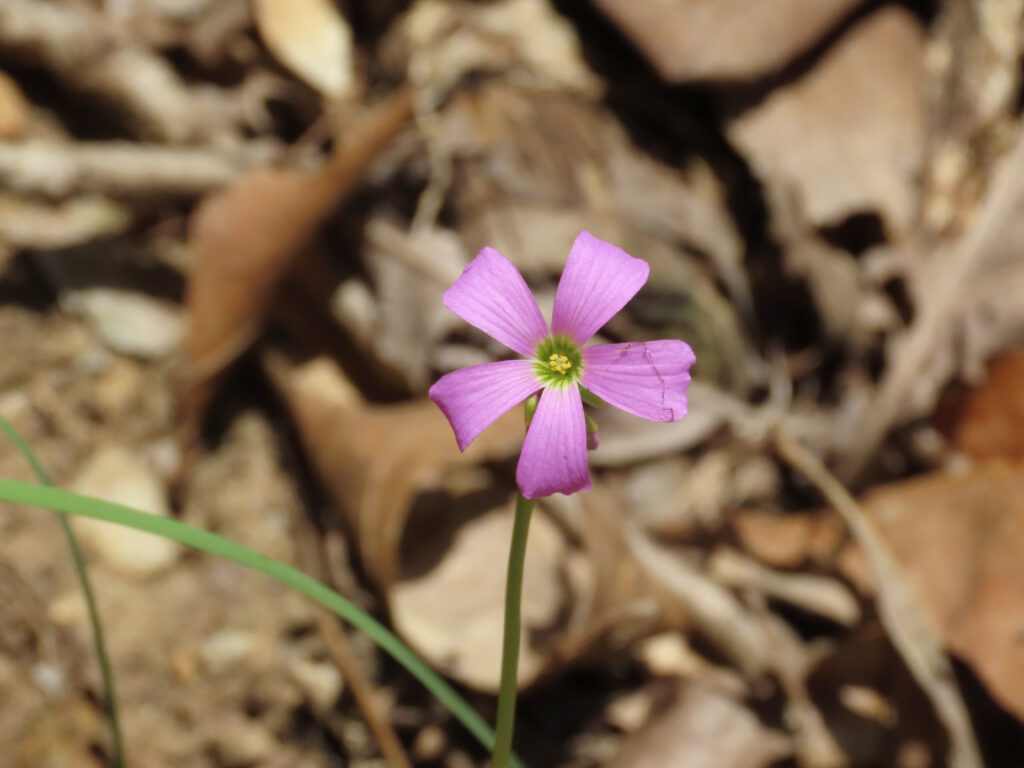
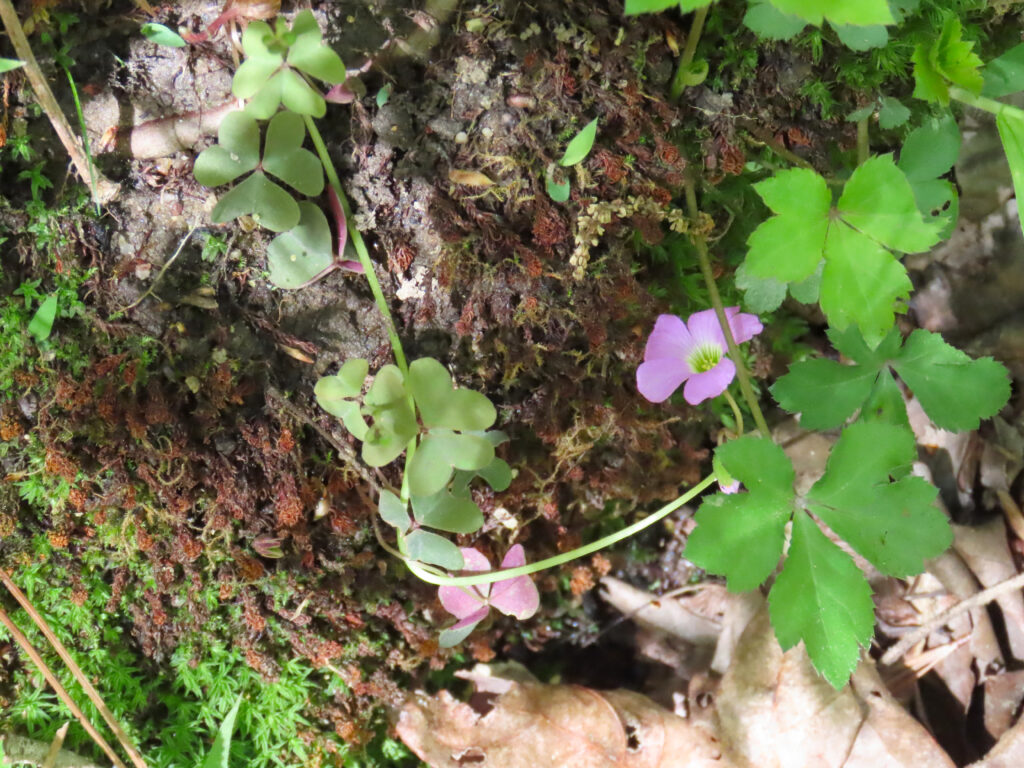
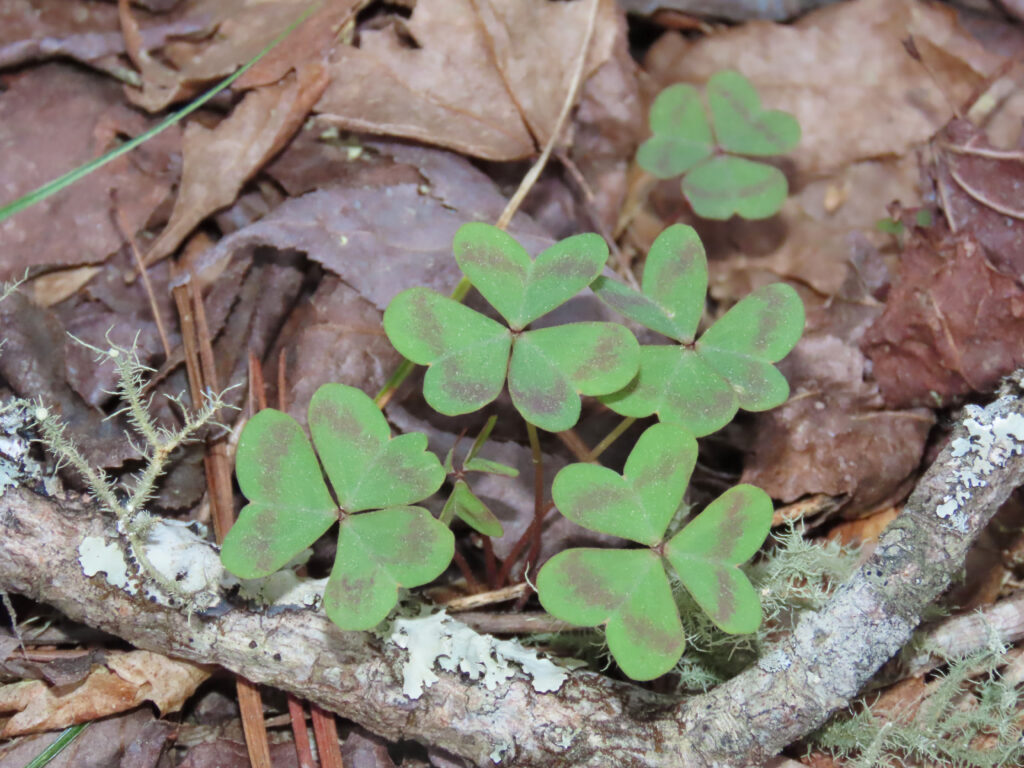
Violet Wood-Sorrel is a native species and a perennial. It grows a small bulb underground and spreads through roots to form small colonies. Its leaves hug the ground, forming a carpet of foliage. The leaves of Violet Wood-Sorrel are often a jade-green but can flush from the center of each leaflet with a rich, dark-purple that either appears as a horizontal slash, a central splotch, or suffuses the entire leaf. The underside of its leaves are the same purple color. Its flowers are borne singly and are hot-pink with a yellow-green center. Its flowers are about the same size as its leaves. Violet Wood-Sorrel is most often found in rich, moist hardwood forests with some amount of slope. This makes it a very rare sight on the Sea Islands but relatively abundant towards the mountains of South Carolina.
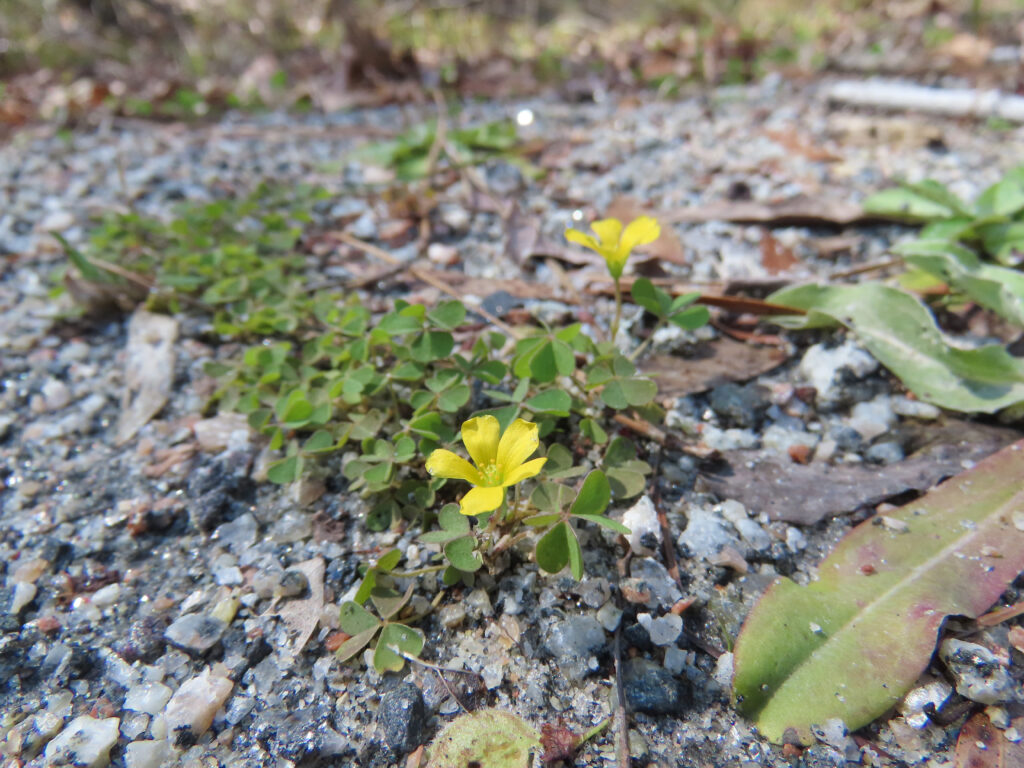
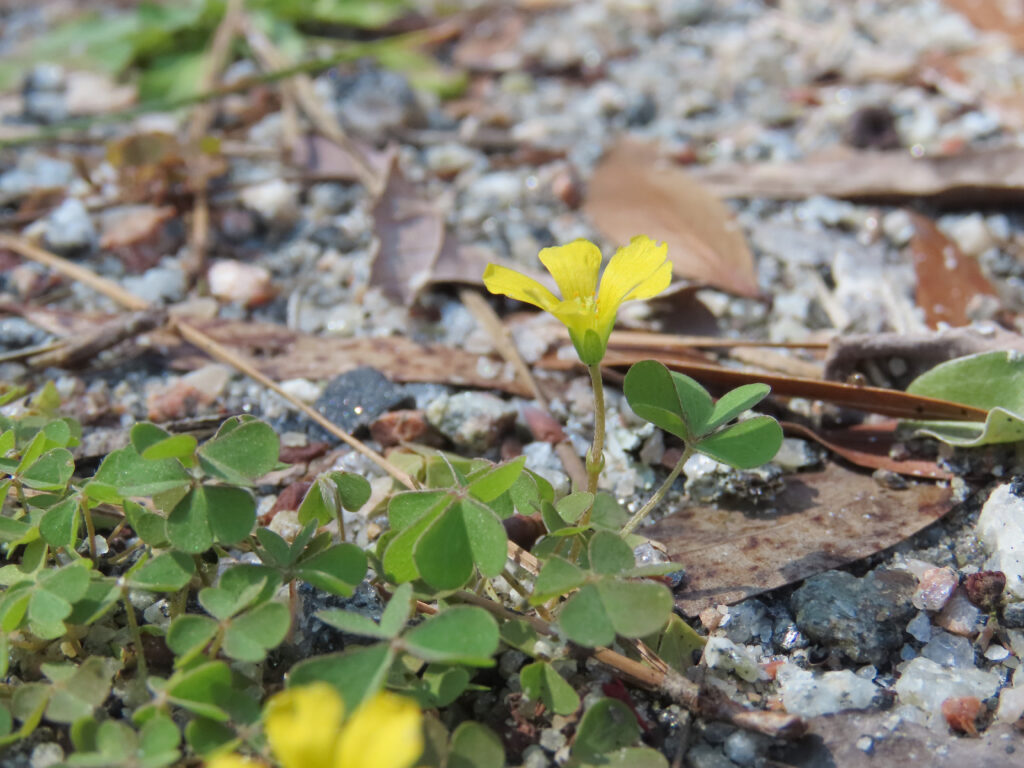
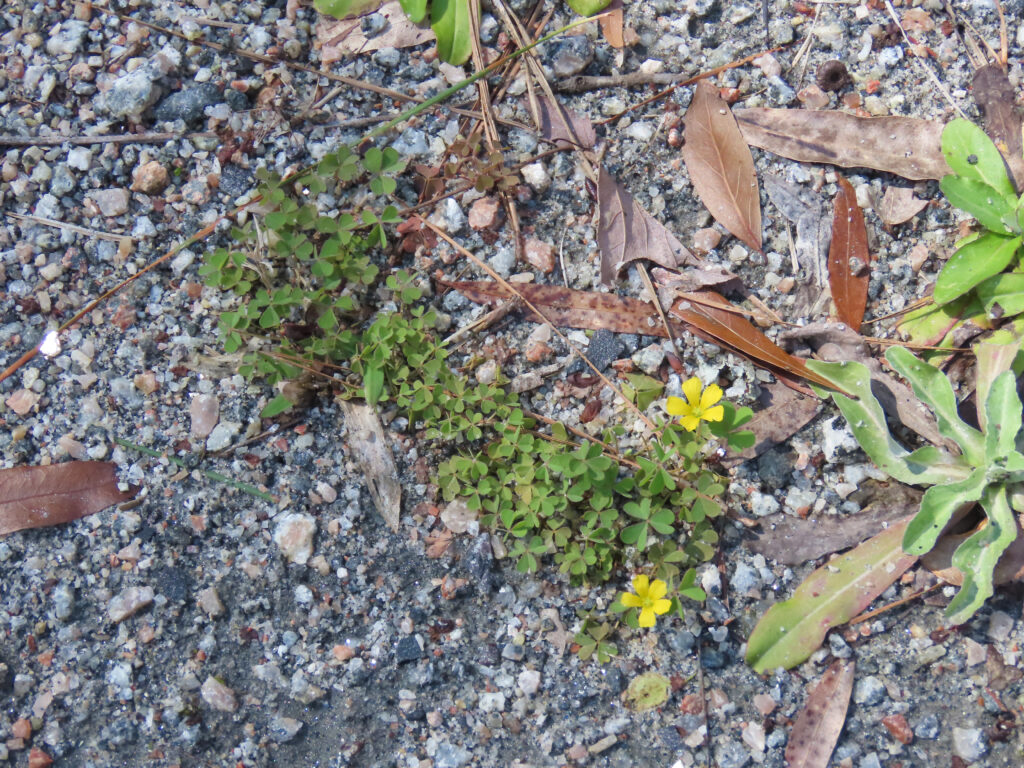
Creeping Wood-Sorrel is an exotic species believed to originate from Southeast Asia. It has an appearance much like Common Yellow Wood-Sorrel, including its hairy stems. However, Creeping Wood-Sorrel creeps laterally along and under the ground rather than growing upright. Its yellow flowers sometimes show orange-red near the center and are very small relative to its leaf size. Its leaves can turn a reddish-purple when exposed to excessive sun and stress. This species is most often encountered in heavily disturbed areas and is particularly fond of growing in sidewalk cracks. It is a weak perennial that may or may not overwinter.
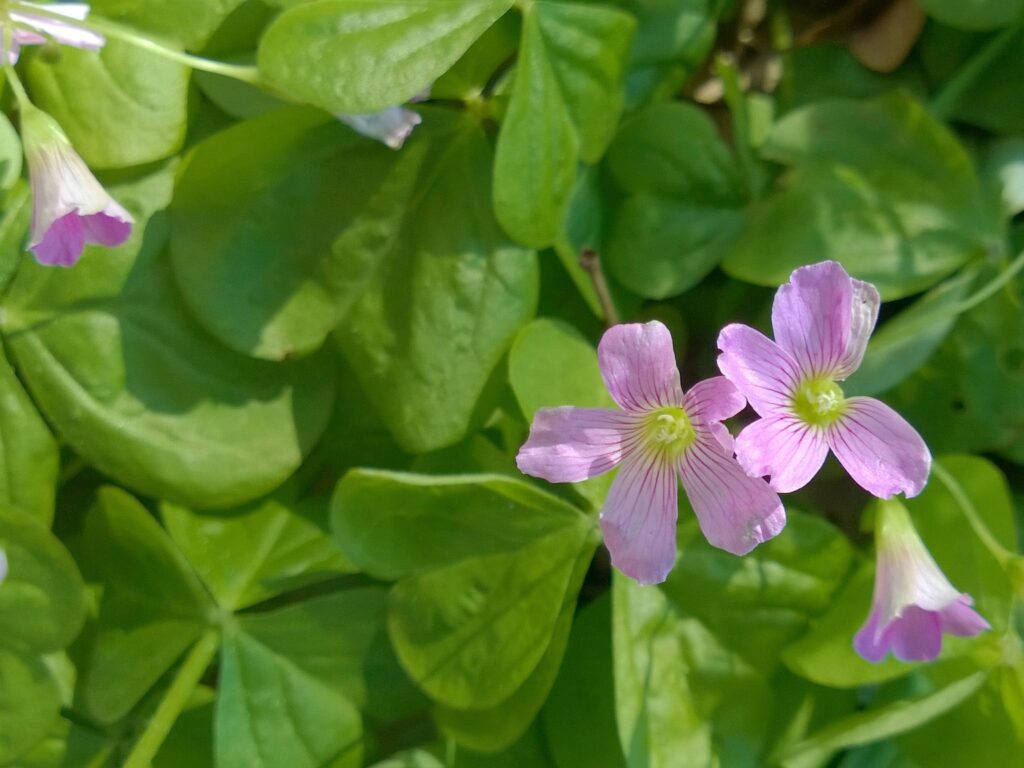
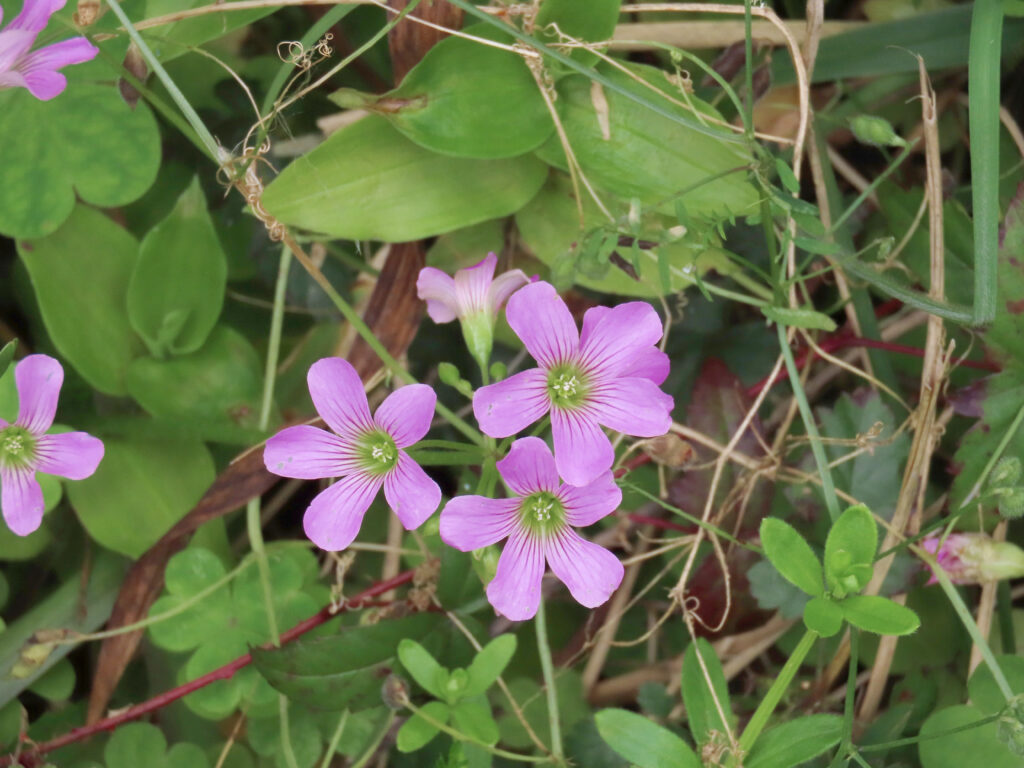
Large-flowered Pink Wood-Sorrel is an exotic species native to South America that has since spread across the globe. It is easily recognized by its large, inch-and-a-half or wider, smooth but slightly wrinkled leaves and large hot-pink flower with fine magenta stripes and a green-yellow center. It is a perennial with a sizable underground bulb. Large-flowered Pink Wood-Sorrel is sometimes sold as an ornamental and can be found commonly around house and in garden beds, as well as roadsides in the Lowcountry.
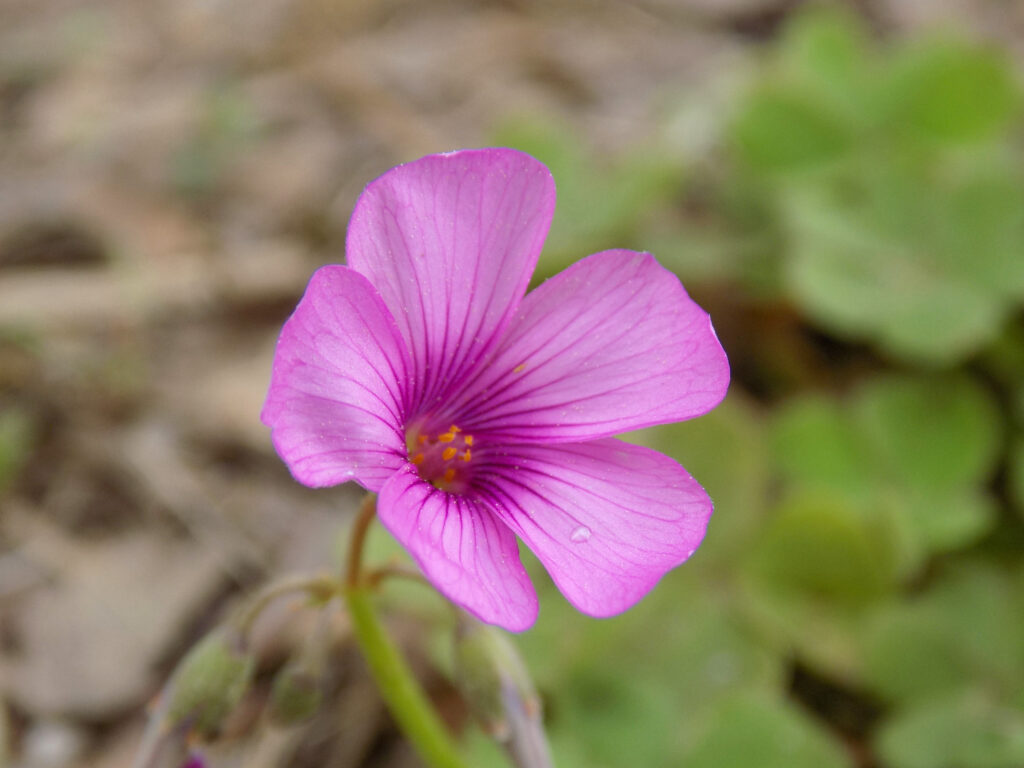
Pink Wood-Sorrel is an exotic species native to the subtropics of South America. It is a strong perennial with a woody, taproot-like rhizome that extends down several inches into the soil. Its leaves have fine hairs across their surface and these leaves can range widely in size from and an inch to two inches across. Its flowers are large and hot-pink with fine magenta lines and most often a burgundy center. Pink Wood-Sorrel is commonly sold as an ornamental and can sometimes be found around homes, gardens, and roadsides in the Lowcountry.