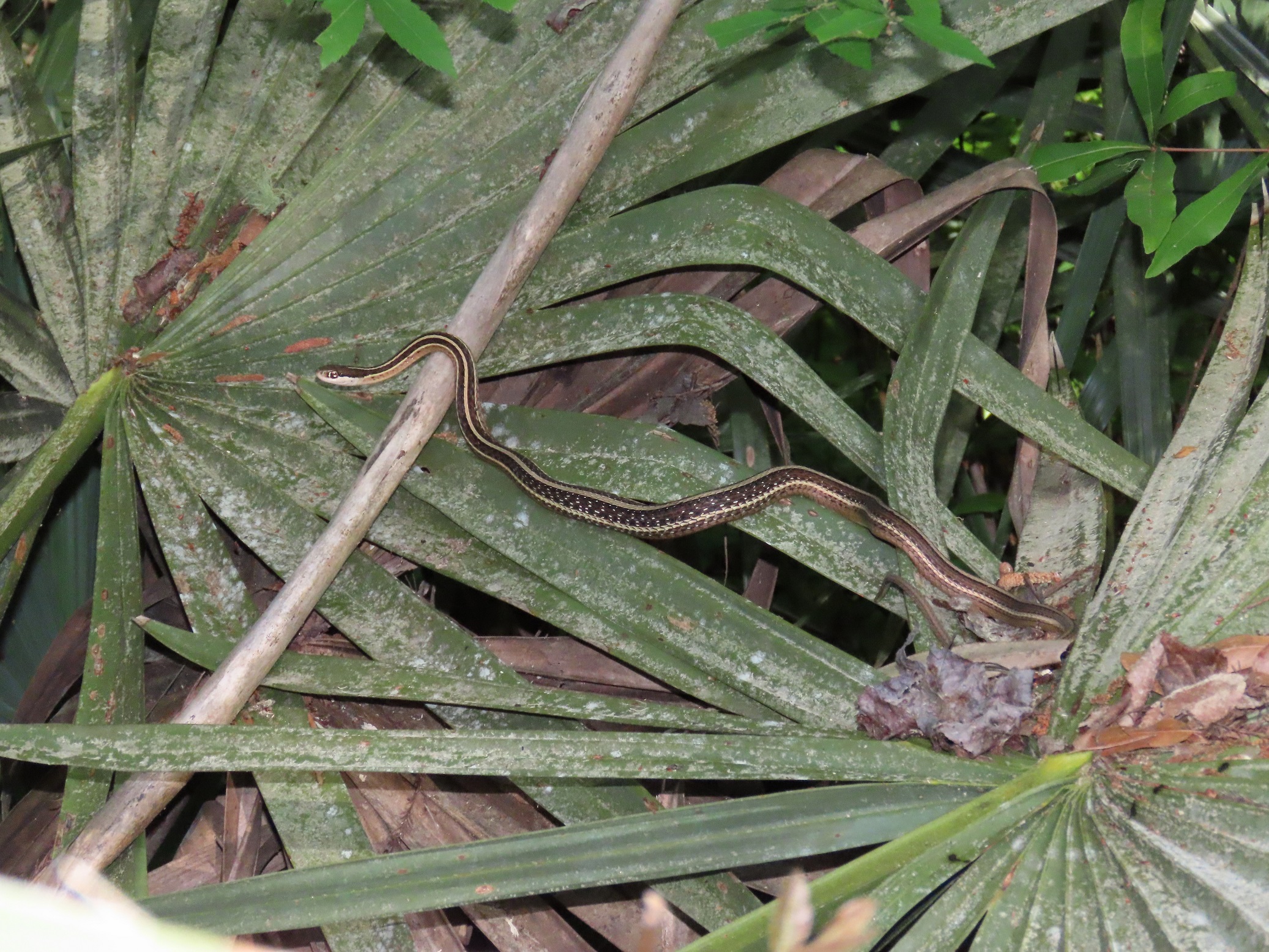
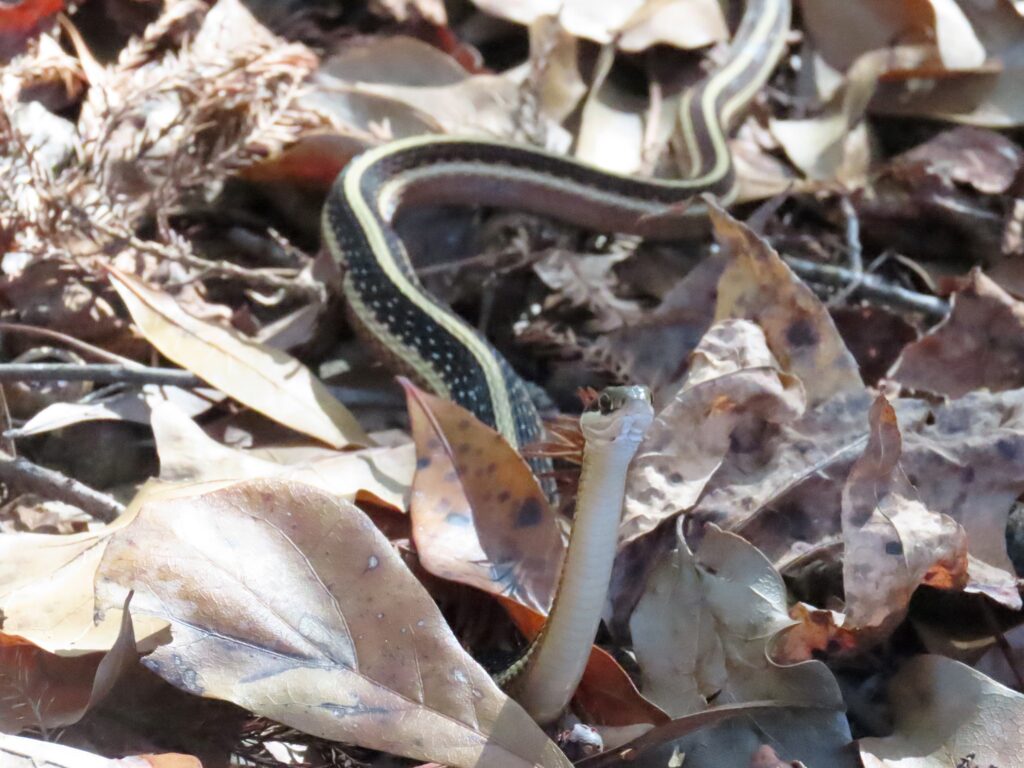
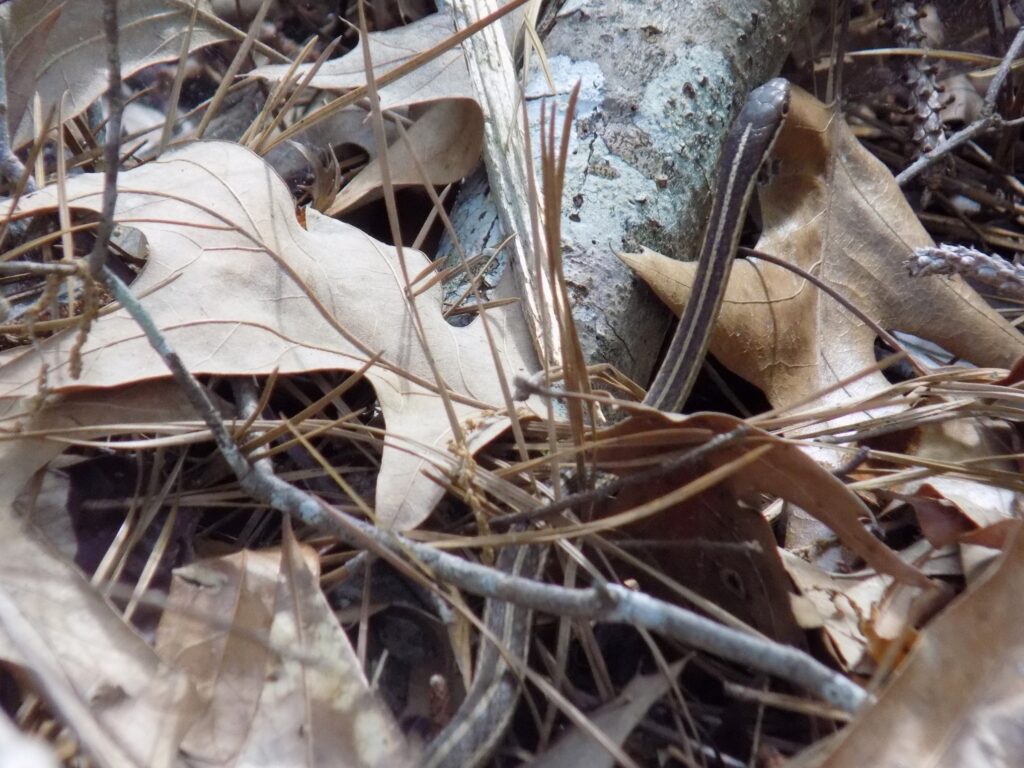
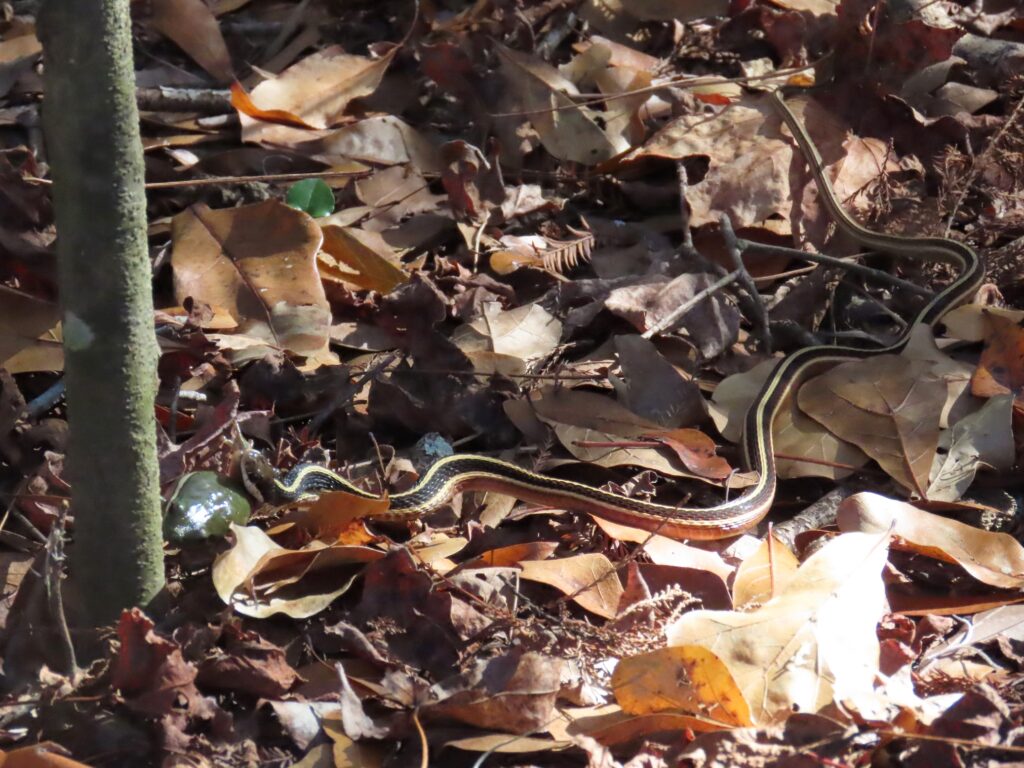
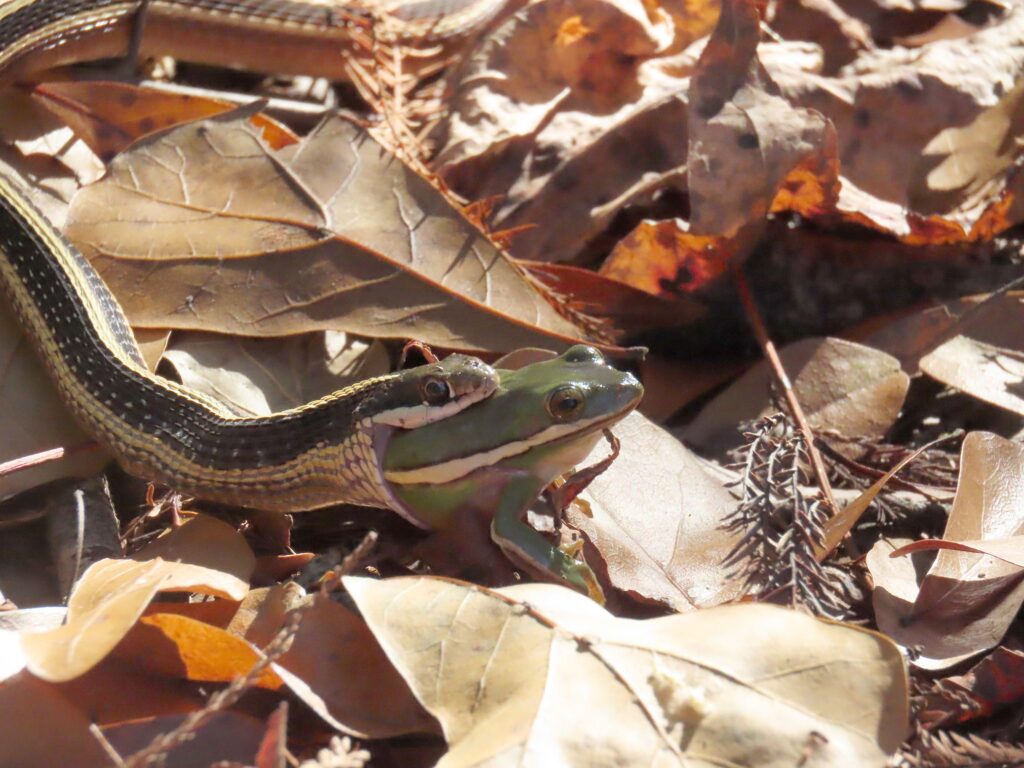
This week for Flora and Fauna Friday, we’re tracing out the finely lined Eastern Ribbon Snake (Thamnophis sauritus).
The Eastern Ribbon Snake is found throughout South Carolina and much of the Eastern United States, excepting the Appalachian mountains. Ribbon Snakes grow up to two feet in length and have a very narrow, delicate body with a proportionately slightly oversized head and eyes. Their belly is a pale-yellow or ivory. Their back is a dark-walnut or chestnut-brown, sometimes with faint checkerboard pattering along their flanks, and has three obvious pale-yellow lines down their length, one in the center and one on each flank. Eastern Ribbon Snakes closely resemble their cousins, the Eastern Garter Snake (T. sirtalis sirtalis). However, the Garter Snake is heavier bodied, often greener in coloration, and has more pronounced checkering. A quick way to check between the two species is to look at the lower jaw. Garter Snakes generally have black lines between their labial scales while Ribbon Snakes have a solid white jaw.
The Eastern Ribbon Snake is found in wet habitats, most often along wetland margins, pond banks, pocosins, bottomlands, floodplains, and other areas where water intermingles with land. They are semi-aquatic, weaving through vegetation and swimming into shallow water in search of frogs, salamanders, fish, insects, invertebrates, and anything else succulent their svelte selves can siphon down. Eastern Ribbon Snakes are non-venomous and, due to their slimness, not constrictors either. They simply overpower and swallow their small, soft-bodied prey whole. If you happen to spot an Eastern Ribbon Snake sitting still, consider yourself lucky! They are quick little buggers and will often vanish like a flash into brush, vegetation, or murky water when walked up on.





© 2026 Edisto Island Open Land Trust.
Built by Colophon