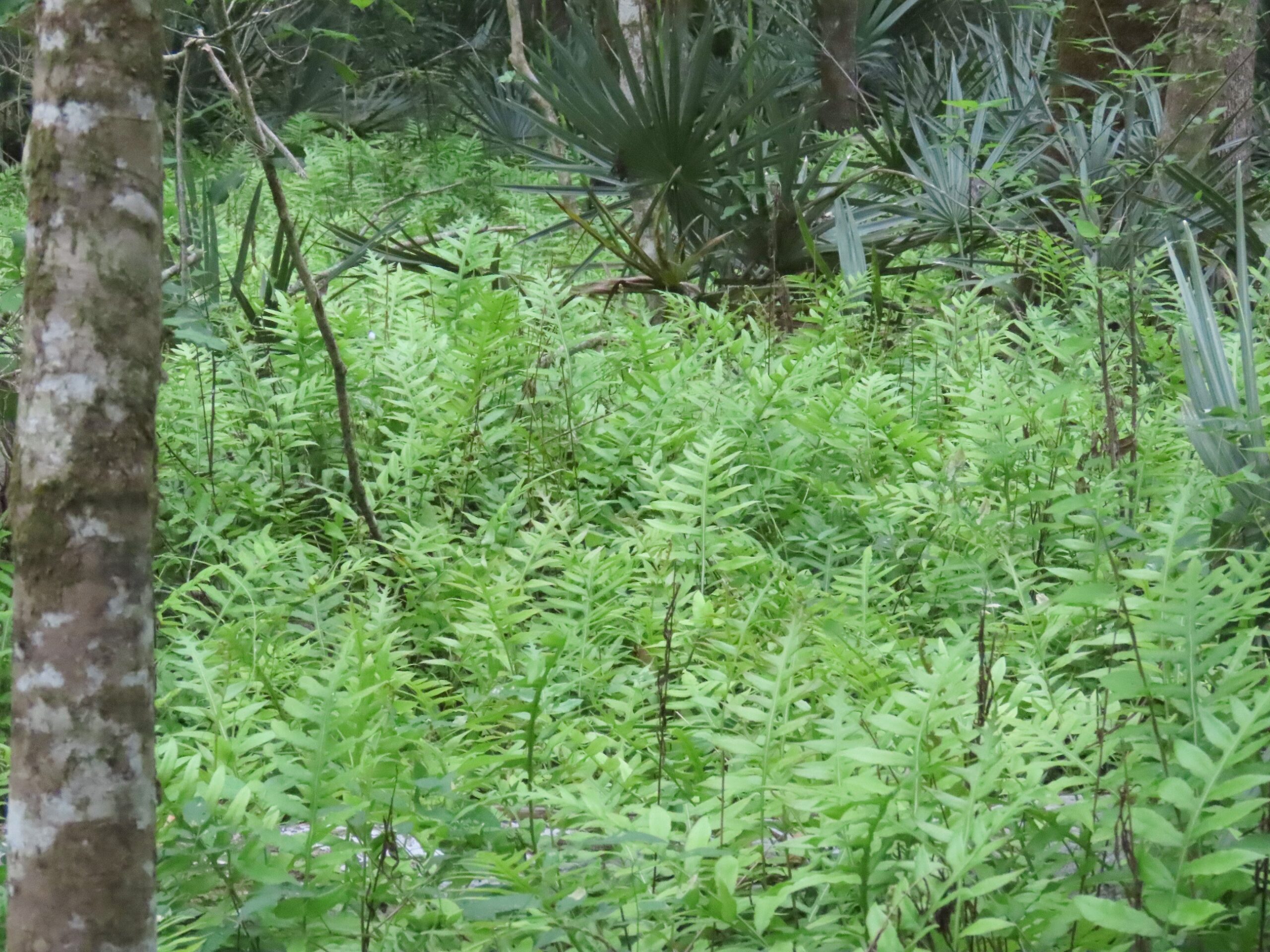
This week for Flora and Fauna Friday, we have three ferns of a feather that fringe wetlands together, Virginia Chain Fern (Anchistea virginica), Netted Chain Fern (Lorinseria areolata), and Sensitive Fern (Onoclea sensibilis).
Here in South Carolina, we have two species of Chain Fern, Virginia Chain Fern and Netted Chain Fern. Both grow deciduous feathery fronds about a foot long, spread underground into small but sprawling colonies, and have a preference for isolated or ephemeral wetland systems in the understory and margin of a forest or woodland. Chain Ferns further get their common name from the net-like chains of circular veins that run down the midlines on the undersides of their fronds. (These two Chain Fern species used to share the genus Woodwardia, but were recently split into their own separate genera.) Sensitive Fern is unrelated to the Chain Ferns, but is similar enough in appearance and habits to warrant being part of the same conversation.
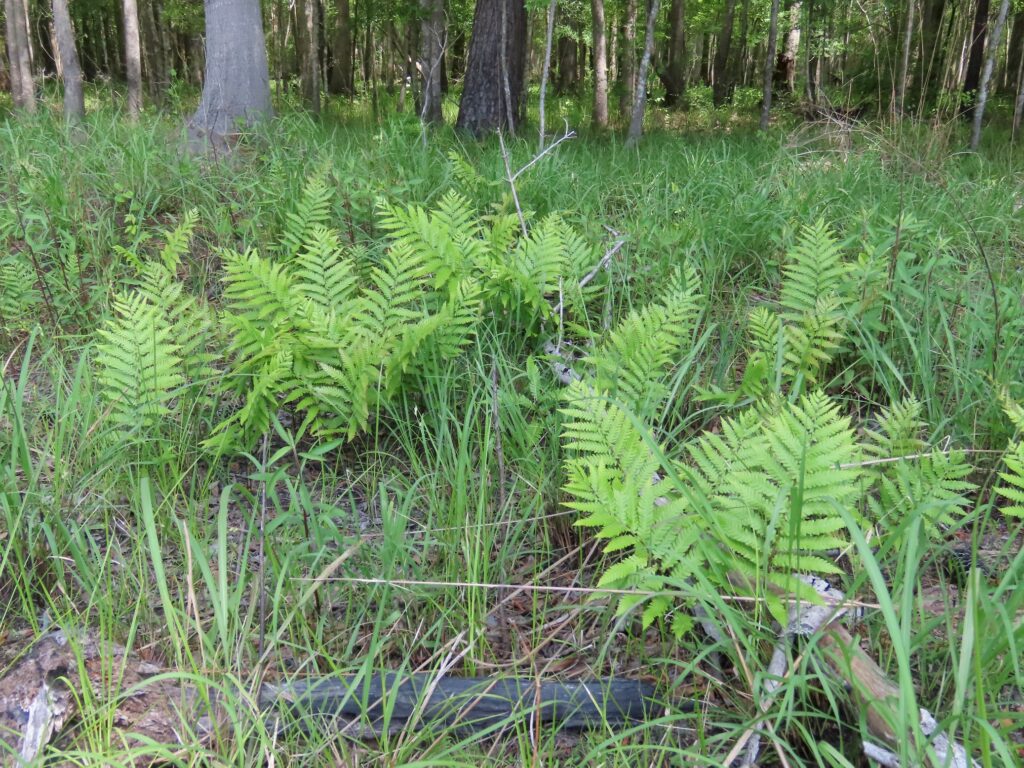
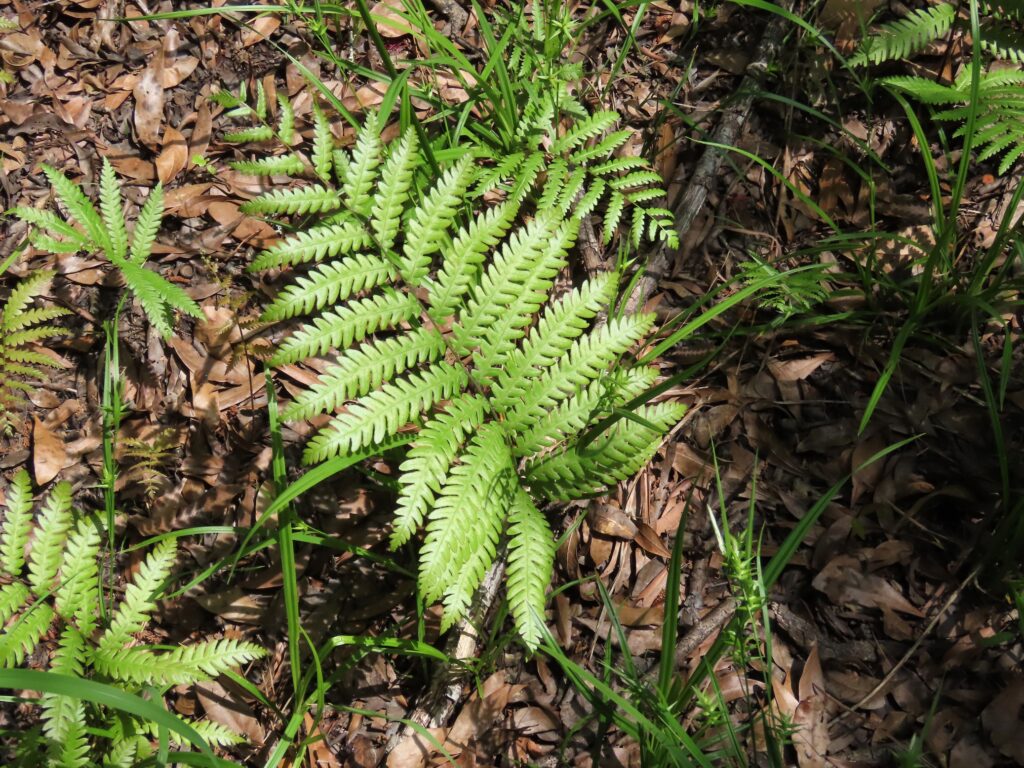
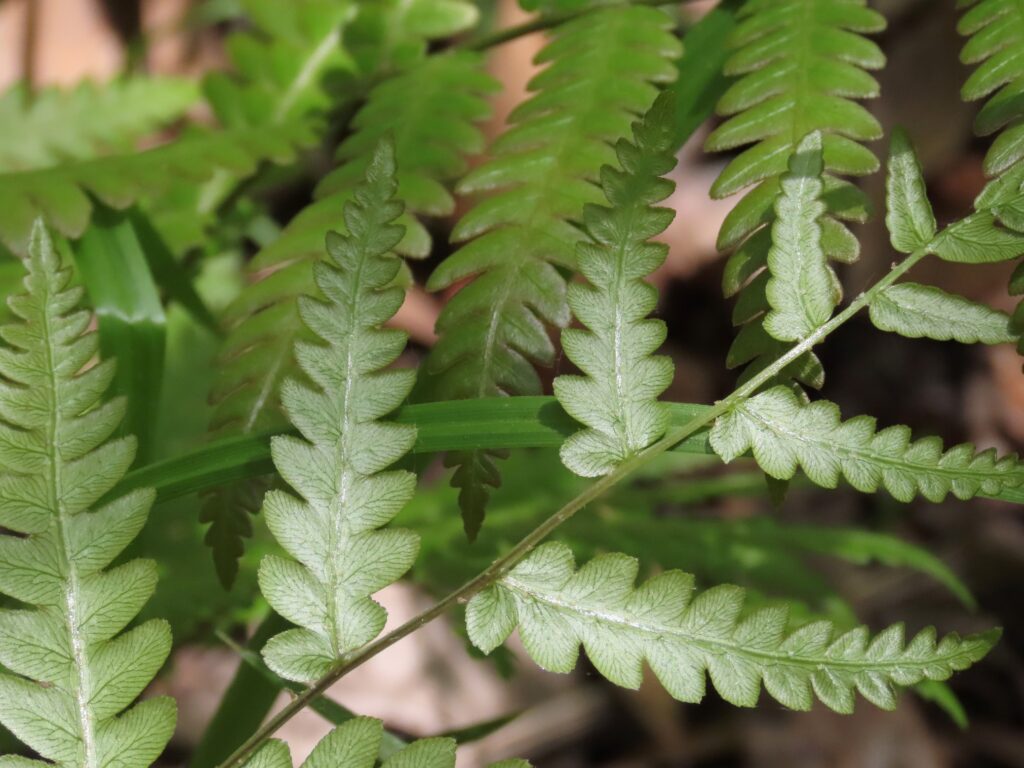
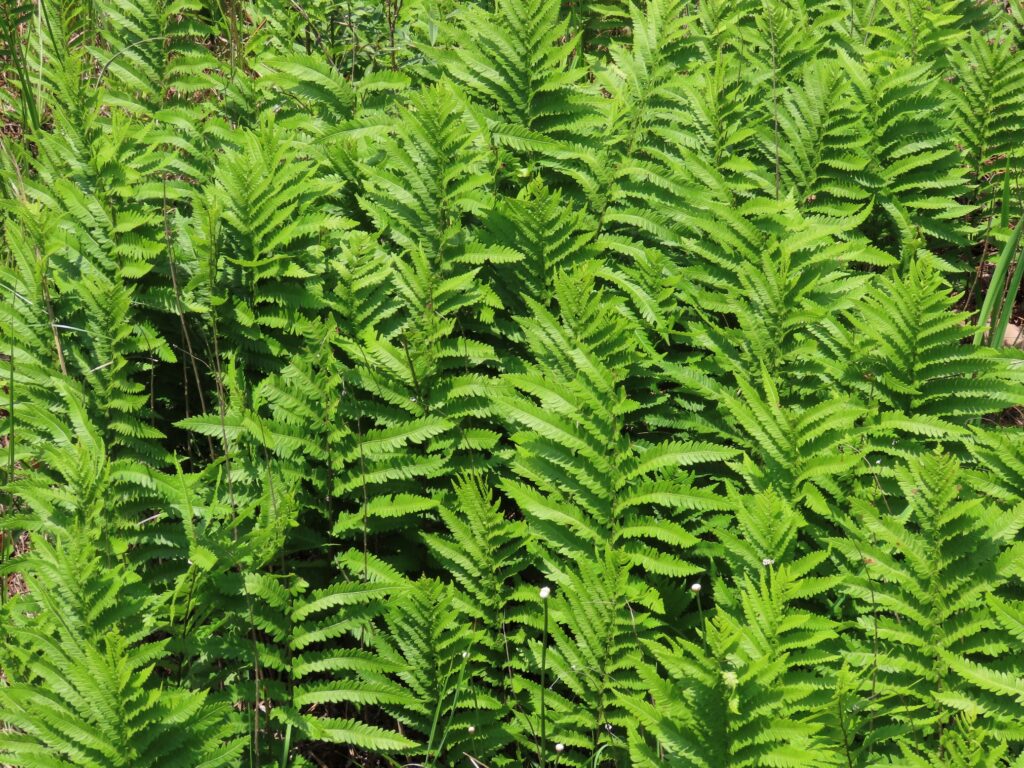
Virginia Chain Fern is restricted to the coastal plain of South Carolina, but nonetheless found throughout the Lowcountry. It is best adapted to locales with acidic soils, more direct sunlight, standing water, and increased disturbance from fire and other forces of nature. This makes it a common sight in Carolina Bays, Pocosins, ditches, and other isolated or ephemeral wetlands in pine dominated or poorly drained systems. However, it will also grow in much the same habitats as Netted Chain Fern when given the chance. Its fronds are a shiny emerald-green and feathery in appearance. Its central rachis, the stem of the frond, is smooth, wiry, and sometimes a dark-green or black. The pinnae have smooth margins and many small, stubby lobes that don’t fully divide to the midvein. Underneath, each of these lobes has a chain of circular veins down its center that radiate out many thin parallel veins towards the margin. Virginia Chain Fern produces fertile fronds that look the same as its sterile fronds but bear spores from granular sori arranged in parallel, angular lines from its chained midveins.
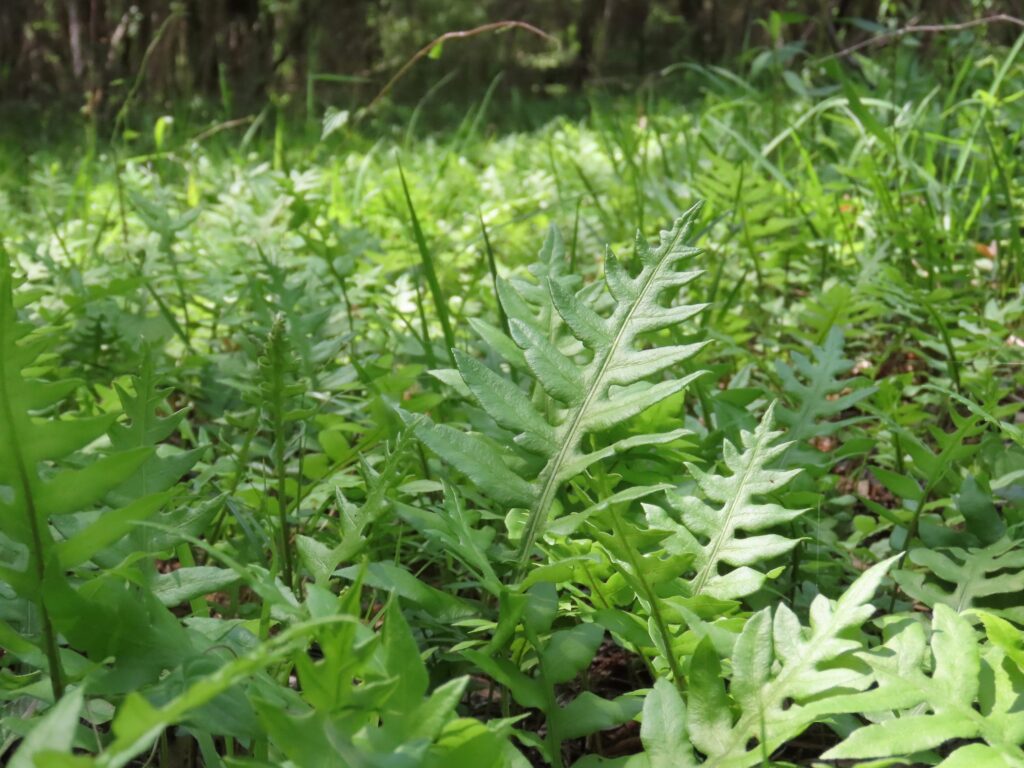
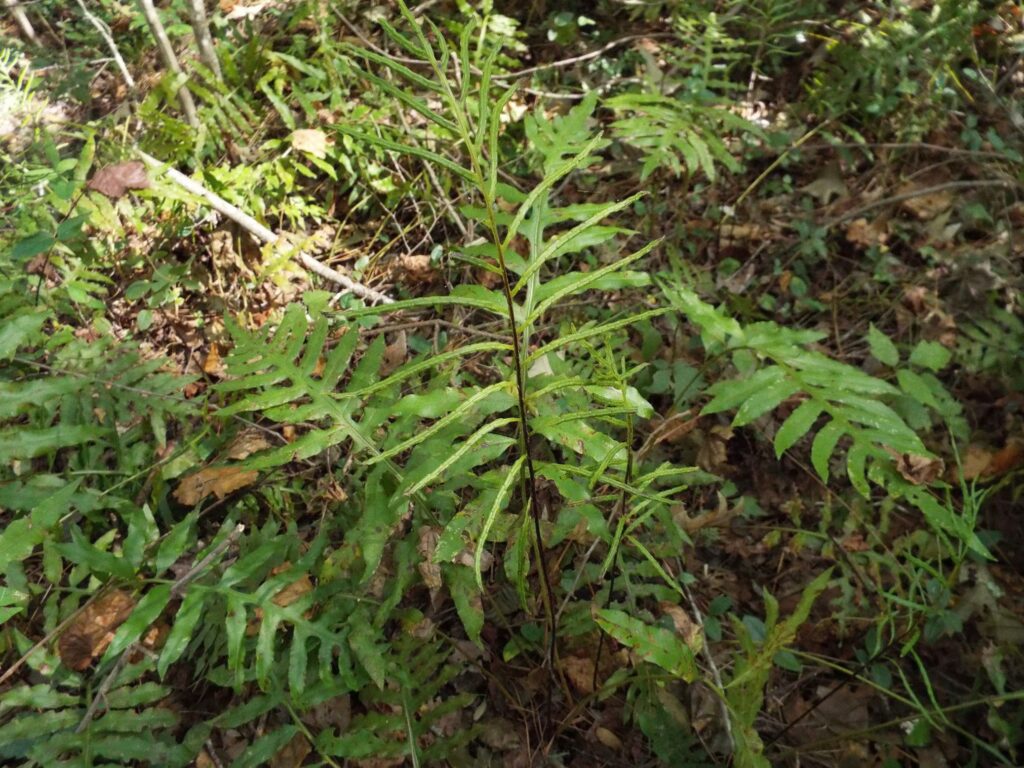
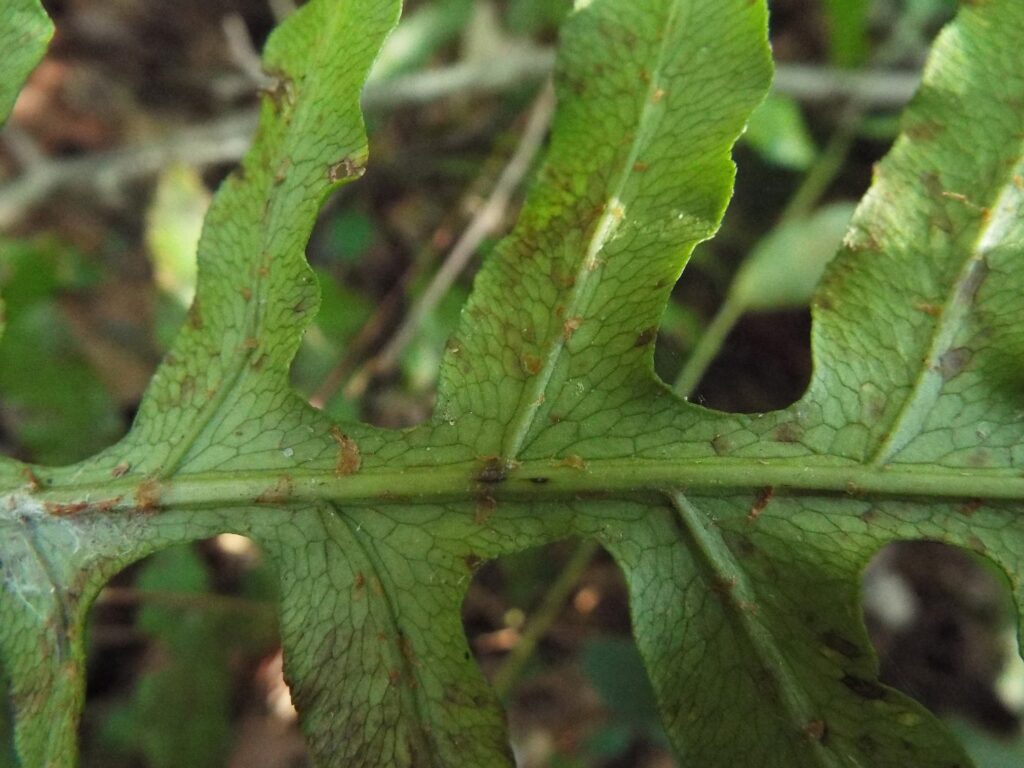
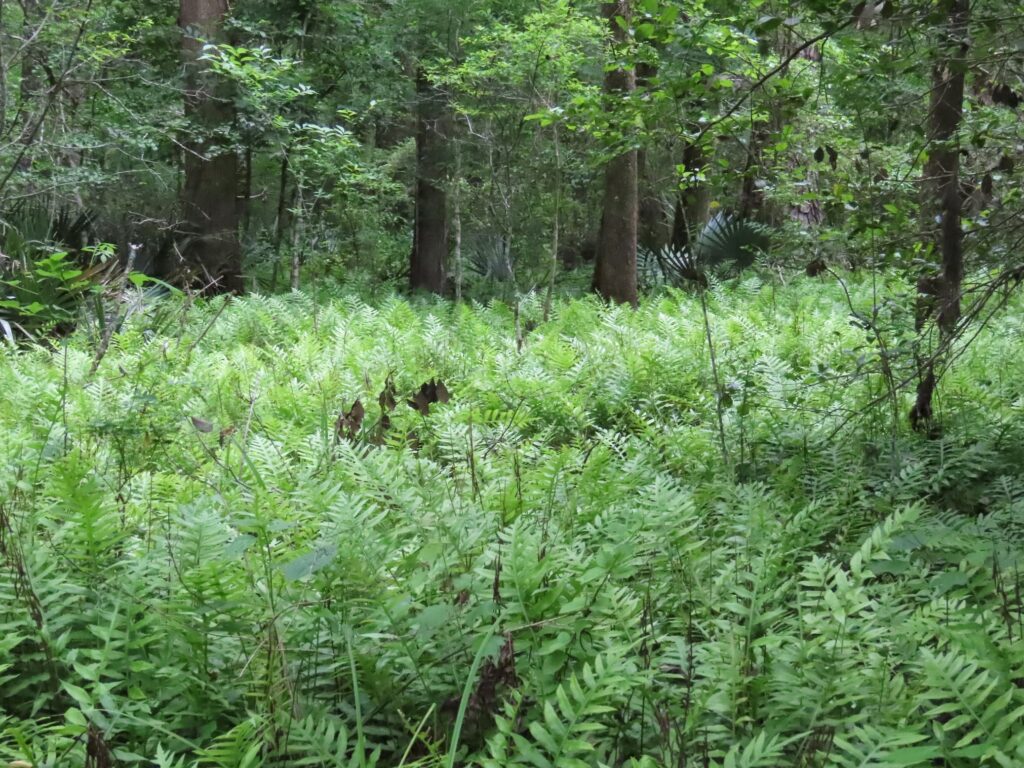
Netted Chain Fern can be encountered all across South Carolina, from the mountains to the sea. It is most commonly found in the understory of hardwood forests growing in wet depression or isolated wetlands, the margins of swamps and freshwater marshes, streambanks, and narrow floodplains outside of standing water. Its fronds are bright emerald-green with entire pinnae that merge together on the upper half of the frond, through a shared wing along the central rachis. Below, these fronds are covered in a net-like network of veins, with a central “chain” down the center of each pinnae. Netted Chain Fern produces spores on fertile fronds, which are similarly shaped to the normal sterile fronds but held upright and possessing a stringy, withered appearance. These fertile fronds bear elongated sori below that look like paired strands of sausage links.
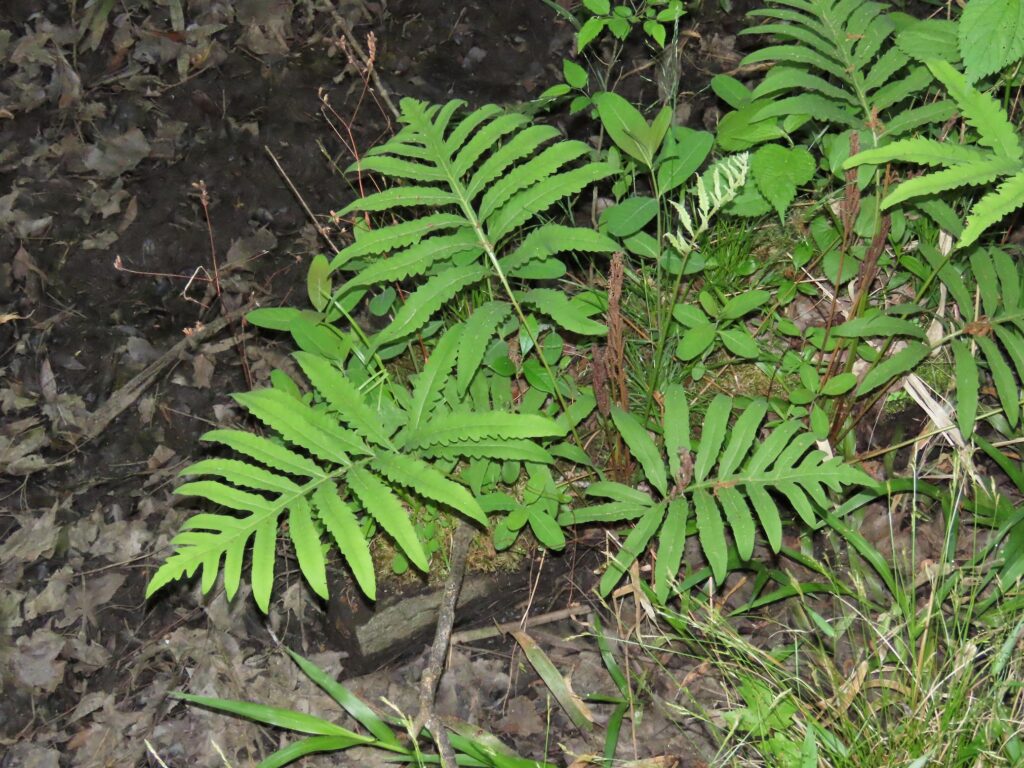
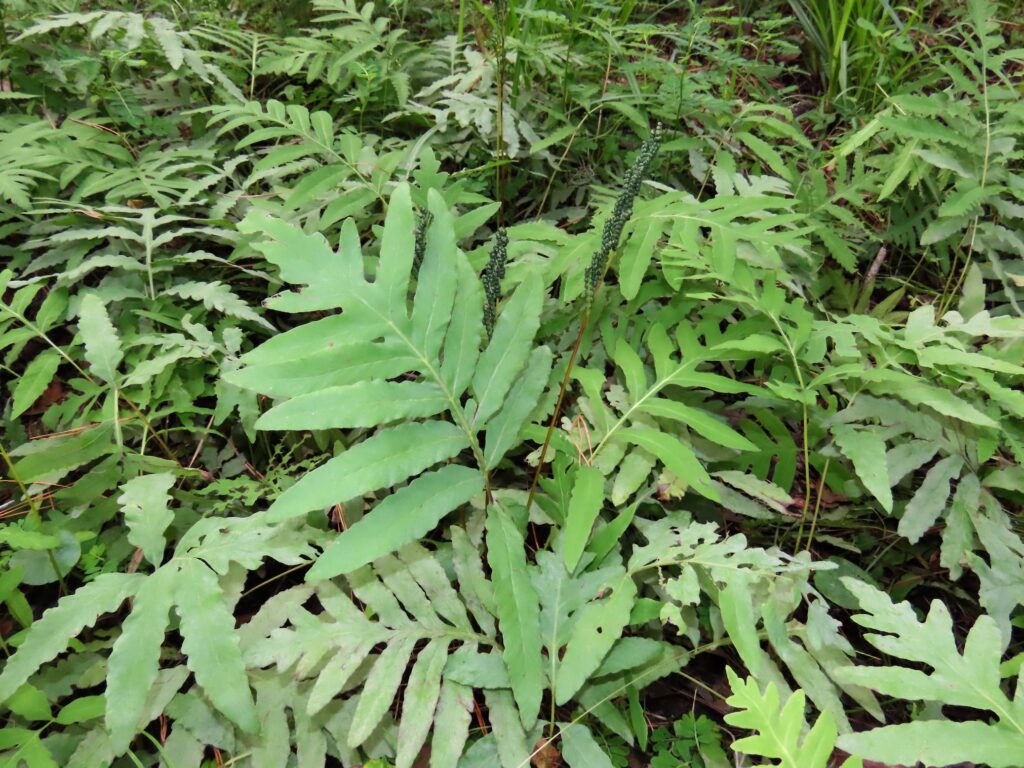
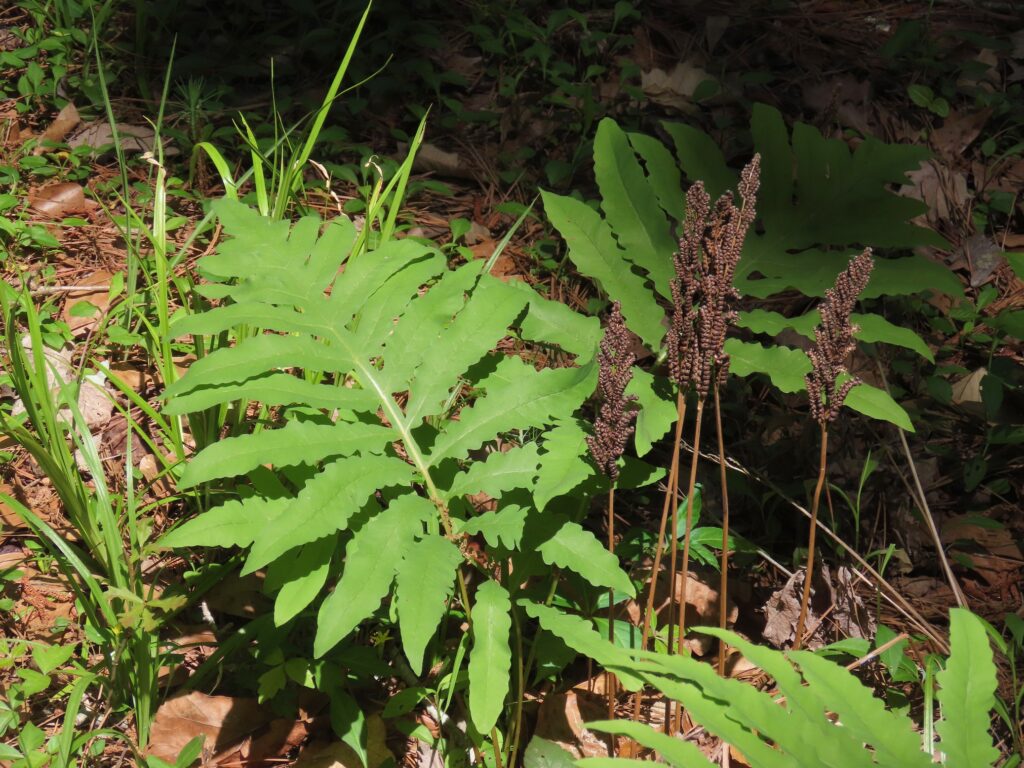
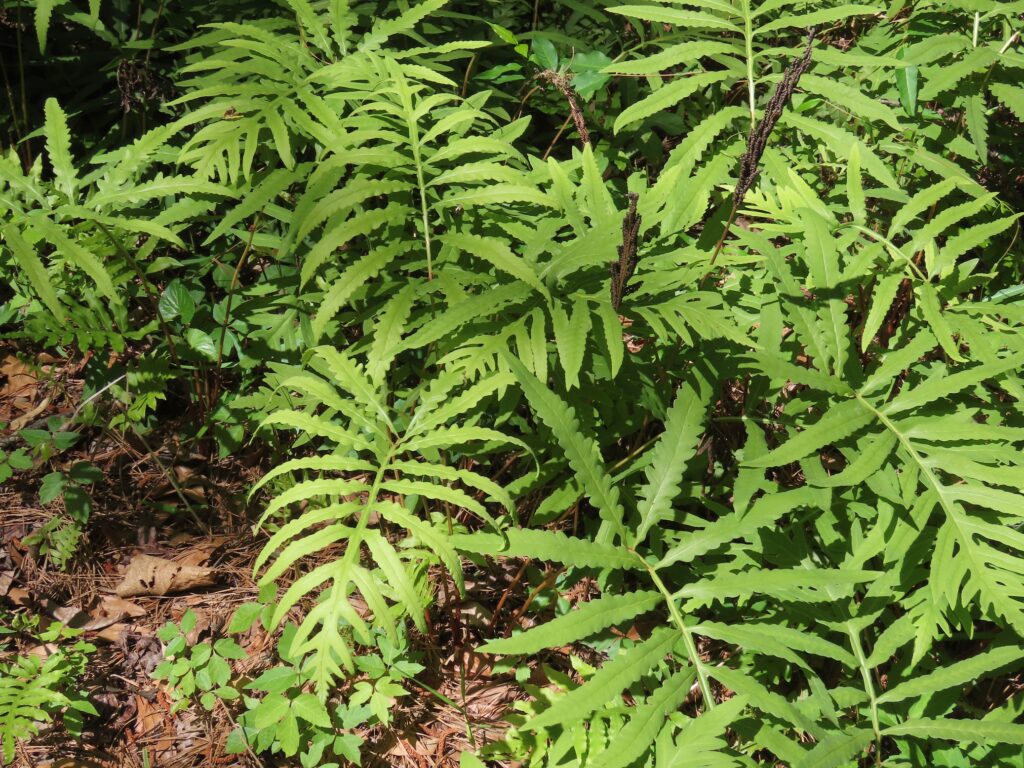
Sensitive Fern is found statewide in similar habitats to Netted Chain Fern, and it shares a close physical resemblance. However, Sensitive Fern, in my experience, prefers to grow in the richer and wetter habitats within river floodplains, bottomlands, and their tributaries and is less abundant on the Sea Islands and along the coast. It can also have significantly larger fronds up to knee height that are more delicate in texture. Sensitive Fern gets it common name from the frost intolerance of its leaves, which wither and die at the first frost. By contrast, Chain Fern leaves are far hardier and leathery, and thus persist longer into winter. On Sensitive Fern, the fronds are often a pale bluish-green and the upper pinnae are solid blades that merge into a common wing along the rachis. The lower you go on the frond, the wavier the pinnae margins are, with the bottom two often prominently lobed. Underneath, it has a prominent, raised vein down the underside of each pinnae, rather than a chain of veins. The fertile fronds of Sensitive Fern are distinct and have upward pointing clusters of spherical sori, like strings of beads.





© 2026 Edisto Island Open Land Trust.
Built by Colophon