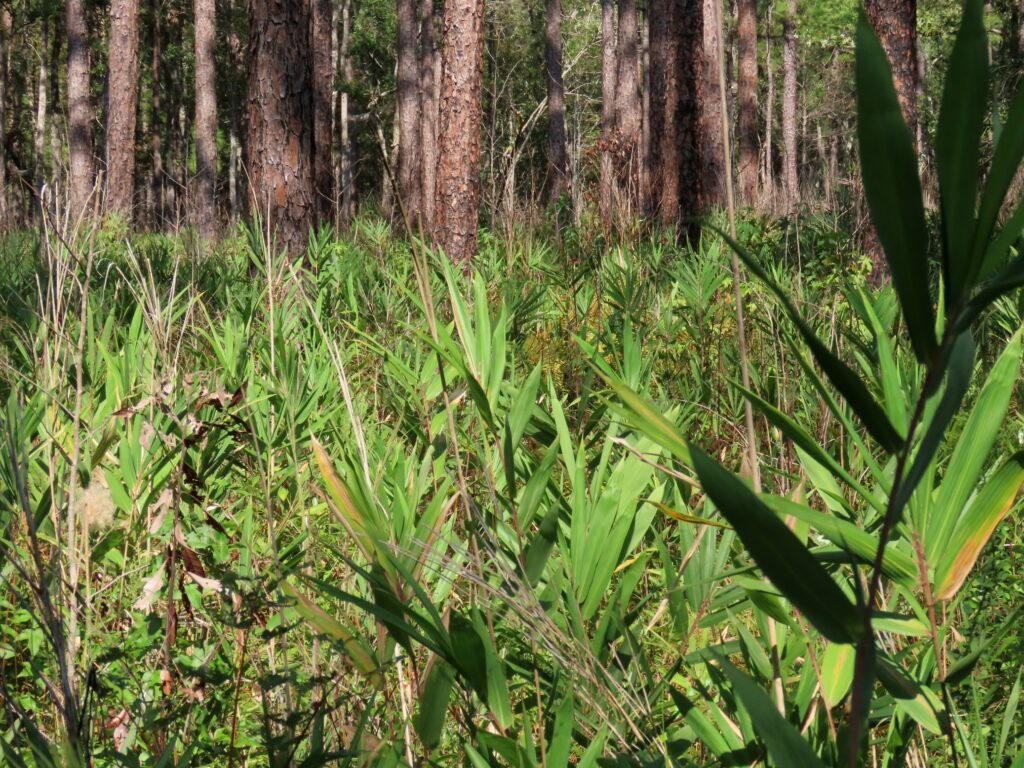
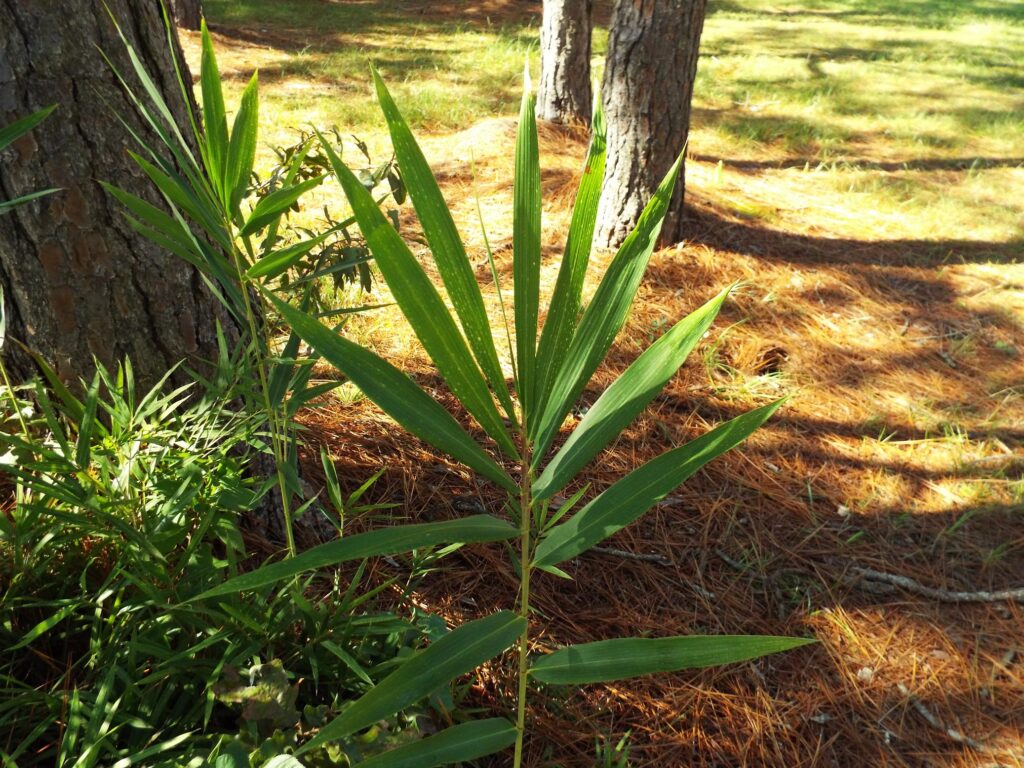
This week for Flora and Fauna Friday we have our native analogue of the iconic grass of the orient, River Cane (Arundinaria gigantea).
River Cane is a large woody grass in the Bamboo genus. It grows in dense thickets, called canebrakes. Canebrakes are found beneath the canopy of floodplain and flatwood forests or on the borders of shallow wetlands. Cane primarily spreads through its roots using underground rhizomes. It only rarely, and somewhat randomly, blooms to produce seeds. River Cane can exceed 30ft in height in extreme cases but ‘round our parts it’s usually between 5ft and 10ft. In the Lowcountry we typically see the subspecies Switch Cane (A. gigantea tecta), which is notably smaller than the Giant Cane subspecies (A. gigantea gigantea).
Like all bamboos, River Cane has a hollow cylindrical stem divided into internal chambers every 6in or so. This growth form lends the plant a rigid but flexible stem that’s very resource efficient. These stems makes the plant an incredibly versatile resource for tool making. It was used to make arrow shafts, pipes, baskets, and innumerable other contraptions by Native Americans. In modern times, I’ve used it with great success both as garden stakes and the chambers for bee motels.
River Cane is a critical plant for wildlife habitat. As previously alluded to, the hollow stems provide nesting habitat for native bees, wasps, ants, and spiders. The canebrake is a habitat used extensively for cover by rodents, frogs, and songbirds. The presence of small bite-sized critters naturally attracts their predators, which include the Canebrake Rattlesnake. A snake so named for its preference for these thickets. Cane thickets are the favored nesting and foraging habitat of the Swainson’s Warbler, Hooded Warbler, and the now extinct Bachman’s Warbler. River Cane is also the host plant for the larvae of six butterfly species, the Creole & Southern Pearly-eyes; the Yehl Skipper; and the Carolina, Reversed, & Lace-winged Roadside-Skippers.

This week for Flora and Fauna Friday everyone’s favorite, or maybe second favorite, crustacean is on the menu: Crabs. More specifically Atlantic Blue Crab (Callinectes sapidus) and Florida Stone Crab (Menippe mercenaria).
There are many species of crab found in the waters of the Lowcountry but today I’ll just be talking about the Blue Crab and the Stone Crab, the two most common eatin’-size species you’ll encounter in the creeks of Edisto Island. Both of these species are large, native, and pinchy but have very different life styles.
The Blue Crab is the staple crab of the seafood menu. They’re a large and graceful crustacean that can exceed nine inches wide from tip to tip. Their handsome shell is mottled with worn greens and browns across the back. A wash of sky blue paints the corners and peripherals of their limbs over a pearly plastron canvas. Mandarin accents their extremes on the many spines that line their limbs and carapace. A fashionable critter, no doubt. Blue Crabs are swimmers. Their streamlined profile and flattened legs let them scuttle through the water column, patrolling the creeks or bolting from danger. Blue Crabs spend their days following the tide in and out of feeder creeks in search of tasty morsels. They use their slender, pointed claws to nab fish and crustaceans, reach into the shells of snails and oysters, or hang onto carrion they discover. The Blue Crab is an economically important fishery in SC and, no matter your technique for catching them, crabbing is a ubiquitous Lowcountry pastime.
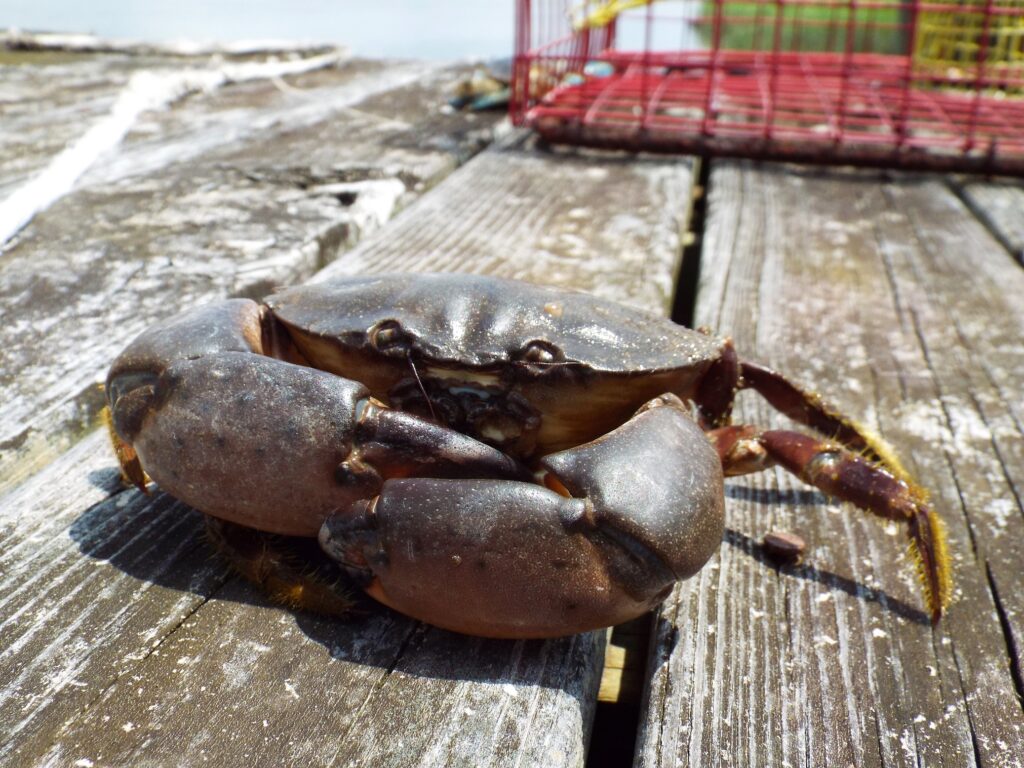
The Stone Crab is a substantial, barrel-chested crustacean that reaches six inches in width. They’re a mix of pluffmud-gray and burgundy across their armored body with thin, pointed legs and two intimidating pincers. They bide their lives in the tidal creeks hanging around oyster reefs and dock structures. Nearby they build the burrows they retreat to between tides. Upon the reefs they feed on Oysters, Mussels, small crustaceans, and any dead things they chance to encounter. Unlike Blue Crabs, they cannot swim and thus cannot move freely with the tides or escape predators. Instead, they rely on their pointy feet to anchor themselves to the oysters while their heavily armored shell thwarts nibbling. Their big meaty claws pinch the snot out of any fish or finger that gets too close. Speaking of big meaty claws, Stone Crabs have asymmetrical claws, one crusher claw and one pincer claw. These claws serve different purposes during feeding. One is shaped to break shell and bone. The other more slim, to pick at the softer bits. Still on about them claws, it is legal to harvest Stone Crab claws with a saltwater fishing license in SC but only one claw of legal size may be taken per crab.
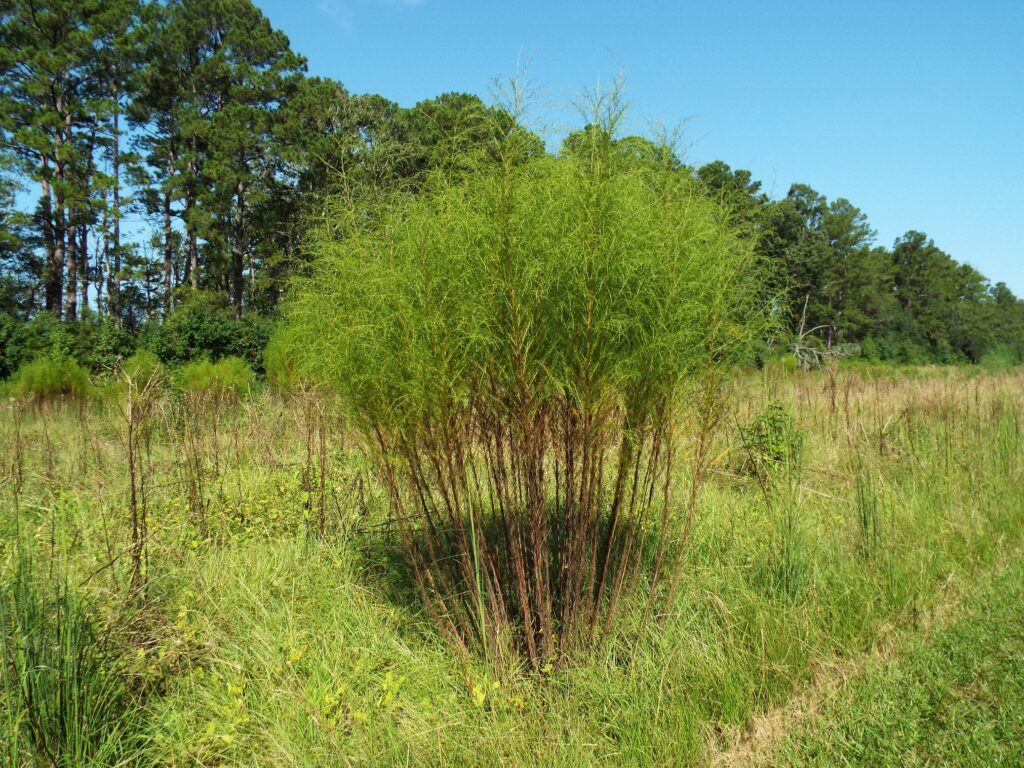
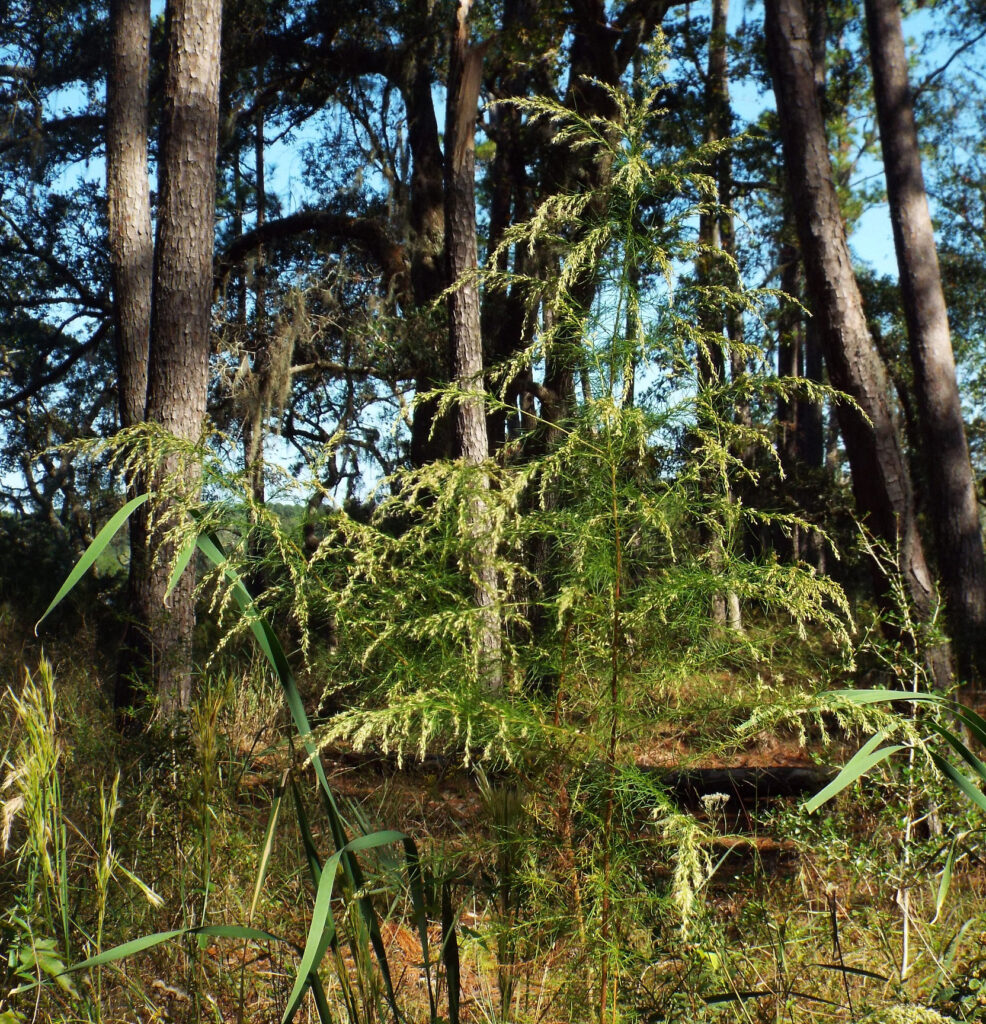
This week for Flora and Fauna Friday we have a common fragrant weed of roadsides and fallow fields, Dogfennel (Eupatorium capillifolium).
Despite what you may have been led to believe, Dogfennel is neither a dog nor a fennel. It’s actually a perennial member of the Aster family, Asteraceae, and a member of the Boneset genus. However, unlike other Bonesets, Dogfennel produces neither pollen nor nectar for our pollinating insects. It is entirely wind pollinated. Its seeds are also wind dispersed and fly their way to fields, gardens, and bare earth across the South. Its vigorous growth lets it establish quickly and soon grows taller than a man. Its stem is stiff and woody beneath a sheen of translucent fuzz and feathery emerald-green foliage. In mid-fall Dogfennel blooms with a spray of minute gray-white flowers. The cycle repeats.
On an aside, despite what is commonly told the essential oils found in Dogfennel do not repel mosquitoes. However, these same oils lend the plant its flagrantly fragrant scent and make the leaves unappetizing to herbivores. Also it’s mildly poisonous. So nothing eats it. I’ll be frank, Dogfennel is a certainly weed if ever there was one. It has little merit in most ecosystems but it’s not without some benefit. Old Dogfennel stems provide habitat for cavity nesting bees and other such insects. However, its most important role is that of soil stabilization and ecosystem pioneering. Dogfennel is very adept at spreading to and establishing in new habitat. If there’s bare ground out there, you can be sure Dogfennel will find it. Once established, it quickly grows a deep taproot. This helps protect soil from erosion and facilitates other plants to establish. This also creates some cover and perches for wildlife to use in what would otherwise be a barren environment. Over time dogfennel will get crowded out by grasses and trees. And so, this plant begins anew some miles and a generation away where the clay lays bare.
This week for Flora and Fauna Friday it’s a group of insect entangling arachnids, the Orbweavers of family Araneidae.
The Orbweavers are a diverse group of pendulous predators common throughout the woods of Edisto. They can be found pretty much anywhere there’s something to stick their webs too and something to eat. These spiders quite literally come in all shapes, sizes, and colors to suit the various micro-habitats they prefer. However, all our common Orbweavers are similar in that they build a vertical web between openings in vegetation to trap flying insects. This web is covered in a sticky glue that adheres to anything that touches it. The spider then attacks the trapped insect, injecting it with venom, before wrapping it up in a silken coffin for later snacking. Females are an order of magnitude larger than males and typically colorful and complex in their abdominal shape. Today I’ll be highlighting four of the more common and recognizable species of the approximately thirty Orbweavers that can be found on our Island. Our stars today are the Spinybacked Orbweaver (Gasteracantha cancriformis), Black-and-Yellow Argiope (Argiope aurantia), Golden Silk Orbweaver (Trichonephila clavipes), and Giant Lichen Orbweaver (Araneus bicentenarius).
The Spinybacked Orbweaver is the most easily recognized of this already recognizable bunch. It’s a small Orbweaver that’s wider than it is long. Females are totally black underneath with a white mantle ringed in deep-red spines. They build oversized webs for their size and will flag their anchor threads with tufts of silk to help birds avoid the webbing. This saves our little spider from having to build a new web every time a cardinal careens through it.
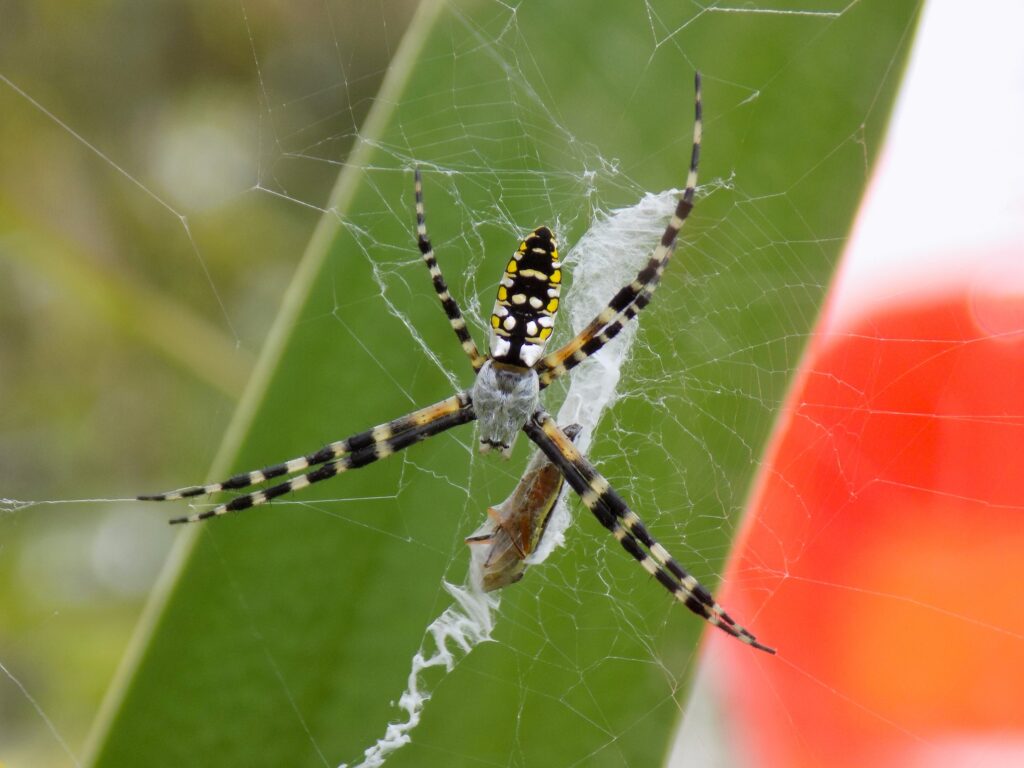
The Black-and-Yellow Argiope is an Orbweaver commonly found in residential areas. Females have a large oval abdomen with a broken yellow border of bands on a black background, a silvery-gray thorax, and long two-tone legs. They prefer meadows, freshwater wetlands, gardens, and other densely vegetated habitats. They build webs lower to the ground than other large Orbweavers, often garnished with a vertical zig-zagging zipper of white silk down the center.
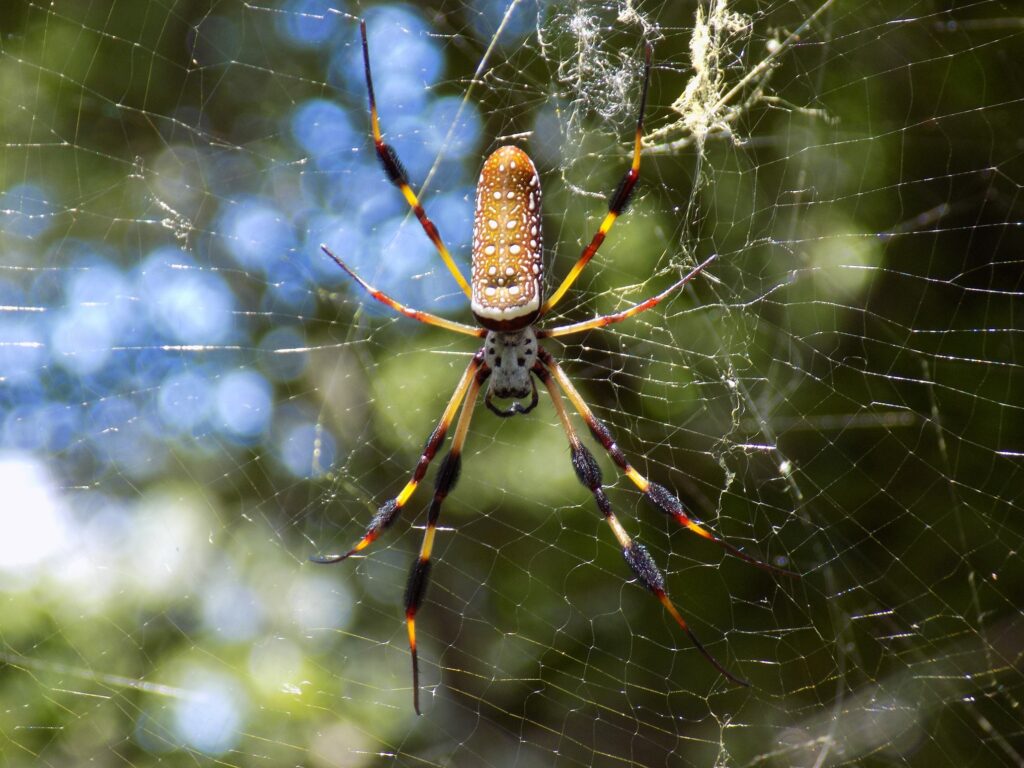
The Golden Silk Orbweaver (AKA Banana Spider) is the most common Orbweaver you’ll encounter in our forests. (Usually with your face.) Females are large and lanky with an aluminum-gray thorax, speckled orange abdomen, and long yellow legs with fluffy black legwarmers above the joints. They build massive webs that are often three-dimensional and disorganized. Unlike other orbweavers, they don’t rebuild their nest but instead just keep adding thread after each instance of damage. Their webs may be high in the trees or right at eye level. Their dragline silk is noteworthy for being a reflective gold color and unbelievably strong.
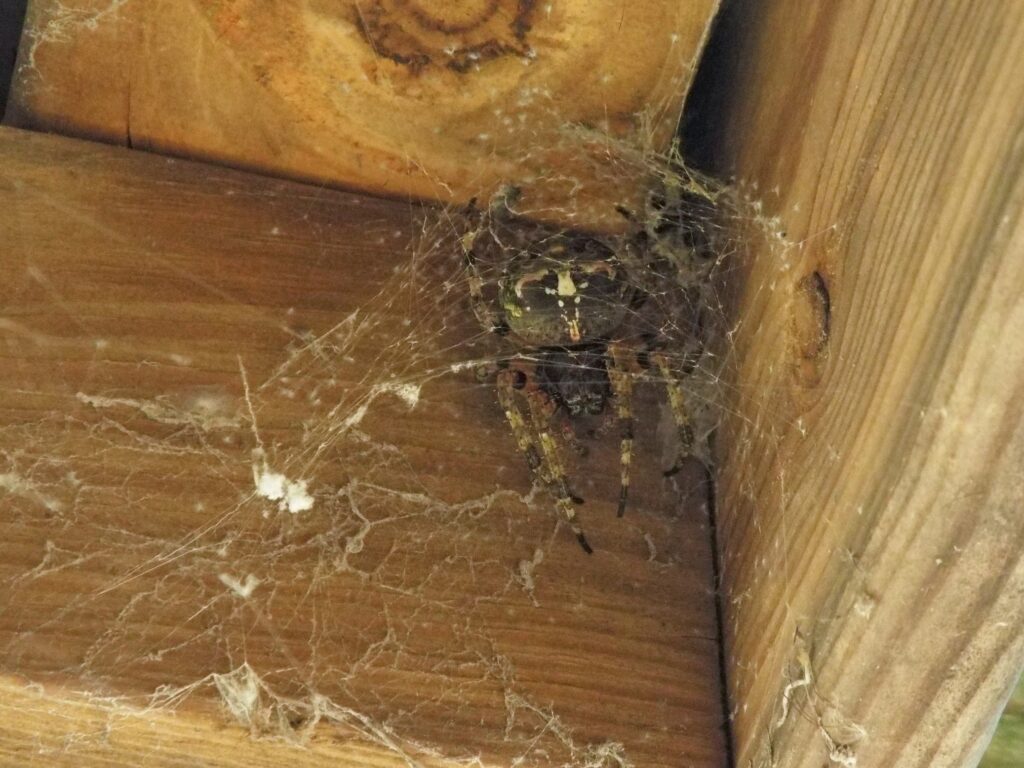
The Giant Lichen Orbweaver is one of the heftiest spiders you’ll encounter on Edisto. A female’s abdomen is roughly the size of a ping-pong ball and about the same shape. Unlike the others, she has a highly camouflaged coloration with a wash of soft green and spots of white over a background of browns. She builds her web from the low branches of a tree to the ground beneath. Then she tucks herself into a cozy corner between the leaves and mosses to wait for some unlucky soul to fall into her trap. Giant Lichen Orbweaver are even known to eat small vertebrates, most commonly Anoles.
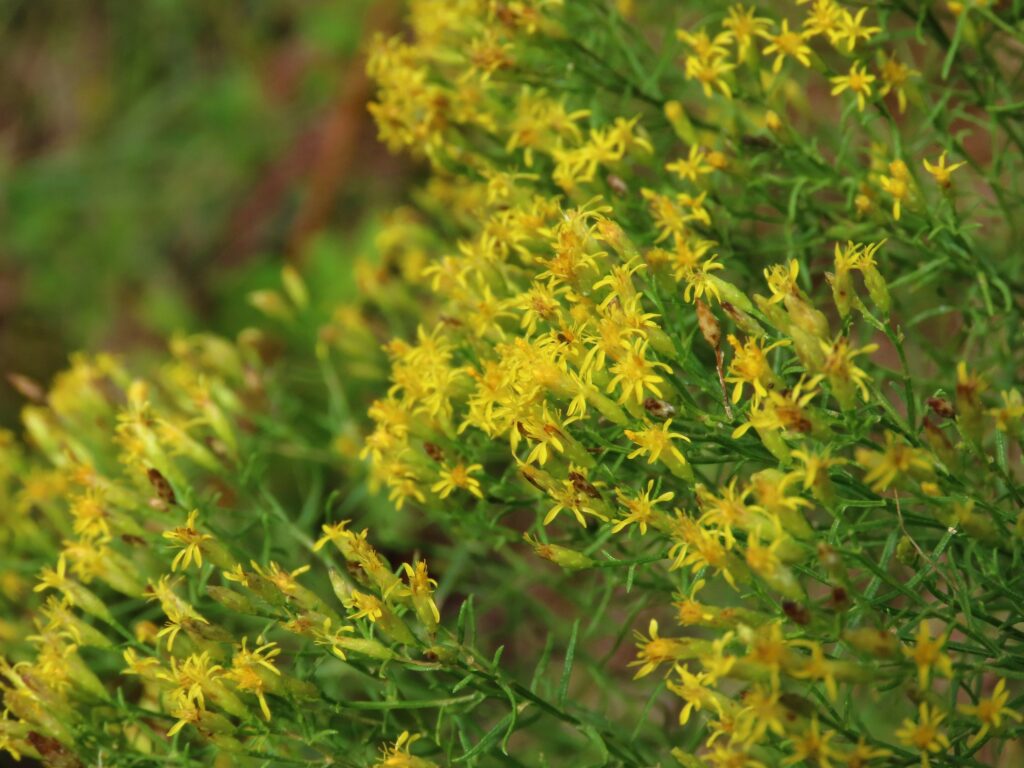
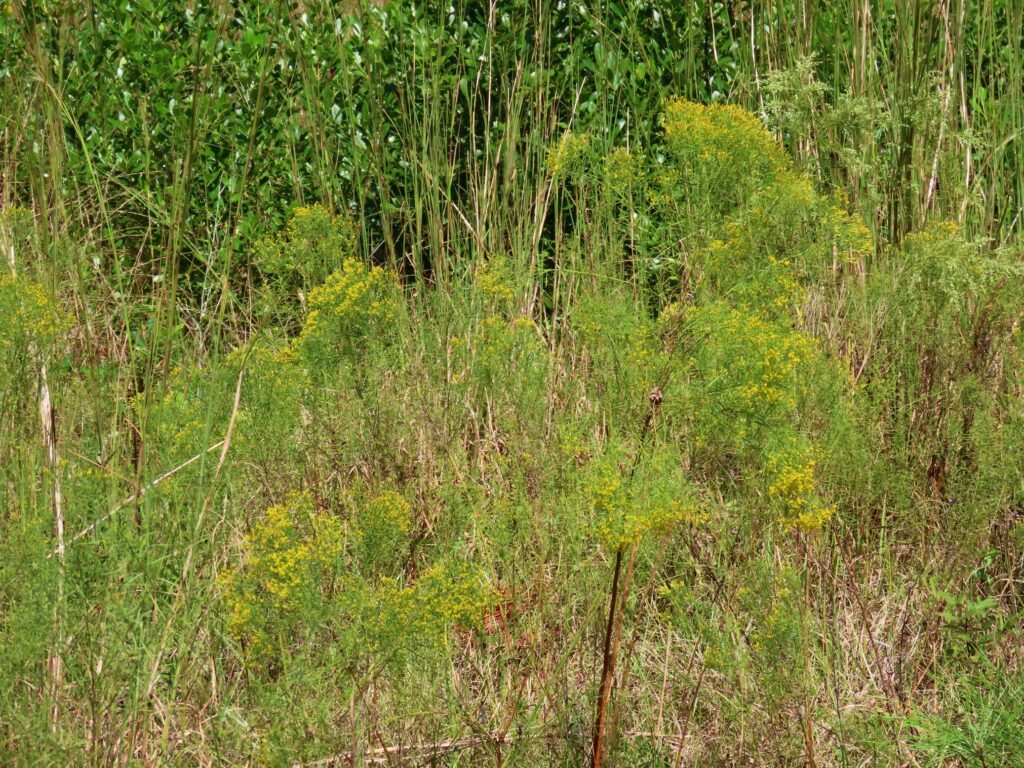
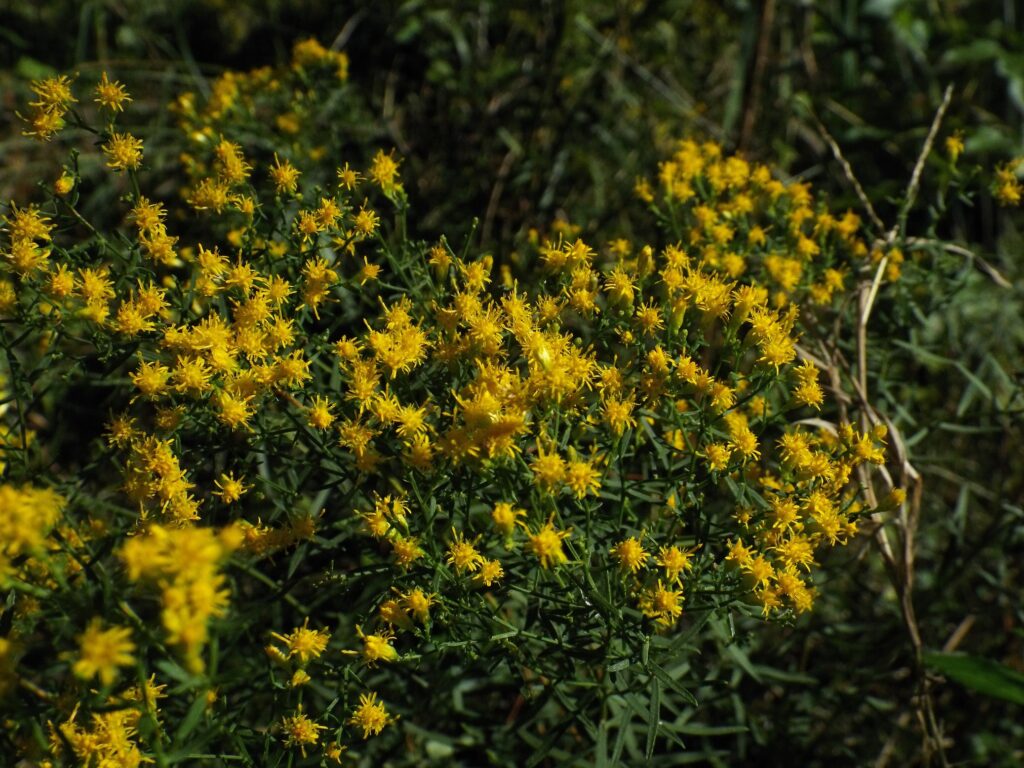
This week for Flora and Fauna Friday it’s a stringy coastal wildflower of the yellow variety known as Slender Goldentop (Euthamia caroliniana).
Slender Goldentop is a perennial wildflower common throughout the maritime forests of Edisto Island. Its shaggy cone of wiry leaves on narrow stems reach the hip. Above the Fimbry and below the Switchgrass through the fringes of the marsh. An appearance not misplaced in the coarse and gnarled flora of the saline floodplain. There it grows quiet and hidden through the warmest parts of the year. Flowers emerge amidst autumn across the plateau of the plant. Small, unkempt, and golden in frothing plumes above the escarpments of the marsh. The plants are common inland as well but never so regular as they are here.
The plant is a reliable source of nectar but often over-shadowed by more productive late-season wildflowers. Many pollinators seek their meals at its neighbors but entertain on its spray of flowers when those others wither away. Slender Goldentop is close kin to Goldenrods, which from its appearance you would predict. Goldentops have a bushier, compacted growth-form than Goldenrods. A trait which makes them easy to pick apart despite the same deep-yellow flares of flowers flown by both.


This week for Flora and Fauna Friday we have the chicken’s bane, the Yellow Rat Snake (Pantherophis alleghaniensis).
The Eastern Rat Snake is one of the most common snakes you’ll encounter in the State. Here on the coast, we have the Yellow morph; the upstate has the Black morph. The Yellow Rat Snake is a large snake often reaching or exceeding five feet in length. Adults are greenish-yellow with four black stripes down the length of their back. Juveniles are gray and blotched with brown. When a Rat Snake detects danger at a distance, it will usually freeze and kink its body like a crinkle-cut French fry, to break up its outline and impersonate a stick. When danger gets too close for comfort they will flee underneath brush if possible or, more often than not, assume a strike position. Here they do their darndest to intimidate, vibrating the tip of their tail in leaf litter to mimic a Rattlesnake and striking at anything that gets in range. Their goal is to bluff and not to outright bite but, despite being a non-venomous constrictor, they will not hesitate to bite the snot out of anyone that accosts them.
Rat Snakes are masters in the art of climbing. They can scale shrubberies, brick walls, and tree bark with ease. They’ll even scale a one-inch pole like it’s nothing. Rat Snakes use this scaly scaling to find their preferred food, bird nests. Rat Snakes love eggs and swallowing them whole. They’re a major predator of our large cavity nesting birds, like Wood Ducks and woodpeckers. They’ll also eat anything else they encounter in a tree cavity including baby birds, adult birds, squirrels, tree frogs, and lizards. Once they get into a nest, they’re almost impossible to remove against their will. However, birds don’t nest year-round. So the bulk of their diet is mice and rats. Rat Snakes are also called Chicken Snakes. This comes from their regular habit of squeezing into coops, sucking eggs, sending the chickens into a tizzy, and waking up the farmer at an ungodly hour. They’re also a hazard to Bluebird boxes and Martin houses around people’s homes. They easily defeating most defenses and drive away nesting birds.
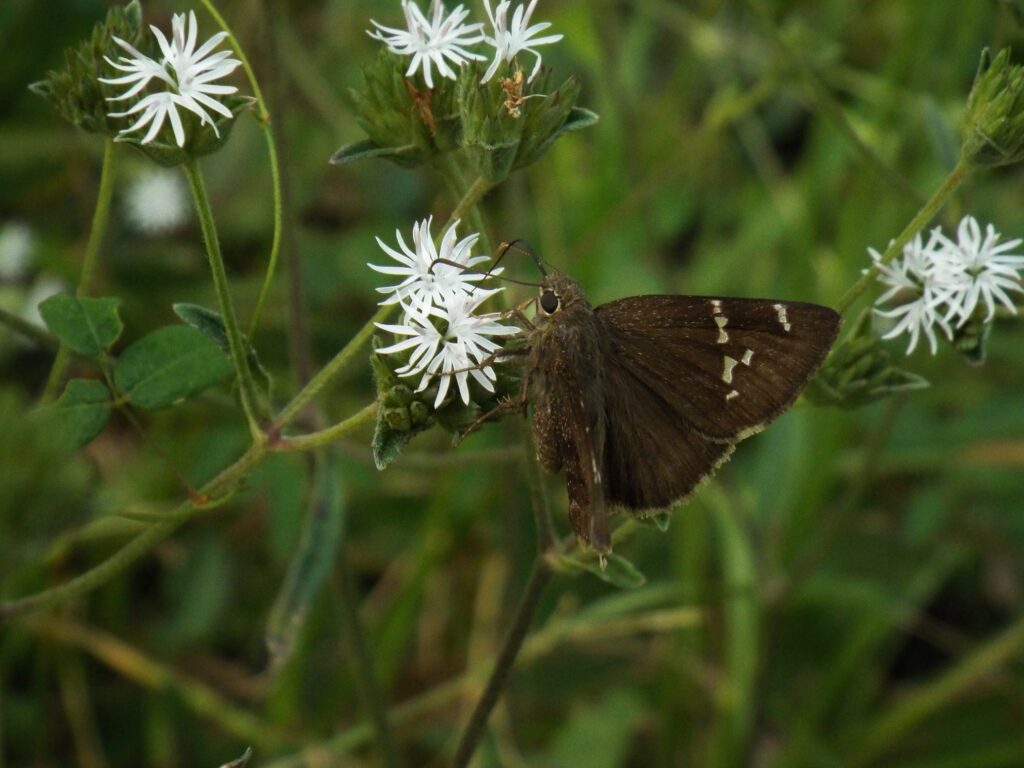
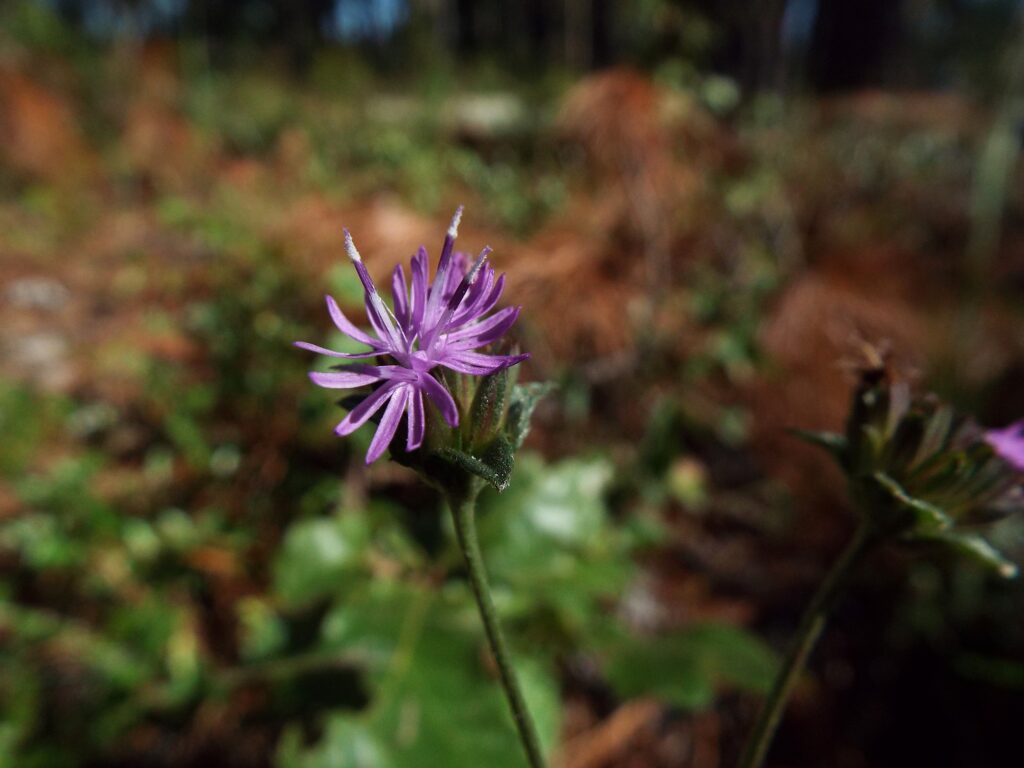
This week for Flora and Fauna Friday we have an easily over-looked wildflower, Wooly Elephant’s-Foot (Elephantopus tomentosus). We have four species of Elephant’s-Foot on Edisto but all are so similar in appearance that it’s easiest if I just speak about our most common species.
Wooly Elephant’s-Foot is a low growing perennial that loves well drained soils and heavy shade. You’ll most often find it growing on wooded ridges and along roads or trails under a canopy of hardwoods. It does best in barren or thinly vegetated areas where there are frequent patches of bare soil. Its large, tear-drop leaves drape the surface of the soil to form a basal rosette the size of a dinner plate. Each leaf is about eight inches long and covered in a layer of fuzz. In ideal conditions, the species can be quite prolific and blankets the ground in an evergreen quilt. The species will also make its home in shady lawns between the stems of St. Augustine Grass.
In late summer thru to fall Wooly Elephant’s-Foot blooms, extending a thin, forked stem one to two feet above the ground. Each tine is capped by a cluster of flowers. The flowers of all species are typically pink or magenta but some are pure white. Each flower has five petals that are skewed to one side, giving the impression of an open hand. Each flower is either discrete from one another or in clusters of up to four. These flowers are adored by pollinators from all walks of life. The unique combination of features from this flowering plant come together to make its nectar accessible to both the smallest of flies and the largest of butterflies. Stiff stems and broad clusters allow Giant Swallowtails and Southern Plains Bumble Bees to perch whilst they frantically gulp down nectar. All the while their short flowers with a broad mouth offer quiet dining to even the smallest of Hoverflies and Flower Beetles. It’s rare for one nectar plant to be so universally agreeable. Most plants specialize in some aspect for a particular group of insects but Elephant’s-Foot is hospitable to all six-legged critters.
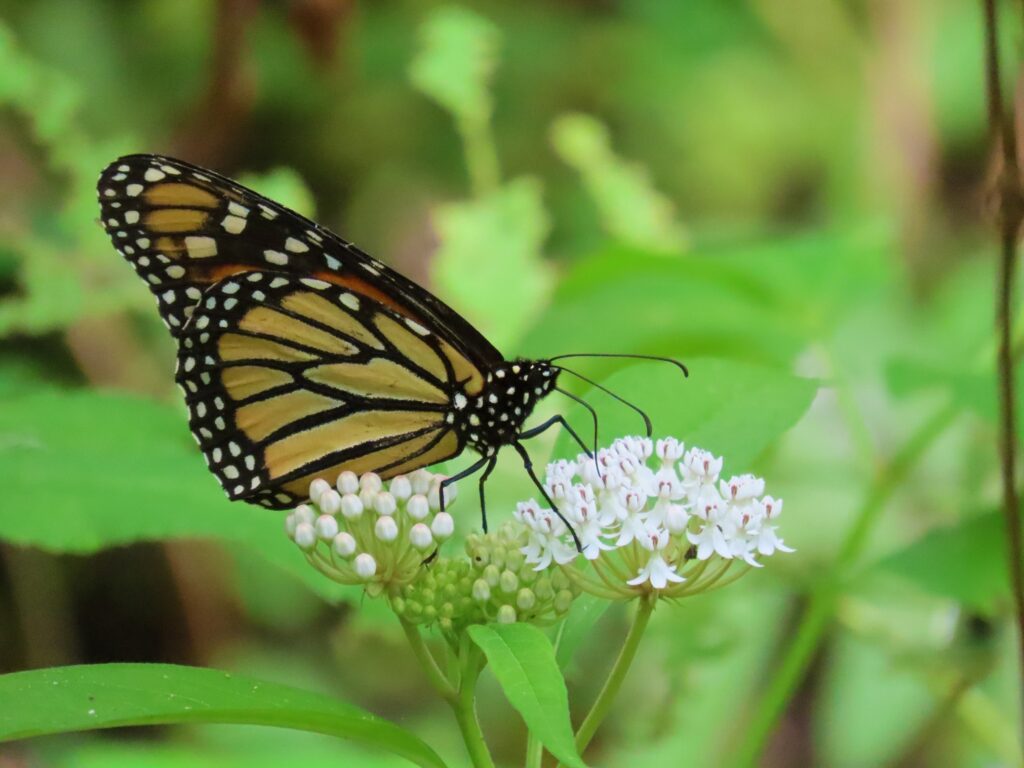
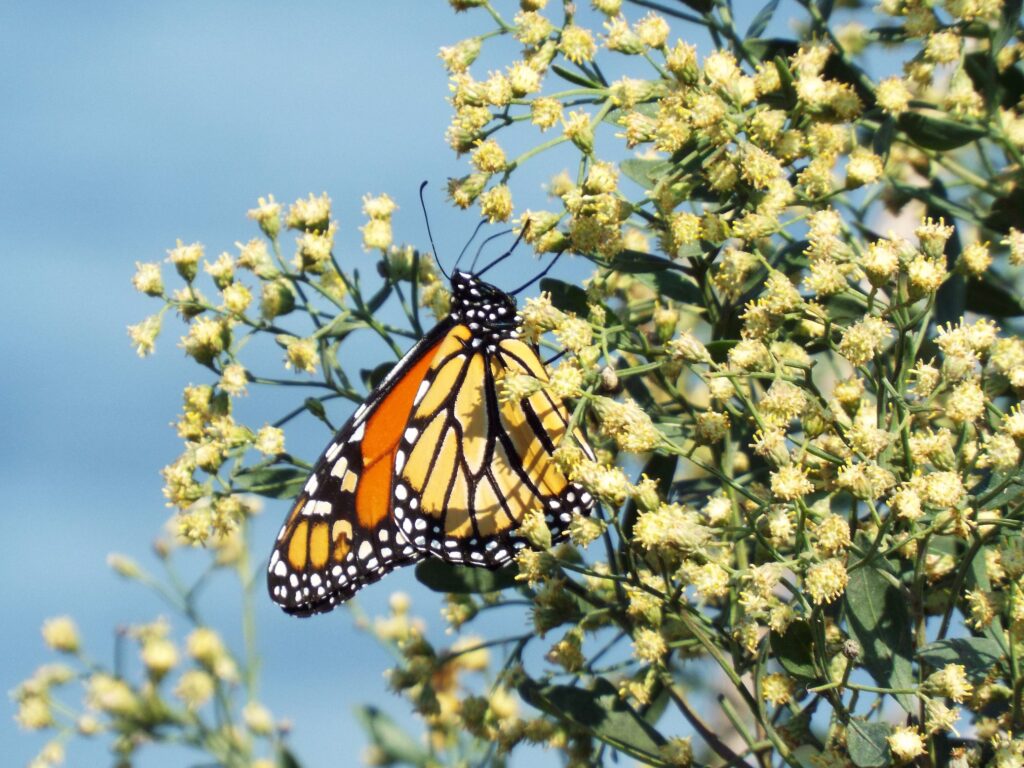
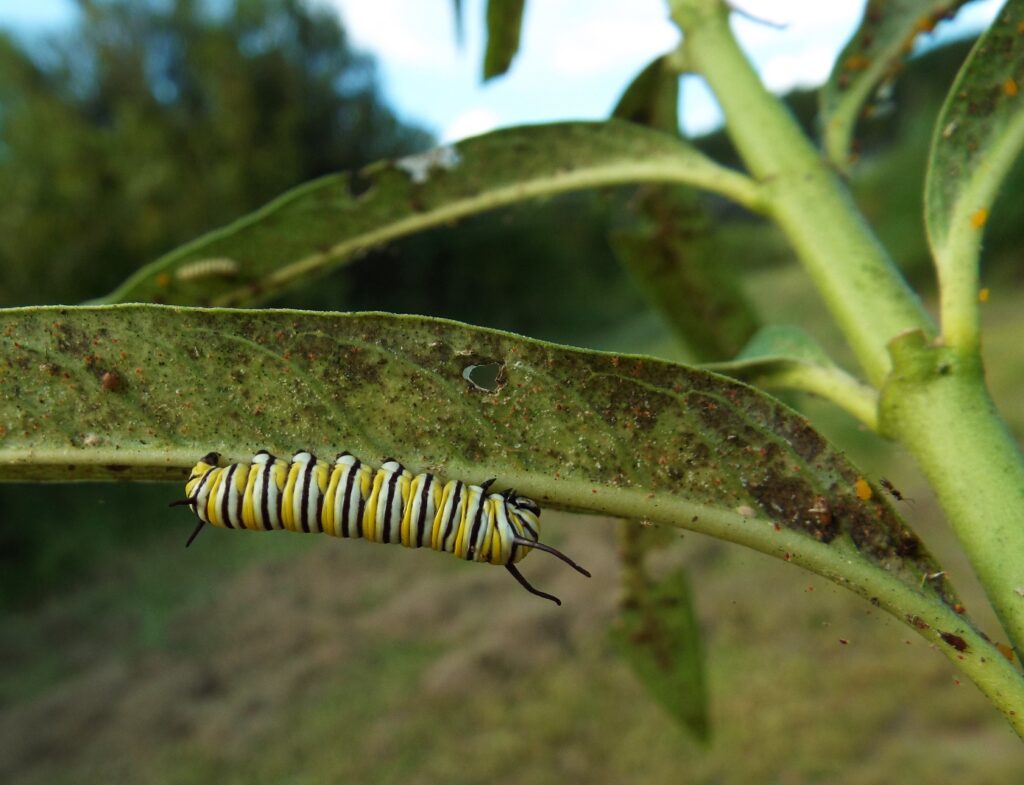
This week for Flora and Fauna Friday our guest needs no introduction, the Monarch (Danius plexippus).
The Monarch is a large butterfly in the Brushfoot family. They’re rich in a burnt-orange above that’s divided by veins of black within black borders. The fringes of their wings are spattered with numerous white polka-dots that spread downward across their downy black body.
Monarchs are interesting in that they feed on Milkweed, a plant that produces a white sap full of toxins. The chemicals in this sap induce cardiac arrest in vertebrates, so herbivores avoid it. Monarchs use this poison to their own advantage. By eating exclusively Milkweed the caterpillars can incorporate these toxins into their bodies, making them as deadly as the plant. However, being poisonous is only useful if the thing that wants to eat you knows about it before it eats you. Otherwise you both end up dead.
Monarchs advertise their toxicity through coloration. Orange and black are the universal colors of danger in the animal kingdom. This patterning is called aposematic coloration and it’s a double-edged sword. Being colorful makes you super obvious to predators, which is a blessing and a curse. On one hand, it decreases your chance of being attacked if the would be attacker can read your pattern. Yet on the other hand, it places you in greater danger from an unobservant, unknowing, or uncaring predator. On top of this, some animals only pretend to be toxic to bluff predators. The Viceroy butterfly is a good example of this and it does an admirable job mimicking our Monarch. Mimics further complicate this predator-poison-prey relationship, turning it into a guessing game for all involved.
The Monarch is a rock star of entomology. It’s one of the few bugs that‘s famous rather than infamous. Regrettably, they’re famous due to their perilous position. Monarchs are a migratory butterfly. Butterflies don’t migrate in the same way birds do, circuiting the continent annually throughout their lives. Instead, butterflies make multi-generation migrations. In late summer, Monarchs begin flying south. They channel down our coastline, flowing from beach to beach in undulating orange waves like an autumn breeze over the ocean. Most make their way to Mexico, although many of those local to the Lowcountry snowbird in Florida instead. Here the butterflies overwinter. When spring sets in the tattered and battered critters fly north in rolling winds. A pilgrimage to lay their eggs over the Milkweed of the Southern US before returning to the Earth. Their children and grand-children continue to leapfrog up the states until winter begins again. The next butterflies to land south of the border are often the great-great-grandchildren of those who made the journey the year before. The Monarch is in danger because of this drawn out migration and its specialized larval diet. Expanding residential development in the Midwest and the over-reliance on pesticides in agriculture are destroying their Milkweed nurseries. The over-development of barrier islands is degrading the corridors of wildflowers they rely on as they migrate through on their way south. On top of that, uncontrollable logging on the mountains of Central America is erasing their wintering grounds. Across the board, Monarchs are getting hammered. They’re not in danger of going extinct but the possibility of this annual journey perishing, reducing the species to but a few sedentary populations, is very much real.


This week for Flora and Fauna Friday it’s the purple haze of coming autumn days, Blue Mistflower (Conoclinium coelestinum).
Blue Mistflower is a clumping perennial most often found in sunny wet patches along woodland edges. It grows densely and fairly low, spreading outward as it goes. Leaves are held apart and opposite each other. Leaves that are almost triangular, crinkly, and a dark-green with burgundy accents on burgundy stems that hold up flower heads. Each stem ties together a bouquet of blossoms at its peak. Blossoms of blue and violet melted over one another onto fuzzy filamentous petals. Each kernel of color is a cluster of flowers clumped with others into an arrangement that’s fractally reflected across the stand of plants.
A purple haze appears to hover above the vegetation to the far off observer. Those who approach find a mist of blue punctured by lively orange and yellows, contrasting flashes fluttering like leaves over smoke. Blue Mistflower is a wondrous nectar plant. It’s placement at the nexus between wetland, forest, and glade creates the opportunity to view many species on pollinators seldom seen together, intermixed with one another. A fog of flies, bees, & butterflies surround our flower and settle like dew upon its petals. We see this phenomenon a lot with our late blooming wetland wildflowers but it is never less impressive with subsequent iterations or alternative floral presentations. Our wetland plants are often prosperous where they find purchase but isolated from their kin. So they bribe the bugs as heavily as they can for even the chance of them delivering pollen to off.
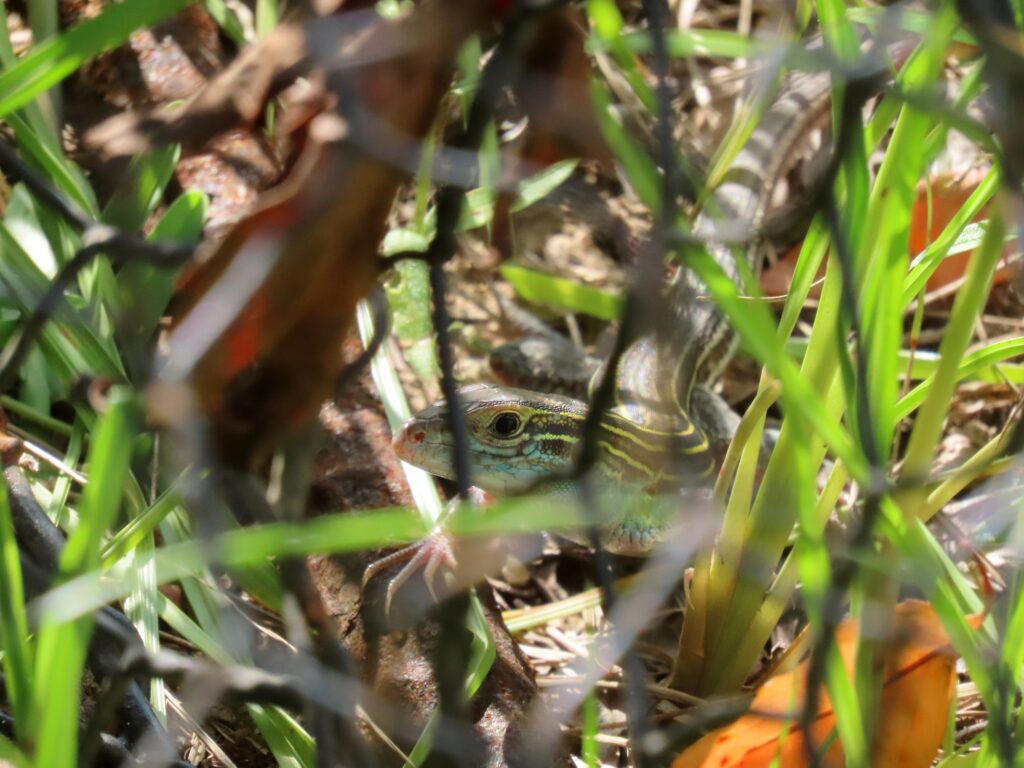
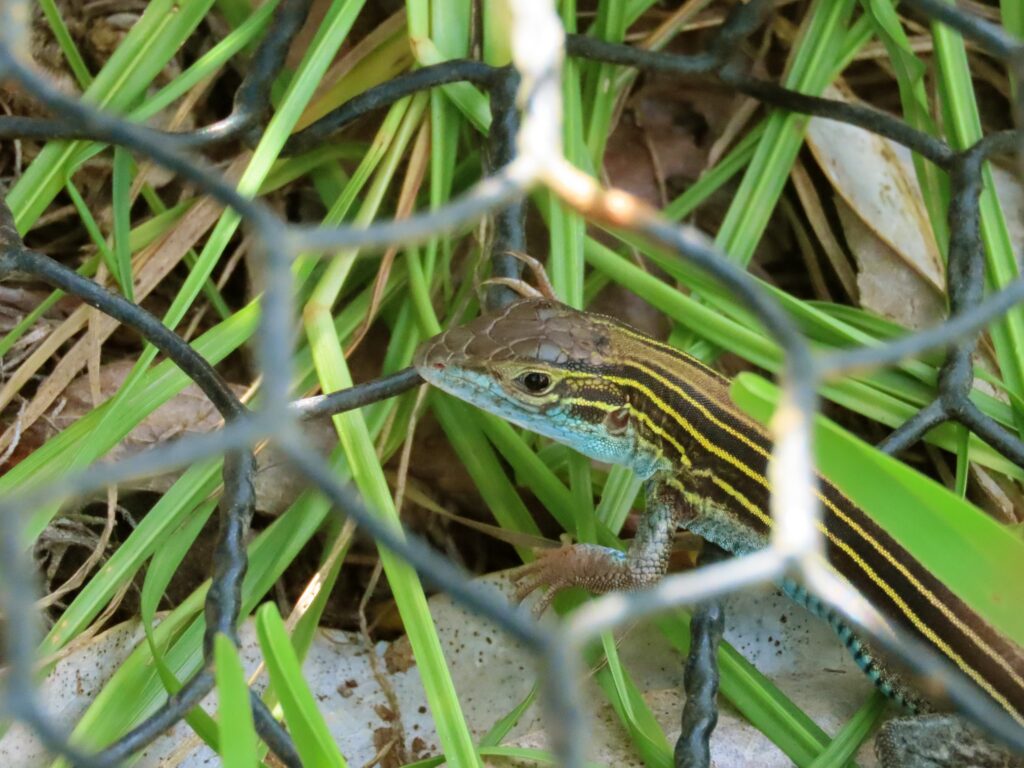
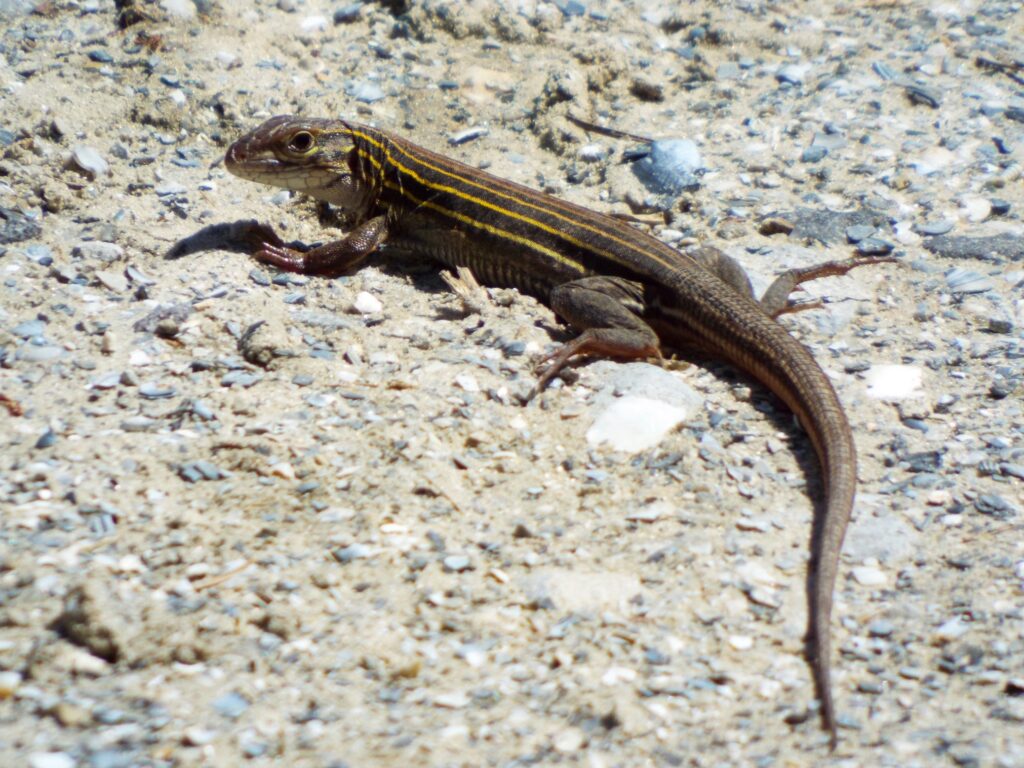
This week for Flora and Fauna Friday we have the striped speedster of the sand barrens, the Six-lined Racerunner (Aspidoscelis sexlineatus).
The Six-lined Racerunner is a species of lizard common on the hot dry sands of Edisto Island. They love heat and relish in the dog days of summer. You’ll never find them in the lowlands of the island but they flee in droves upon our sandy hills. They’re long and somewhat slender with short legs and extended toes. Their back is charcoal-black with a central gray-brown stripe. Their body is flanked by six lemon-yellow lines, three per side, that flow behind the eye and bleed into the tail. The male’s throat and belly are washed in turquoise that flashes at that eye as he blinks across pale sands. The species has a jittery appearance. Moving in rapid, jerking movements. These tweaky telltale signs betray their most novel quality.
Racerunners are quick little things. They explode from their footings at the slightest provocation. Their long toes anchor into the soft sands and propel our reptile elsewhere in the blink of an eye. Their primary predators are the Southern Black Racer (Coluber constrictor priapus), the Loggerhead Shrike (Lanius ludovicianus), and the American Kestrel (Falco sparverius). Their speed is both defense and offense, moving them out of harm’s way and launching them into prey the same way. Six-lined Racerunners eat insects. They most often forage casually under leaves and logs for little critters but can utilize their quickness for high-speed snacking when the opportunity presents itself. Also, they don’t shed their tails like most of our other lizards. They need it as a counterbalance while sprinting. Leaving it behind would be a death sentence.
Six-lined Racerunners maintain an extremely high body temperature during the day, typically above 100°F. Normal reptiles have a low core temperature which slows their metabolism and saves calories. Racerunners exploit the heat of summer to drive their metabolism to mammal-like levels. This grants them the gift of continuous acceleration. Many reptiles can produce explosive speed on demand but it comes at the cost of extended exhaustion. Their sluggish metabolisms takes forever to recharge the energy stores they burned. Racerunners worked around this and can run for longer distances with shorter rests in between. Meaning they can save energy like a reptile at night or during winter but can move like a rabbit in the heat of the day.




© 2026 Edisto Island Open Land Trust.
Built by Colophon