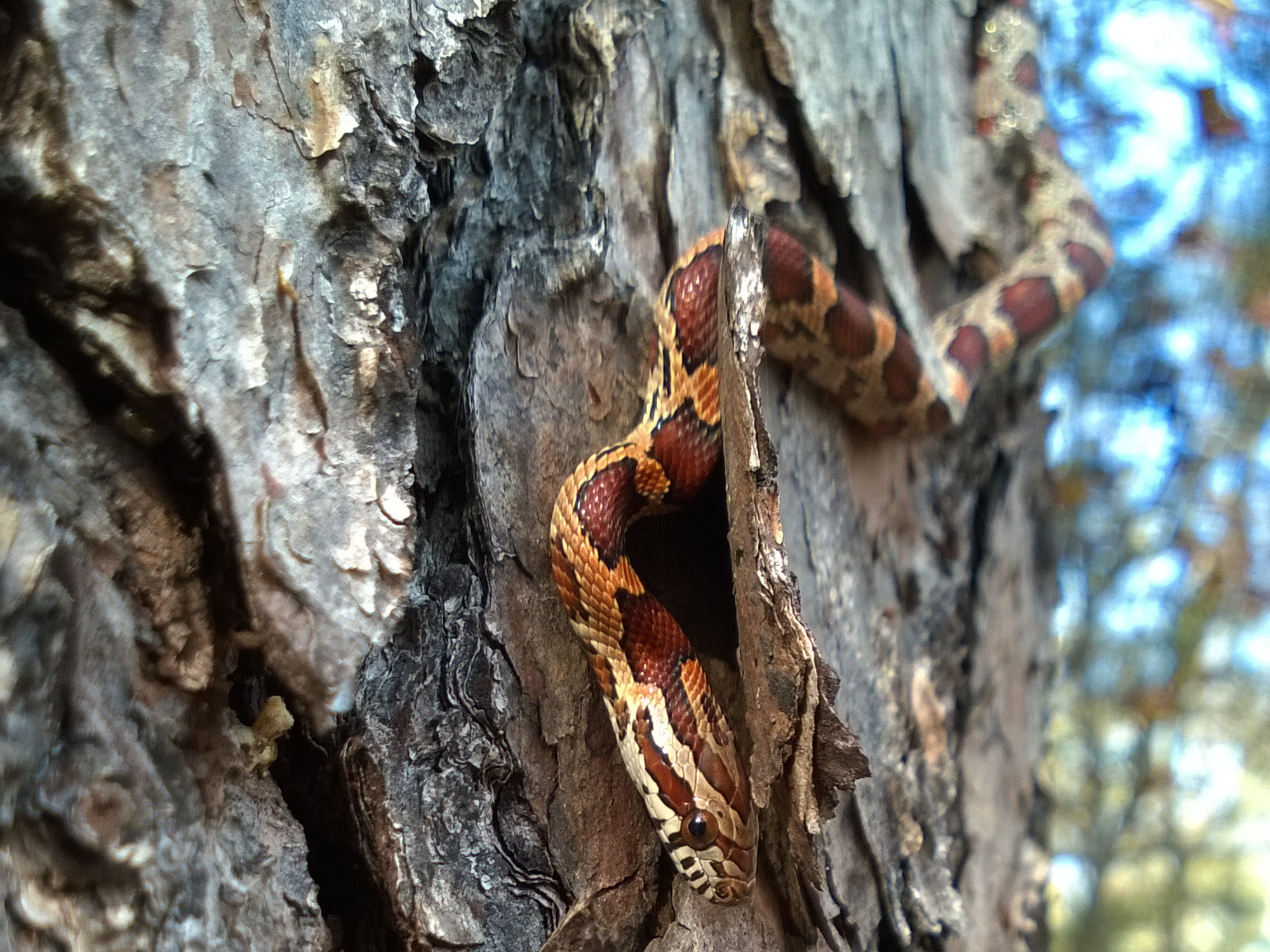
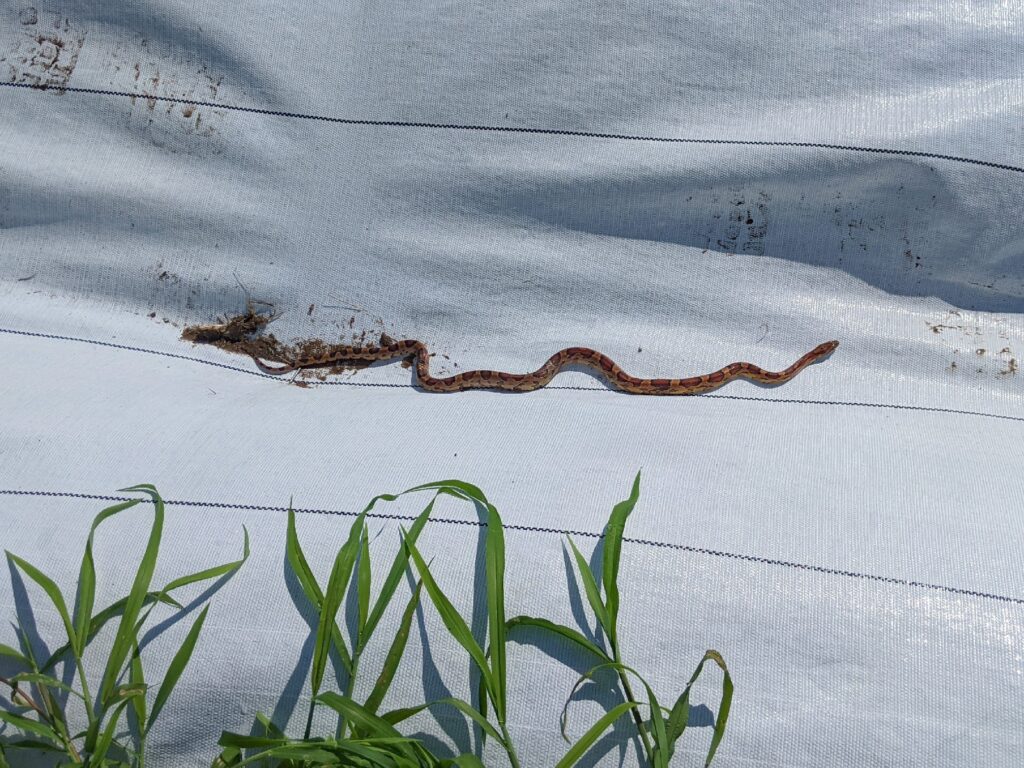
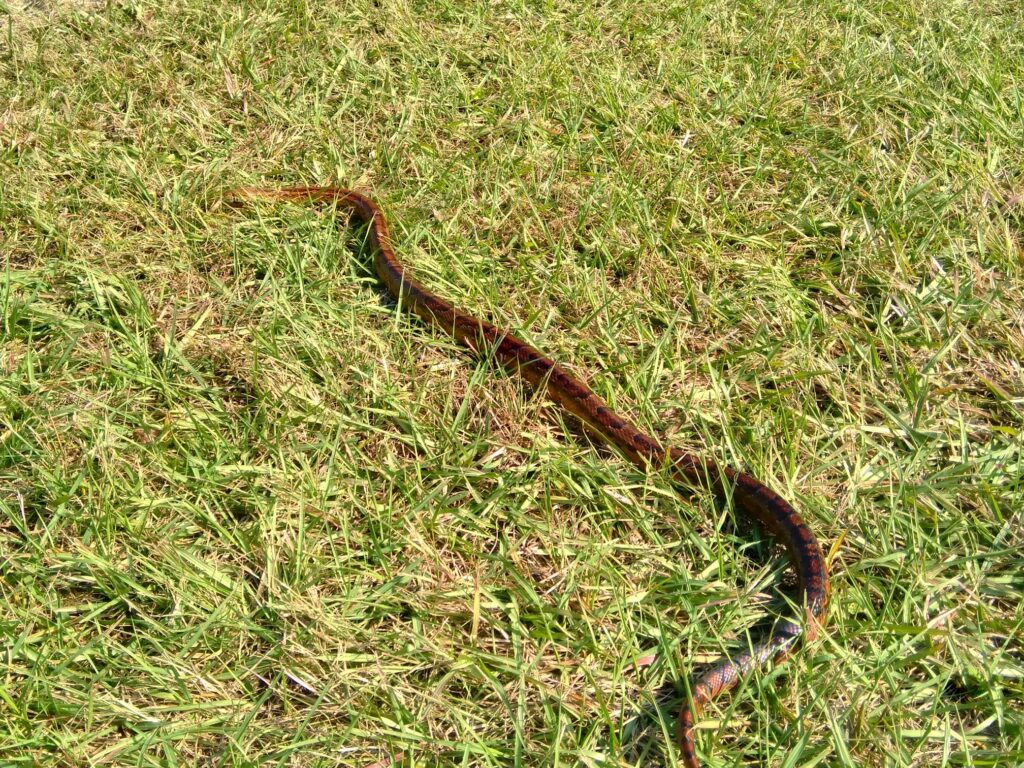
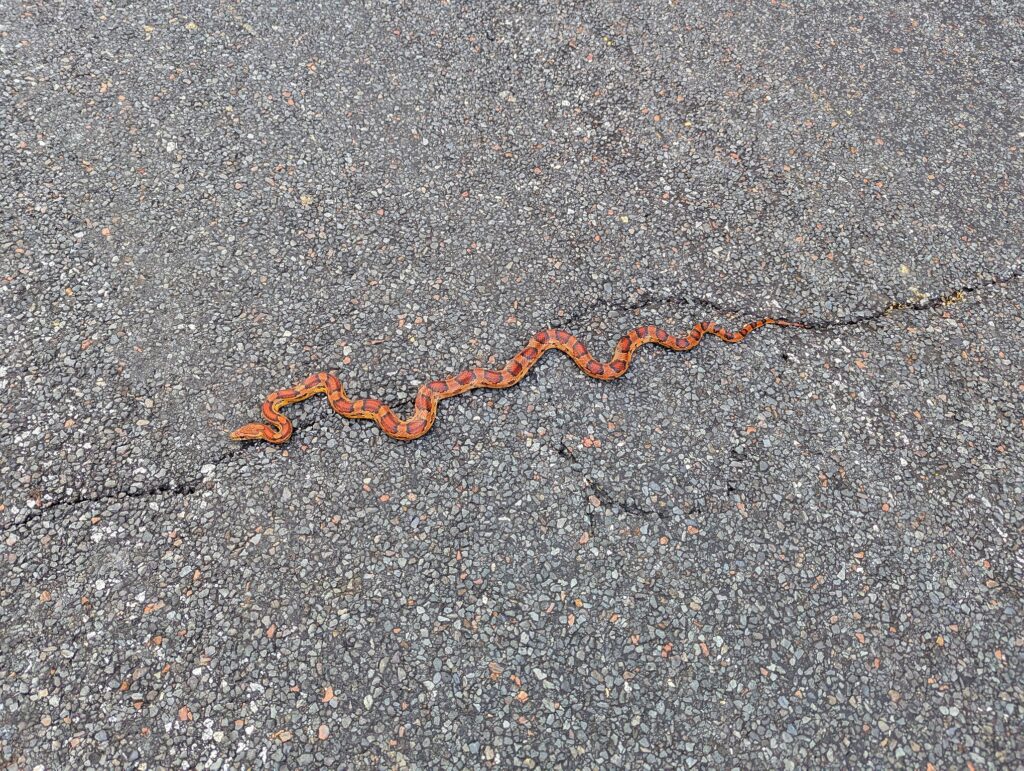
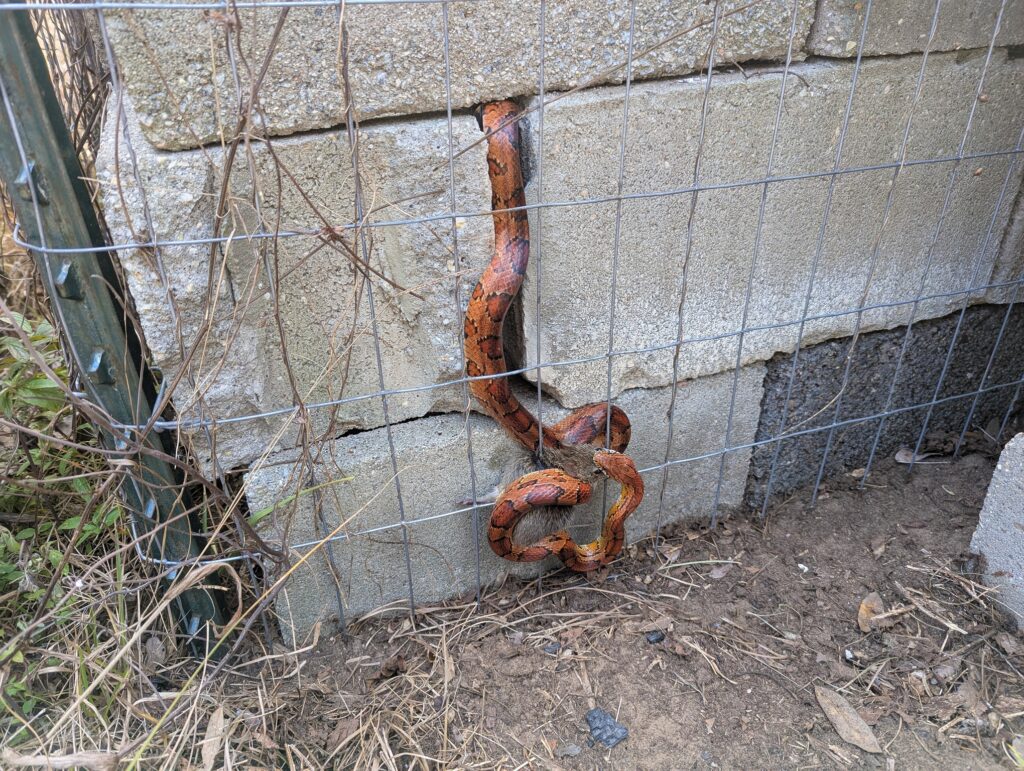
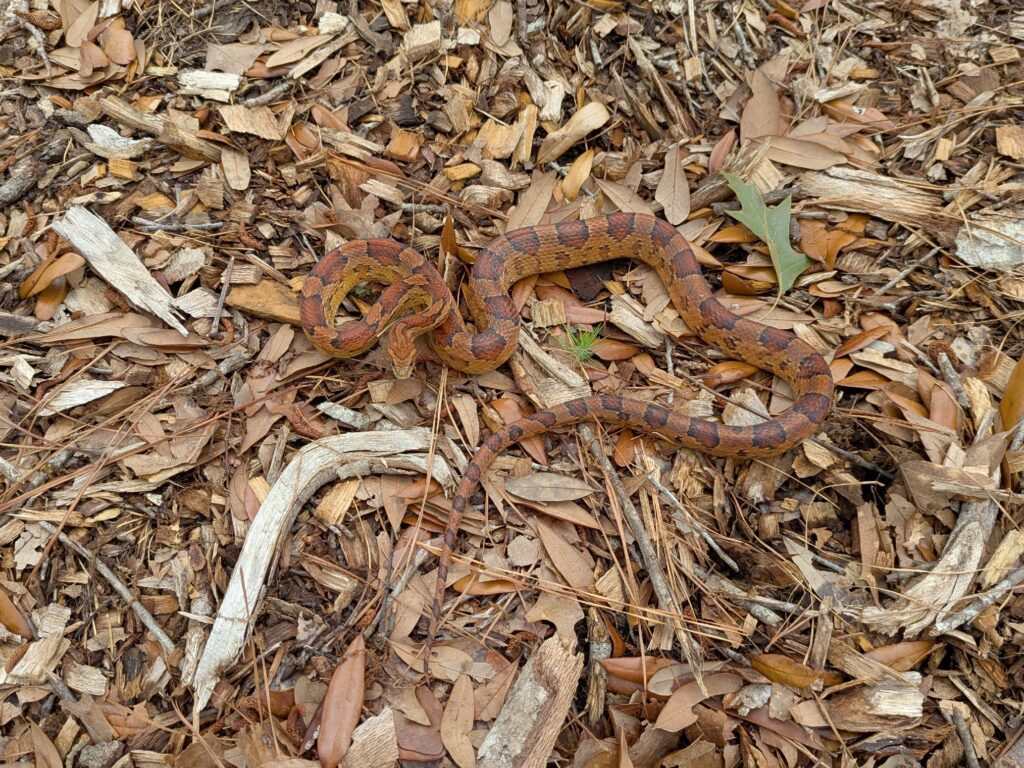
This week for Flora and Fauna Friday, it’s the blocky stalker with talents for balance, the Corn Snake (Pantherophis guttatus).
The Corn Snake is a common snake found from beach to mountain throughout all of South Carolina and much of the Southeast. They typically grow to three to four feet in length and are checkered from tongue to tail, red on orange above and black on white below. That namesake corn-cob color pattern is distinct and they’re one of our easiest snakes to identify. The Corn Snake is a close cousin to our bulkier and more abundant Eastern Rat Snake (Pantherophis quadrivittatus). Although visually the two are hard to confuse, these sister snake species share many traits.
Corn Snakes are nonvenomous and absolutely harmless to people and pets. [*Pet rats excluded.] They are ambush hunters and subdue their prey through constriction. Corn Snakes are powerful constrictors that suffocate their prey before swallowing it whole. They are also adept climbers, just like Rat Snakes, and can scale the vertical face of a tree trunk with ease. However, Corn Snakes prefer to stay grounded so they may blend into the pine straw and leaf litter for camouflage. They primarily eat rodents, songbirds, frogs, lizards, and bird eggs. And don’t fret, they are almost always too small to gulp down a grade-A chicken egg! Corn Snakes are fairly active hunters, moving through the landscape at dawn and dusk while smelling the air and searching for prey. Snakes smell with their forked tongue, flicking it through the air to capture odors on their saliva before reeling it in to deposit eau de outside upon the roof of their mouth. There scents are sensed by the Jacobson’s Organ, which works just like our nose but through licking instead of sniffing. Corn Snakes are good at sniffing [licking?] out rat trails and bird droppings, and then following that scent trail back to the prey’s nest, where they either barge in unannounced or hover outside the entrance for an opportunity to strike.
Corn Snakes are an all around cool critter and a critical check-and-balance for rodent populations, especially in and around human dwellings. Although they do go after songbirds and bird nests when given the chance, they prefer to hunt rodents down on the dirt. They’re very efficient too. I can tell you firsthand, they can clear out a colony of cotton rats in a hurry! Corn Snakes are thus incredibly beneficial snakes to have around your yard, as they keep rodent populations under control. That in turn keeps invasive black rats out of native habitats, suppresses the selective overgrazing of young plants by native cotton rats, and discourages native woodrats from eating all the electrical wiring in your car.





© 2026 Edisto Island Open Land Trust.
Built by Colophon