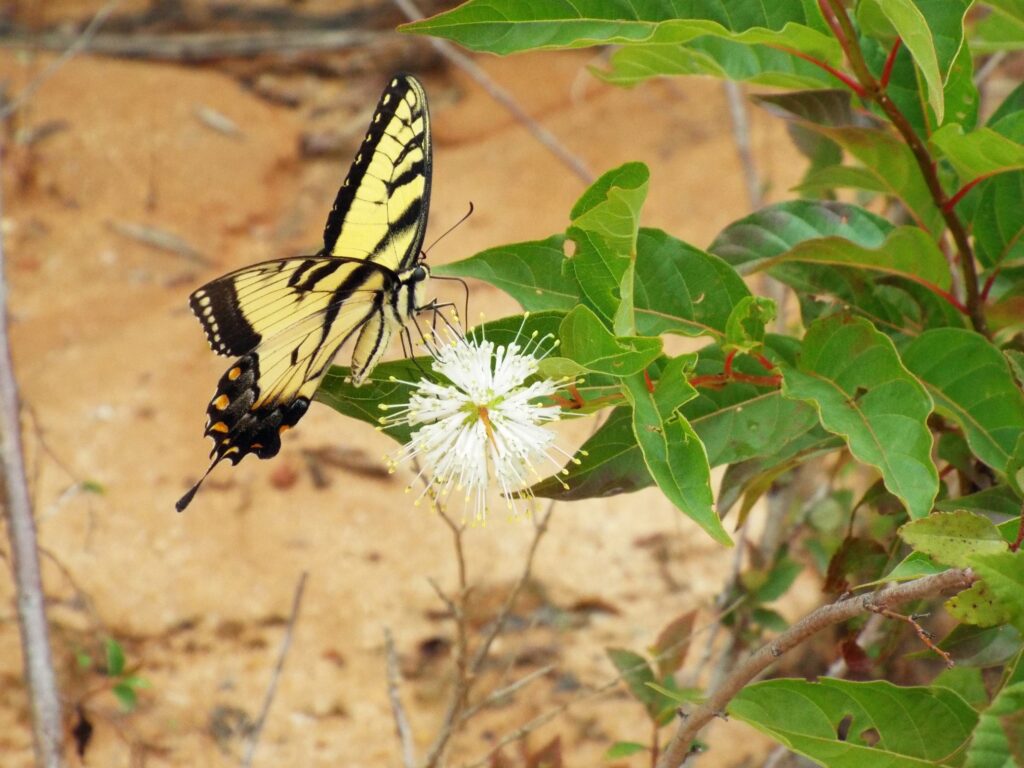
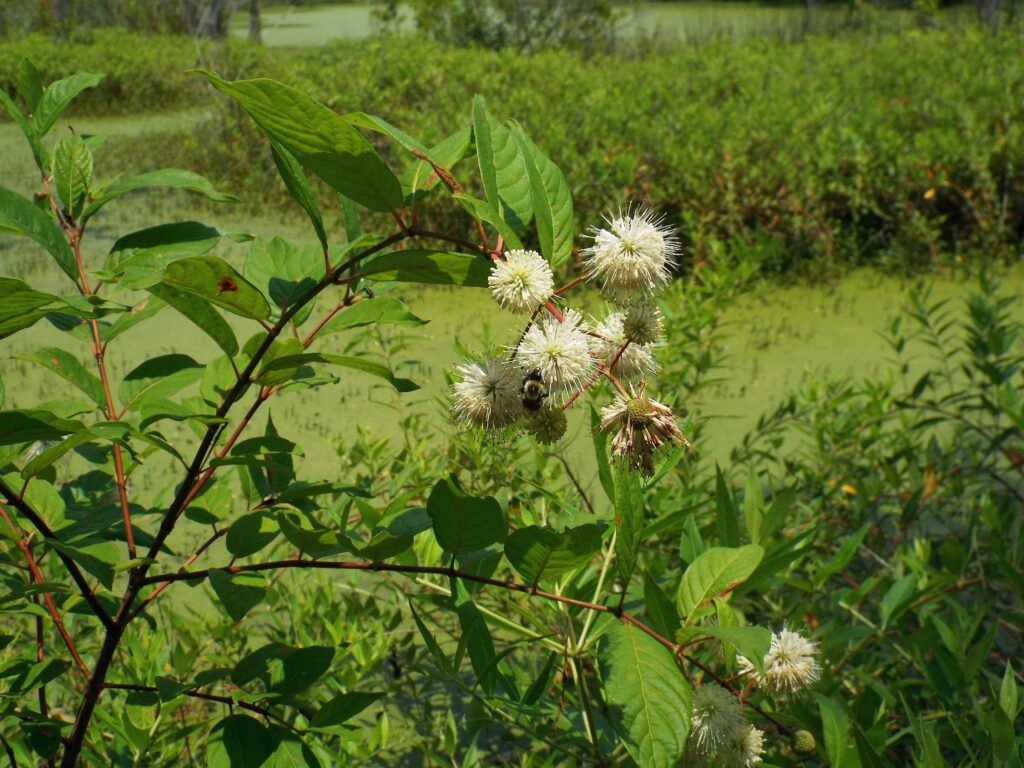
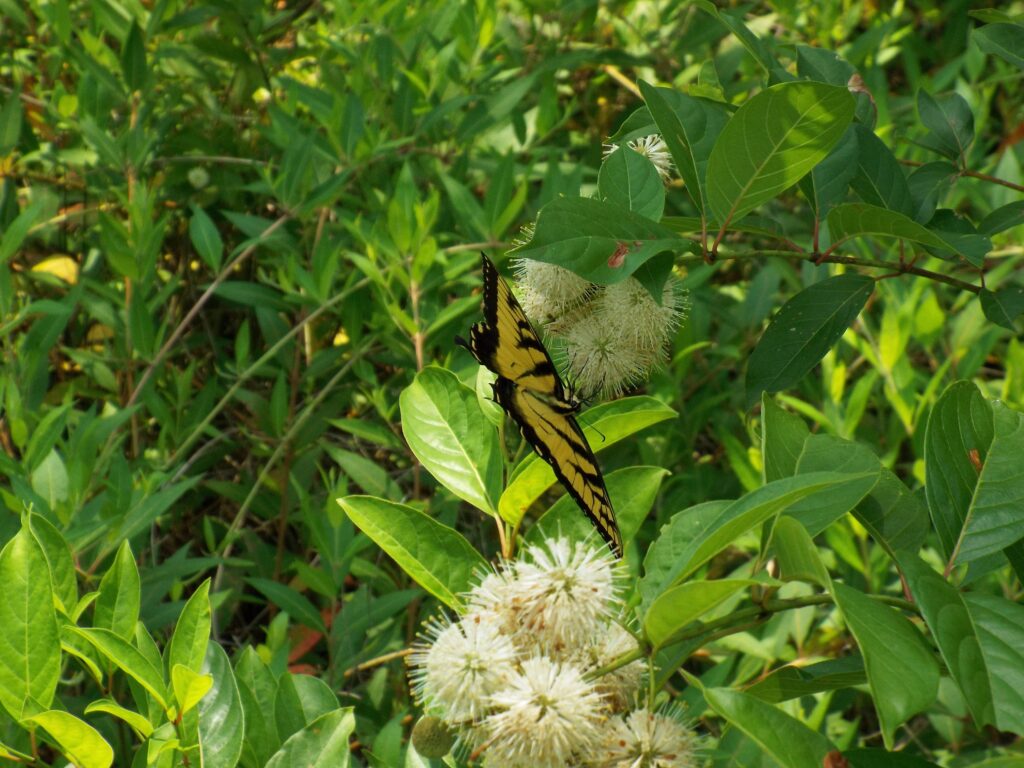
This week for Flora and Fauna Friday, we’ve got another wetland wildflower. This week we’re looking at the Buttonbush (Cephalanthus occidentalis).
Buttonbush is a resident of our freshwater marshes, ponds, riverbanks, and swamps. It’s well adapted to sunny wetland habitats and is most often found growing in standing water. It’s a common sight along riverbanks and ditches or poking up above the sedges and rushes of freshwater marshes, where it can bask in full sun. It typically grows as a short shrub but can reach over 10 feet in height. It has somewhat large, simple, and oppositely arranged leaves. Its stems are a reddish-pink and the leaves usually have a prominent midrib of a similar color. In early summer, Buttonbush begins to flower. At the end of each branch, it produces a cluster of white spherical flowers. Each one of these flowers is actually a ball of dozens of smaller flowers. These flowers are a massive draw for pollinators. Eastern Tiger and Palamedes Swallowtails are particularly fond of Buttonbush, along with many other species of butterflies and bees. Once their flowers are pollinated, fruits begin to form. As the fruits mature, they turn red and bumpy before drying out and turning a dark brown. Each bump is a tiny nut that is eventually shed and may float to dry ground or a hummock of grass and sprout. Others, not so lucky, get eaten by ducks, rails, and sparrows as they float on the water. Buttonbush is a deciduous perennial, shedding its leaves each winter and leafing out again in spring.

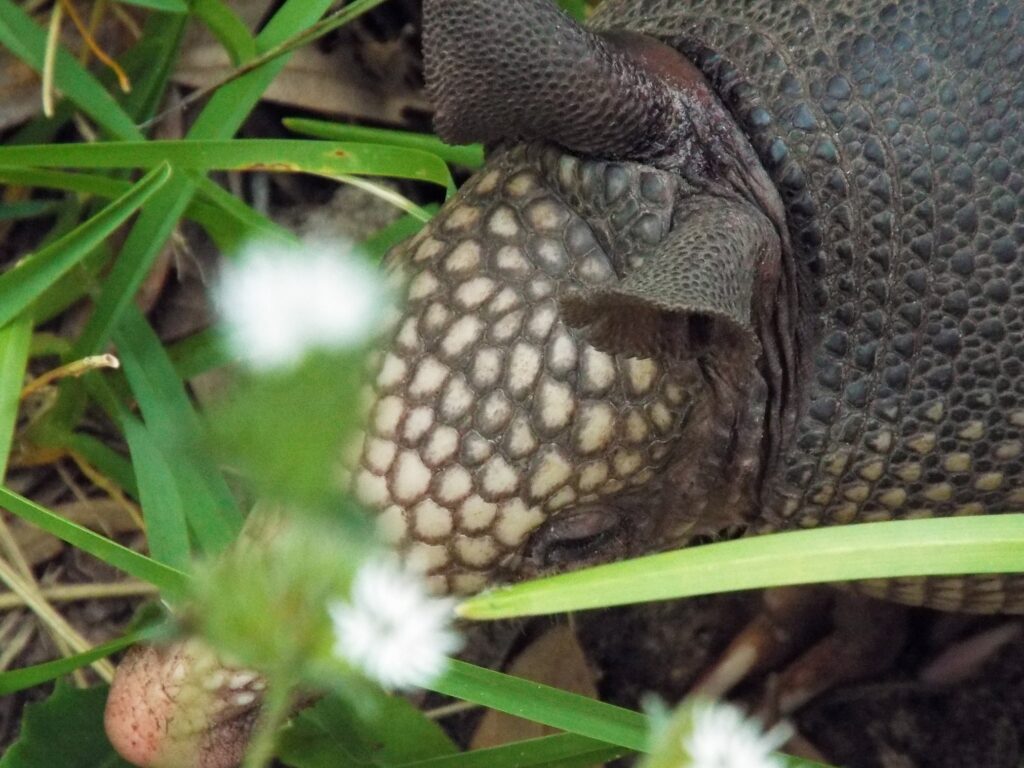
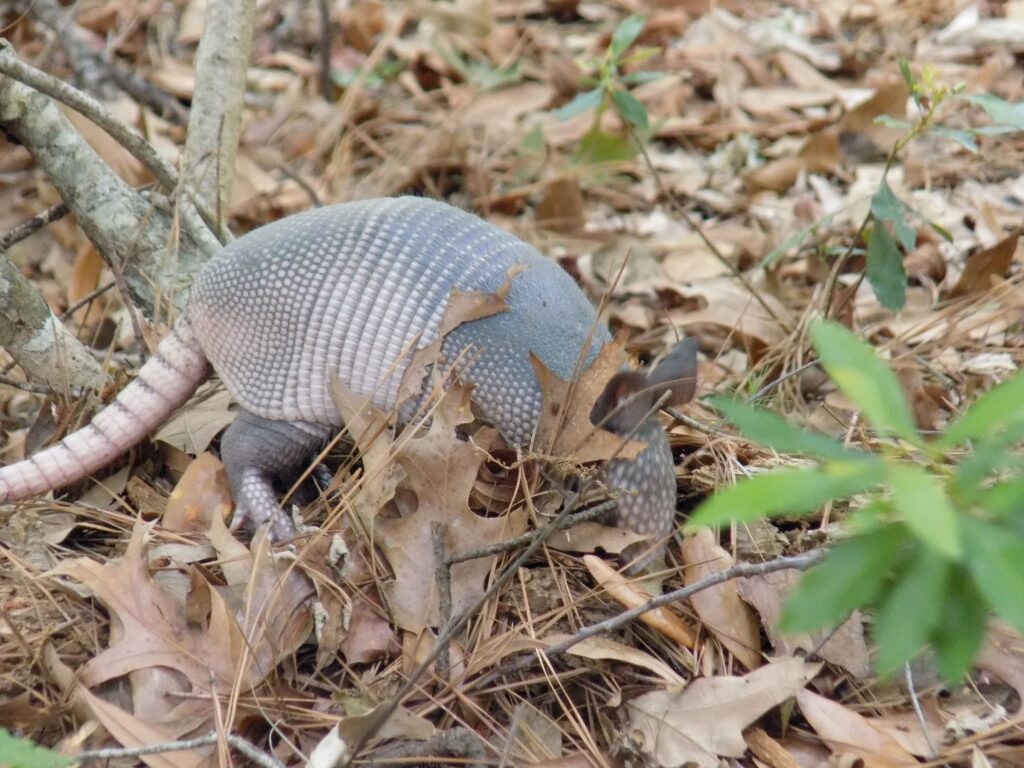
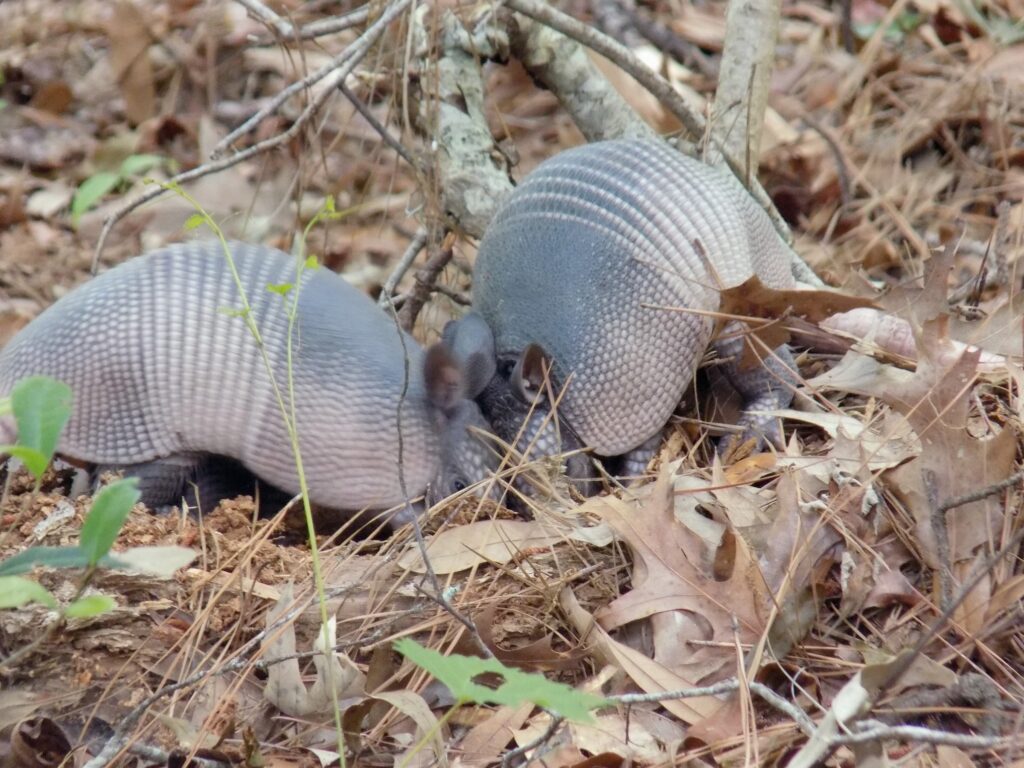
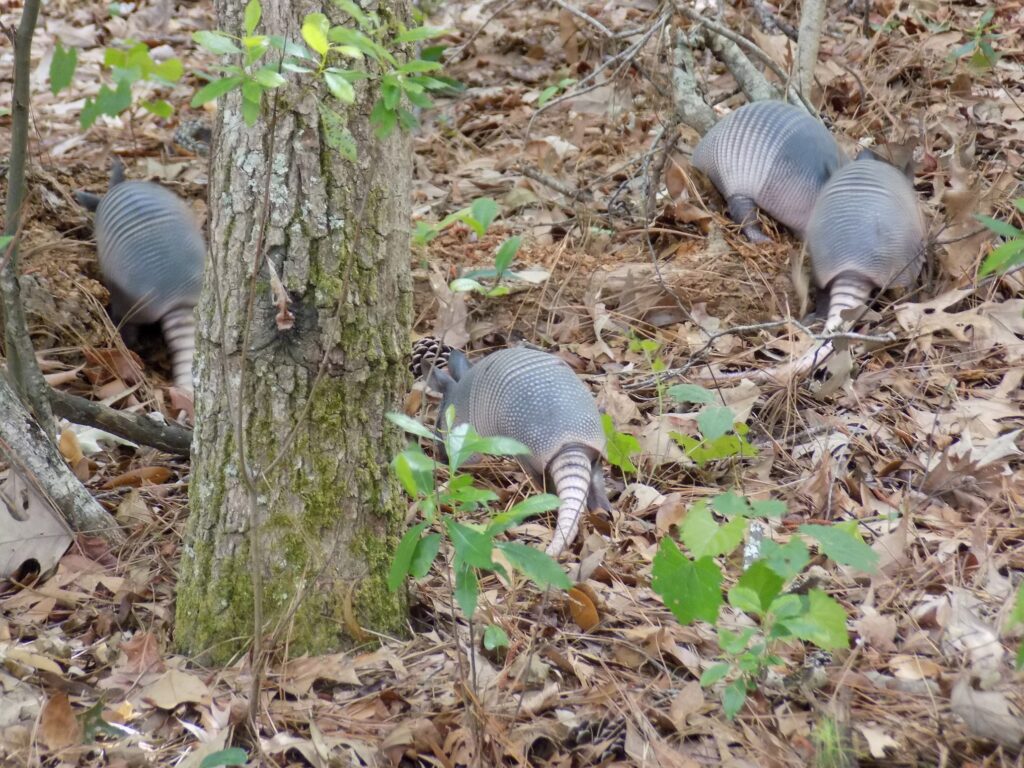
This week for Flora and Fauna Friday, we have an interesting mammal on the docket and one with quite the poor reputation. This week we’re talking about the Nine-banded Armadillo (Dasypus novemcinctus). The Nine-banded Armadillo is very unique among our mammals. I don’t think I can cover all the weird facts in one post, but I’ll try and hit the high notes.
Nine-banded Armadillos are a medium sized mammal that specializes in digging. Armadillos belong to the superorder Xenartha, which also includes Anteaters and Sloths. Members of this group have extra protrusions on their vertebrae that stiffen and strengthen the spine and greatly facilitate their digging ability. Their front claws are massive and put to good use in digging up food. They are insectivorous and feed mainly on worms and subterranean insects. Armadillos use their strong sense of smell to detect prey through the soil. Armadillos have a pretty good sense of hearing but their eyesight is abysmal. (I’ve stood in a field and had them step onto my boots on more than one occasion.) They make up for being practically blind by being covered from head to toe in armor. This armor is actually some of the most impressive in the animal kingdom as it shares the best features of fish scales and turtle shells. Their overlapping, interlocking bony scutes form a flexible yet rigid series of plates and bands along their back. These bony scutes are then covered in a layer of flexible, waterproof keratin. The same stuff that makes up horns, nails, and hair. This makes the armor impervious to all our predators except the powerful teeth and jaws of the American Alligator. However, the belly of the armadillo is unarmored and, unlike some other species, the Nine-banded Armadillo can’t roll into a ball. When attacked, the Nine-banded Armadillo launches forward, its shell deflecting both teeth and claws, and barrels into the nearest thicket. Armadillos are primarily nocturnal and sleep in burrows during the day. Here, female Armadillos raise their young. Nine-banded Armadillos are unique in that their litters are always identical quadruplets.
Armadillos in South Carolina are considered invasive pests by many. Their burrowing damages berms and foundations. Their hunt for worms often draws them into flower beds, where they wreak havoc night after night. They are known to carry leprosy. Their near blindness, nocturnal nature, and defense mechanism of launching themselves forward and upward sends them careening into wheel wells and radiators by the hundreds every night. However, this rate of roadkill doesn’t even make a dent in their population as they lack natural predators in SC. Just like the Coyote, the Nine-banded Armadillo falls into a gray area where they’re not quite exotic but not quite native. Their range has been naturally expanding northeast from Mexico for over a century and, I’m sure as many of you know, they’ve only established themselves SC in the last two decades. However, unless we develop a taste for possum-on-the-half-shell, I can say for certain that, just like the Coyote, the Armadillo is here to stay. Whether we like it or not.
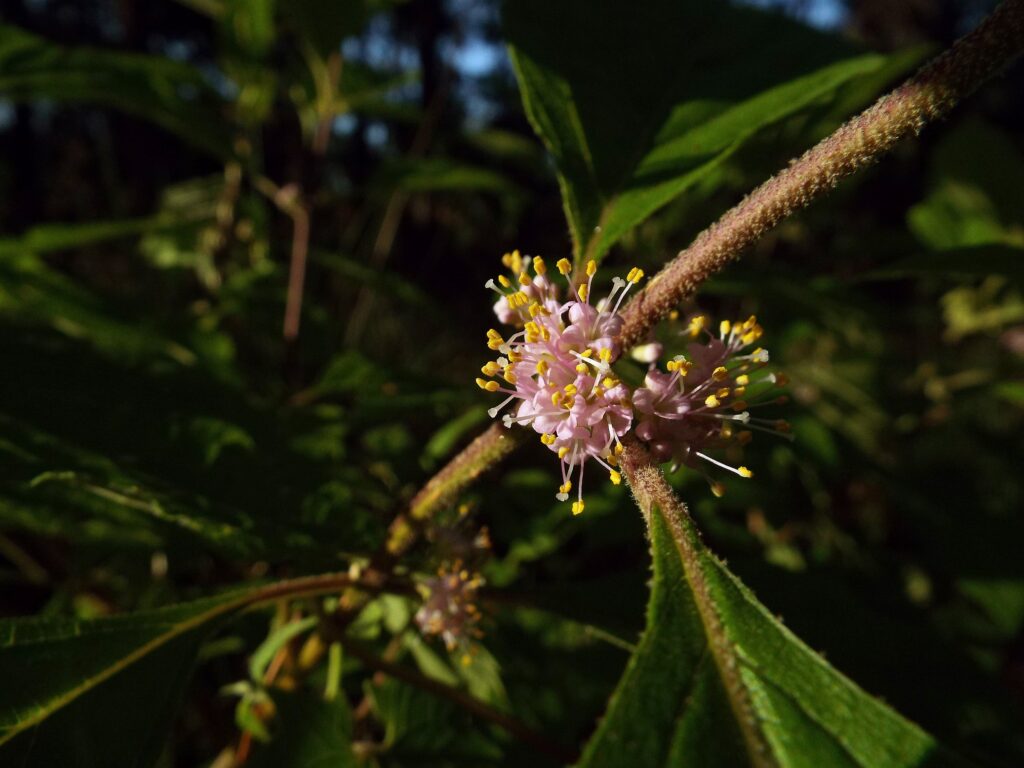
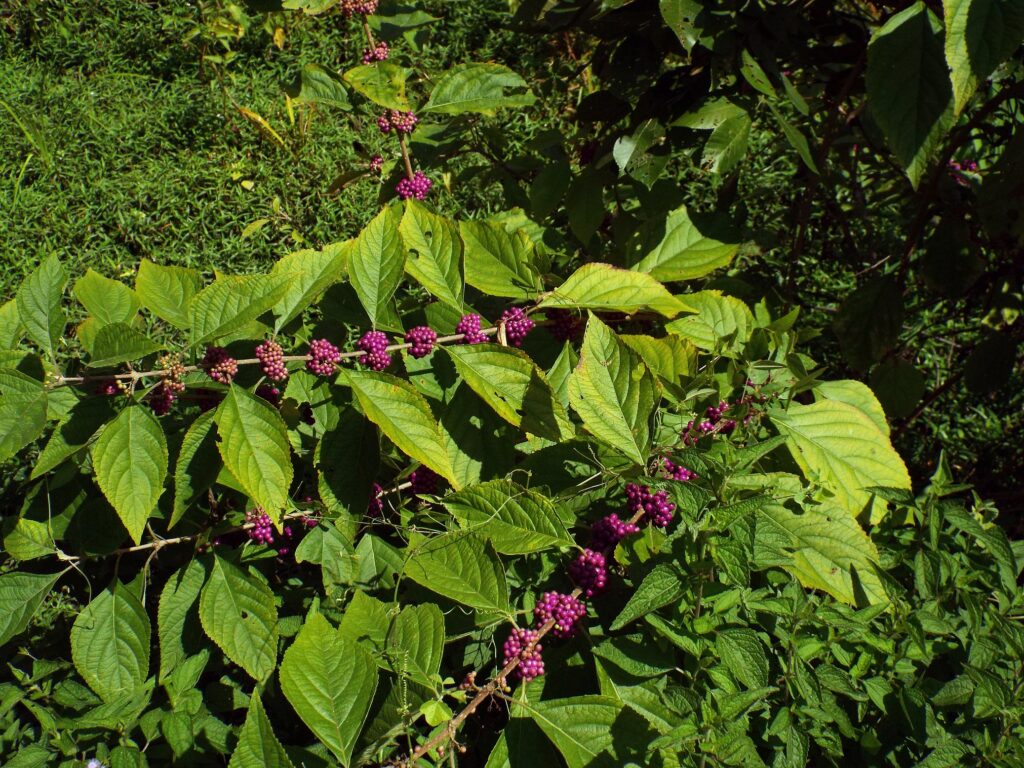
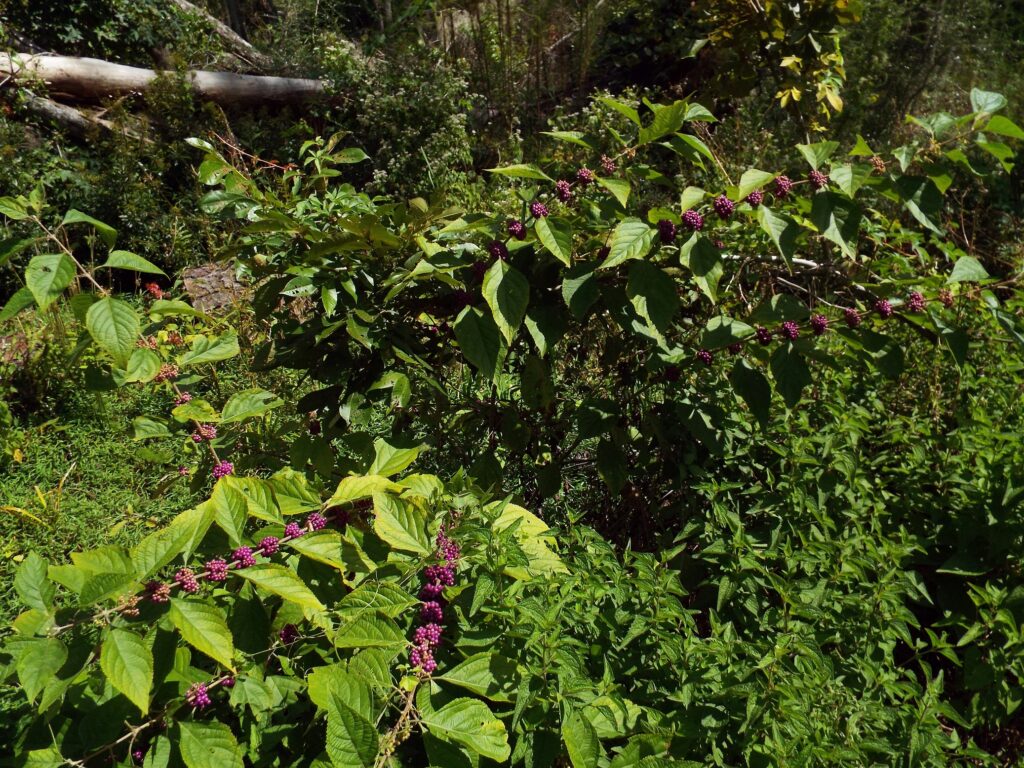
This week or Flora and Fauna Friday, we have a lavish lavender limbed local shrub to discuss. We’re shining a spotlight on the American Beautyberry (Callicarpa americana).
American Beautyberry is found throughout South Carolina. From the Appalachian foothills to the barrier islands of Edisto. Its appearance is open and spreading with large, opposite, simple leaves. The bushes can reach head height but are usually about chest high. Beautyberries are often found growing along forest edges or beneath trees in open forests, yards, and fields. In the early summer, American Beautyberry produces clusters of small, pale pink flowers at the nodes below the bases of its leaves. By late summer, these nodes are bursting with rich lavender berries.
American Beautyberry is a hardy native shrub that makes for a great ornamental. Their flowers, while small, do attract a number of pollinators. The vibrant purple fruits remain on the plant for weeks, providing not only a treat for the eye but a treat for many species of birds. Northern Mockingbirds are a particular fan of the berries and a major disperser of their seeds. When crushed, the leaves of the plant release the chemicals callicarpenal and intermedeol, which can act as a mosquito and tick repellent.

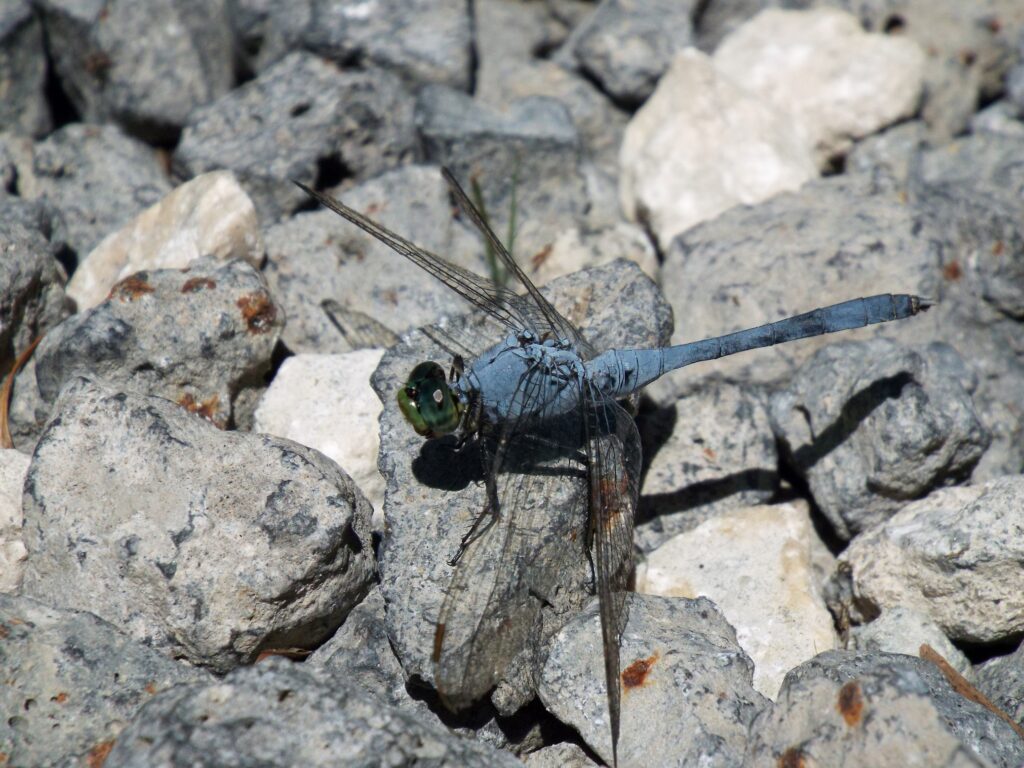
This week for Flora and Fauna Friday, we’ll be talking about an insect from an order that we’ve yet to discuss, but you’ll hopefully be seeing more of them in the future. This week we’ll be looking at our first Dragonfly, the Eastern Pondhawk (Erythemis simplicicollis).
Eastern Pondhawks are one of our most common and widespread dragonflies here in the lowcountry. They can be found along almost every quiet body of fresh or brackish water. I’ve seen them along ditches, ponds, lakes, wetlands, rivers, lawns, creeks, floodplains, retention ponds, impoundments, ephemeral wetlands, and marshes. Eastern Pondhawks are a medium-sized dragonfly. Larger than our Dashers and Dragonlets, smaller than our Skimmers and Darners, and somewhere in the middle of the size range for our Pennants. Males are a powdery blue throughout the body and females sport a lime green thorax with a black and white striped abdomen. Both sexes share the characteristic clear wings, green head, and white abdomen tip of the species. The species also has a habit of landing on the ground or as low as they can on vegetation. This makes them an easy species to identify.
Like all dragonflies, the Eastern Pondhawk has an aquatic nymph. A wingless first stage of life for living underwater. Dragonfly larvae are accomplished hunters. They possess a hinged, extendable lower jaw that they use to grab prey. Once the nymph is fully grown, they climb up a stem, branch, pole, or wall near the water and begin to molt. From the shell of this nymph will emerge an adult dragonfly. This process may take an hour or more to complete. Dragonflies are ancient and accomplished hunters. Their aerial agility is surpassed only by Hummingbirds. During the day, Eastern Pondhawks feed on flying insects like mosquitoes, flies, moths, butterflies, lacewings, and even other dragonflies.
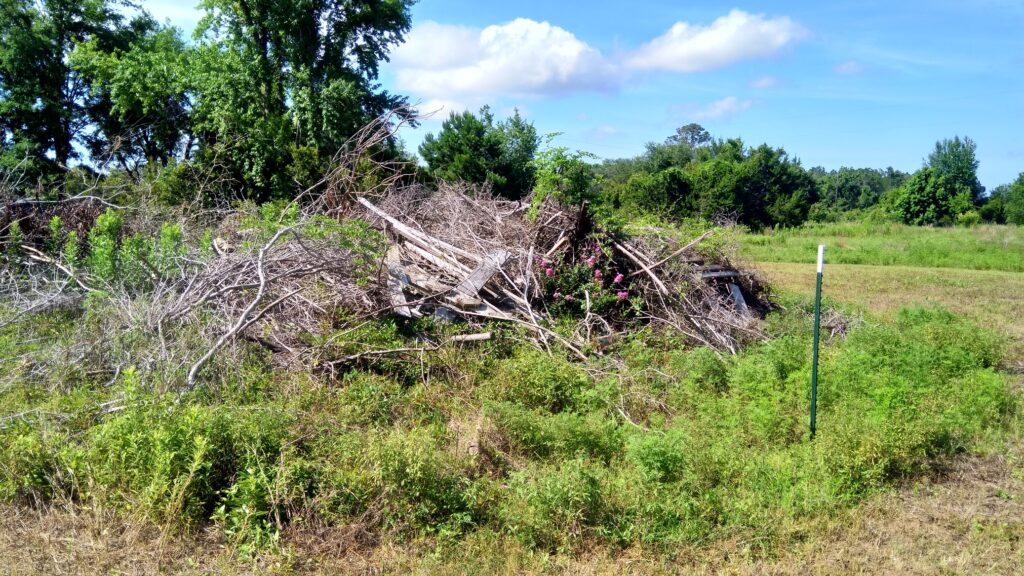
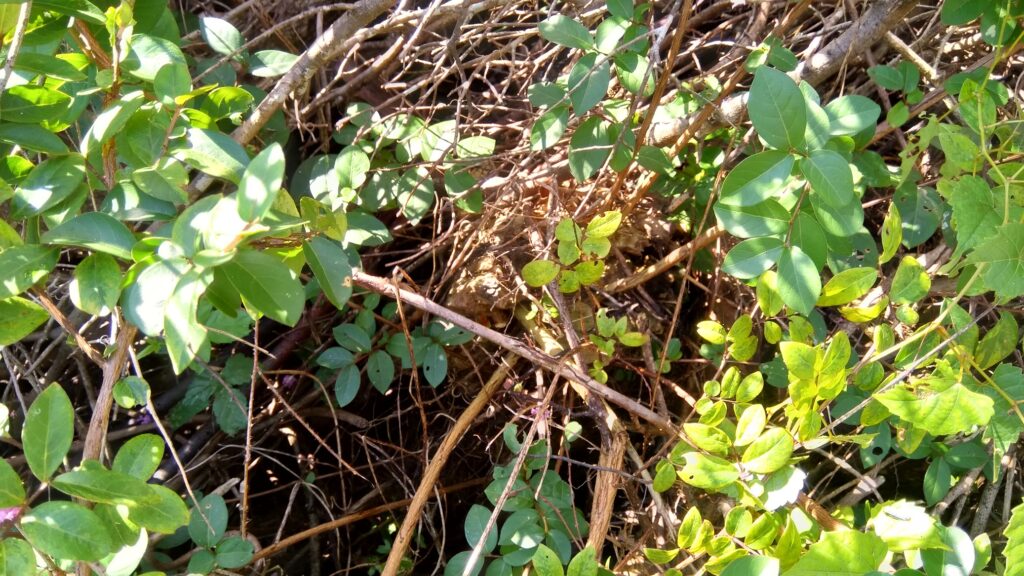
Surprise! I’ve got a biology bonus post for ya’ll. It doesn’t pair with tomorrow’s Flora and Fauna post at all but it was too cool not to share.
Last Friday out at the Hutchinson House, I noticed something strange poking through the brush pile in the front field. There was a Crape-Myrtle blooming in the middle of it! The strangest part about that is there was never a Crape-Myrtle planted in that spot. It was a regularly disked and bush-hogged field before we acquired the property. When the EIOLT began cleaning up around the Hutchinson House we piled the woody debris we cleared in the middle of the field, so it would be out of the way of construction and could eventually be disposed of. Last fall, we cleared a strip out in from of the house so the footers for the cover could be poured and the boom lifts would have level ground to work on. On the far end of that strip was a large Crape-Myrtle stump that had been choked by Chinese Wisteria until it was just barely clinging to life. The inside of the stump was totally rotten and what was left of the tree was too far gone to make a proper recovery. So we had it removed and it ended up in the brush pile with the other debris. Eight months later, that same nearly dead stump, ripped out of the ground and left in a pile in the middle of a hot sandy field, is not only still alive but doing well enough to bloom! On top of that, what’s left of its old root system is putting out shoots where the stump was torn out. You just can’t kill a Crape-Myrtle.
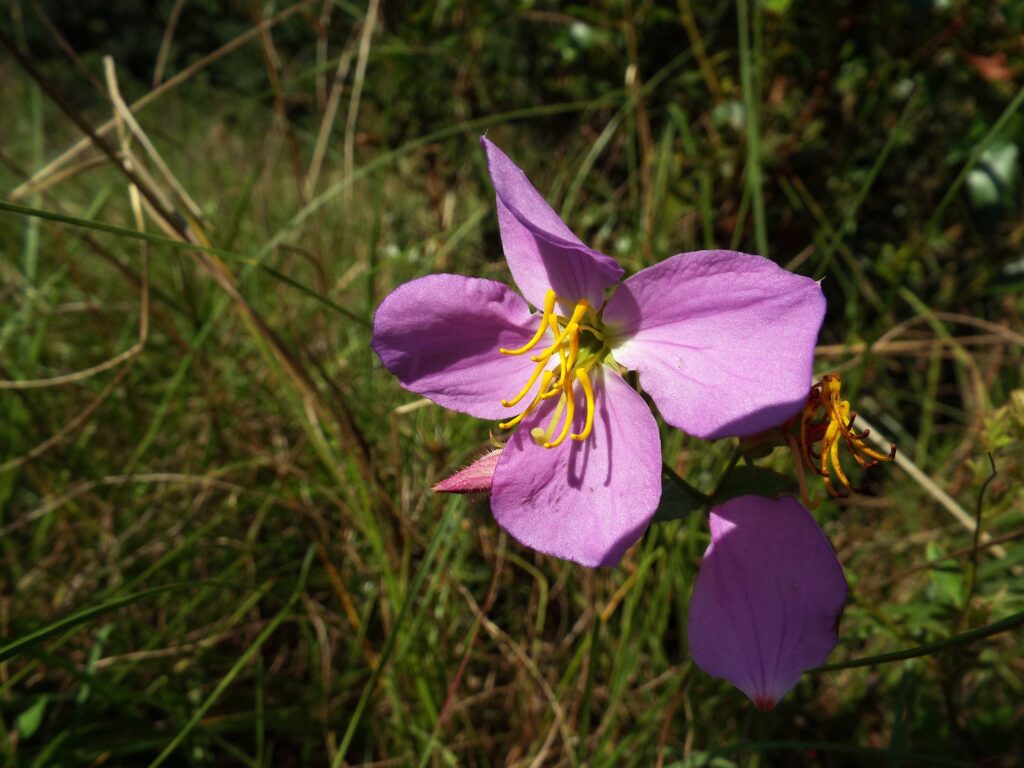
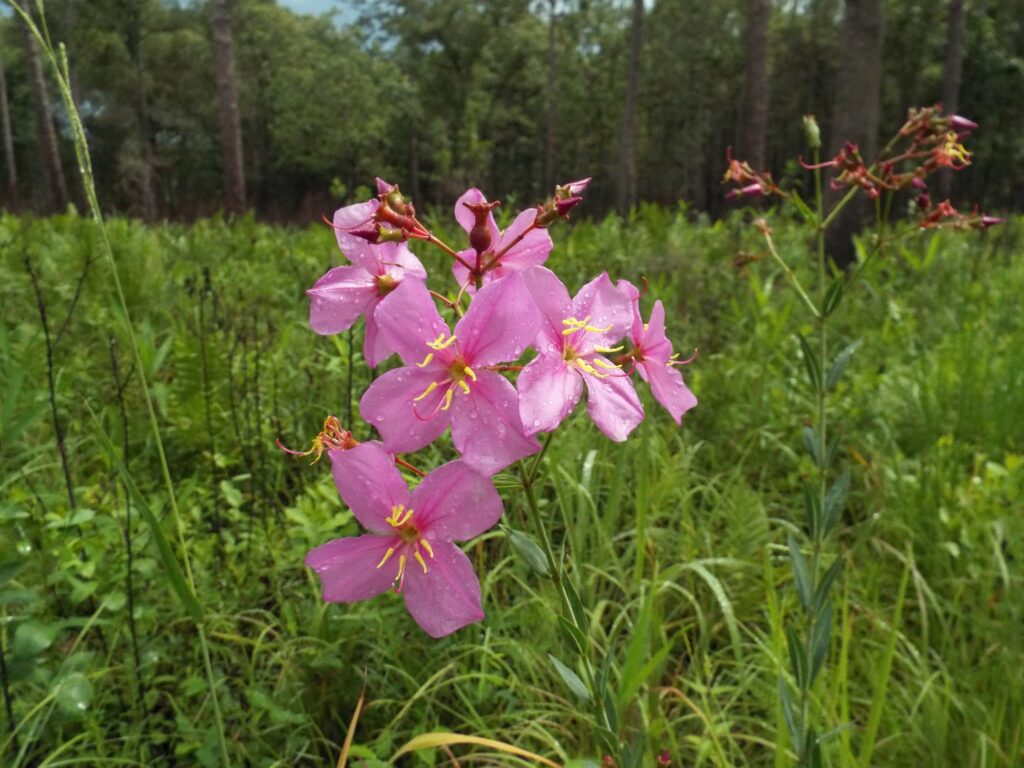
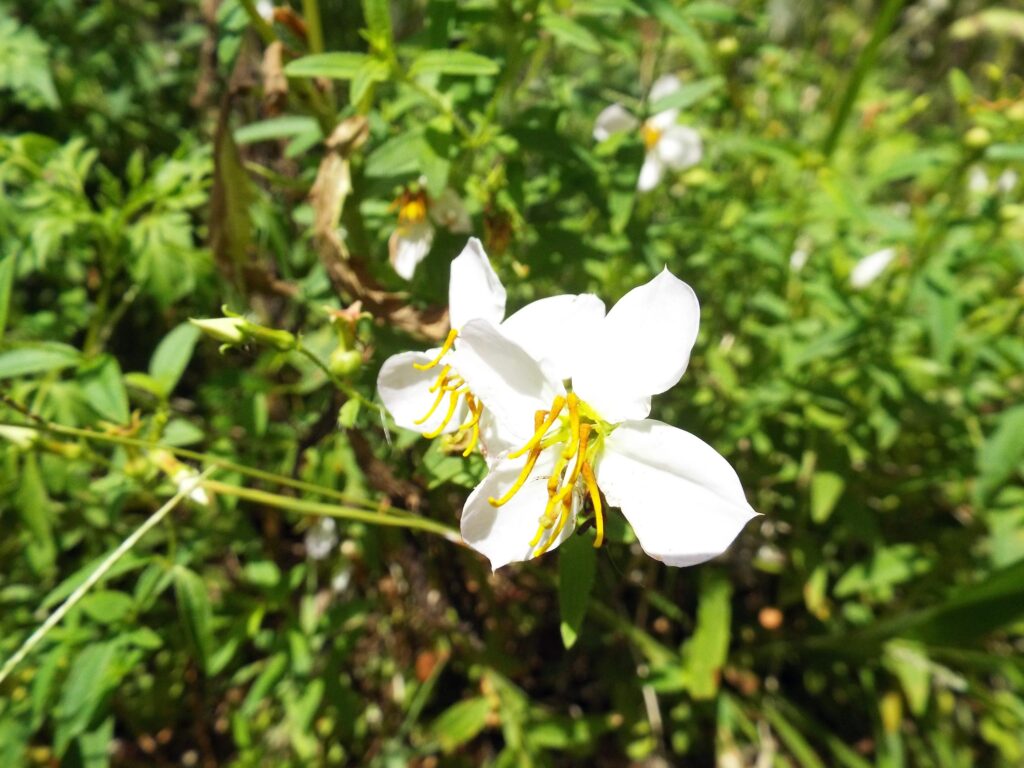
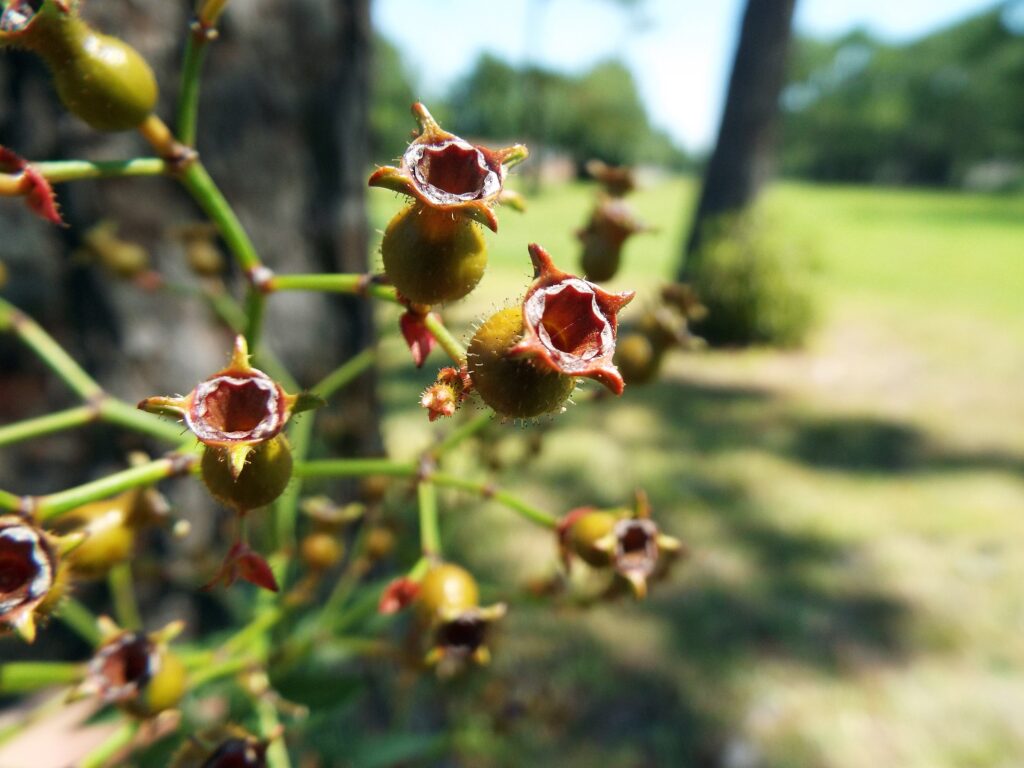
This week for Flora and Fauna Friday, we’re looking at another common wildflower of SC. This week we’re examining Meadow-beauties, genus Rhexia.
Meadow-beauties are a genus of low growing, wildflower shrubs common to the savannahs, fields, roadsides, glades, and meadows of the south. Each of our common species are similar in appearance. They sport four wide magenta petals and eight finger-like anthers of pollen above opposite, simple leaves. Meadow-beauties produce very little nectar, so they don’t draw in many butterflies or wasps, but their ample pollen supply is a magnet for native bees. Their flowers are rather ephemeral and only last a short while before their petals are shed. Beneath the flowers, an urn-shaped capsule full of miniscule seeds forms.
Around these parts, I’ve stumbled upon three species of Meadow-beauty: Maryland Meadow-beauty (Rhexia mariana), Handsome Harry (R. virginica), Maid Marian (R. Nashii), and Savannah Meadow-beauty (R. alifanus). Maryland Meadow-beauty is by far the most common and can be found across Edisto and SC as a whole. It loves roadsides, fields, and meadows. It grows as a short, open shrub and can also be found as a white-flowered variety. Handsome Harry is more suited to pine savannas and shows up more inland. It’s just as short a shrub as the others but with much fuller foliage. Maid Marian is mostly coastal and prefers wetter soils. It looks a lot like Maryland Meadow-beauty but is given away by special hairs on the back base of its petals. Savannah Meadow-beauty is easy to pick out from the others because of its smooth, blue-green leaves held upwards against its stem. Its flowers are a little larger and more vibrant than the others and the plant thrives in sandy Pine savannas.
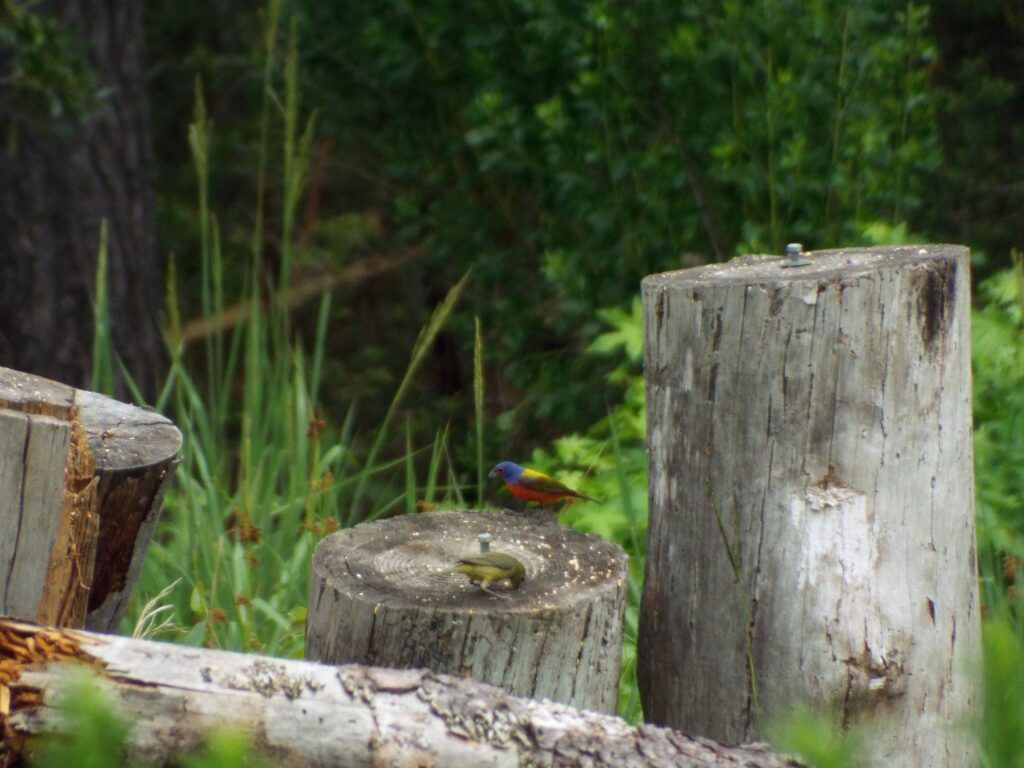
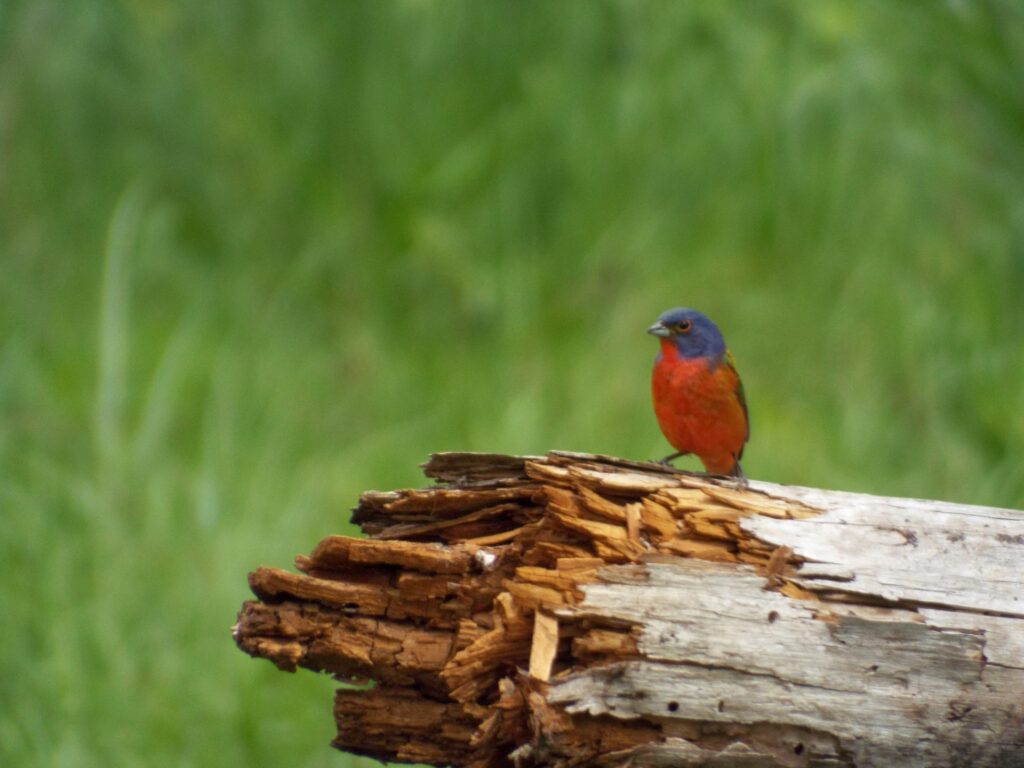
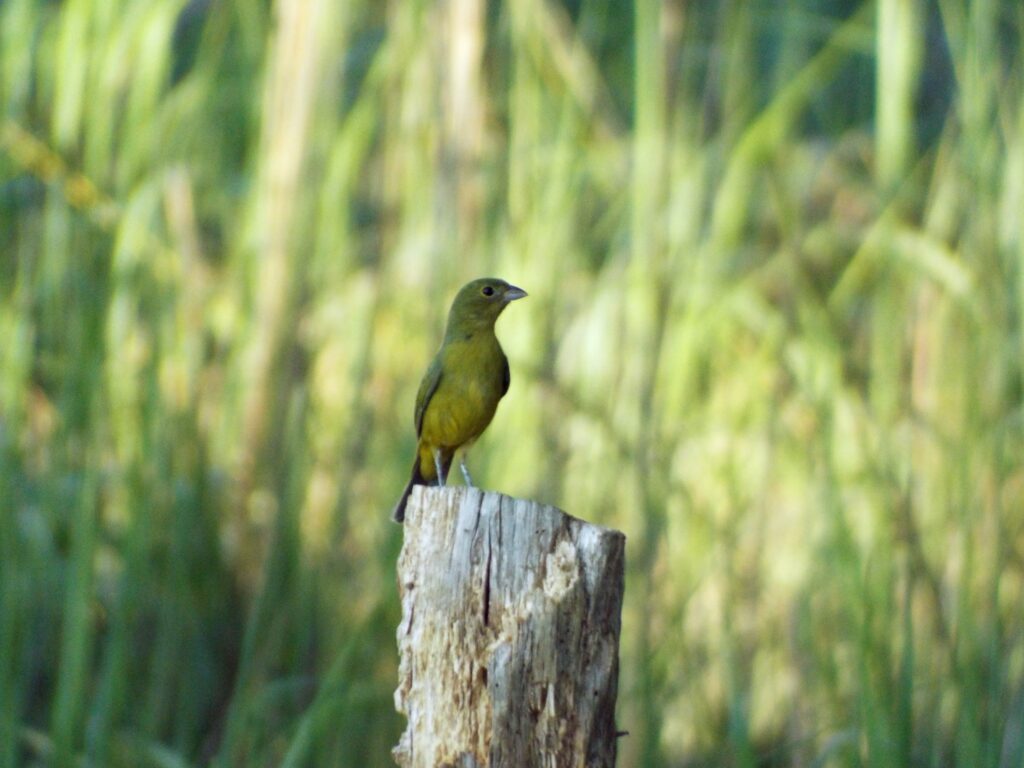
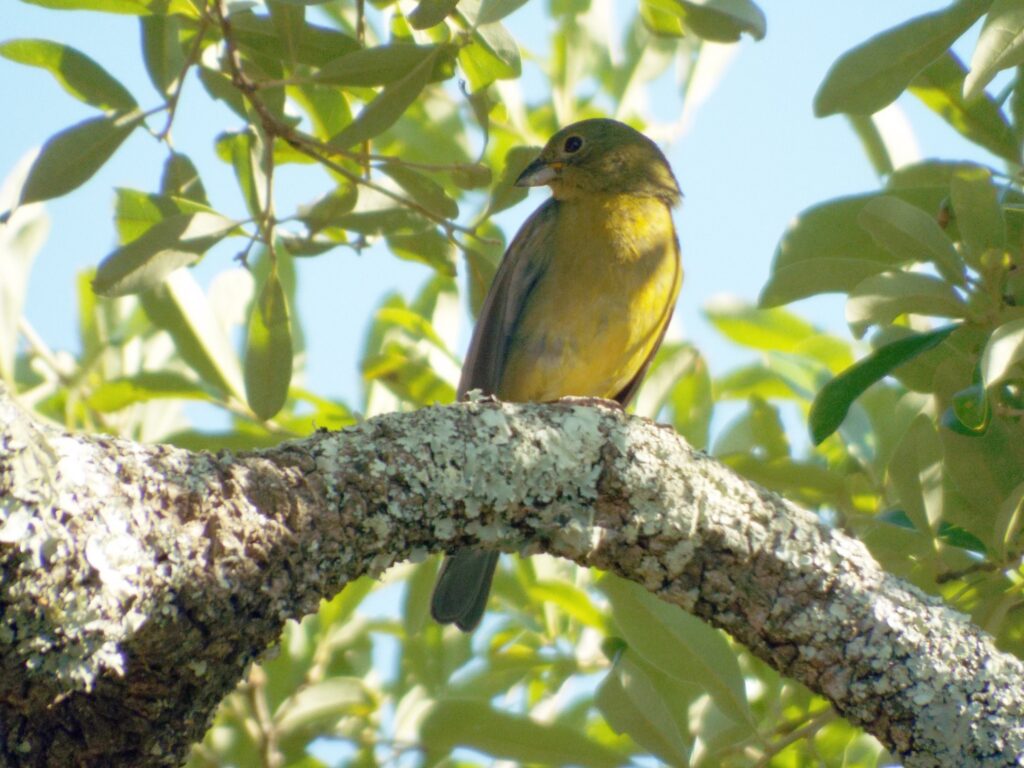
This week for Flora and Fauna Friday, we’re taking a look at another unmistakable bird of Edisto. This week we’re talking about the Painted Bunting (Passerina ciris).
The Painted Bunting, just like the Roseate Spoonbill, is an unmistakable sight in the Southeast. A blur of color that streaks along the hedgerow and launches in through your peripheral vision. They were even given the French nickname of Nonpareil, meaning “without equal” or “unrivaled” in reference to their striking plumage. The male is a vibrant patchwork of red, blue, and chartreuse. The female a blend of greens and yellows not seen on any other bird in our region. They are roughly sparrow sized and relatives of the Cardinal and Tanager. Painted Buntings eat seeds and insects. They often visit bird feeders in their territory. Their preferred habitats are maritime forest, agricultural fields, and the shrubby edges of causeways, roads, and forests. Females build their nests in dense scrub a few feet off the ground or in Spanish Moss well out of reach. Males mark their territory with a warbling song they sing from an exposed perch, usually about 30ft above the ground. Painted Buntings are here most of the year but vacation in Mexico for the colder parts of winter.
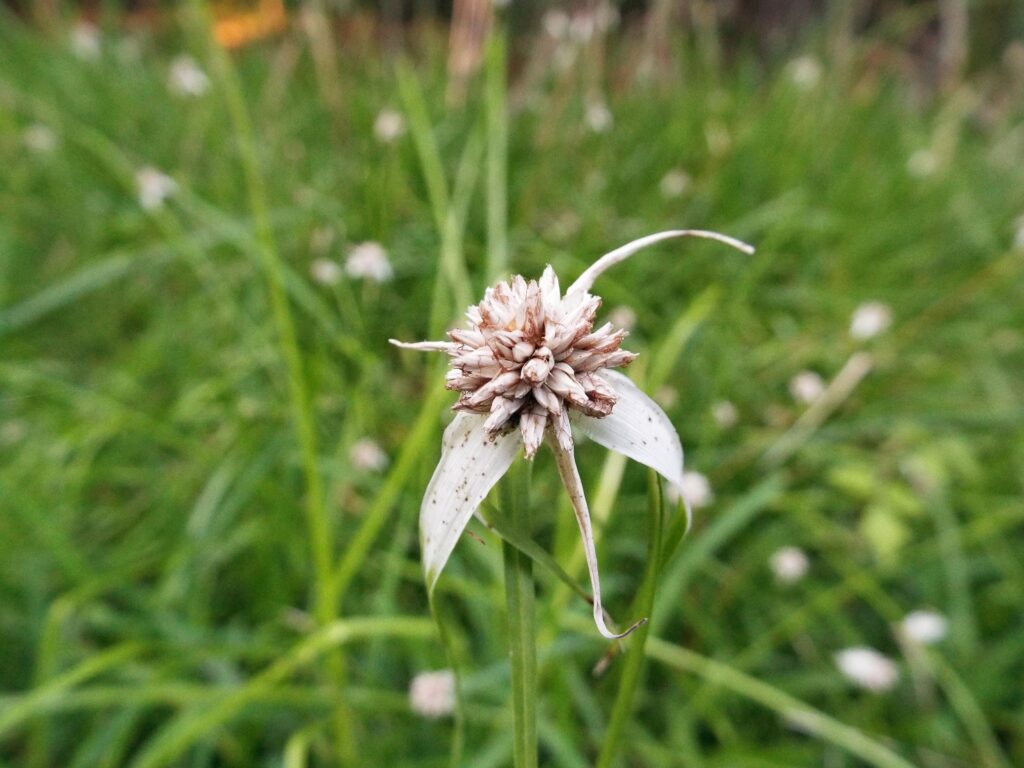
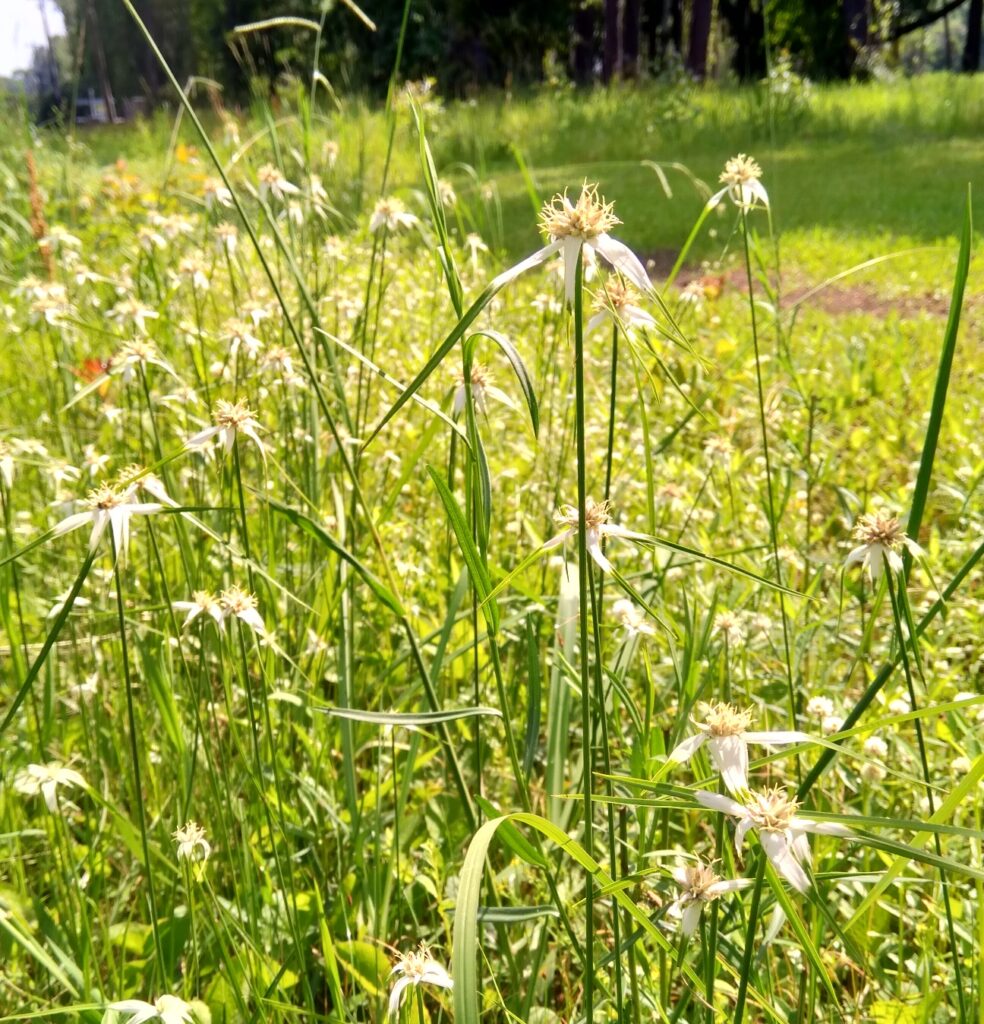
This week for Flora and Fauna Friday, we’re looking at grassy wetland plant whose appearance betrays its heritage. This week we’re talking about the White-topped Sedge (Rhynchospora colorata).
The White-topped Sedge is a resident of wet meadows, ditches, and other open shallow wetlands. (It’s even growing in the ditches across the street from the EIOLT office.) It grows in dense strips or clumps that reach about 2 feet tall. In late spring, the Sedges bloom producing a small cluster of white flowers ringed by a pale corona of long, variegated bracts. Bracts are the leaves found just below a flower. In the White-topped Sedges, these bracts are up to 6 inches long, white at the base, and green at the tip. They form a whorl beneath the true flowers where they resemble petals, much like the bracts of Dogwood or Hydrangea flowers.
White-topped Sedges are interesting because they’re a member of the Sedge family, Cyperaceae. Sedges are an incredibly diverse group of plants that are closely related to, and strongly resemble, Grasses. Just like Grasses, Sedges are rather plain and their flowers mostly inconspicuous. The white-topped Sedges are an exception. They’ve developed a showy flower unlike any of the members of their family. These white bracts standout like a beacon to insects and attract pollinators to the plants. As the pollinators move from flower to flower, they distribute pollen between flowers. Almost all the other members of the Sedge family rely on wind pollination, making the White-topped Sedge’s adaptation unique among Sedges.
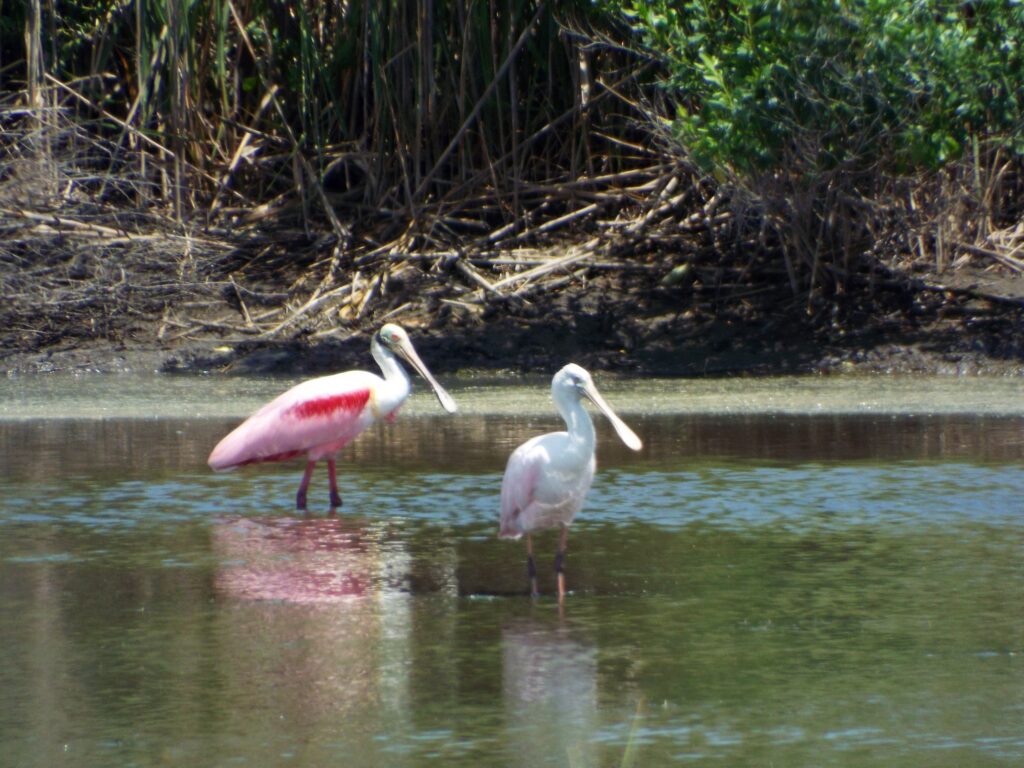
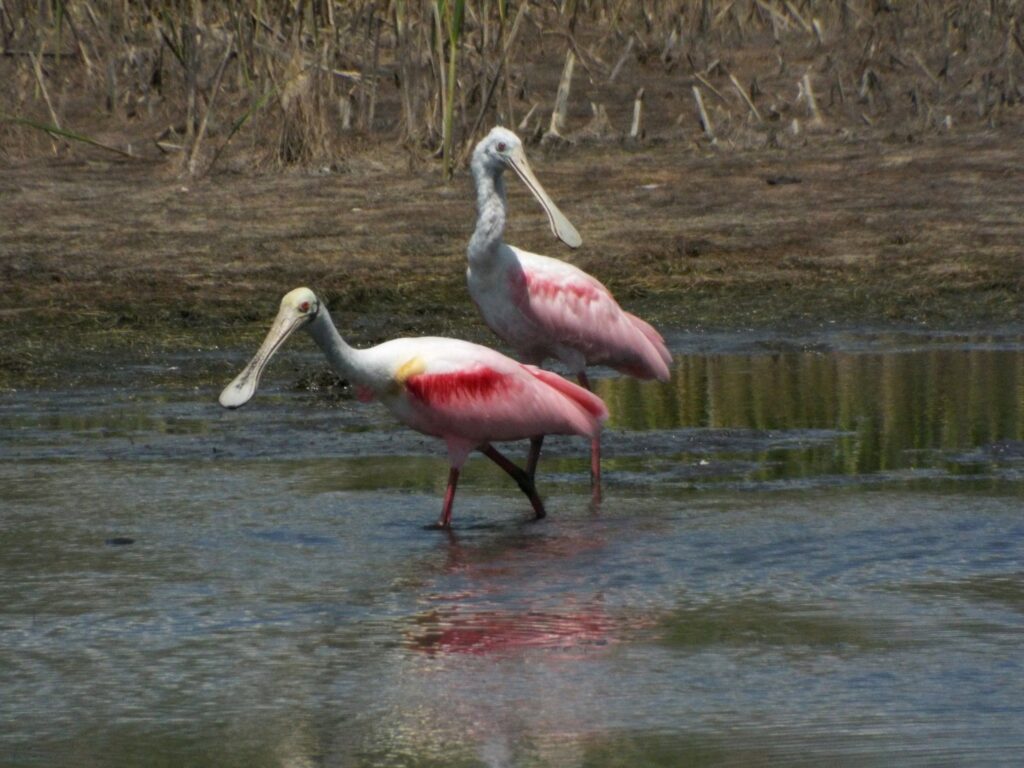
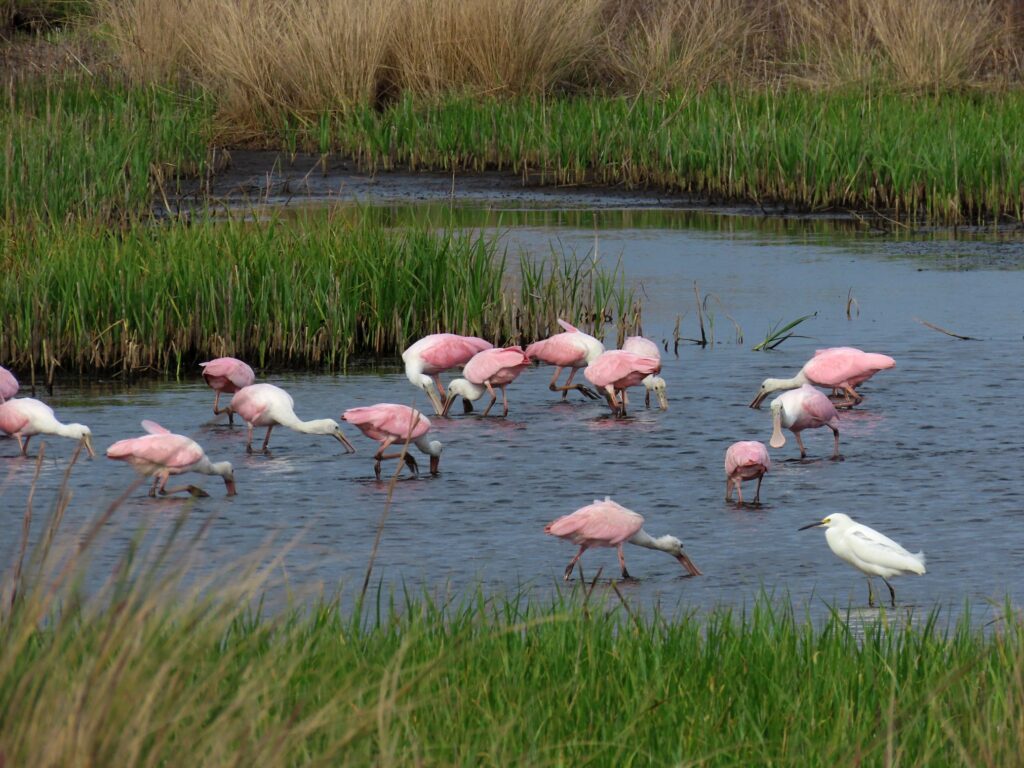
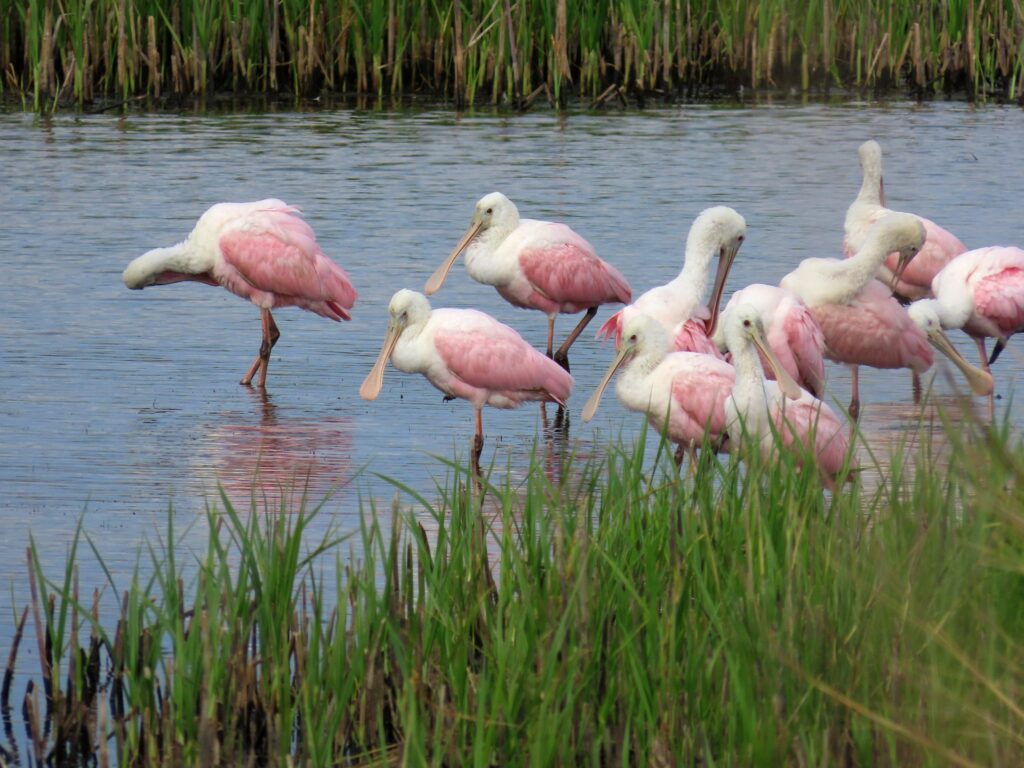
This week for Flora and Fauna Friday, we’re discussing the hot-pink ladle-faced wading bird that draws birders from far and wide to the ACE basin. This week we’re taking a gander at the Roseate Spoonbill (Platalea ajaja).
It’s unquestionable. Roseate Spoonbills are the most striking of all our wading birds. Their hot pink wings, bubblegum legs, bony spoon-shaped bills, large stature, and glowing ruby eyes will give even the most seasoned birder whiplash when one turns up unexpectedly. No other bird, save a very lost Flamingo, commands the same presence in the marsh. Despite their resemblance to Wood Storks, of the species in SC, Roseate Spoonbills are most closely related to Ibis.
Roseate Spoonbills are quite common in coastal TX and LA as well as southern Florida but are a much more special sight on Edisto. They migrate our way come summer, trickling in along the intracoastal waterway. We’re only just on the edge of their breeding range in SC. So most of the birds you will see are immatures coming more north than the breeding grounds to feed. Adult Roseate Spoonbills have a bald head but immature birds still have a full head of feathers. Roseate Spoonbills feed in the saltmarshes and impoundments of our coast, slicing their flattened bills from side to side as they march along in the shallow water. When they bump against something tasty they snap their bill shut, trapping their prey in a spoon-y embrace. Roseate Spoonbills eat a diet of small fish and crustaceans, including mummichogs, blue crabs, and shrimp.
If you want to appreciate the beauty of our utensil-snouted fusia-feathered friend in person, I can recommend two hotspots on Edisto. I often see Roseate Spoonbills below the bridge along the Dawhoo River in early summer and more reliably on the back of Jason’s Lake in Botany Bay WMA in late summer. So grab your binoculars and camera and get out there!
This week for Flora and Fauna Friday, we’re looking at a common but unique wetland plant. This week were talking about Lizard’s Tail (Saururus cernuus).
Lizard’s Tail belongs to the family Saururaceae. This family only contains 7 species, of which only two are found in the United States. Of those two, Lizard’s tail is the only one found East of the Mississippi. This leaves Lizard’s Tail quite unique in appearance from anything else in our area.
Lizard’s Tail is a perennial wildflower that thrives in shaded freshwater marshes and open swamps. It’s alternate arrowhead-shaped leaves carpet the mud of many a shallow backwater and bottomland in the Lowcountry. The plants grow in dense stands and can reach about 4ft in height. In the spring the plants produce a slender spike of green-white flower buds. These flower buds open from the base of the inflorescence to the tip, creating a white bottle brush at the bottom with an off-green “lizard’s tail” of buds still hanging from the tip. In the winter the plants die back to their roots to start the cycle anew.




© 2026 Edisto Island Open Land Trust.
Built by Colophon