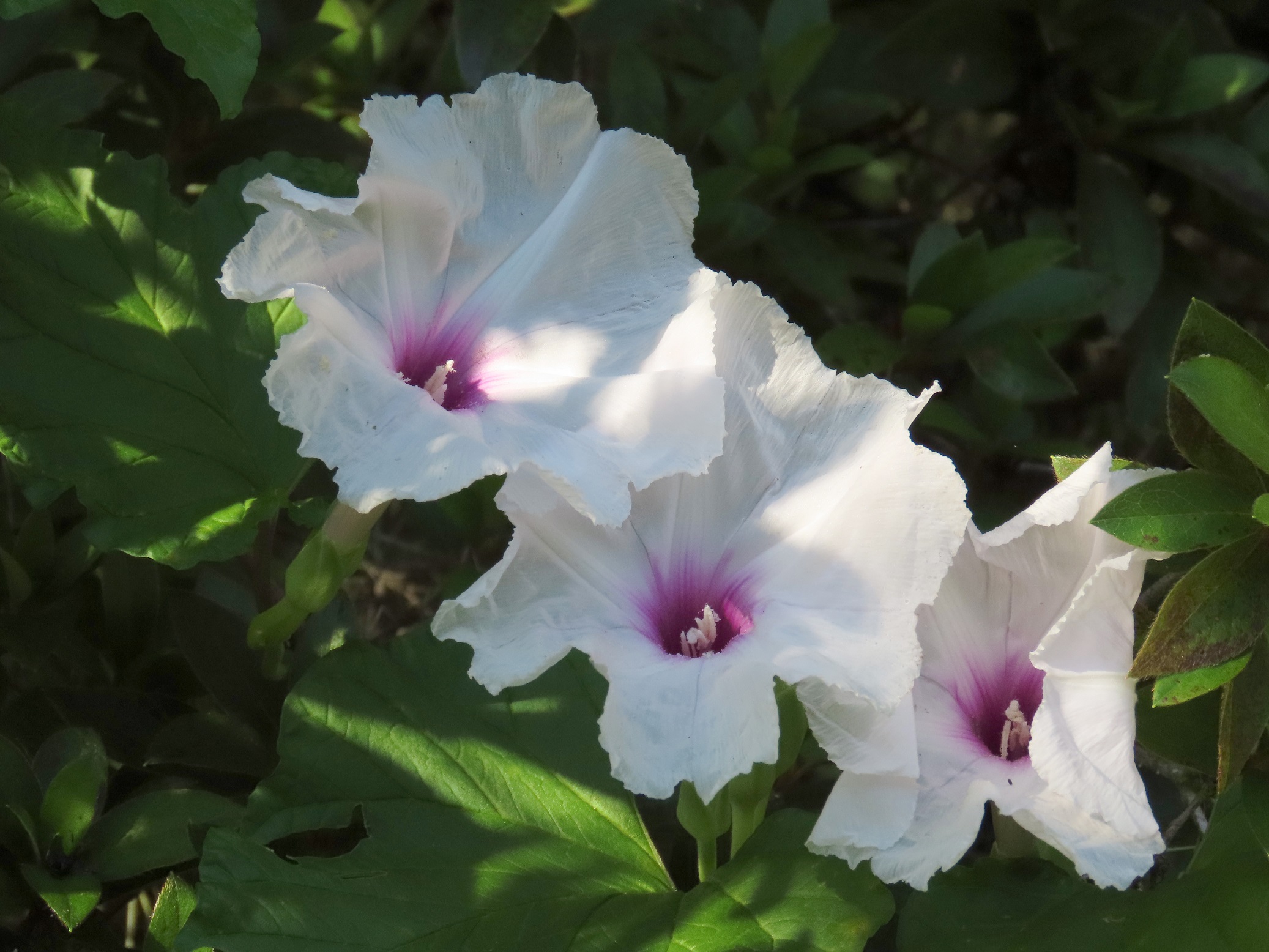
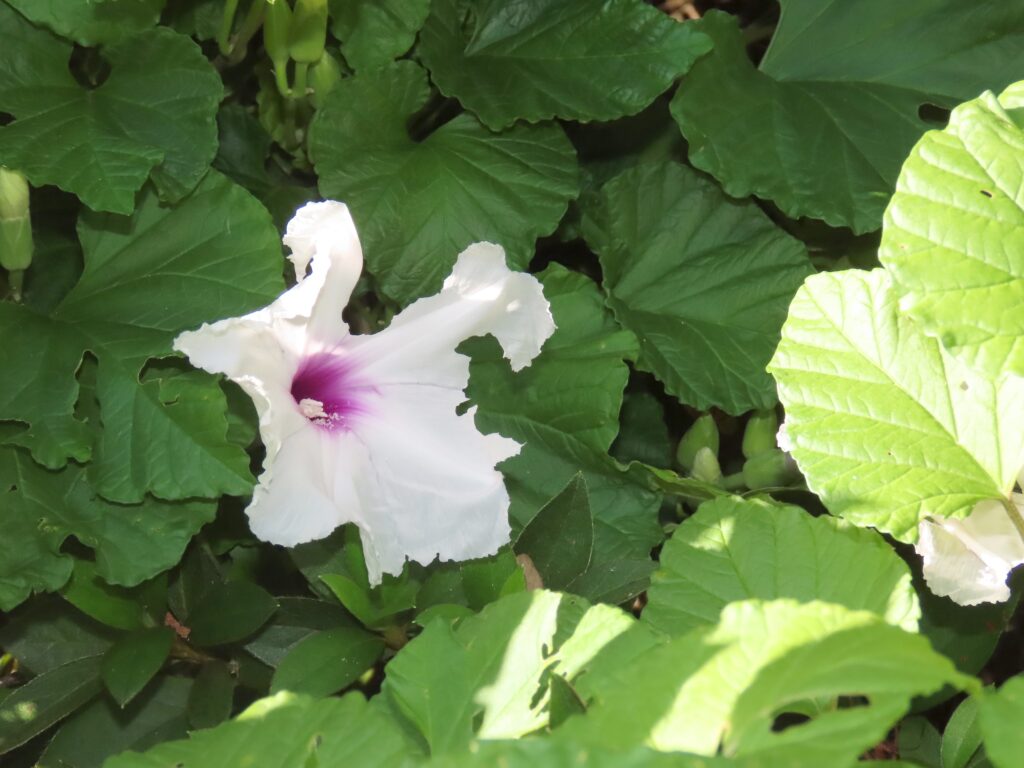
This week for Flora and Fauna Friday we have a rare and ornate living relict left by our indigenous Sea Island forbearers, Largeroot Morning-Glory (Ipomoea macrorhiza).
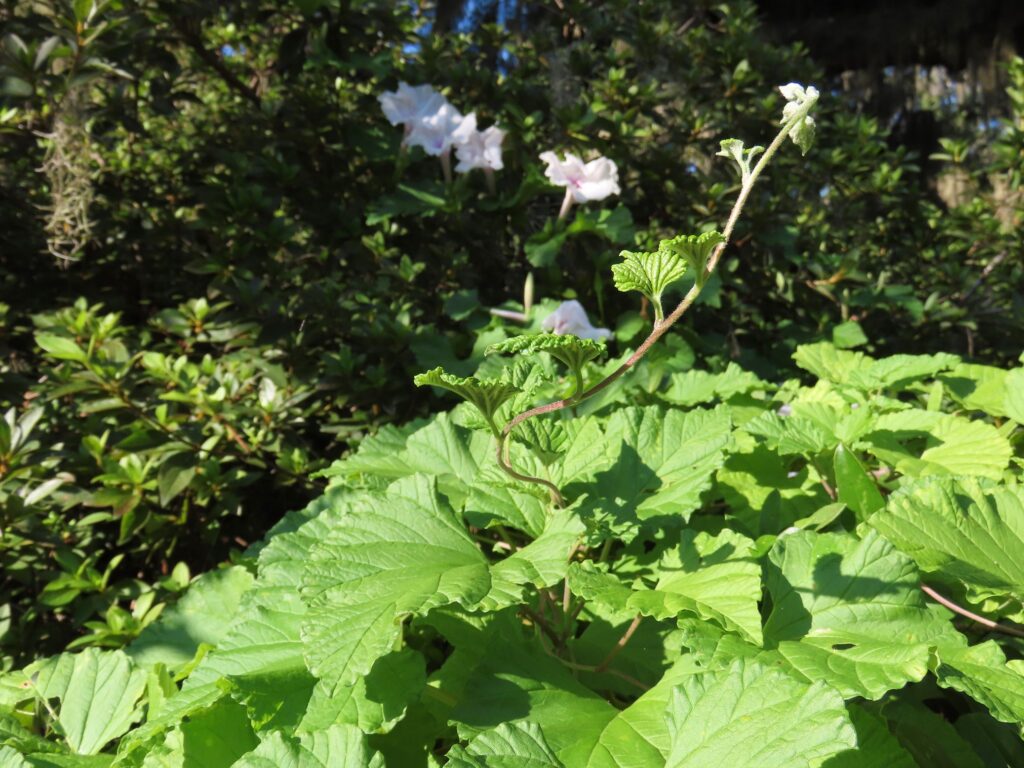
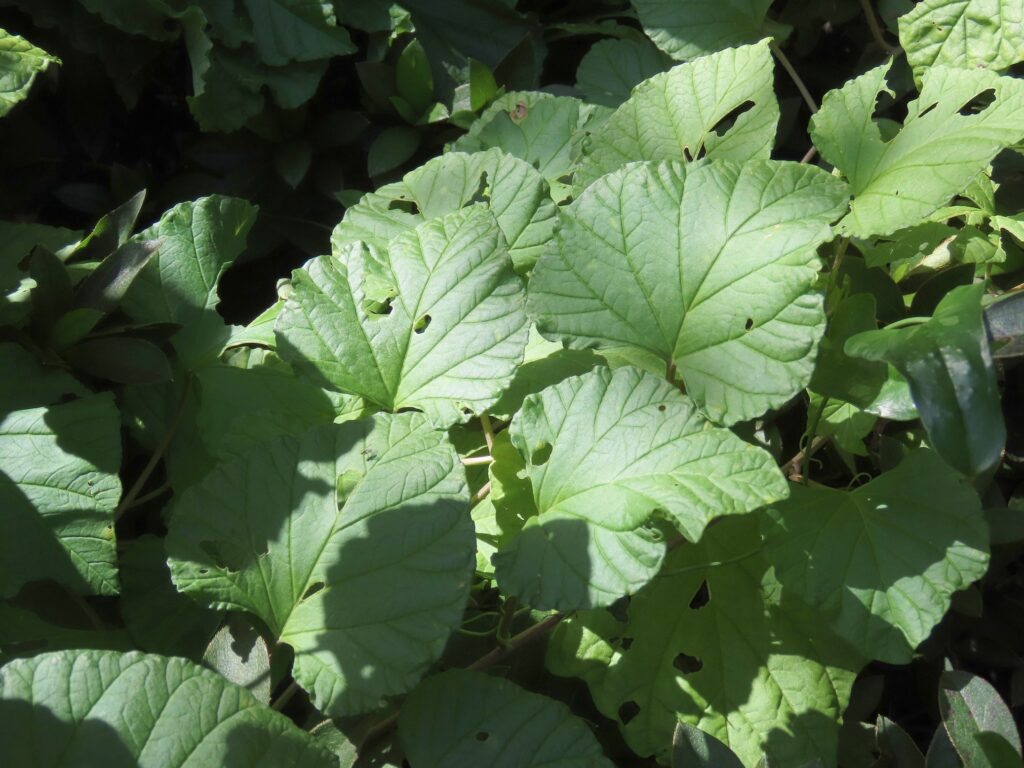
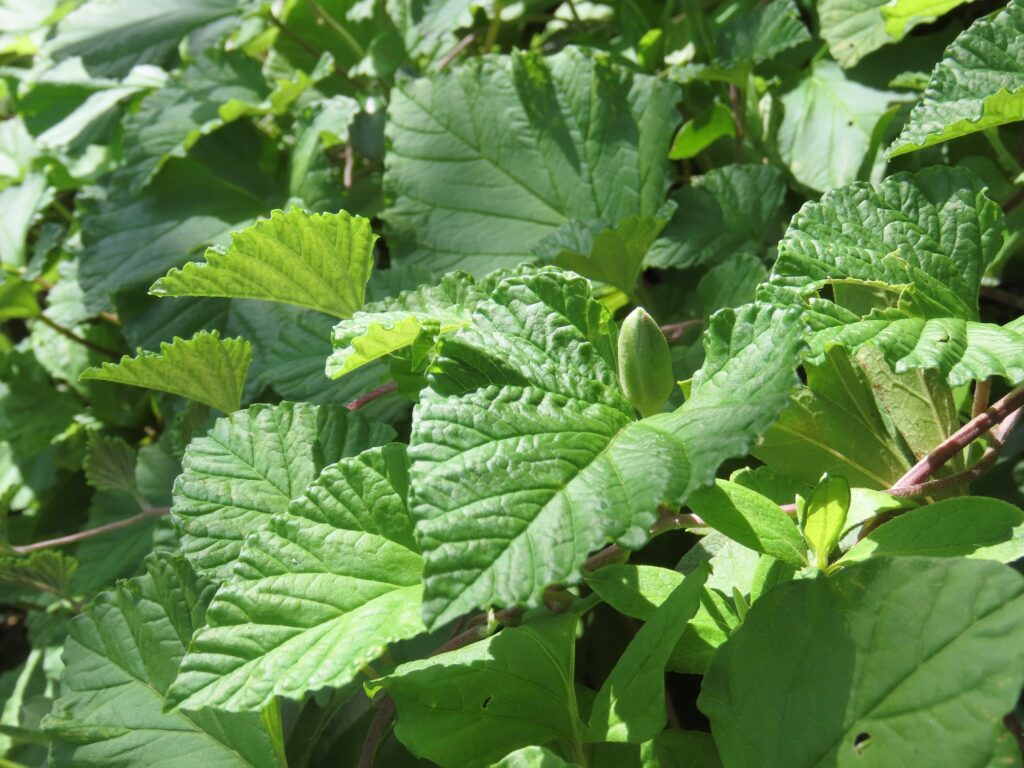
Largeroot Morning-Glory is a rare plant here in South Carolina and is known from just a select few coastal areas scattered around the Sea Islands of the Lowcountry, to include several sites on and around Edisto Island. Its main population is down in Florida and is further found at a smattering of coastal plain locales around the Southeast. It is a mammoth member of the Morning-Glories, growing big in all regards. It can climb high into hedges and extends broadly in its breadth to bury bushes beneath twining vines. Its prolific soft-green leaves are large, nearly hand-sized, and heart-shaped with debossed veins and a wavy leaf margin.
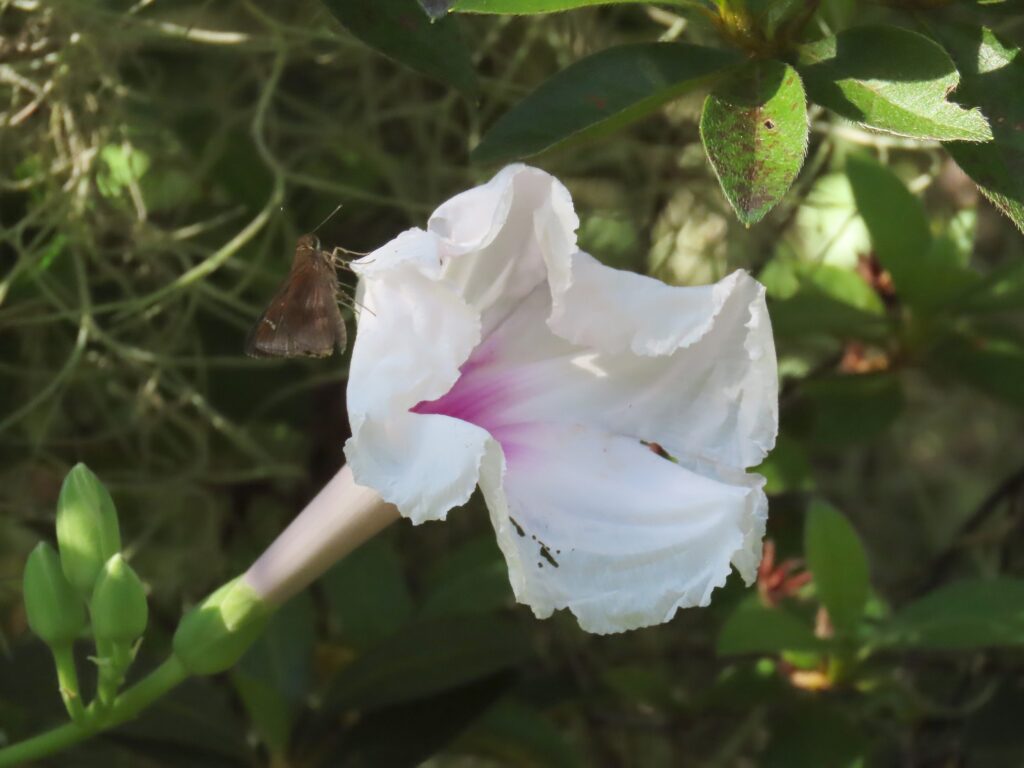
Amidst September, through this emerald sea of leaves towers up twisted torpedo-shaped flower buds. These buds twirl open at daybreak to meet the rising sun with a great pearl-white funnel of flower that spirals down to its dark-lavender depths within. These flowers are huge, nearly four inches across and six inches long with a wavy, almost feathery, fringe. These petals are very delicate and exceedingly ephemeral, withering and fraying almost immediately with the heat of the morning sun. This floral display persists for a few weeks, with new flowers unfurling open each morning to replace those of yesterday. Largeroot Morning-Glory’s flowers attract moths, hummingbirds, and butterflies with nectar in exchange for pollination. The flowers will dry and mature into a hard capsule, which will split to release a cache of seeds. These seeds are big, about the size of a field pea, and covered in a thick coat of long, silky, chocolate-brown lint, much like a fine short-cotton.
Simultaneously, down below in the sandy earth Largeroot Morning-Glory grows and swells a giant tuber, often reaching the size of a melon. This tuber sustains the plant through winter and gives it the nest-egg of energy it needs each spring to explode forward anew to smother and cover its surroundings in a wash of green and white. The tuber of this plant earned it a special place with the Native American peoples of the Southeast. Largeroot Morning-Glory was easily grown around coastal settlements as a low maintenance but calorie dense food, which could be unearthed and cooked in times of need. This species’ extant “natural” populations here in South Carolina are almost all associated with Native American middens, shell mounds, and settlement areas. Such sites are principally on high calcium, sandy, waterfront sites on remote islands, points, and tall bluffs. Thus, it is suspected by botanists that Largeroot Morning-Glory was introduced to South Carolina, some hundreds or thousands of years ago, by Native American peoples trading, travelling, or emigrating from Florida to the Lowcountry. This would explain its patchy populations beyond the peninsula of Florida. Nonetheless, Largeroot Morning-Glory is still an impressive native plant with deep, and large, roots here in South Carolina’s natural history.
On an aside, the related Bigroot Morning-Glory (Ipomoea pandurata) once filled a similar root crop niche for Native American peoples more widely throughout the Southeast, and has large flowers that look quite similar to Largeroot Morning-Glory. However, this sister species has less fleeting flowers that bloom earlier and its leaves are much smaller and often trident-shaped. In the abundance of caution, if you feel like foraging for root plants locally, please, please, [I beg of you] don’t go digging up and eating the very rare imperiled Largeroot Morning-Glory out of the woods. If you must, go look for the far more common and not at-risk Bigroot Morning-Glory. Also, apparently neither taste all that good and are bitter in taste. So it’s not worth the effort. Further, Sweet Potatoes (Ipomoea batas) are Morning-Glories too and have a long history of cultivation down in South America. (And are delicious and will grow like the dickens on Edisto Island.) So maybe just order some heirloom Sweet Potato slips for your garden instead, and let the wild ‘taters be.





© 2026 Edisto Island Open Land Trust.
Built by Colophon