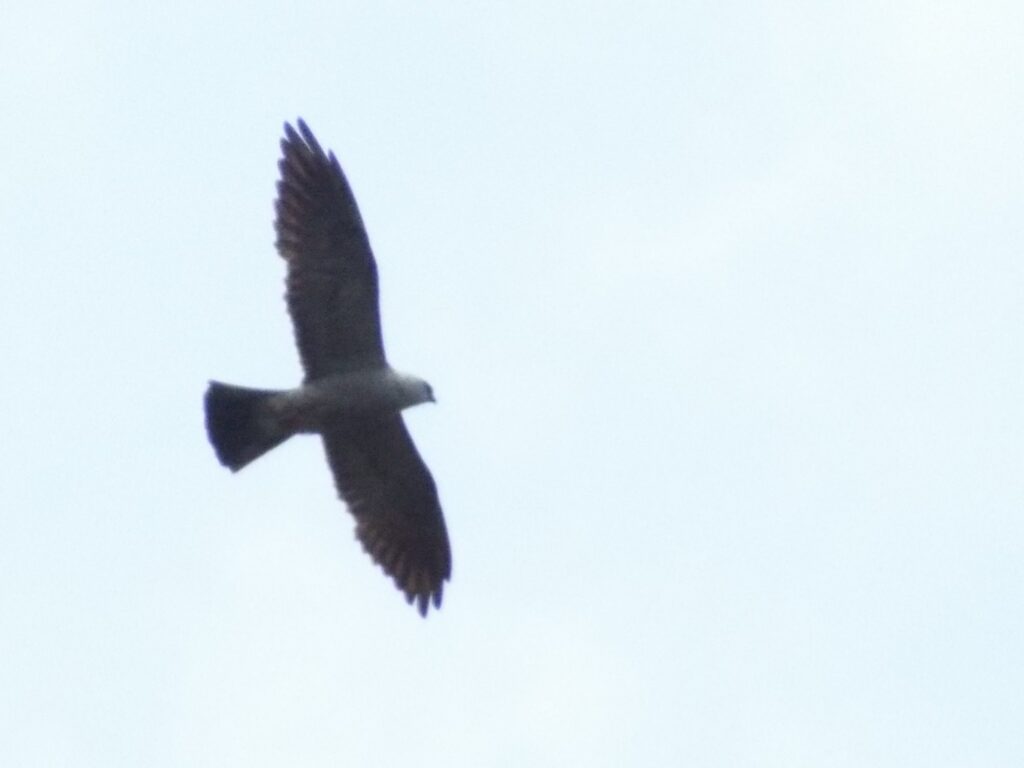
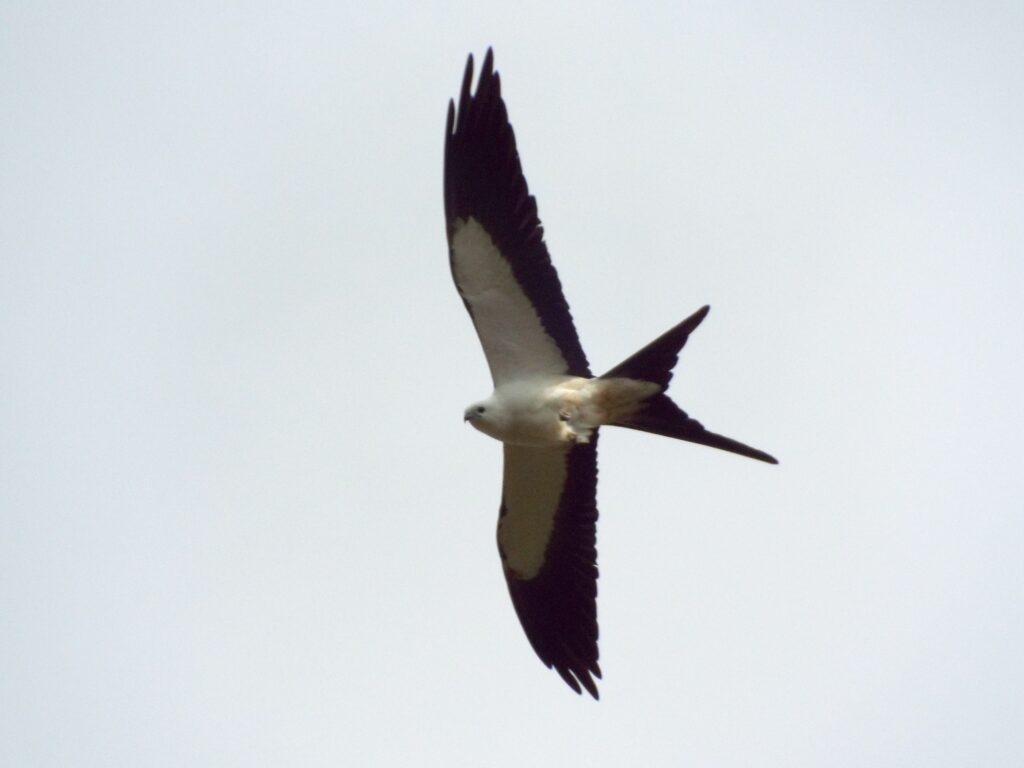
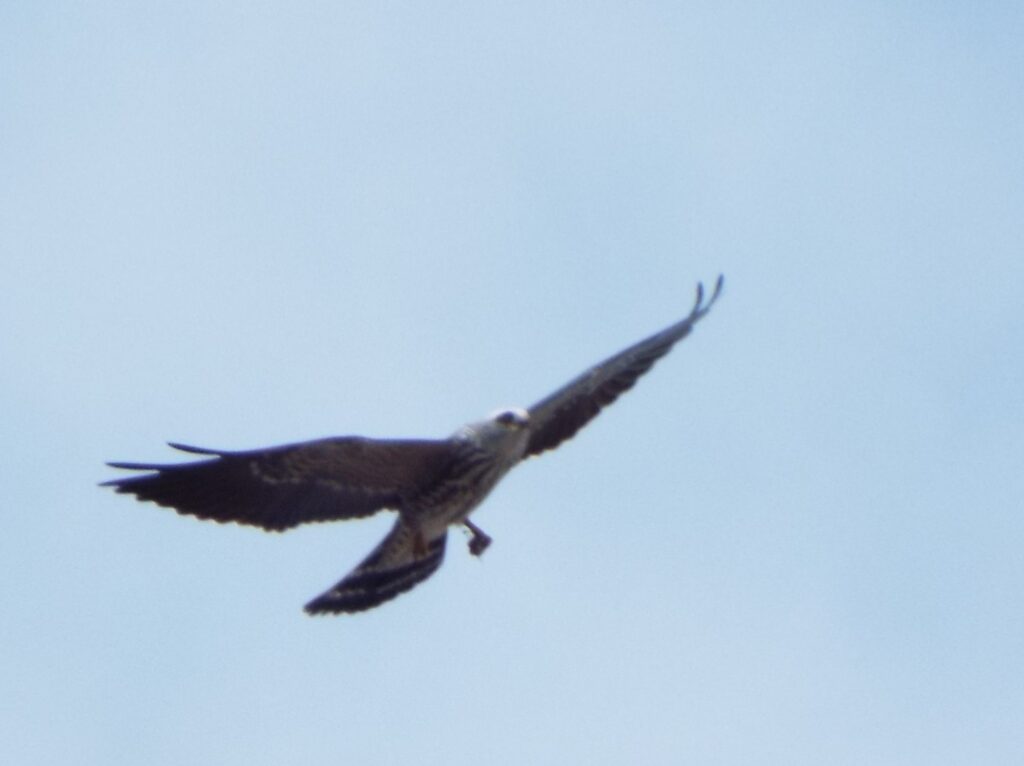
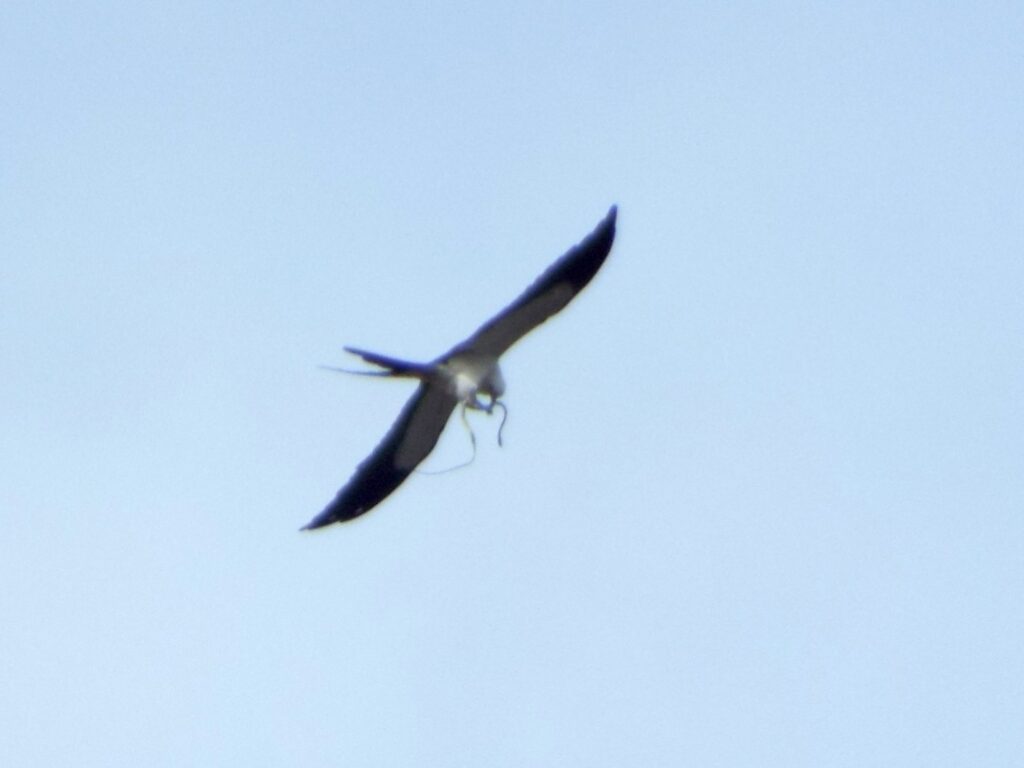
This week for Flora and Fauna Friday, were taking a look at a pair of raptors who glide into our horizon every summer. This week were talking about the Kites.
Here in on Edisto we have two species of Kite that regularly grace our skies come summer to feed and breed. They are the Mississippi Kite (Ictinia mississippiensis) and the Swallow-tailed Kite (Elanoides forficatus). Both species are similar, but not identical, in habits, habitat, diet, and behavior. Kites are highly agile and efficient fliers. They spend their days hunting on the wing. Soaring high over fields, marshes, and open wetlands or skimming just a few feet above the treetops. Rarely ever flapping their wings. Kites feed primarily on large insects, like beetles, wasps, and moths, that they catch in mid-air or on small vertebrates, like lizards, frogs, and bats, that they snatch from the treetops. Kites take their meals on the wing, eating it from their talons. Kites are rather social and can often be seen hunting in large swarms of birds over open areas. Mississippi Kites are much more social than their Swallow-tailed cousins but the latter won’t hesitate to join in on a feeding frenzy if the opportunity arises.
Both species are partial to lowland forests with intermittent open habitat, but the Swallow-tailed is definitely the more specialized of the two. Swallow-tailed Kites have a strong preference for swamps, marshes, and floodplain, riparian, and bottomland forests. Mississippi Kites are more generalist in habitat, utilizing some drier forest habitats as well as pastures, farmland, and even urban areas. Predictably, Mississippi Kites thus have a much larger range and are found throughout much of the state. Swallow-tailed Kites are almost exclusively found in the coastal plain. Both species are common here on Edisto in the summer, but the Mississippi Kite is definitely easier to find. There’s usually at least one, if not 20, circling over the fields at King’s Market. Swallow-tailed Kites are harder to pin down but the edges of lowland forests or marshes are always a good bet.

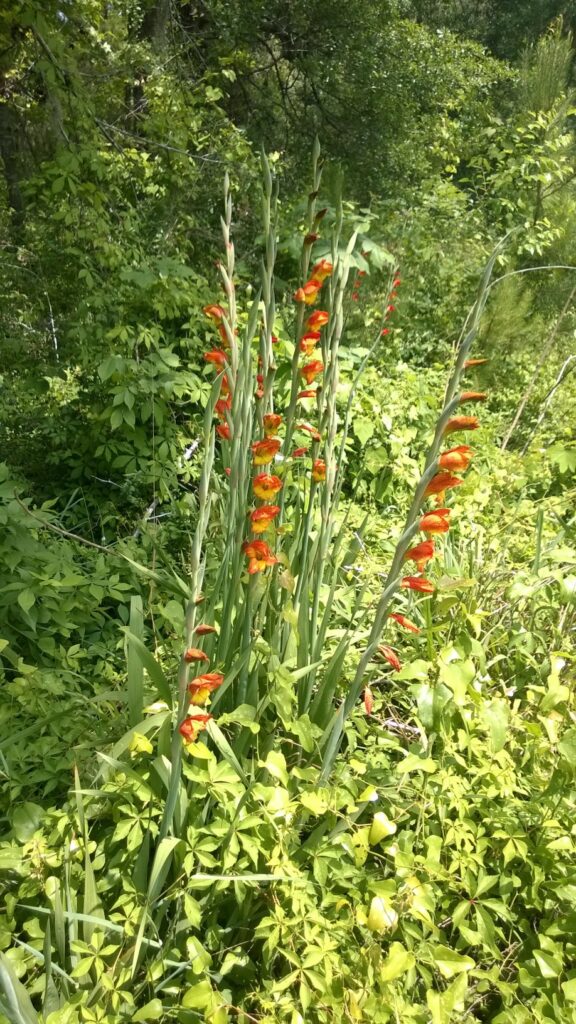
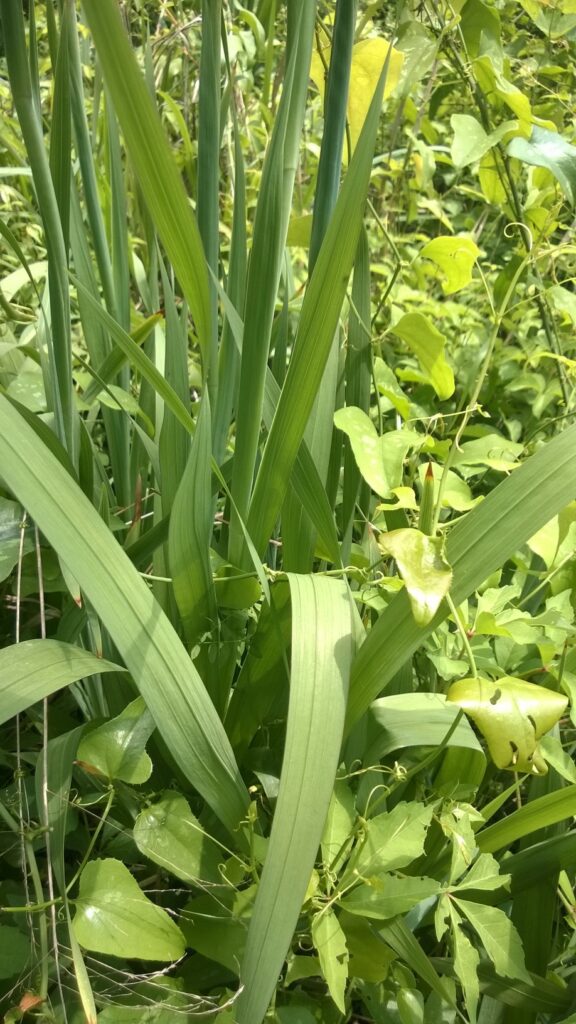
This week for Flora and Fauna Friday, the subject is a naturalized exotic plant that is, nonetheless, a staple of old Edistonian gardens and the shoulders of Highway 174. This week we’re sneaking a peek at the Dragon’s-Head Lily (Gladiolus dalenii).
Like other members of the Iris family, Gladiolus dalenii loves wet soils. On Edisto it thrives in the shady, disturbed, sandy, and wet soils of the ditches along Hwy-174 and it’s many branches. The species is perennial and spreads clonally through its roots. The large, flat, erect leaf blades give the genus their common name of “Sword Lilies”. The Dragon’s-Head Lily produces a single flower stalk per leaf clump that can reach over 5 feet in height. Each stalk bears about a dozen large flowers along one side. The flowers are a fiery blend of yellow and red-orange. Although the species is exotic, it’s quite innocuous to the native plant communities.
The Dragon’s-Head Lily is a native throughout tropical and eastern Africa with quite an expansion range on the continent. Its history and range in the United States is poorly understood, with only a few isolated reports of it in LA, MS, and AL. However, I can tell you for certain that it’s made quite the home for itself on Edisto Island. Decades in the past it was a popular ornamental planting in both Edisto and Beaufort. Part of a horticultural trend that has long since been forgotten. However, although the history of its planting, origins of the horticultural stock, and even its botanical name was forgotten by the descendants of its propagators, those same plants and the beauty of their flowers still remain. A torch that burns each spring though we know not why it was lit.
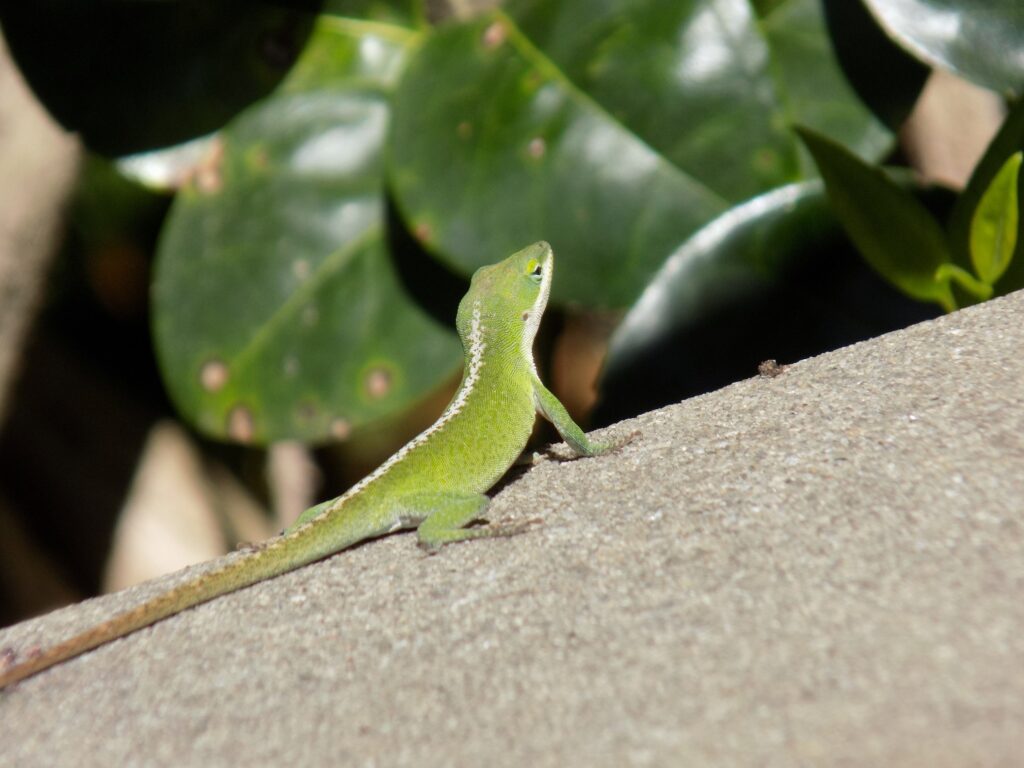
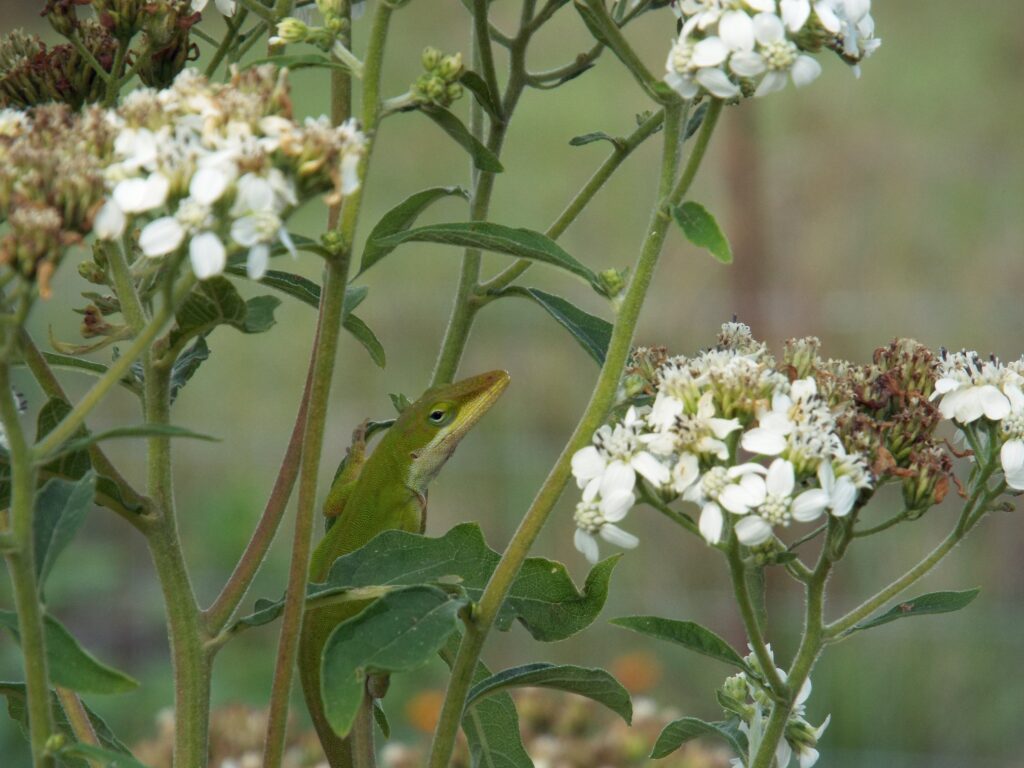
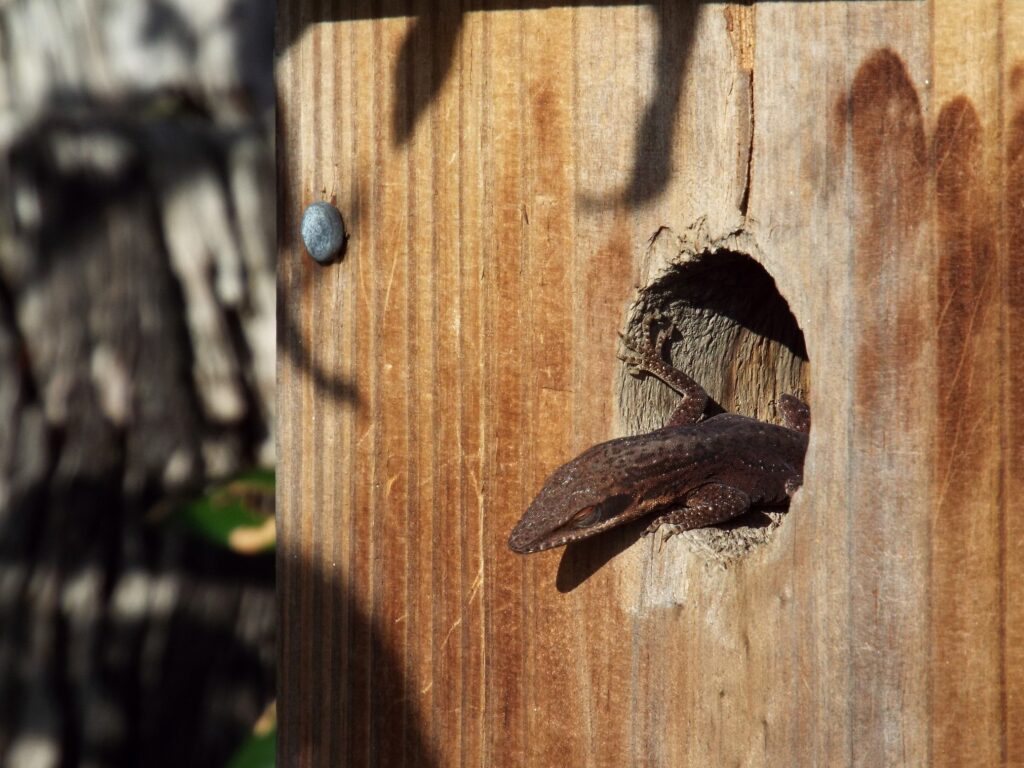
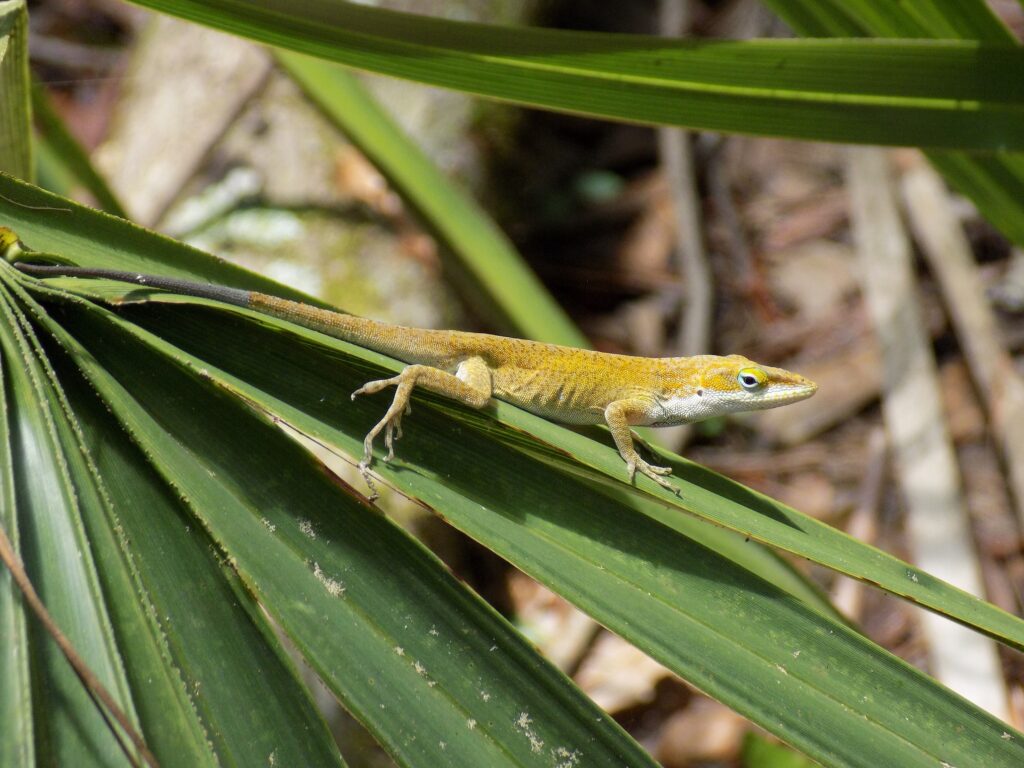
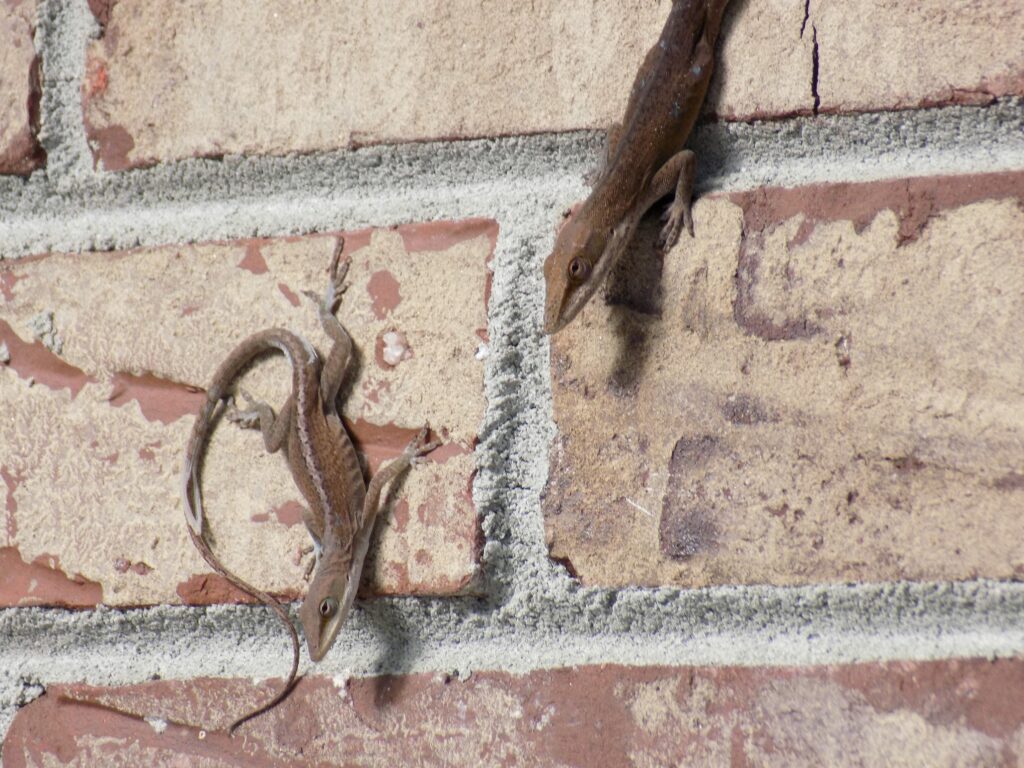
This week for Flora and Fauna Friday, we’re peering in on a critter I’m sure we’re all well acquainted with. This week we’re looking at the Carolina Anole (Anolis carolinensis).
Found from Texas to North Carolina, the Carolina, or Green, Anole is a trademark reptile of the South and found in every county in SC. They’re an arboreal insect-eating predator that hunts everywhere from urban hedges to the treetops of the most isolated oldgrowth blackwater swamps. Anoles hunt by stalking tree branches and rushing or jumping at their prey, jaws agape, and clamping down on whatever they grab. Despite how common these lizards are, they’re interesting in many ways.
Male Anoles are larger with a beefier head and possess a pink “dewlap” on their neck. Females display a white stripe down their spine. Males are very territorial during the breeding season and can often be seen confronting each other. During a standoff, males display dark patches behind their eyes, a short crest on the back of their neck, and flare their dewlap while pumping their upper bodies. These standoffs often result in fights between rivals where the two lock jaws and attempt to bite their opponent into submission. Like all of our lizards, Anoles have the ability to shed their tail to escape a predator. The shed tail will continue to wriggle on its own for over a minute. Carolina Anoles also have the ability to change their color using tiny pigment sacs below the skin called chromatophores, just like Chameleons. However, Anoles can only change from Green to Brown and they do so not for camouflage but to thermoregulate. Like all reptiles, they are ectothermic and depend on the environment for heat. Also like Chameleons, which they are unrelated to, Anoles have the ability to move their eyes independently of one another. This allows them to scan their surrounding for prey and predators much more efficiently and without moving their head. Anoles also have specialized feet, like Geckos, that allow them to scale practically any surface, including paned glass. Their foot pads are studded in lines of specialized hairs. These hairs fray at the tip, creating hundreds of contact points each. This incomprehensible degree of surface area composed of microscopic points allows Anoles to electrically adhere to a surface through even the weakest of the intermolecular forces. Think of it as atomic Velcro.
This week for Flora and Fauna Friday, we’re taking a glance at a native wildflower that’s endemic to our Saltmarsh. This week the subject is the Salt-Marsh Pink (Sabatia stellaris).
The Salt-Marsh Pink (also called the Rose-of-Plymouth, Sea Pink, or Marsh Pink) inhabits salt marshes along the east coast from Louisiana to Massachusetts. It’s an annual plant with opposite leaves in the highly diverse Pink family, Caryophyllaceae. They bloom from the middle of spring until the end of summer. Their flower is a five-petaled pastel pink bloom with a vibrant violet and gold star surrounding its pistol and stamens. This central star is where it gets the specific epithet “stellaris”.
Salt-Marsh Pinks are one of only a handful of wildflowers that can be found blooming deep in our saltmarsh. It grows best in the highest marsh where the tidal influence is felt only on the king tides. It can be found in the salt meadows surrounding the saltmarsh growing amongst Carolina Sealavender, Perennial and Annual Saltmarsh Asters, Bristlegrass, and Fimbry.
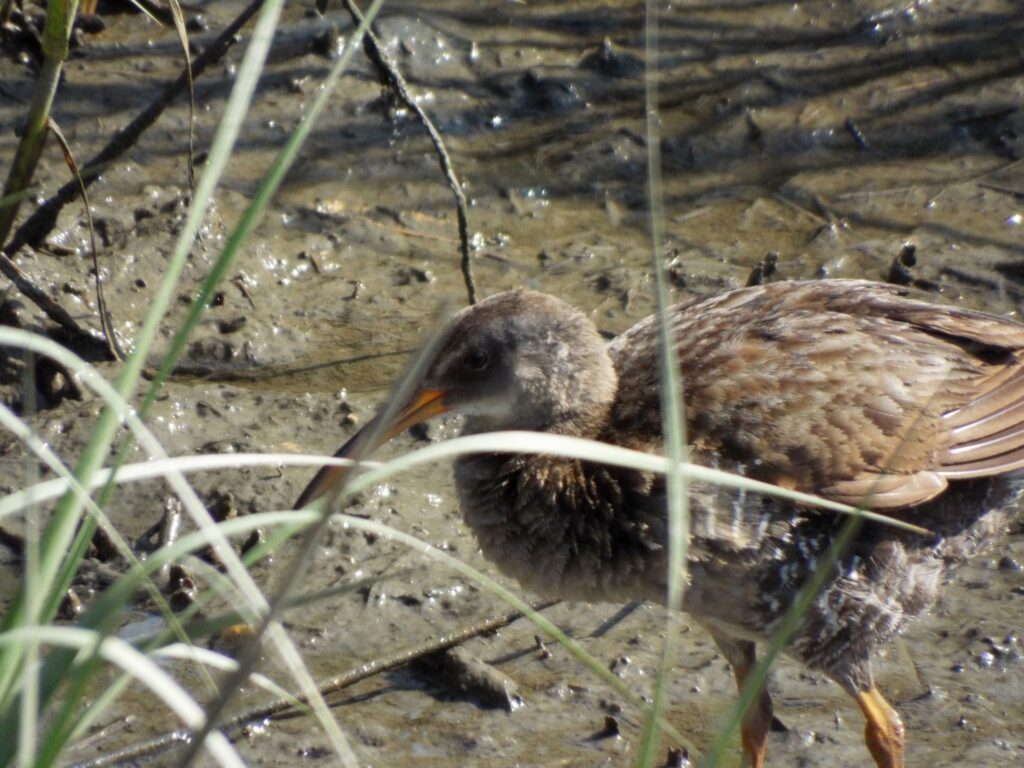
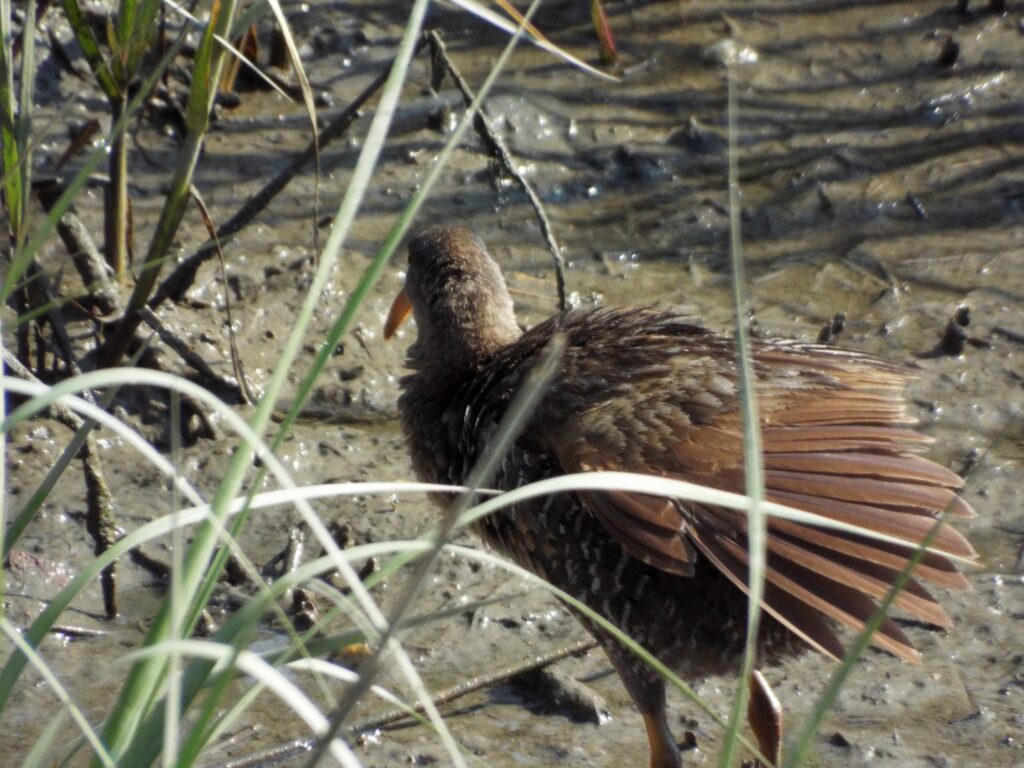
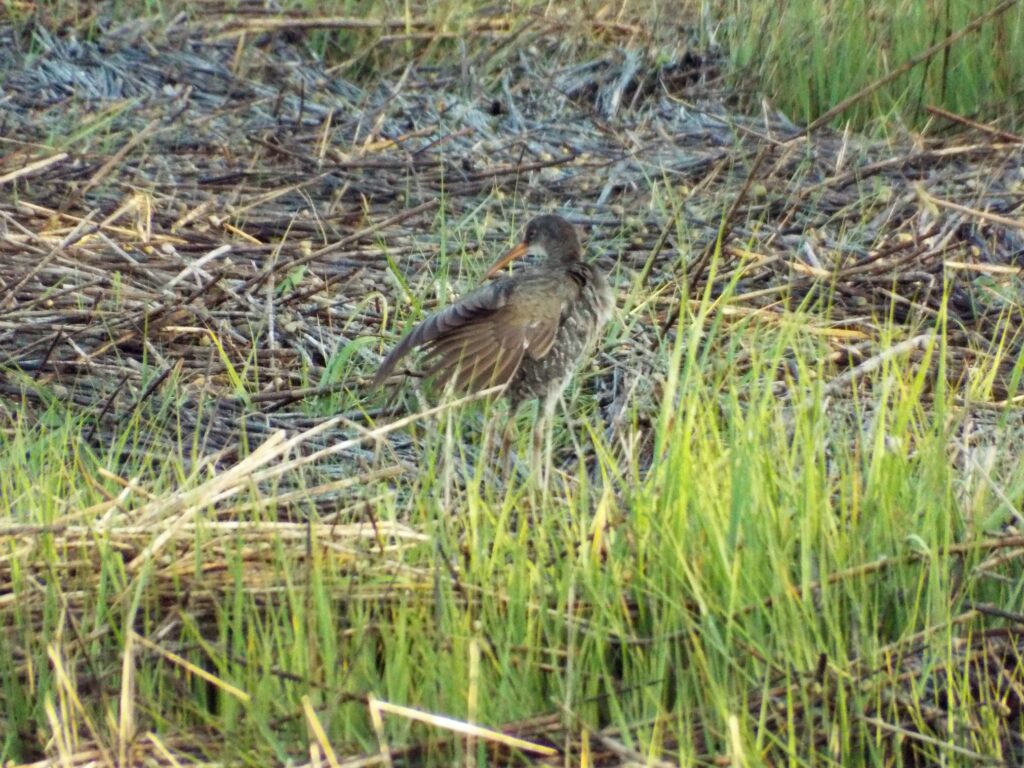
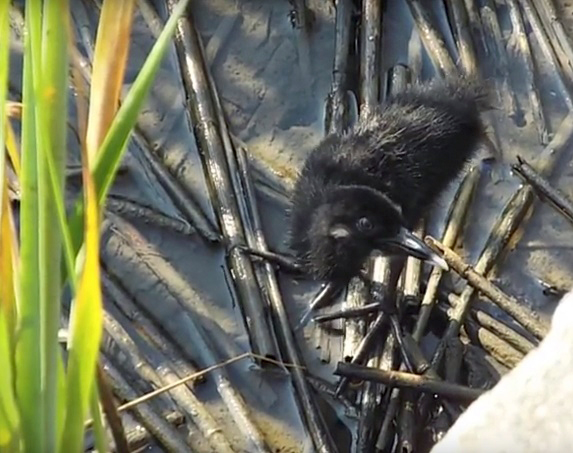
This week for flora and fauna Friday we’re examining an often heard but scarcely seen marsh bird. This week we’re talking about the Clapper Rail (Rallus crepitans).
Clapper Rails are a common bird species in the saltmarshes of Edisto and throughout the East and Gulf coasts. They are one of our largest Rail species. Rails are not shorebirds, as one might guess, but are more closely related to Coots, Cranes, and Gallinules. Their noisy “clapping” song, a series of loud industrial sounding grunts, is heard throughout the year wherever there is marsh. Clapper Rails spend their lives beneath the rushes and grasses of the marsh. Only occasionally venturing out to cross a causeway or stream or clean their feathers. Clapper Rails are omnivorous but prefer eating arthropods, especially Fiddler Crabs.
For every bit as boisterous and cacophonous a Clapper Rail is in voice, it is equally as stealthy and secretive in appearance. Rails are unparalleled masters of stealth in their domain of the marsh. Their plumage is perfectly patterned to dissolve the bird within the marsh. Their body is shaped so that they can live their entire life undetected beneath the grass and rush. The phrase “thin as a Rail” is a nod to one of their many adaptations to marsh stealth. Rails can flatten their bodies laterally. This allows them to squeeze through tight gaps in the grass and not only walk, but run, in between the reeds without even touching them! Staying off the grass is important. Brushing against the reeds makes noise and causes the grass to sway above the marsh. Both of these signatures can be tracked by predators and could give away a Rail’s location. Clapper Rails are built for speed. Not in the air but on soft mud. They have long legs, wide toes, and a shortened tail and wings. They are experts in the Spartina Slalom and will wipe the floor with even the serpentine Mink in a foot race through the marsh. Clapper Rails have traded most of their flight capabilities for agility on land. Because of this, their build is very reminiscent of a scrawny Chicken, which coined them the nickname “Marsh Hens”. It also means they are poor fliers and are most vulnerable in the open. Their main predators are Mink, Great Blue Herons, and Hawks. I’ve found the best place to see Clapper Rails out and about is around marinas, boat landings, and fishing piers. Places where humans are always present and the birds are used to us.
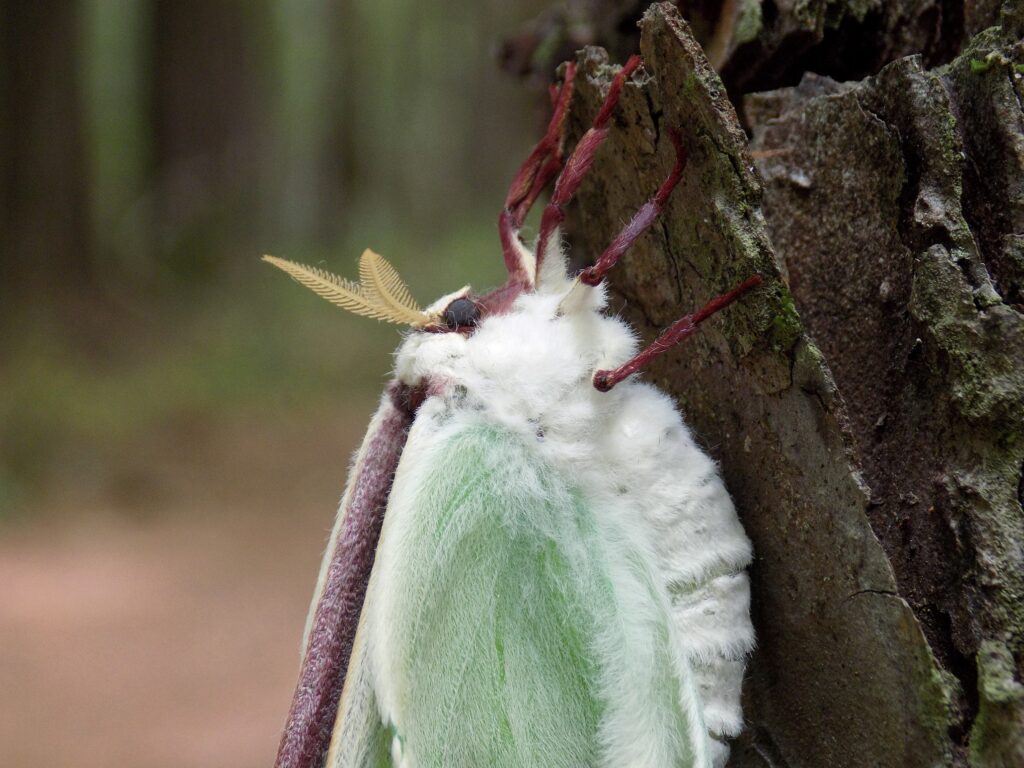
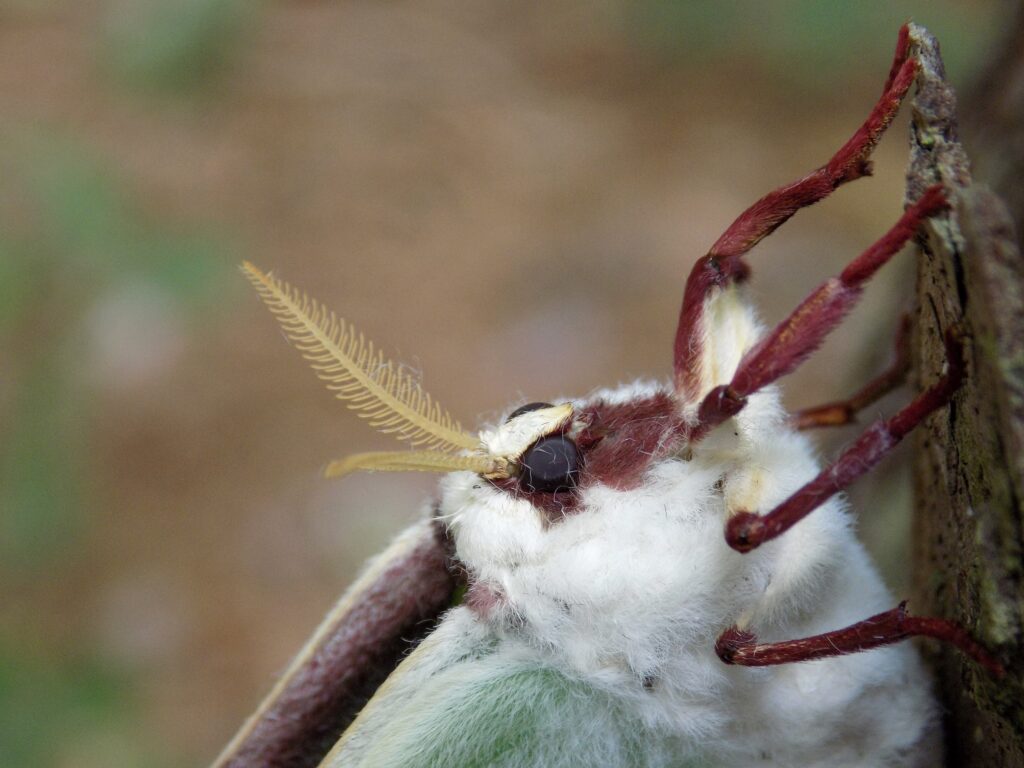
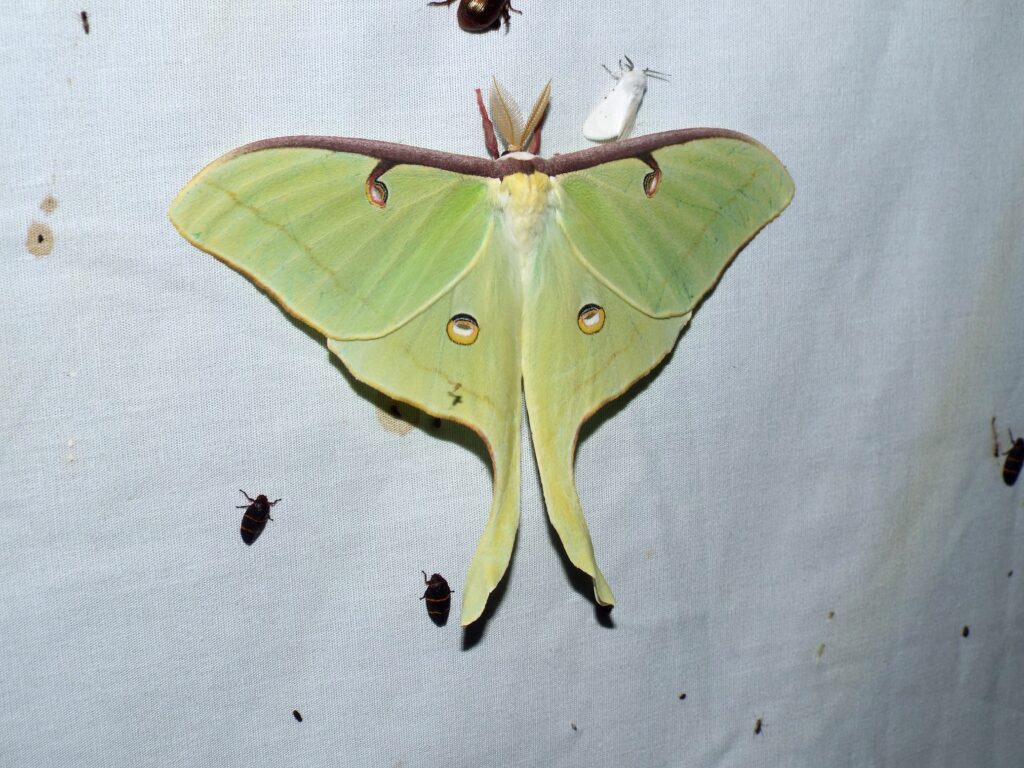
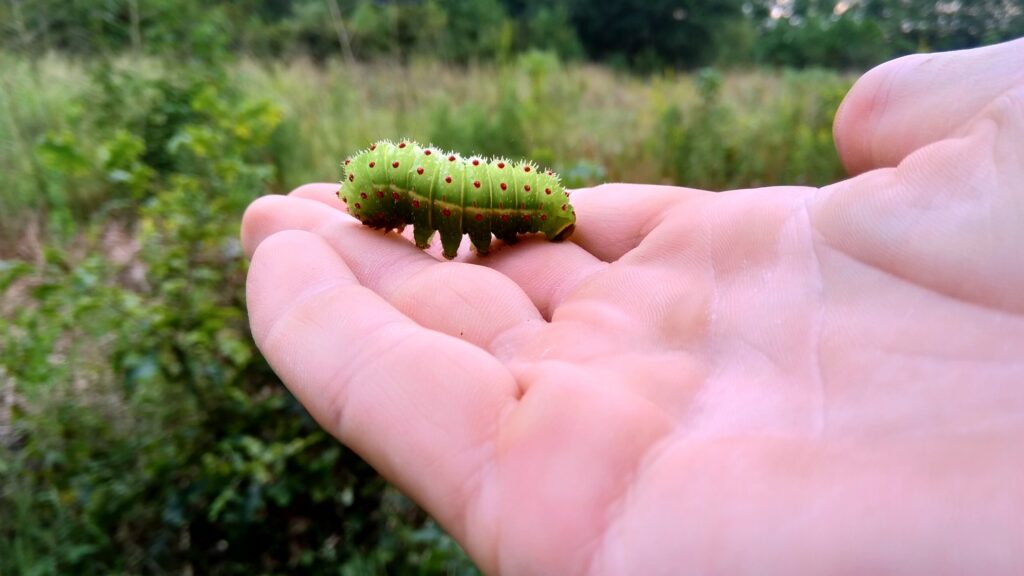
This week for Flora and Fauna Friday, we’re getting up close and personal with the chartreuse sprite of spring evenings. This week we’re examining the Luna Moth (Actias luna).
Luna Moths are members of the Silk Moth family, Saturnidae. This family holds our largest and most spectacular moths, of which the Luna moth is no exception. Saturnidae includes the stunning Promethea, Polyphemus, Io, and Cecropia Moths as well. Silk Moth caterpillars spin cocoons made of, you guessed it, silk. Although, Saturnidae is not the same family as the Domestic Silkmoth, from whom silk fabric is made.
Luna Moth caterpillars feed on the leaves of a variety of hardwood trees. When they’ve molted four times and reached a hefty size, the caterpillars spin a cocoon and fall from the treetops to hide below the leaf litter. A few weeks later, an adult Luna Moth will emerge or, if pupation occurs in fall, the following spring. Luna Moths are active from spring until fall. However, adult Luna Moths don’t eat and they only live for about a week after emerging. During this week their only motivation is to reproduce and start the cycle anew. Males and Females can be told apart by the size of their feathery antennae. Males use their antennae to sniff out the female’s pheromones. So male antennae are about twice as wide.
Luna Moths, like most Moths, are nocturnal. I’ve seen my fair share of these lime-green, swallow-tailed moths waft in while black-lighting or softly clinging to a tree, freshly emerged, pumping their wings. Nonetheless, stumbling upon a Luna Moth always feels special. An ephemeral emerald emerged from the ether. A glistening jewel loosed from a verdant crown to adorn the bark below. A fleeting bead of beauty that wrenches the eye and splits the mundane.
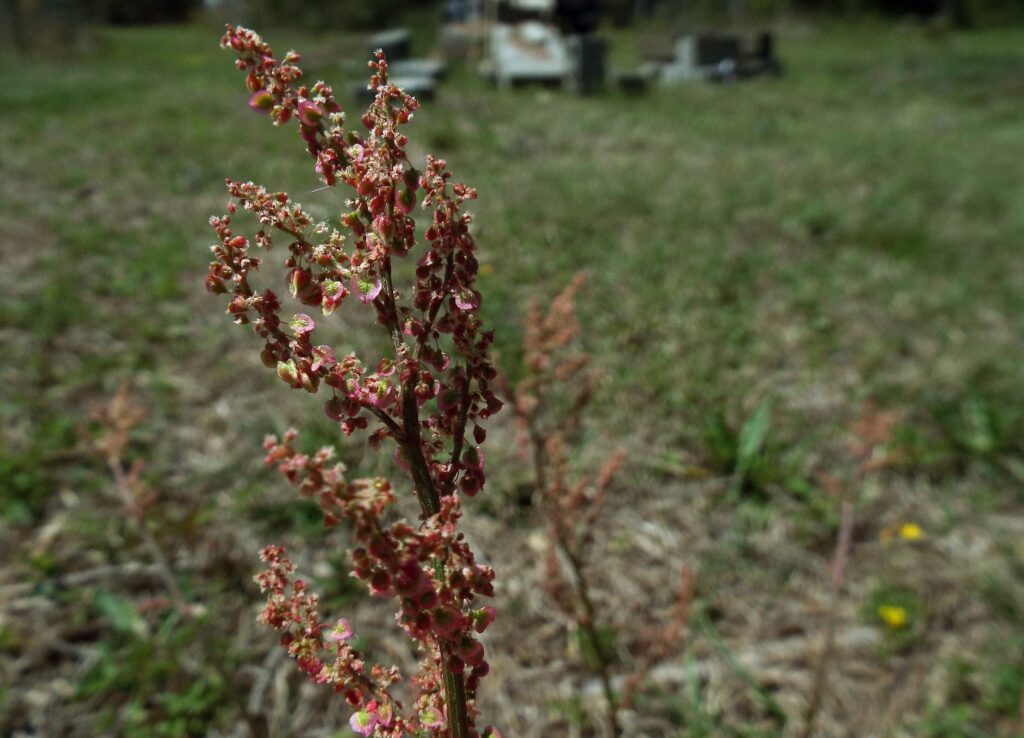
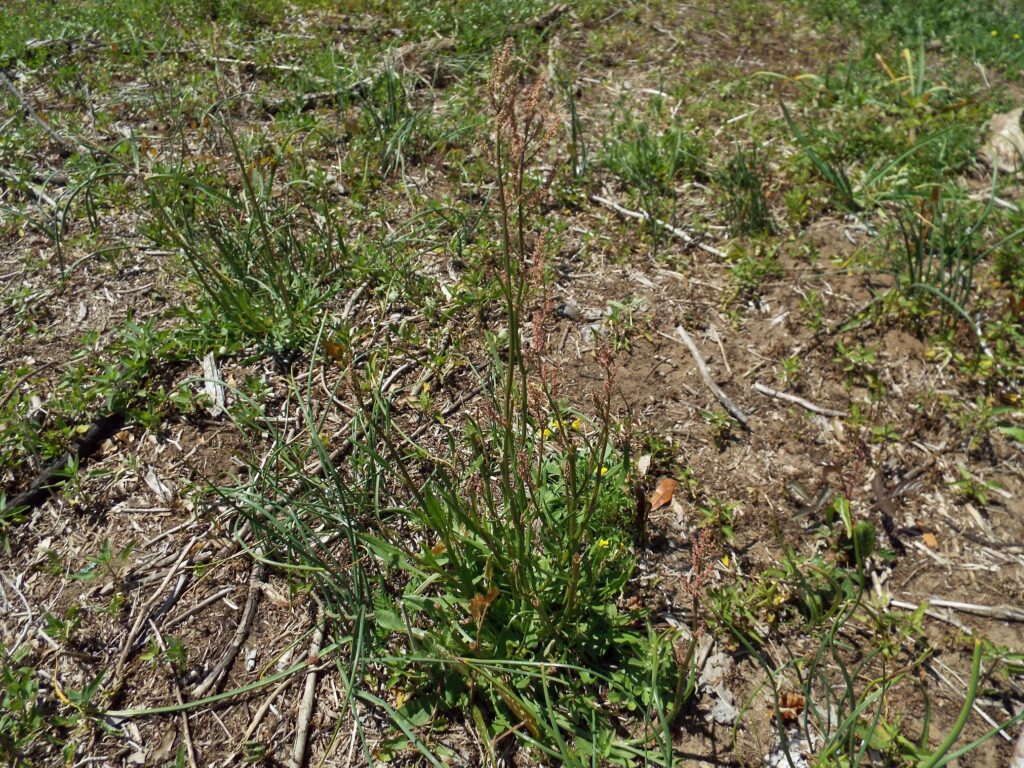
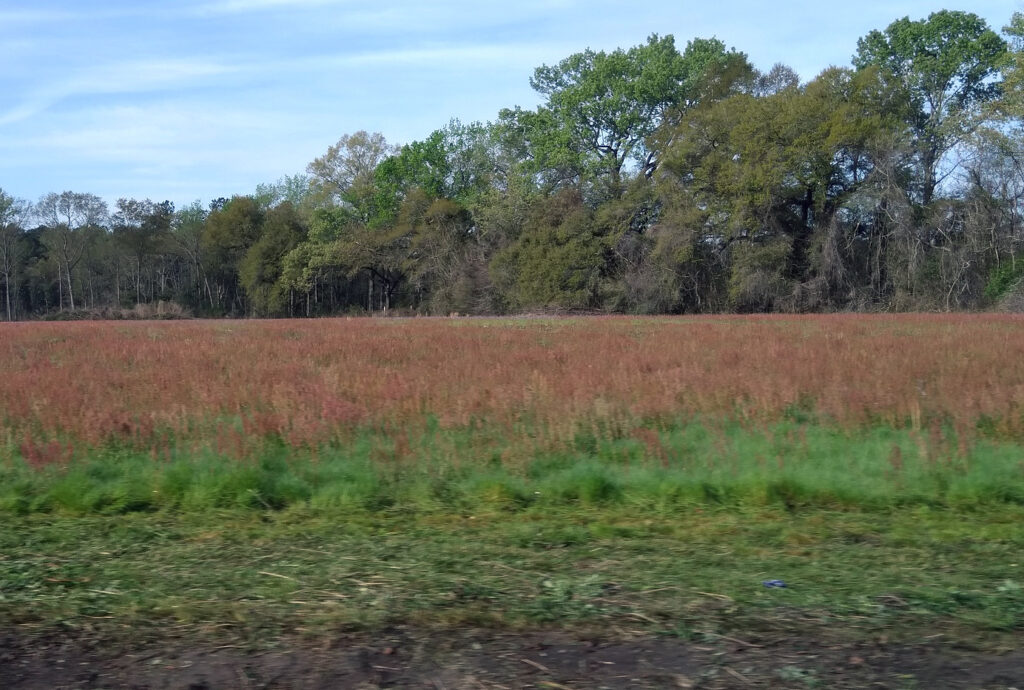
This week for Flora and Fauna Friday, we’re looking at a common weed found throughout the Island. This week we’re looking at Sheep Sorrel (Rumex acetosella). What I grew up calling “Sourgrass”.
Sheep Sorrel is a member of the Buckwheat and Smartweed family, Polgonaceae. The genus Rumex, known as Docks, are diverse and common herbaceous plants here in SC. You often find them growing along roadsides, ditches, and fields. Sheep Sorrel is no exception. It’s a prolific exotic forb across lawns and fallow fields in the spring, coating fields in a wash of red. It prefers drier, sandier soils than most of our other native Docks.
Sheep Sorrel is a basal rosette of leaves that produce several vertical spikes of red-pink wind-dispersed seeds in spring. Its leaves are long, thin, and spear-shaped. The red-pink, heart-shaped seeds act as single wing that carries the seeds on the wind where ever it may blow. Sheep Sorrel gets the colloquial name “Sourgrass,” that I grew up using, from the chemicals found in its leaves and stems. It gets the specific epithet “acetosella” in its scientific name from the flavor of its foliage as well. The plant is chock full of Vitamin C and citric acid. In fact, the leaves of Sheep Sorrel are completely edible! They taste like lemon juice and bland spinach to me. Chewing on the flower stalks reveals a potent sour flavor too, which I was taught to enjoy as a child. Just don’t chew on the flowers or try and eat the fiber-y stems like you would the leaves. That’s not a pleasant experience.
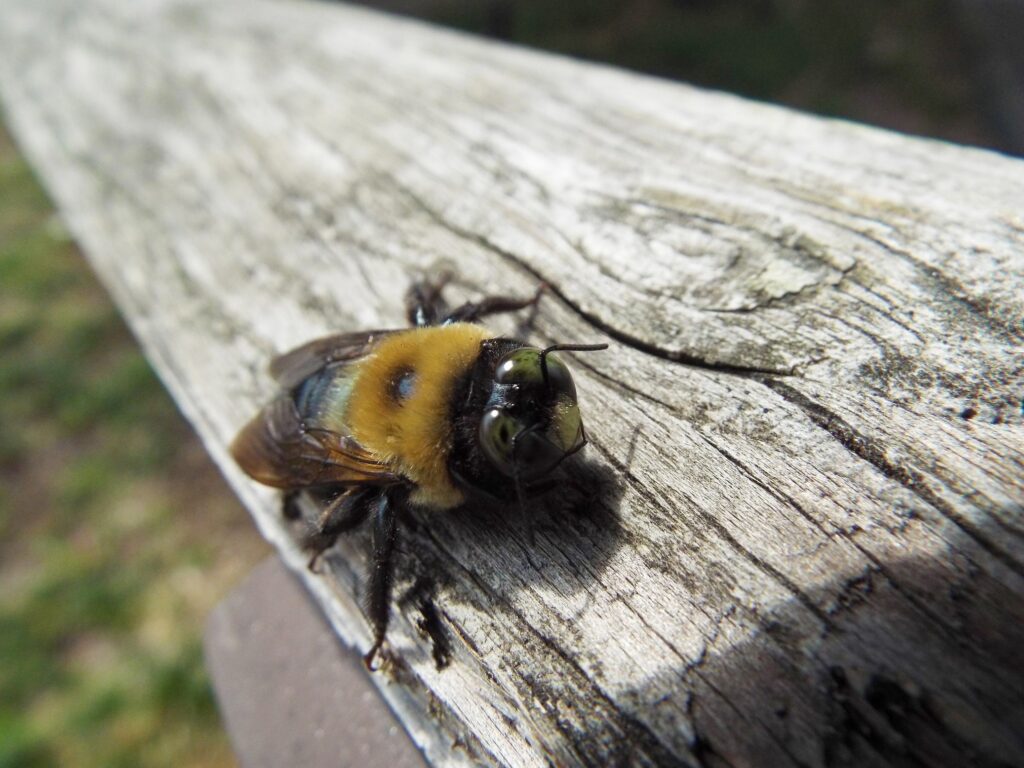


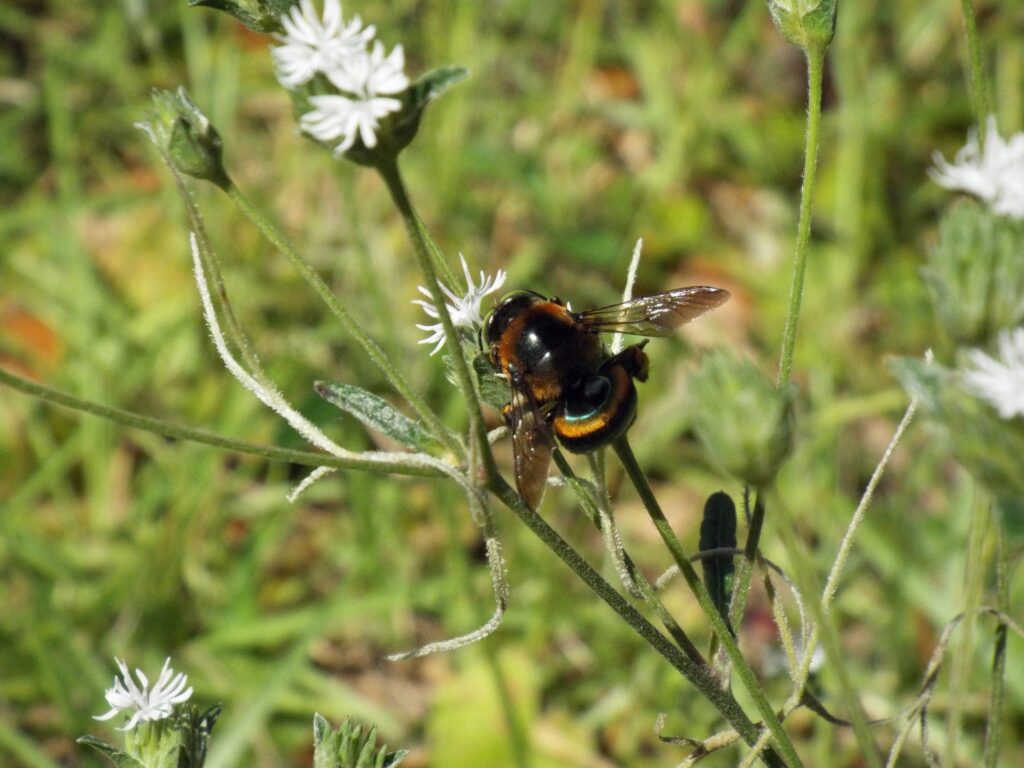
This week for Flora and Fauna Friday, I come to the defense of yet another insect with a bad rap. This week we’re learning about the Carpenter Bees, genus Xylocopa. In SC we have two species of Carpenter Bee: Eastern Carpenter Bee (Xylocopa virginica) and Southern Carpenter Bee (Xylocopa micans). The Eastern Carpenter Bee is by far the most common in our area.
Carpenter Bees get a bad rap because they hang around human structures harassing the occupants and chewing holes into wood. I’m not going to argue against the persecution they get for causing structural damage to human dwellings. (They’ve cost me a few Adirondack chairs and shovel handles in the past.) However, I will argue that they’re not a hazard to your health. They’re all bark and no bite. Or I should say, all bite and no sting.
The Carpenter Bees that hangs out beside your porch and buzz a foot in front of your face every time you leave the house are entirely harmless. That’s a male. Males of the insect order Hymenoptera (Bees, Ants, and Wasps) lack stingers. This order’s stinger is a modified ovipositor, or egg laying appendage. So only females have stingers. Male Carpenter Bees, which can be identified by the bright yellow square in the middle of their face, are territorial. The females spend days or even weeks carving out a larval tunnel in a block of wood and the males make certain no one bothers mate while she works. That’s why male Carpenter Bees get up in your business whenever you pass by their hidey-hole. Females aren’t territorial but they do sting. You’d have to squeeze one with your bare hand to get her to sting, but she can if she needs to. Females lay their eggs in the tunnels they carve. Each egg gets a nugget of “bee bread”, a mix of pollen and nectar, for food and their own divided cell made from wood pulp.
Eastern Carpenter Bees look a lot like Eastern Bumble Bees. The easiest way to tell them apart is by how fuzzy they are, especially at the base of the abdomen. Just like Bumble Bees, Carpenter Bees eat nectar and are important pollinators. Unlike some bee species, they’re active most of the year and hibernate in their tunnels over the winter. That makes them an important pollinator for many plant species throughout the year and a vital part of your local ecosystem.
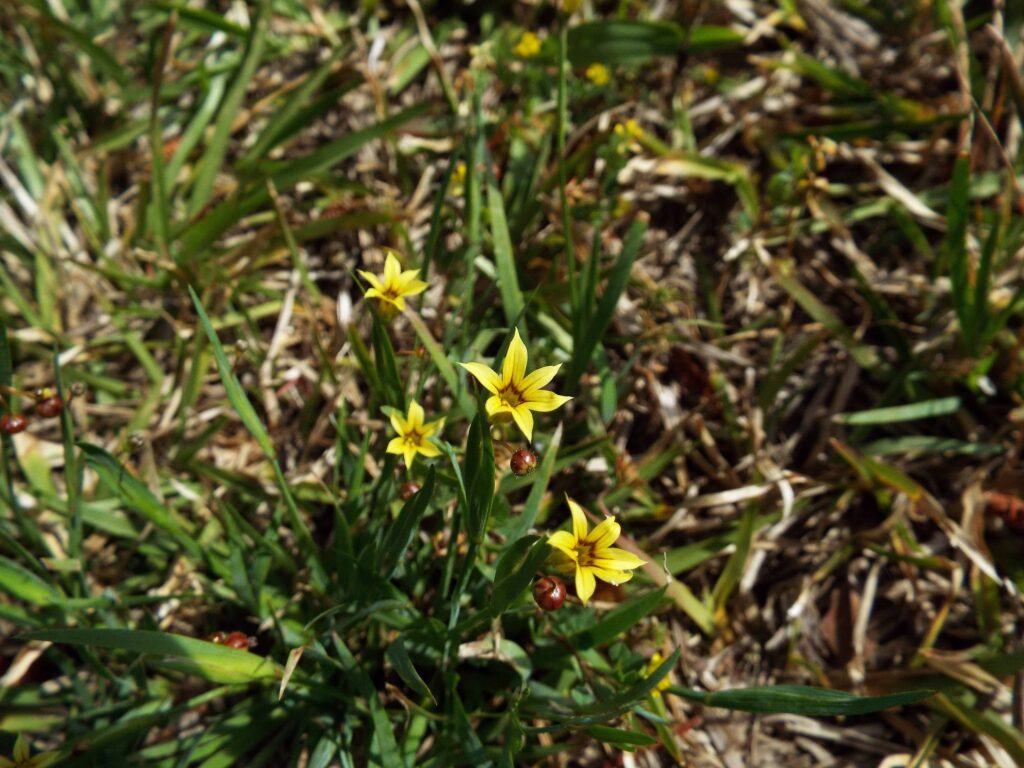
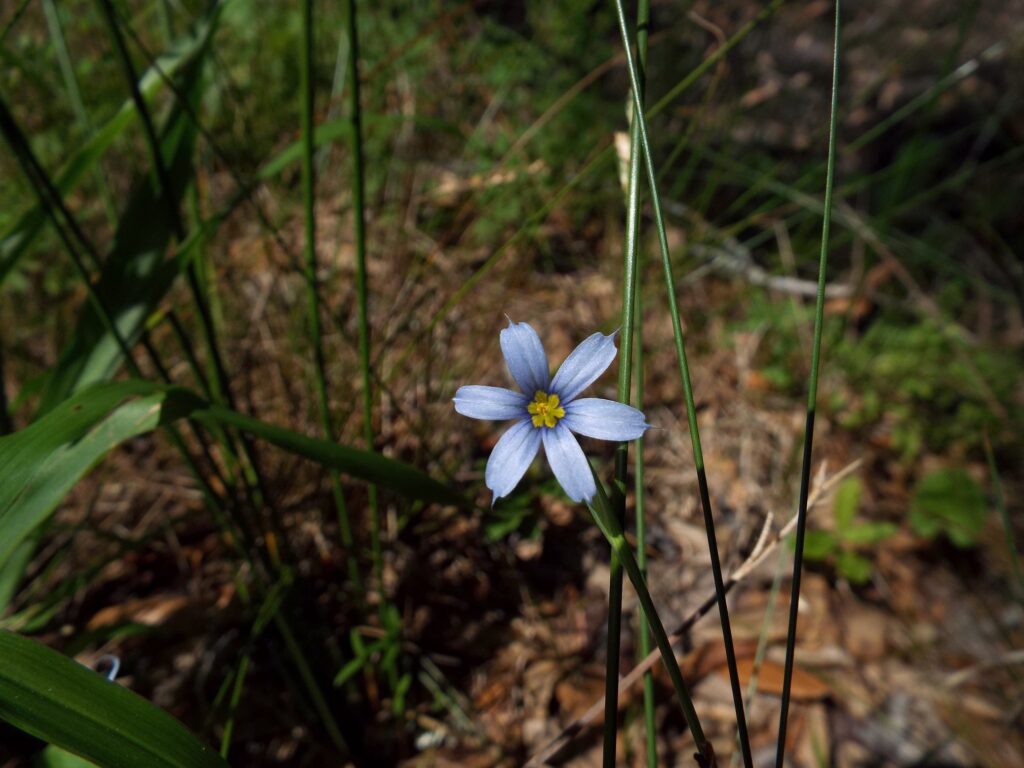
This week for Flora and Fauna Friday, we’re examining another genus of wildflowers. The subject of our attention are the Blue-eyed Grasses, genus Sisyrinchium.
Blue-eyed Grasses are not grasses but members of the Iris family. They have the characteristic colorful, six-petaled flowers of an Iris, albeit on the small scale. The same goes for their leaves, which have that flat, nested, fan-like shape of an iris. Just like other Irises, their fruit is a capsule that splits open and drops seeds as it dries. Blue-eyed Grasses grow in disturbed habitats such as forest edges, trail sides, road shoulders, lawns, and the like.
In our area we have about 5 species of Blue-eyed Grass. On Edisto, the species you’re most likely to see are: Annual Blue-eyed Grass (Sisyrinchium rostulatum), Narrowleaf Blue-eyed Grass (Sisyrinchium angustifolium), and Eastern Blue-eyed Grass (Sisyrinchium atlanticum). Annual Blue-eyed Grass is the easiest to find and ID. It grows in almost any sunny, disturbed site and has a short stature with small, pointy flowers that range in color from blue, to pink, to yellow. Narrowleaf and Eastern Blue-eyed Grasses are very similar in appearance both having long thin leaves and blue-purple flowers. However, the Narrowleaf prefers sunny, open habitats and Eastern prefers shady, woodland habitats.
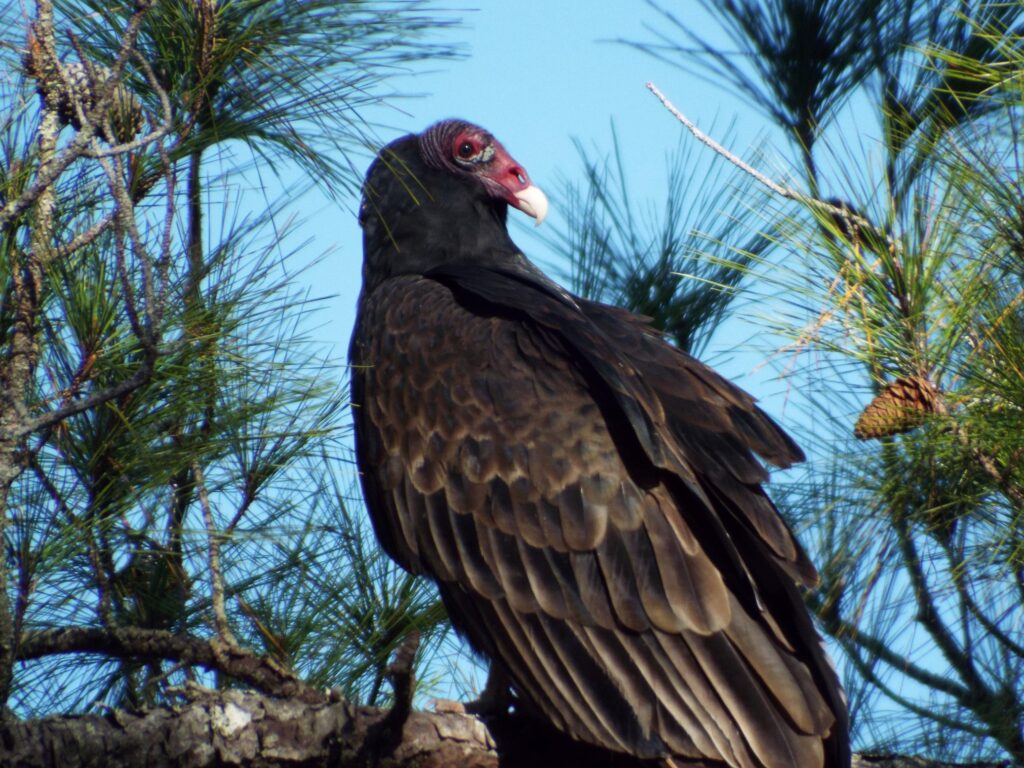
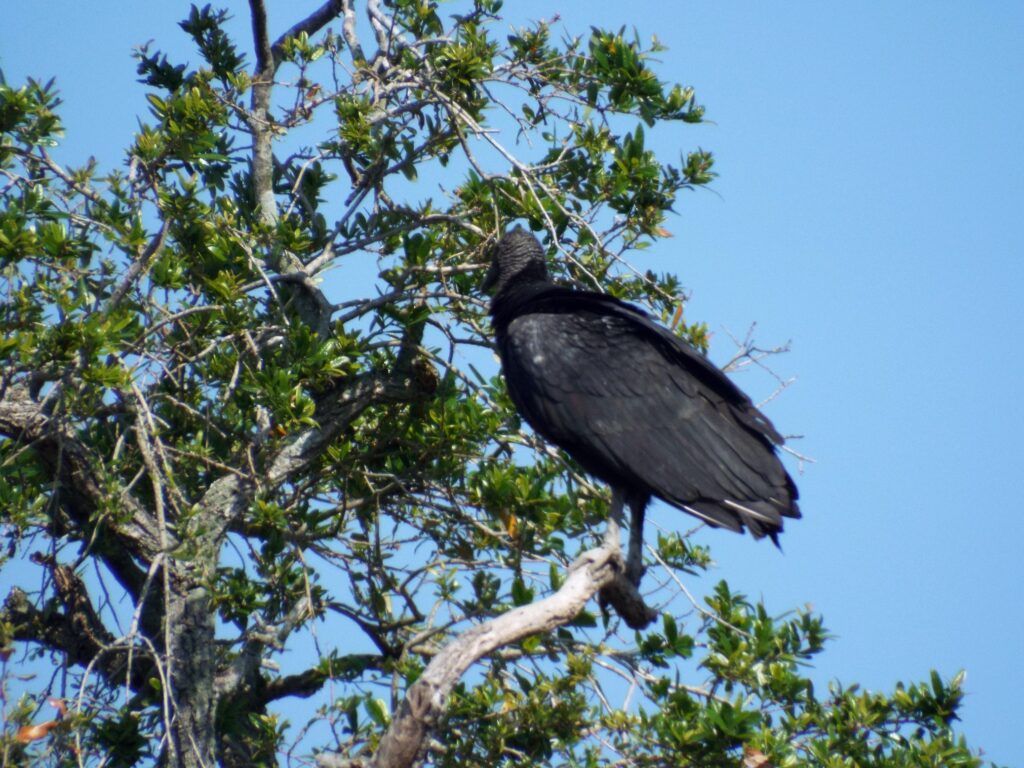
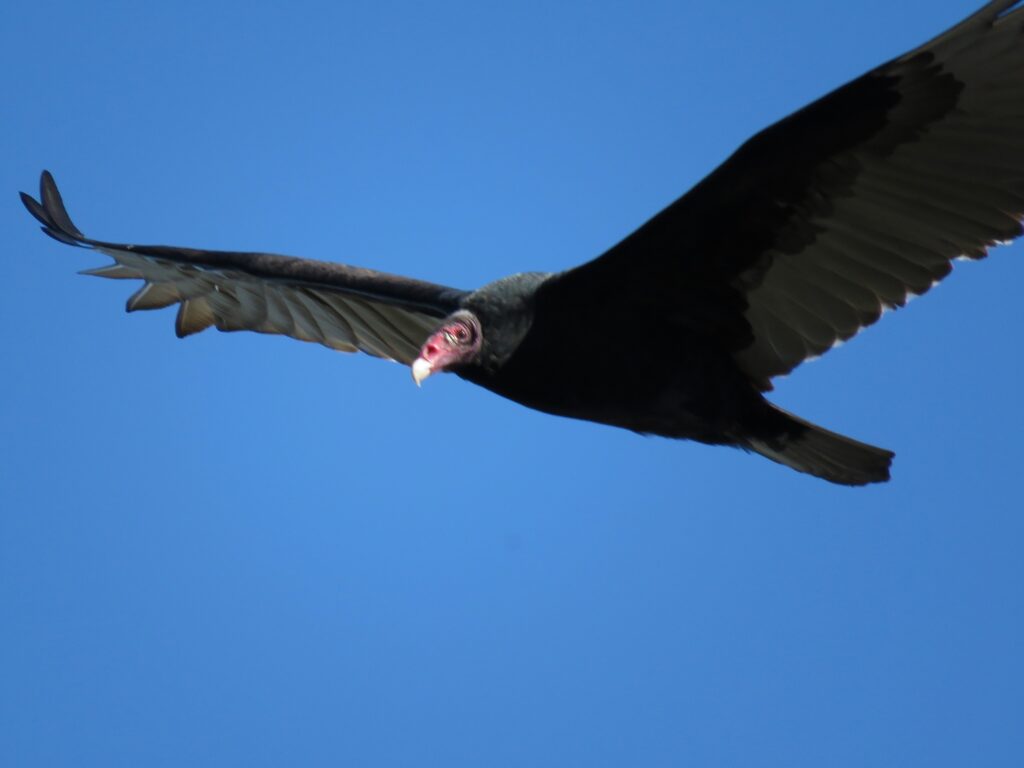
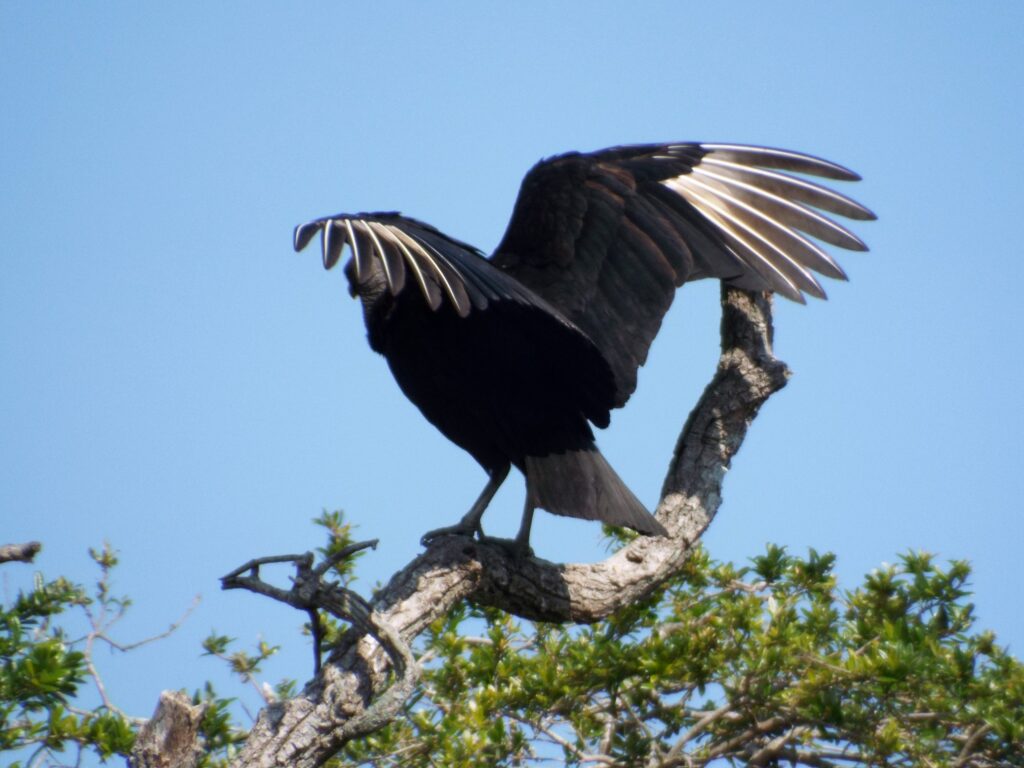
This week for flora and fauna Friday we’ll be examining a pair of birds that are a familiar site along scenic highway 174. This week we’re talking about Vultures.
In South Carolina there are two species of Vulture, the Turkey Vulture (Cathartes aura) and the Black Vulture (Coragyps atratus). Both of our Vultures have dark plumage, featherless heads, great senses of smell and vision, and feed on dead animals. (On a side note, the term “Buzzard”, which is often applied to Vultures, is actually the name of several Old World Hawk species that will eat carrion but prefer to hunt prey.) Vultures lack feathers on their heads because of the nature of their diet. Feathers would get in the way of feeding on carrion and rot from continuous exposure to bodily fluids and bacteria. Thus, our Vultures have lost the feathers on their heads to avoid these complications. Vultures sun their dark feathers in the heat of the day for the same reason. This scorching heat serves to cook bacteria and parasites that cling to their plumage. Vultures, predictably, have extremely robust immune systems. It’s kind of a prerequisite if you’re eating rotten meat for a living. They are essentially immune to diseases like Anthrax, Salmonella, and Botulism! Vultures provide a valuable ecosystem service by eating carrion. By eating carcasses before they rot, Vultures help prevent the spread of disease and mitigate the localized disturbances to plant and invertebrate communities caused by decomposing animals. Adult Vultures, due to their unsavory lifestyle, have almost no natural predators.
Turkey Vultures can be distinguished from Black Vultures by their pink-red heads and legs, dark brown plumage, and more slender, raptor-like physique. On the wing, Turkey Vultures are readily identified by their gray primary and secondary feathers, rickety flight, and wings held upward in a dihedral aka a shallow “V”. Turkey Vultures get their name from their resemblance to the Wild Turkey. Both share a bald, pinkish head and dark brown plumage. The Turkey Vulture is a very efficient flier and can kettle high in the air for hours and miles on end, without flapping its wings once. They accomplish this by exploiting thermals and small scale turbulences along forest edges. Turkey Vultures have one of, if not the best, sense of smell of any terrestrial animal. They also have acute vision. This allows them to smell and locate carrion before any other scavenger can, all while circling high in the air. Turkey Vultures are often the first scavenger on a carcass and typically get to take their pick of the choice bits before their competition arrives.
Black Vultures can be separated from Turkey Vultures by their wrinkly gray heads and legs, black plumage, and a more robust, stork-like physique. Black Vultures only have gray primary feathers and their flat, forward-held wings and more direct powered flight style allows for an easy ID in flight. Black Vultures have eyes as equally keen as those of Turkey Vultures but have a less developed, although still impressive, sense of smell. Black Vultures are more energetic, boisterous, aggressive, and tend to travel in groups. Black Vultures have adapted to exploit these personality and physiological differences to their advantage. Black Vultures tend to circle higher in the sky than Turkey Vultures. From this vantage point they sniff and stare for carrion like any other Vulture but also watch for the lower flying Turkey Vultures. When they identify Turkey Vultures, or other Black Vultures, flying low over an area, they pursue the other birds in hopes of being led to a meal. This often results in Black Vultures swarming and stealing a carcass from the less aggressive and more solitary Turkey Vultures. This results in the common roadside spectacle of a dozen or two Black Vultures bounding, flapping, and encircling a roadkill. Black Vultures are also known to hunt some prey and will primarily target newborn or juvenile animals as a group.
Being a scavenger, Vultures are especially susceptible to threats from environmental contaminants. If an animal dies from poisoning or chemical contamination, a Vulture is likely to feed on its carcass and itself be poisoned. They also are at risk of gradual poisoning due to a concept called bioaccumulation. Bioaccumulation is where contaminants, such as heavy metals and pesticides, can accumulate in an animal overtime from eating contaminated food. These contaminants may not exist in this animal at dangerous levels but the predators that eat these contaminated animals will retain those same contaminants at an even higher concentration, so on and so forth up the food chain. This was the principle behind why DDT was devastating on carnivorous birds, like Eagles and Condors, but not their prey. As a carrion eater, Vultures sit at the peak of the food web and are especially susceptible to bioaccumulation. Although not as bad as the California Condor, our eastern Vultures took a hit from the widespread use of DDT. However, Vultures are one of the few animal species that have benefitted dramatically from human encroachment and habitat fragmentation from the construction of highway networks. This helped them quickly recover from the declines caused by DDT. Roadways are a huge source of mortality for many species of mammals. While bad for mammals this provides a smorgasbord of food for Vultures. The ribbons of asphalt through the woods create thermals and canopy opening that facilitate Vulture flight and their ability to see carcasses. In fact, the ranges of both the Black and Turkey Vultures are expanding northward because of this!




© 2026 Edisto Island Open Land Trust.
Built by Colophon