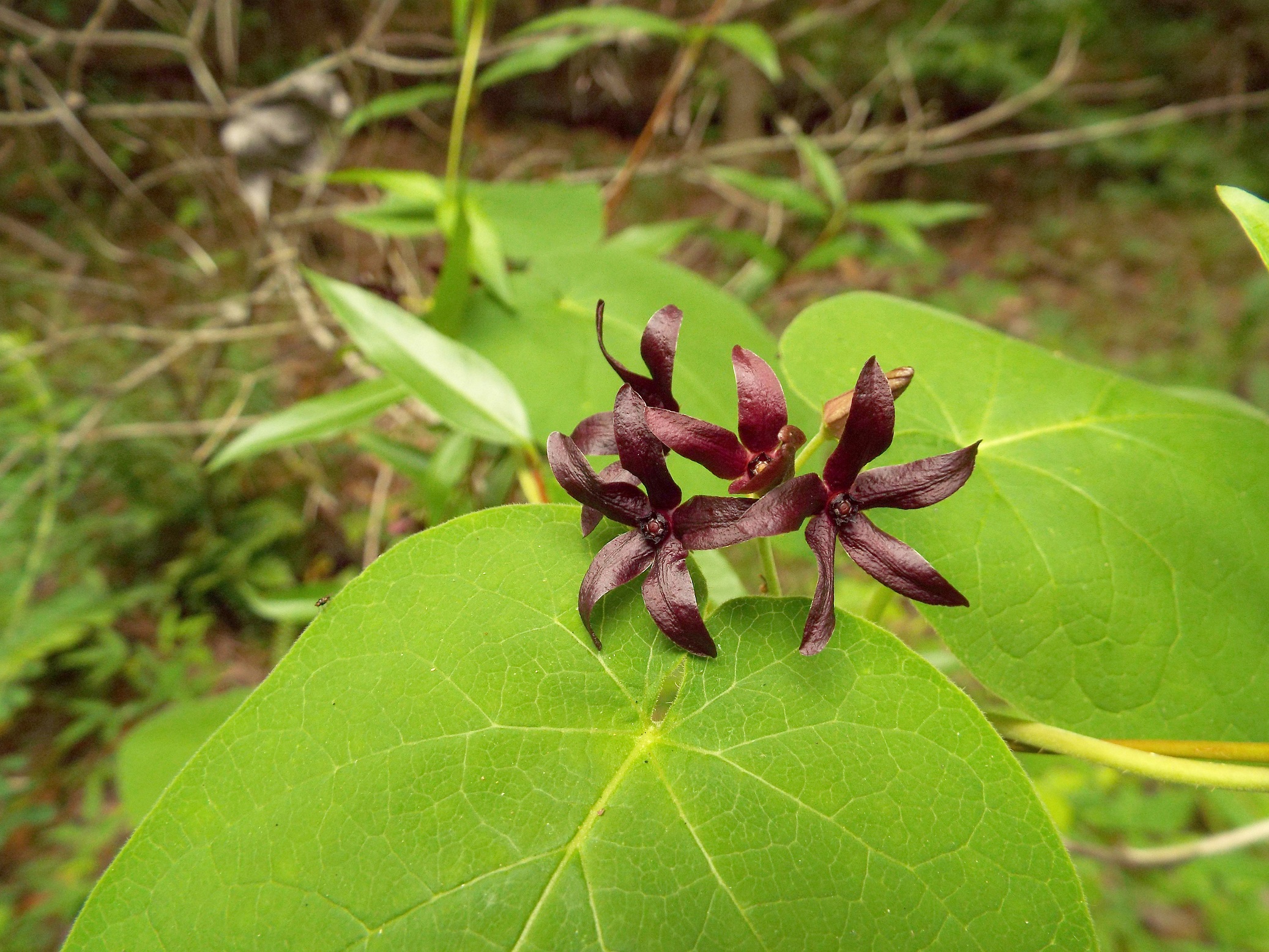
This week for Flora and Fauna Friday, it’s a pair of woodland vines on which Monarchs dine, the Milkvines (Matelea spp.).
Here in the Lowcountry we have two species of Milkvine: Carolina Milkvine (Matelea carolinensis) and Yellow Milkvine (Matelea flavidula). Both of our Milkvines are rather uncommon sights and they are both denizens of the understories of hardwood forests. Carolina Milkvine is most common along swamps and freshwater rivers, just above the floodplain. It’s a species that is more abundant in the piedmont of South Carolina and much of the Southeast. Yellow Milkvine is a rarer plant overall, being found from just a smattering of locales in South Carolina, Georgia, Alabama, and north Florida. It’s well adapted to the sandy, rich soils of the Lowcountry and our Sea Islands and is found most often along wetland margins underneath hardwood forests, where those habitats punctuate the sand ridges and limestone outcrops of the Lowcountry landscape. The Lowcountry of South Carolina is the stronghold of Yellow Milkvine’s global range.
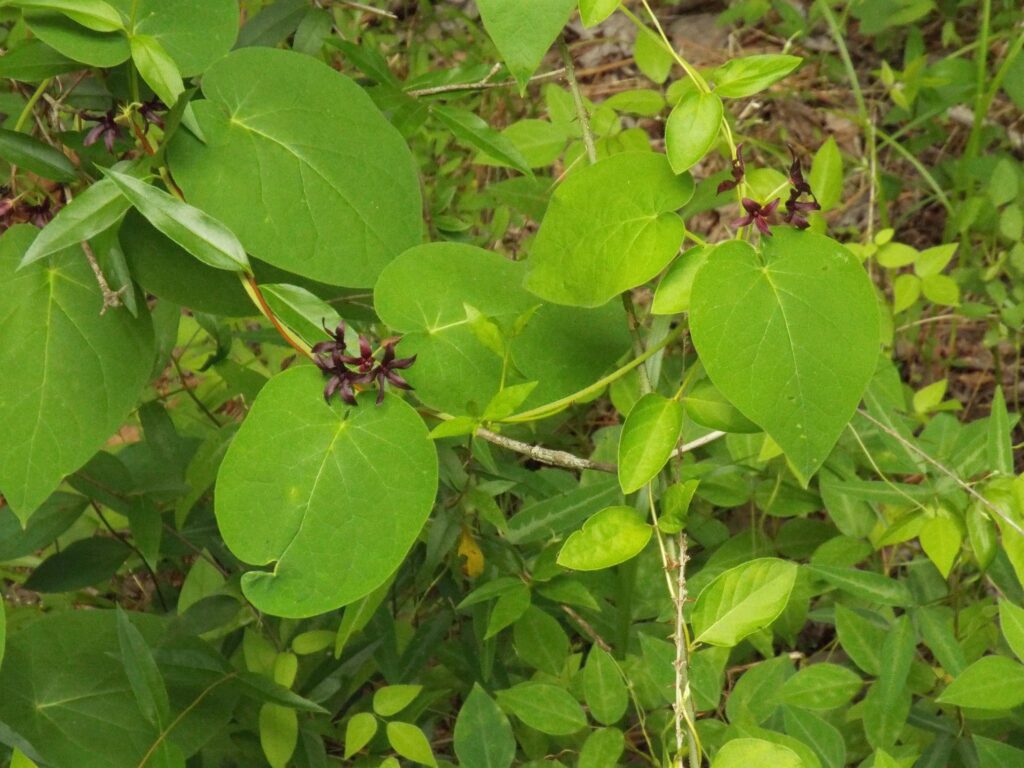
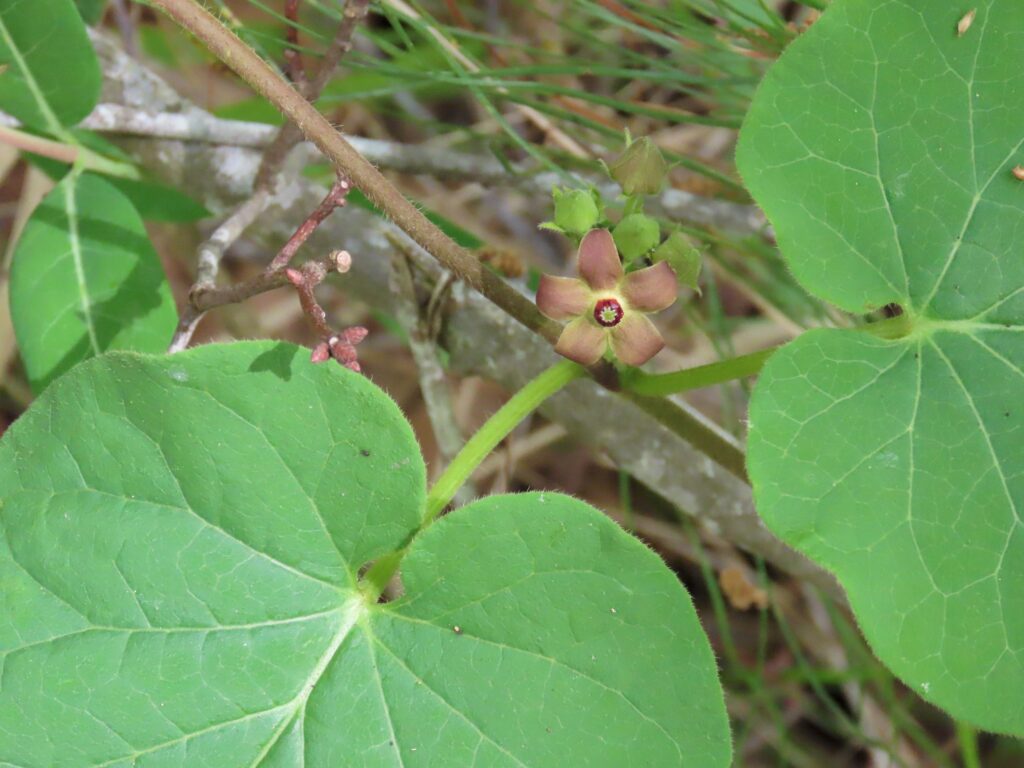
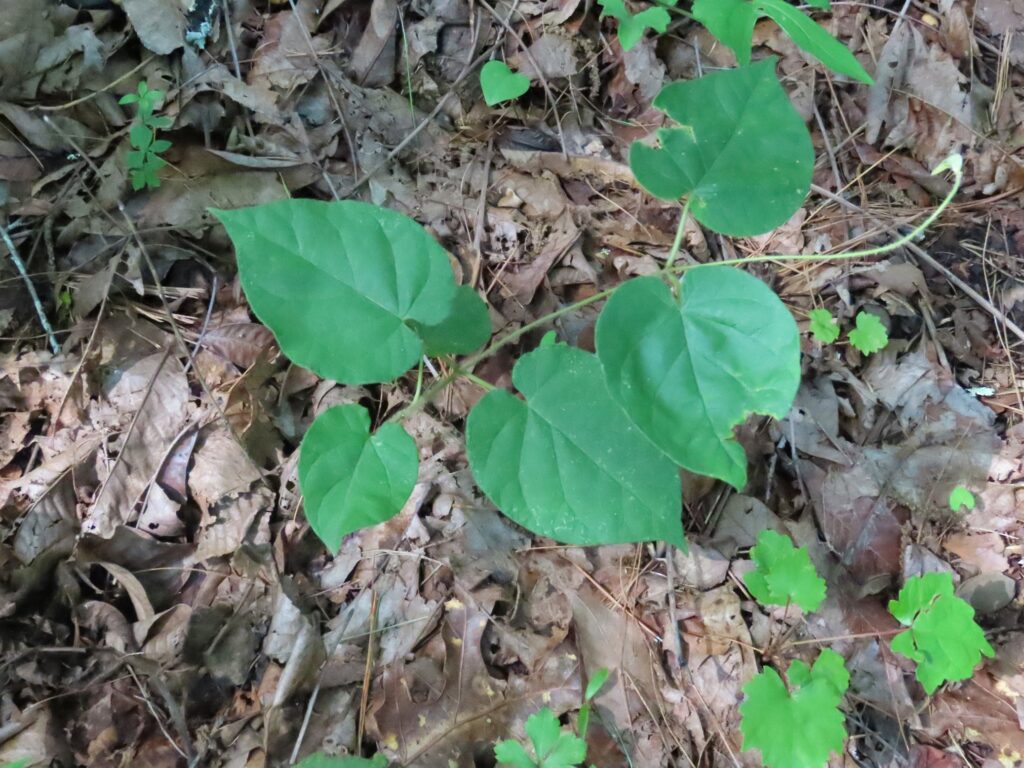
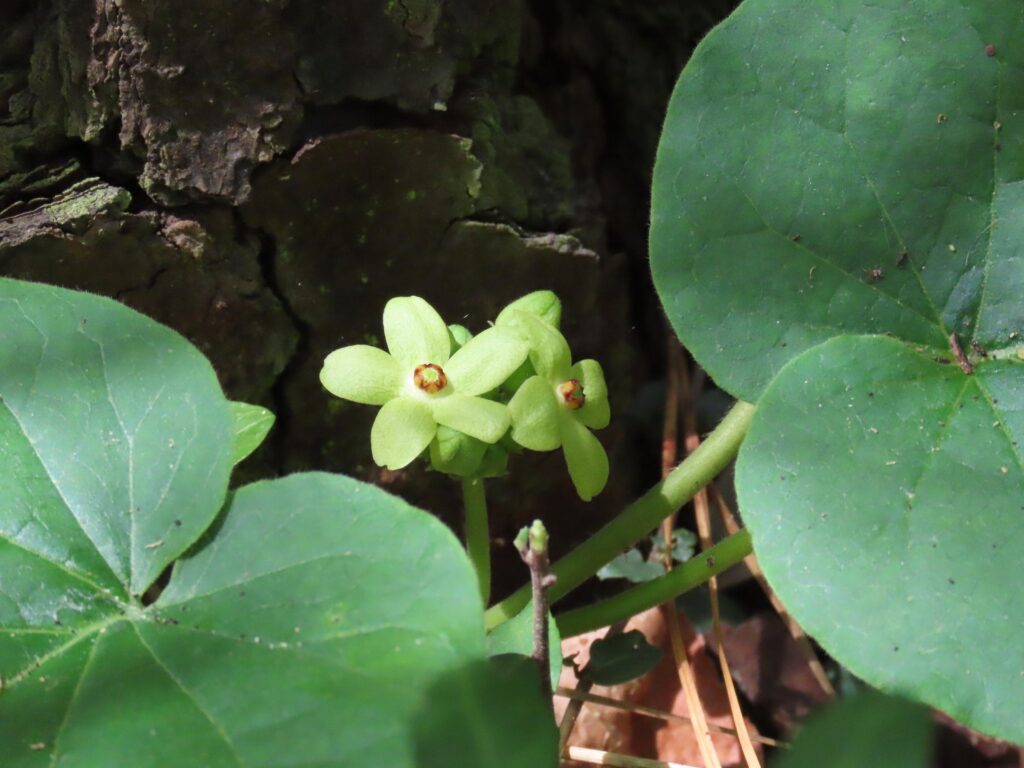
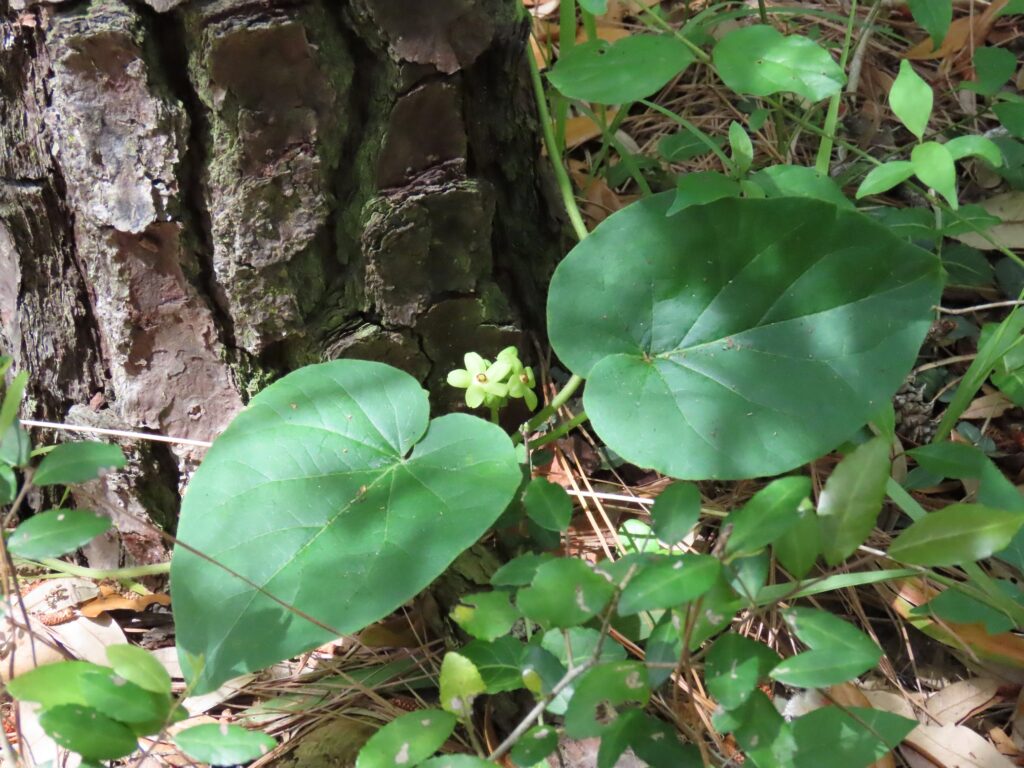
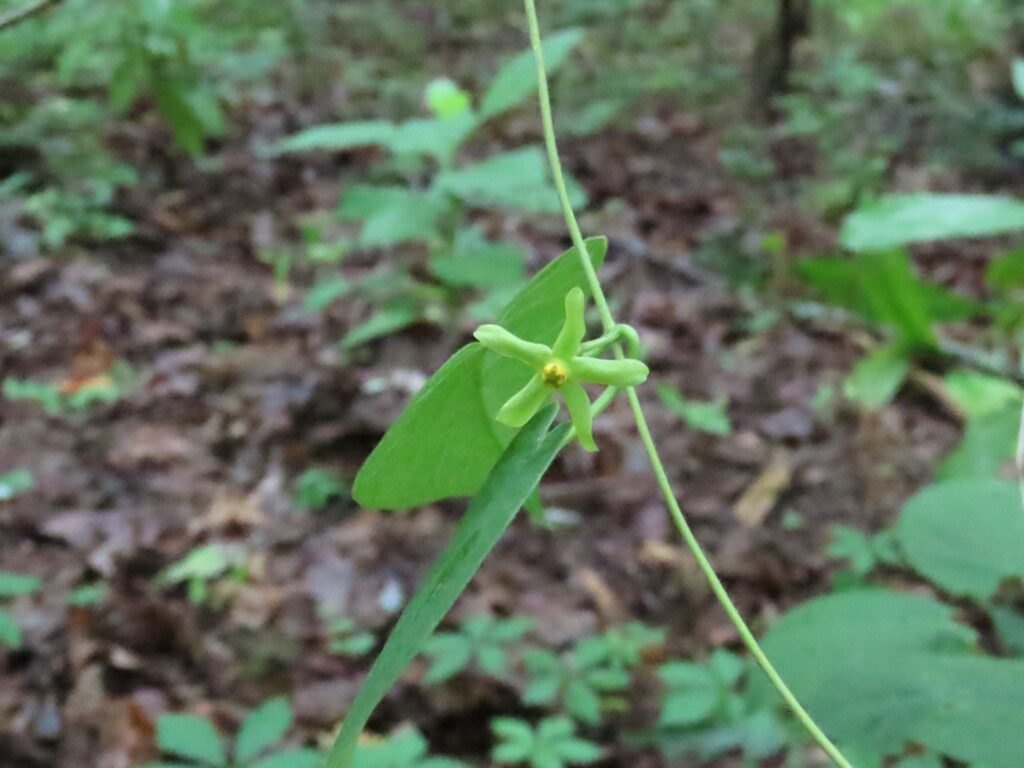
Both of our Milkvines are perennial, herbaceous, twining vines and, when not in flower, look very similar to each other. Both have large, rounded, dark-green, opposite, palm-sized leaves with a smooth margin, cleft base, and either a round or slightly-pointed tip. Their vine grows atop vegetation most often to waist height, is thin and pliable, and often covered, along with their leaves, in a light fuzz. When damaged, Milkvines ooze a white latex sap full of toxic compounds to help ward off insects and other would-be herbivores. The flowers of our two Milkvines are similar in shape but differ markedly in color. Both have a five-petalled star-like flower with uniformly colored, rounded and lightly wrinkled petals that merge towards their base around a raised cylindrical center. In Carolina Milkvine, this flower is most-often a dark-maroon with a black-purple center ringed in a variable but paler color. In Yellow Milkvine, the flower is a pale yellow-green with green net-like veins across the petals and a golden center. Both of our Milkvines bloom in late-April and May. After their flowers bloom, if pollinated, they mature into an elongated, inverted teardrop-shaped seedpod covered in short spiny bumps. As the seedpod dries, it splits open to reveal many rows of fluff tethered seeds to be swept away to lands unknown by any passing breeze.
Milkvines are most easily confused with a third, far more abundant and closely related vine, Anglepod (Gonolobus suberosus). Anglepod leaves and vines look extremely similar to Milkvines, with only subtle differences, which takes an experienced eye to differentiate. Anglepod leaves tend to be darker green, slightly shiny, a little wrinkled, and with a deeper cleft on their base, but there is much overlap between the two clades. Anglepod also prefers to grow in the understory of hardwood forests, just like Milkvines, but is more attuned to life in wetlands, floodplains, and the occasional shaded roadside. Anglepod is found throughout all of South Carolina. Yet thankfully, Anglepod is readily differentiated by its flowers and seedpods. Anglepod flowers are very similar in structure to Milkvines but have pointed petals, no net-like veins, and are usually maroon at their center and pale-green towards their tip. The seedpods of Anglepod are angled, hence the common name, having a mostly smooth, inverted teardrop-shaped seedpod with five pronounced longitudinal ridges.
Both Milkvines and Anglepod are relatives of Milkweeds (Asclepias spp.) and all three can serve as a host plant for the caterpillars of the Monarch butterfly (Danaus plexippus). Although not seemingly a preferred host here in the Lowcountry, Milkvine and Anglepod plants scattered throughout our hardwood forests can help bolster and buffer our local non-migratory Monarch population from year to year against environmental anomalies.