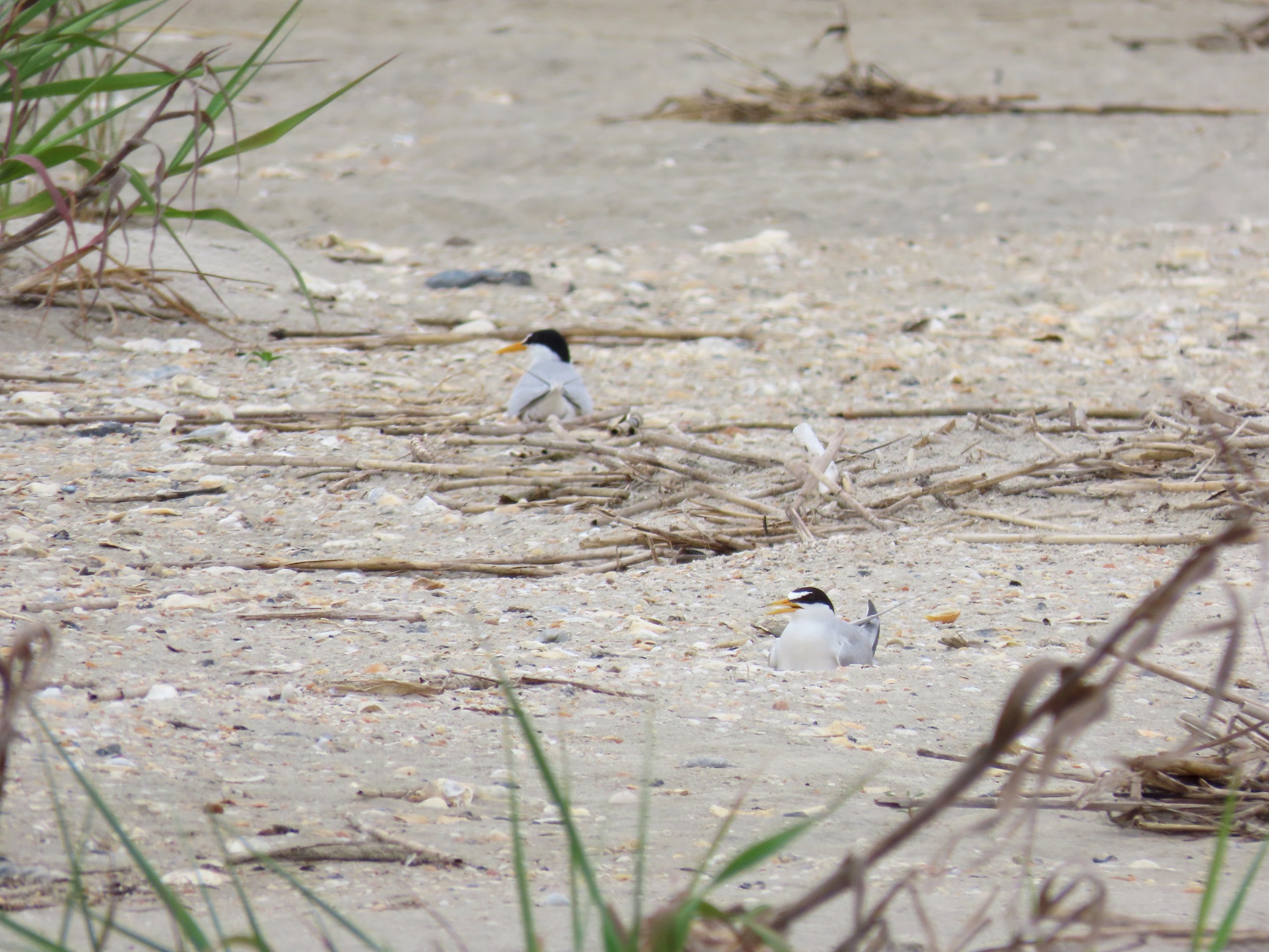
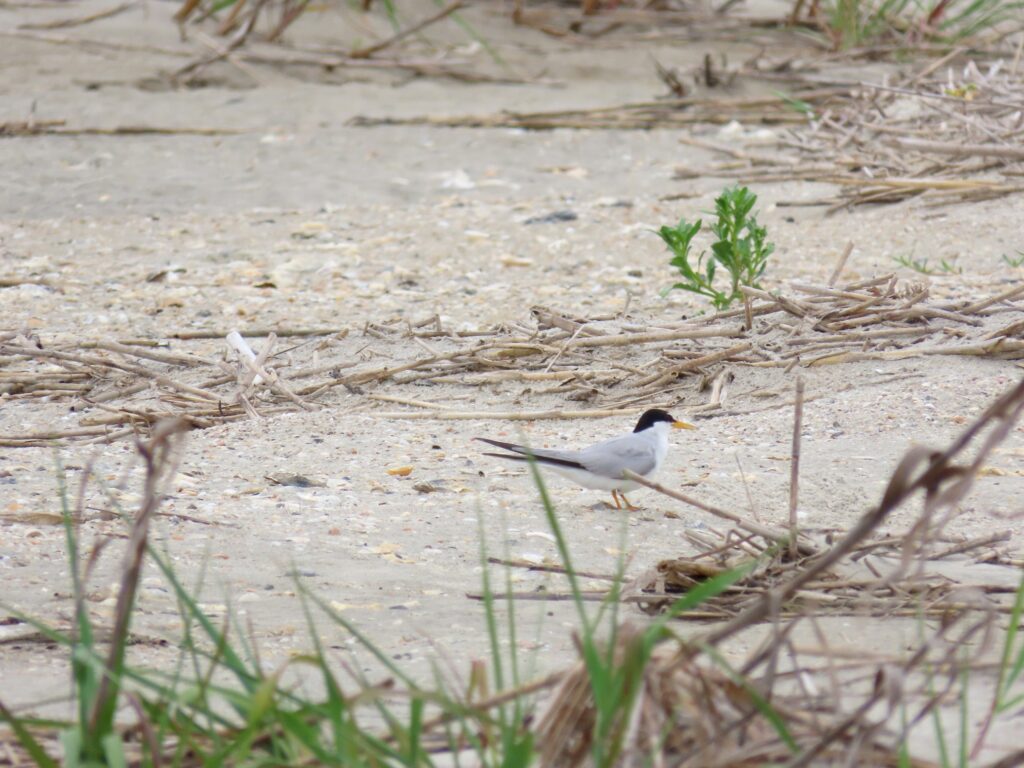
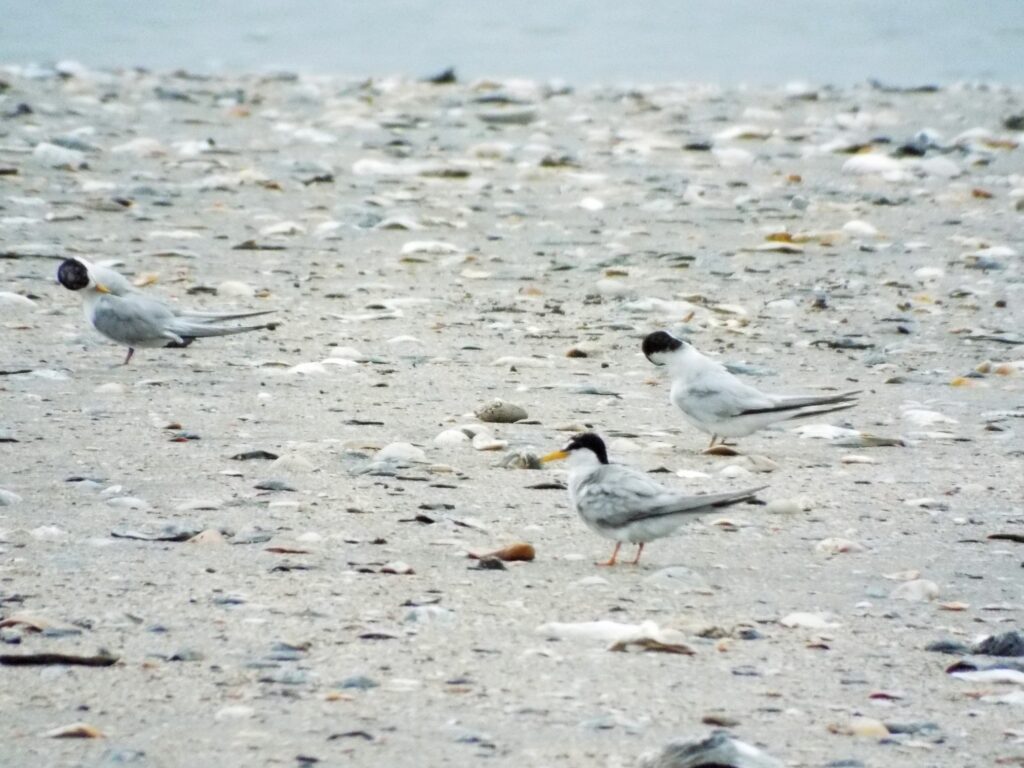
This week for Flora and Fauna Friday, we’re spying on the slightest of our shore nesting seabirds, the Least Tern (Sterna antillarum).
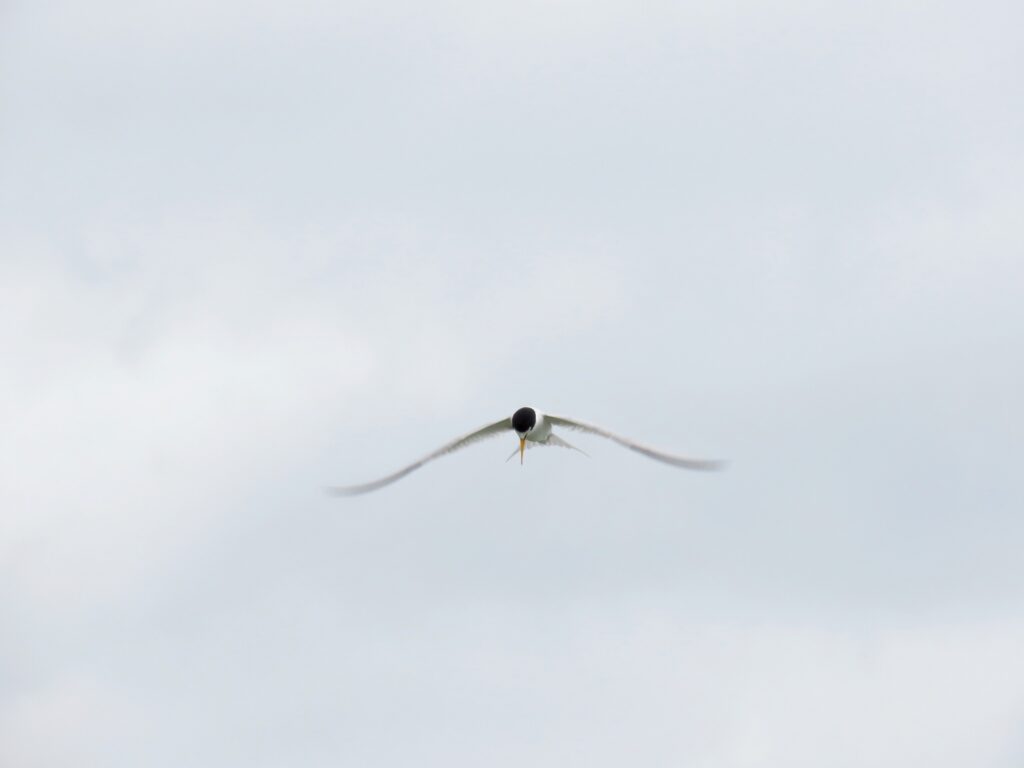
The Least Tern can be found in summer up and down most of the East coast of the United States, and year-round in the Caribbean. Here in South Carolina, they call the estuaries of our sea islands and the beachfront of our barrier islands their summer home. The Least Tern is our smallest species of Tern in the United States. They’re about the same size as a Purple martin, but with a much broader wingspan. Least Terns have long, pointed wings and a short “swallow-tail” trailing behind them. Their plumage is pale overall, white below, a cool silver-gray above, and with a dark leading edge to their wing tips. Whilst perched, Least Terns in breeding colors are readily recognized by not just their petite presence and pallid plumage but also a lemon-yellow bill, golden legs, and a full black cap with a distinct white triangle on their forehead. Their call is a squeaky, shrieky, raspy, resonant cry that trails down in volume as it progresses, and is similar but lighter and higher than other, larger Terns.
Least Terns here on Edisto subsist primarily on a diet of small fish. Like all our Terns, they hunt using plunge diving. They cruise up and down creeks and shallow flooded flats in a slow flight on deep, bobbing wing beats, scanning the water’s surface for schooling fish. Once a buffet bears itself beneath them, they lock on and drop down, plunging bill-first into the water to spear or snatch a meal, before their buoyant body buoys them back above.
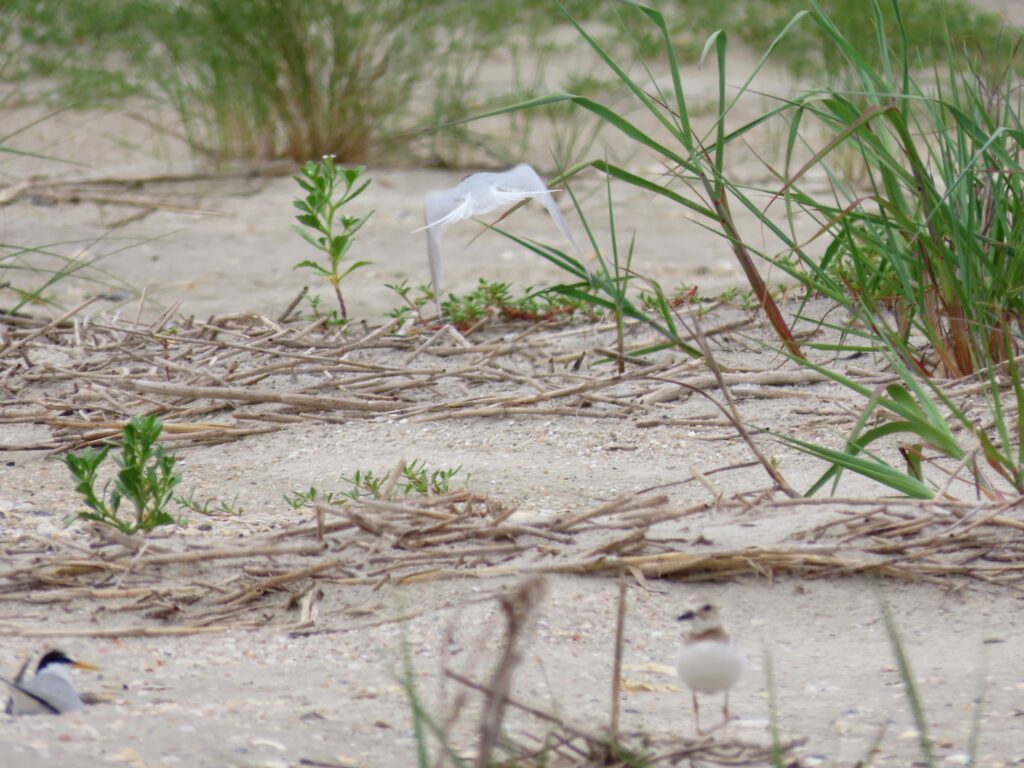
Least Terns are a threatened species here in South Carolina and a species of significant conservation concern for SCDNR. In the Lowcountry, they principally nest on sand bars, beach dunes, and inlet sand banks right up against the ocean and they share this space with myriad other nesting shorebirds and seabirds each year. Least Terns are smaller than all other sea birds that nest here in the Lowcountry. Thus, they rely heavily on the more chaotic and dangerous beachfront nesting sites to raise their young, as they are easily pushed out by bigger birds from the other more favorable, safer sites on isolated, protected sand banks. Use of these extreme coastal nest sites not only places seabirds and their nests at heightened risk of harm from extreme weather and hurricanes, but also human induced pressures and disturbance. Erosion from coastal infrastructure shrinks banks, bars, and beach dunes to reduce the total area available as nesting habitat. Coastal development further eliminates potential nest sites by converting the landscape to an unusable state for wildlife, while also introducing invasive plants, feral animals, and general ecological imbalance that cause increased nest failure. Increased beach traffic, and especially unleashed dogs, disturb nesting birds in the dune systems, forcing them to waste energy when escaping to the air, preventing them from feeding their young, and exposing delicate eggs and fledgling birds to the broiling rays of a Lowcountry summer sun. Sea level rise compounds these threats further by shrinking the total area of beachfront and accelerating the shifting of these sandy lands. This cumulative stress on estuarine ecosystems is called ‘coastal squeeze’. Coastal squeeze is felt most sharply by intertidal and beach dependent species, and has rapidly become an existential threat to many species in recent decades.
Least Terns, thankfully, are one of the more resilient and adaptable beach nesting species when faced with such pressures. For example, they famously have begun nesting on flat, graveled rooftops Downtown and in other coastal cities. Nonetheless, the compounding impacts of coastal squeeze are taking their toll on Least Tern populations range wide. You can do your part to help protect Least Terns, and other seabird and shorebird nests, by staying off the beach dunes, keeping your dog on a leash whenever on the beach, and respecting SCDNR and other conservation signage you find that closes or restricts beach access for the wellbeing of some of our most imperiled and beloved Lowcountry birds.





© 2026 Edisto Island Open Land Trust.
Built by Colophon