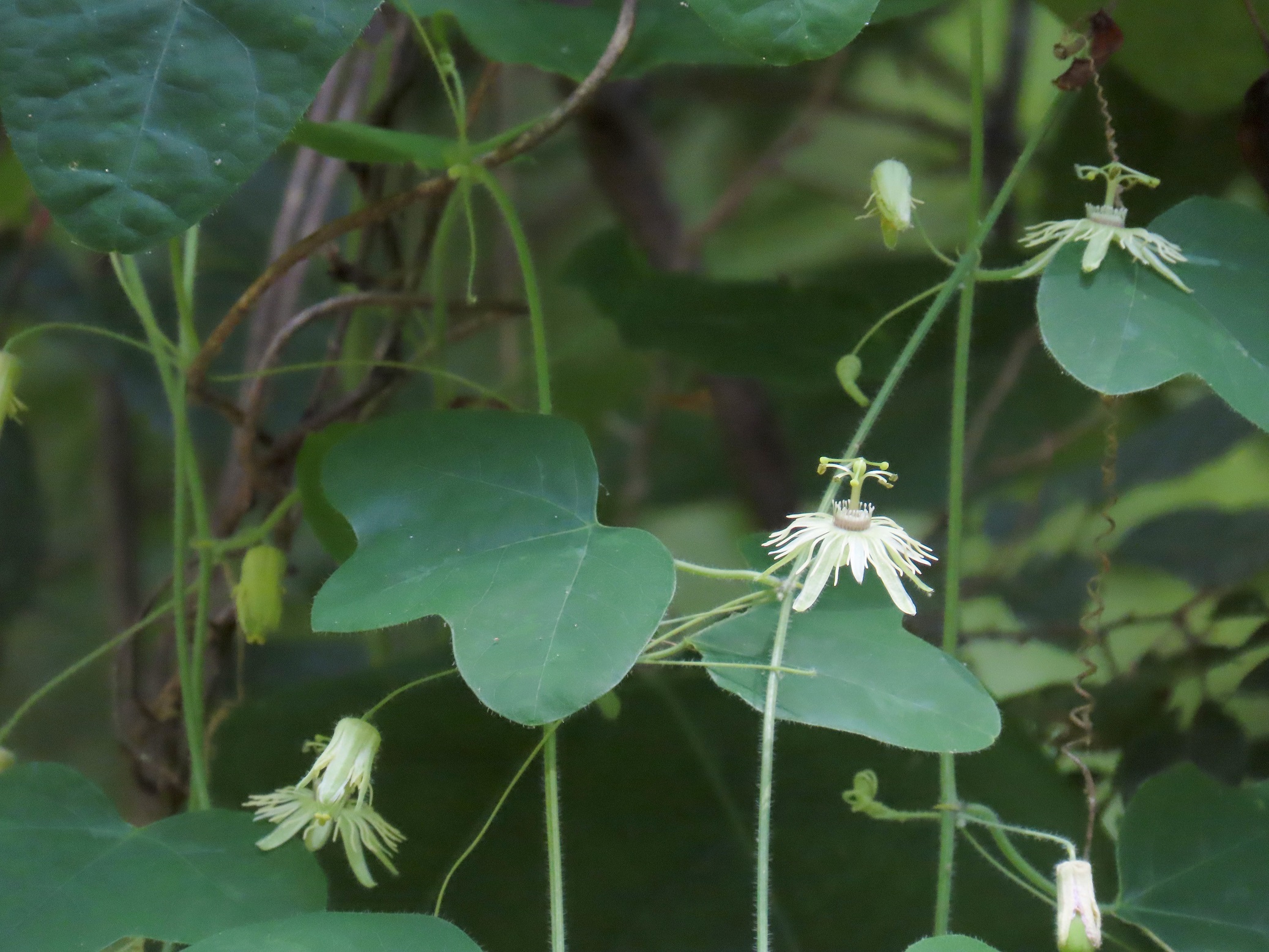
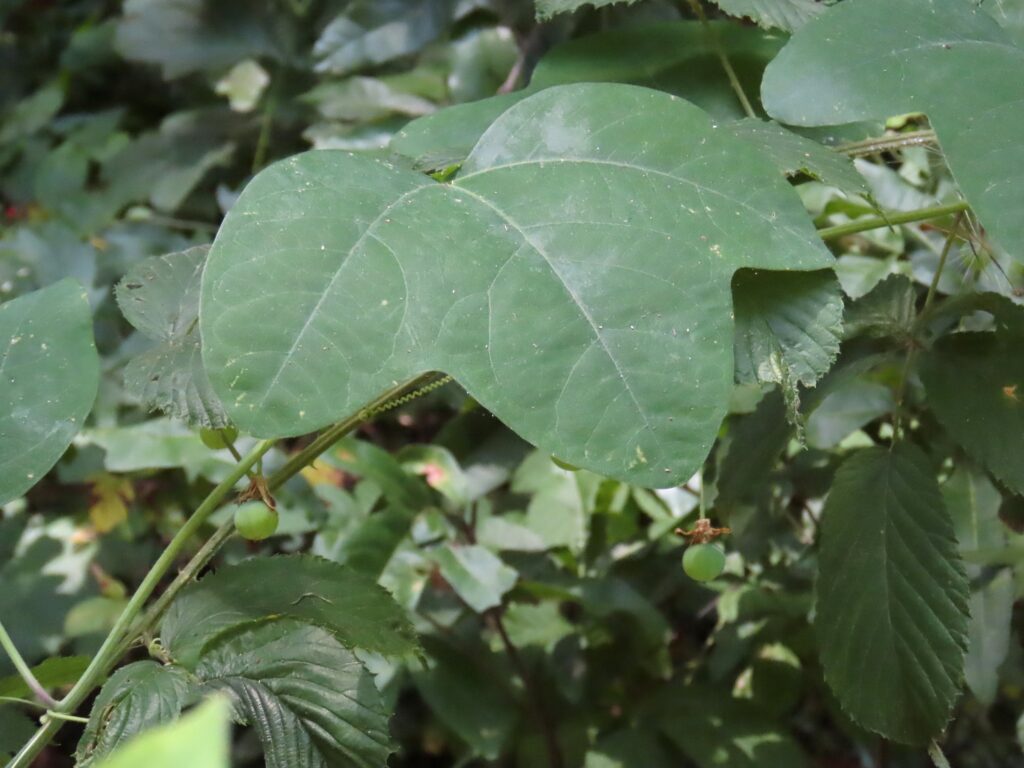
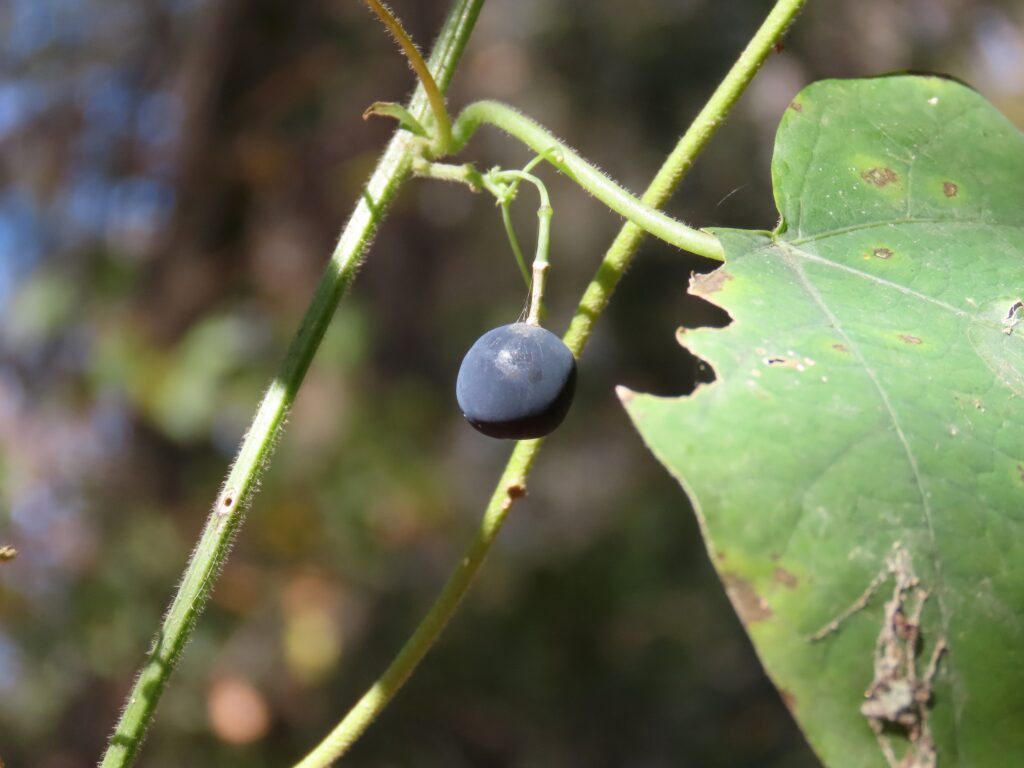
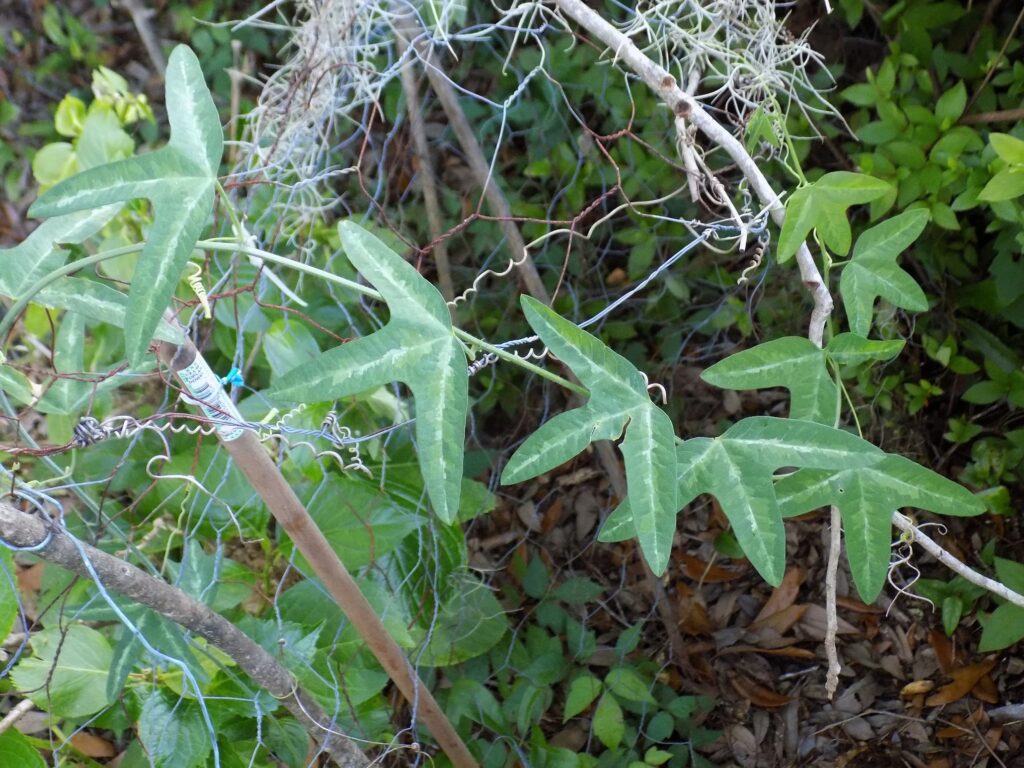
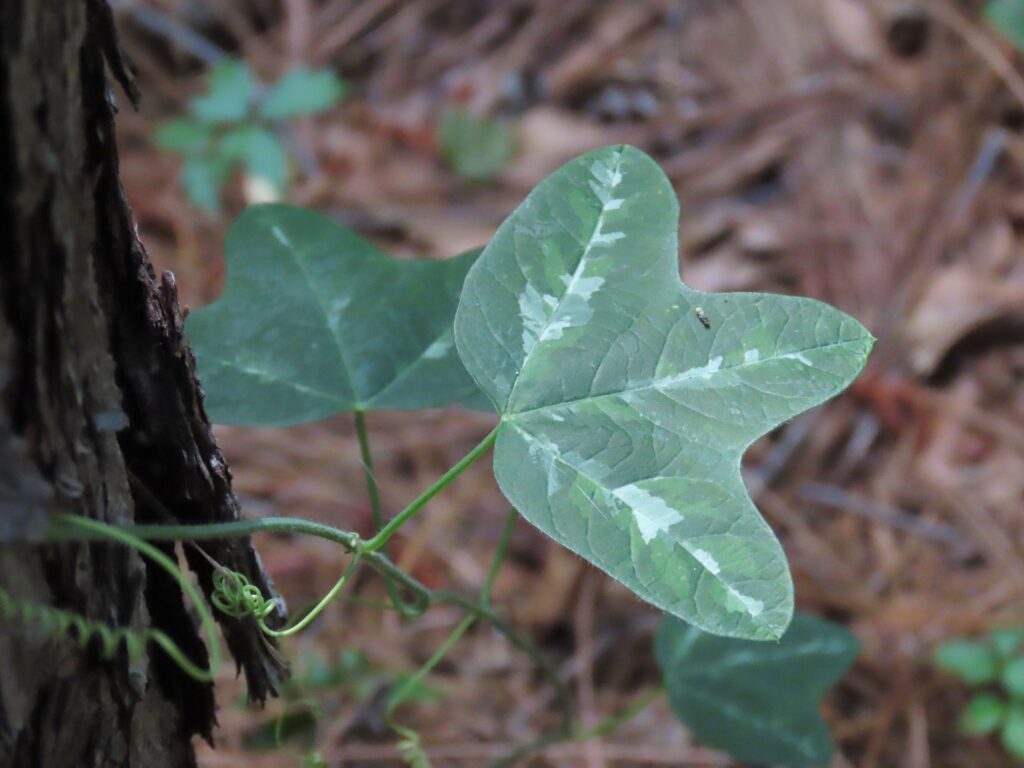
This week for Flora and Fauna Friday, we find a variegated vine that twines along shadowed wood lines, Yellow Passionflower (Passiflora lutea).
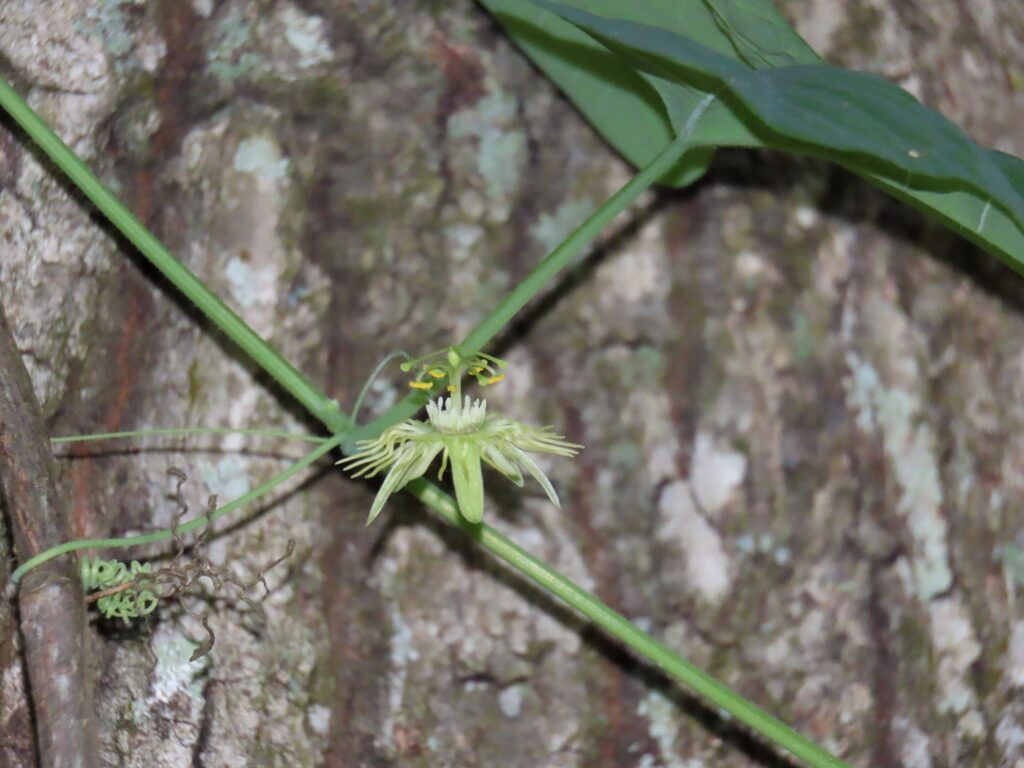
Yellow Passionflower is found throughout the Southeast and all of South Carolina. It’s the more subdued and subtle sibling to the bold Purple Passionflower (P. incarnata) that blazes its brilliance in the sun baked pastures, prairies, and pineywoods around the State. Yellow Passionflower instead offers an air of restrained elegance within the verdant shadows of forests across the region. Yellow Passionflower is most often encountered on roadsides, trails, hedgerows, and river bluffs where there is ample shade from the sun rays. It’s a thin and wiry vine that anchors itself with tendrils and climbs into and over low shrubs. Yellow Passionflower grows up to a little over head height and hangs a loose, scattered collection of leaves out in the air to intercept wayward rays of sunlight. Its leaves are a soft, deep, bluish green, occasionally with blotches of silvery wash variegating its veins. Each leaf is trilobed and can vary in shape from nearly round, to pointed and stringy, like the three-toed footprint of a bird. In early summer, Yellow Passionflower begins to bloom, bearing a roughly one-inch, pastel yellow-green blossom. Although small and monochrome in color, it is a flower no less complex and wondrous than its purplish kin.
Five petals support a stage of some fifty radiating coronal filaments. At their inward convergence stands a towering ovary crowned with five hanging anthers and five dangling stigmas. Like some strange alien streetlight or radio antennae, it radiates signals into the surrounding landscape to draw in pollinators. Pollinating insects land on the elongated filaments of the flower and crawl to the base to grab a sip of nectar. Those hanging anthers dust their backs with pollen as they pass beneath and the dangling stigmas take samples from others for cross pollination. Passionflowers are most attractive to bees, but well used by myriad other pollinators. These flowers, once pollinated, will mature into a miniscule blue-black berry, to be gobbled up by birds and carried further on down the road. The foliage of Yellow Passionflower also hosts the caterpillars of several butterflies, including the Variegated Fritillary, Gulf Fritillary, and is the preferred host plant for the Zebra Longwing here in the South Carolina Lowcountry.