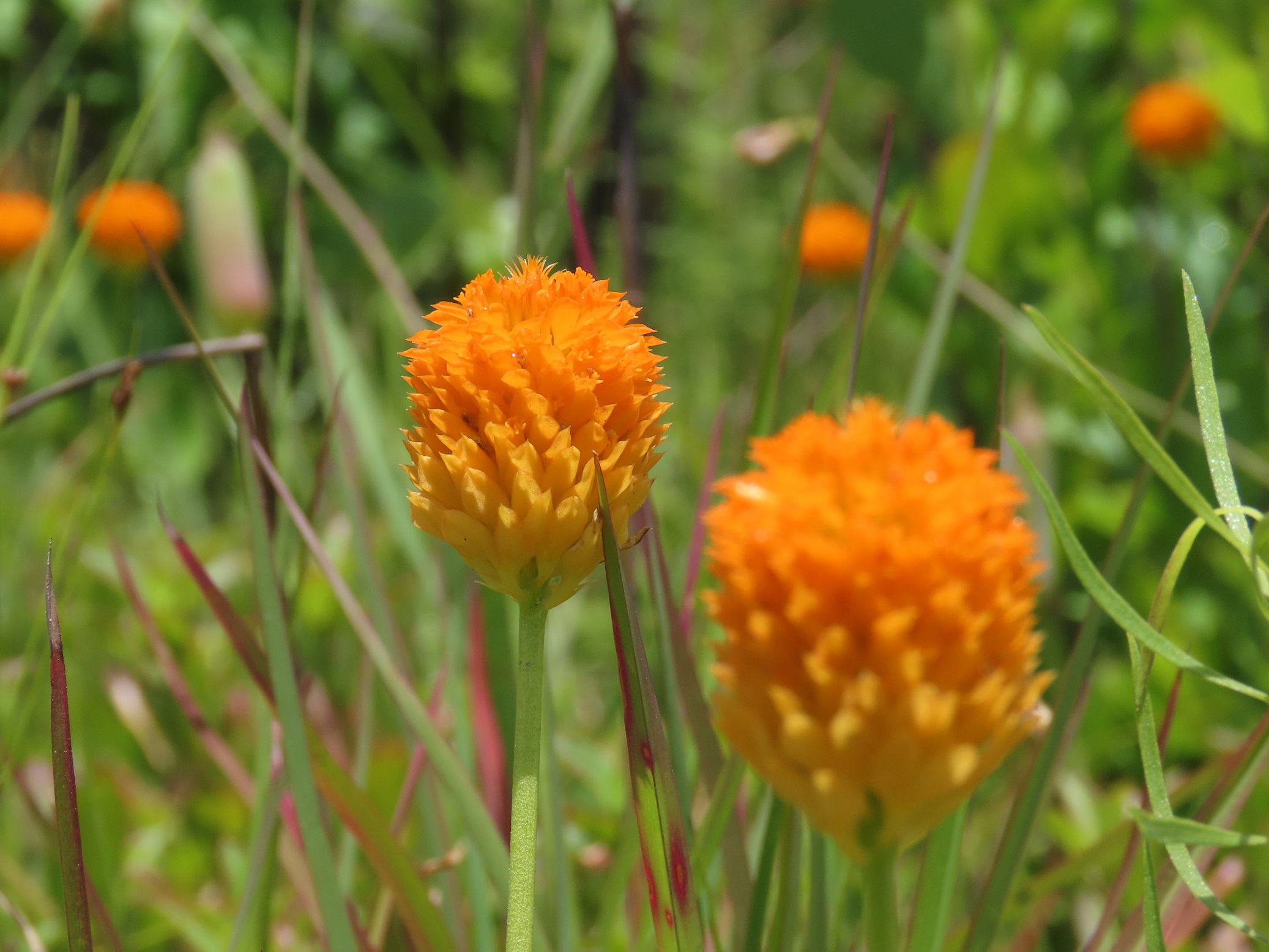
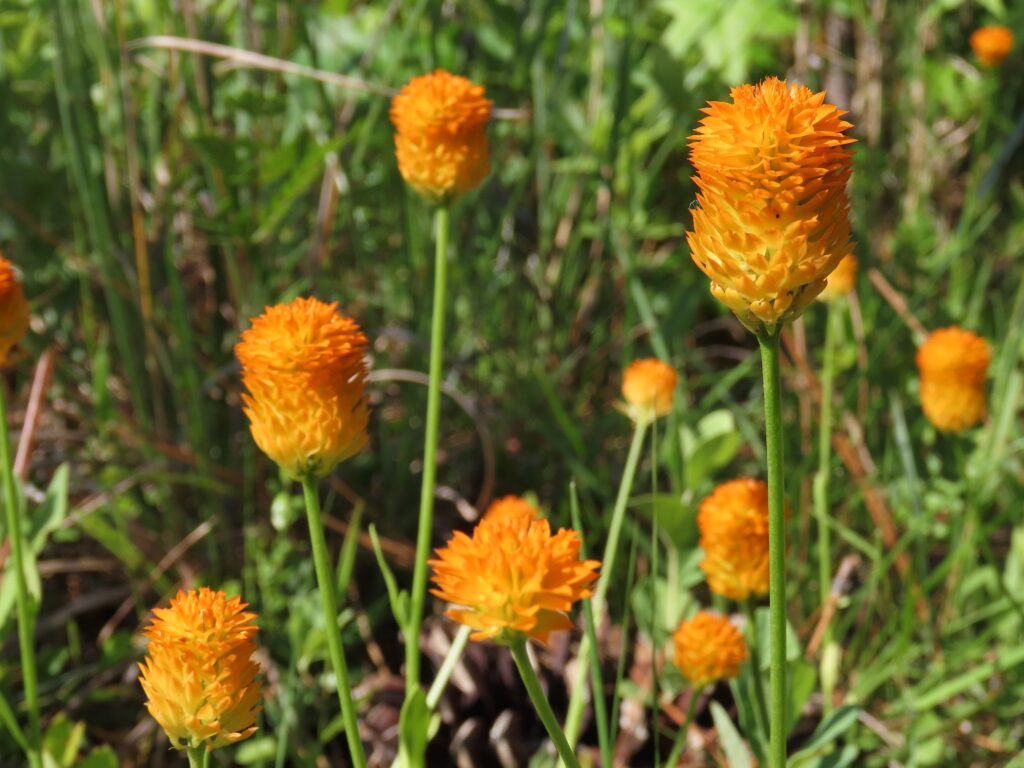
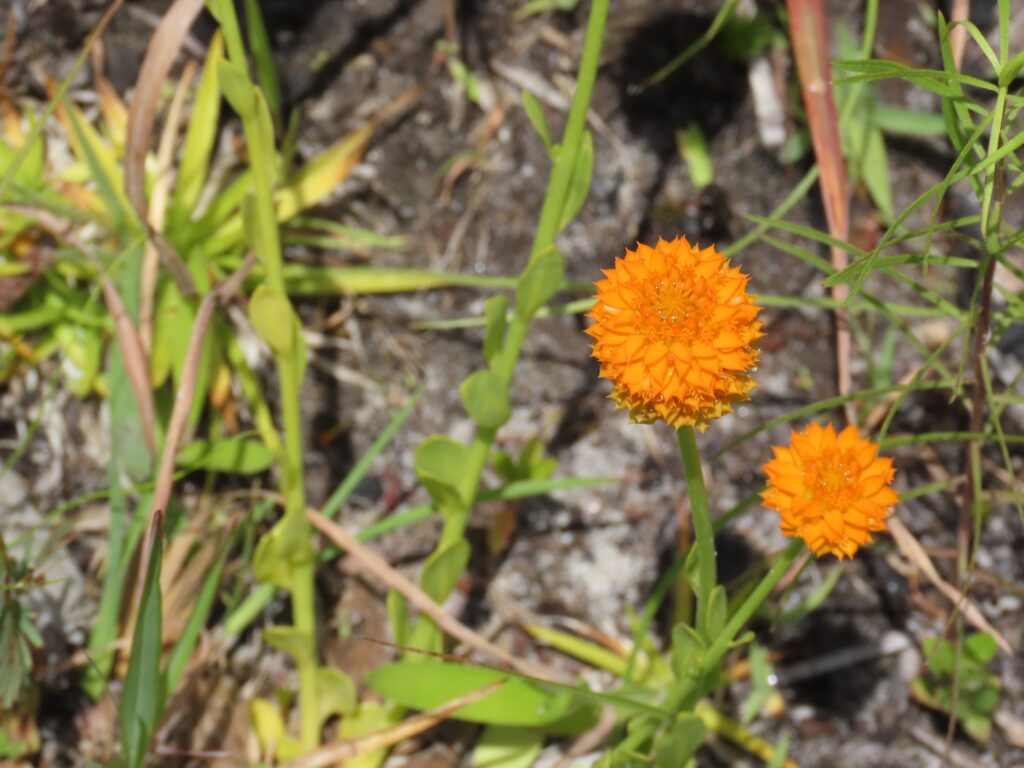
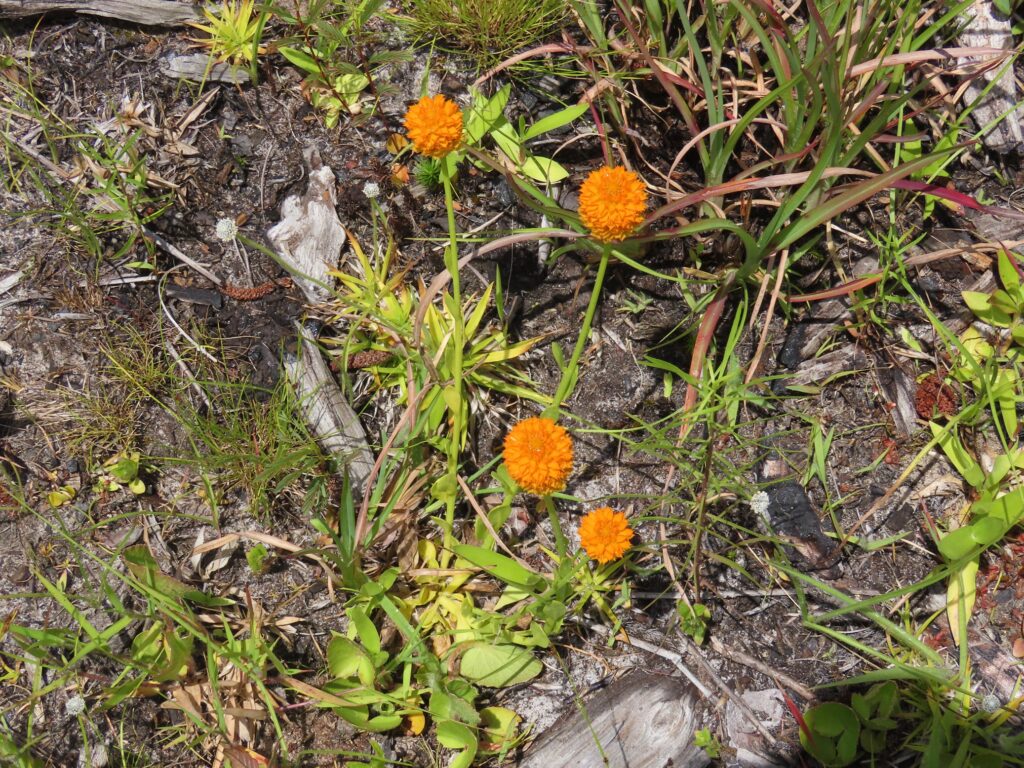
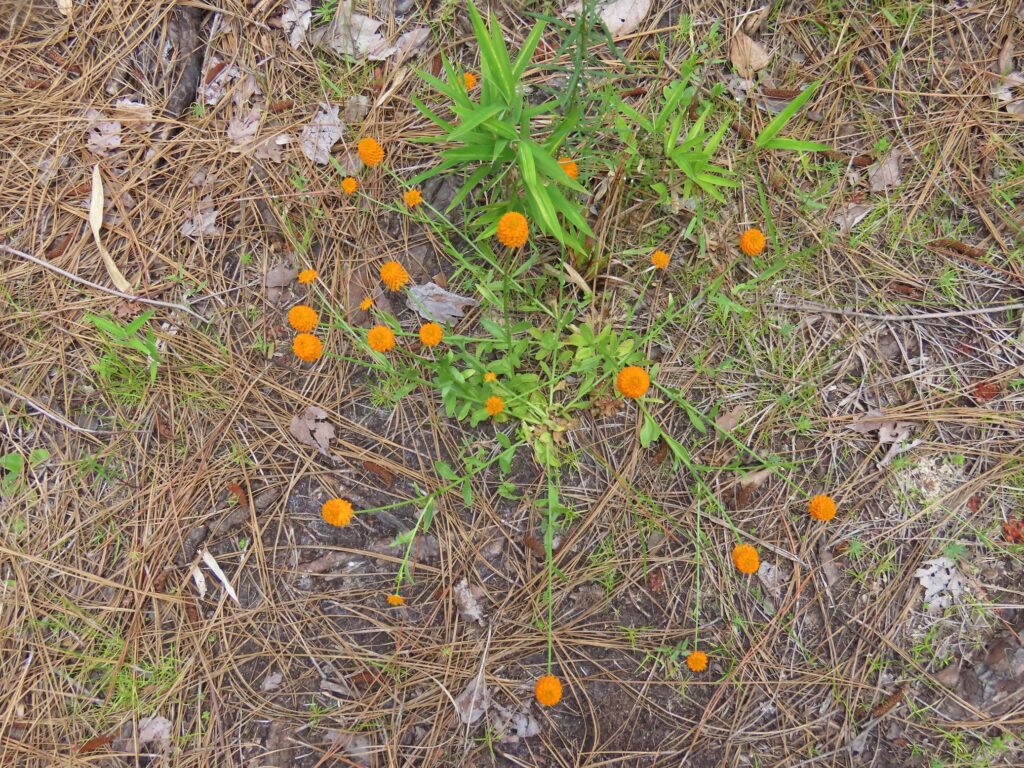
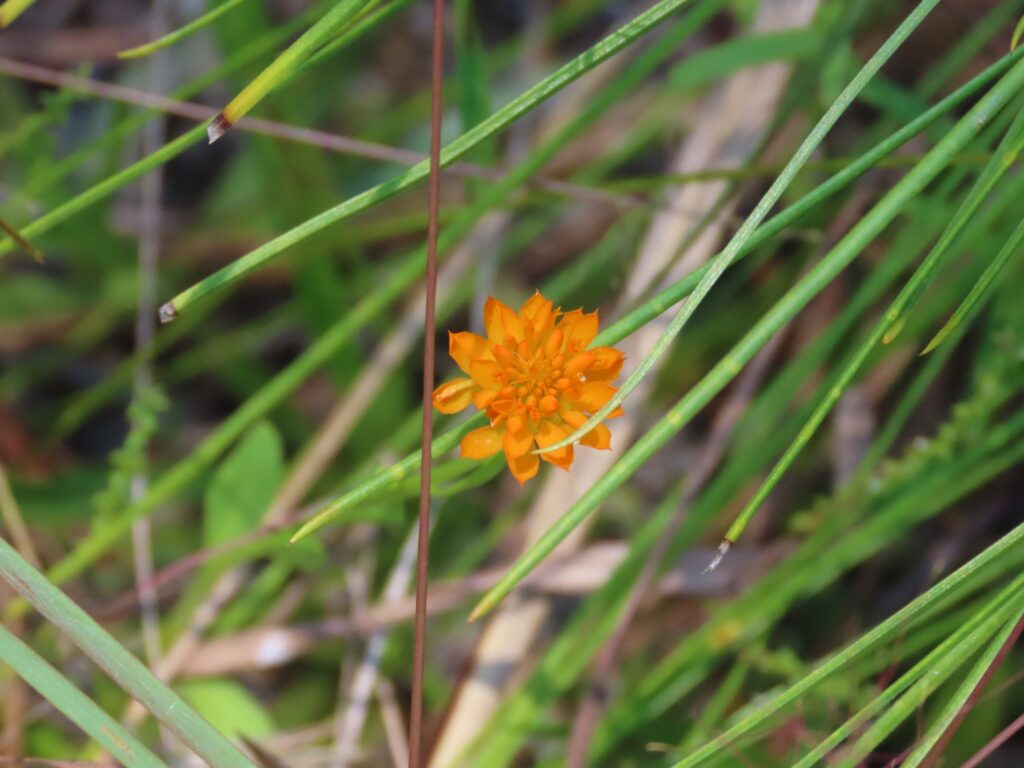
This week for Flora and Fauna Friday it’s the venerable Bog Cheeto: Orange Milkwort (Senega lutea) [Syn. Polygala lutea].
All told, we have about 15 species of Milkwort in the Lowcountry, some of them quite rare. Orange Milkwort, however, is one of those inescapable, hard to miss, can’t mistake it wildflowers found throughout the coastal plain of South Carolina. It is a regular sight in bogs, Carolina Bays, pocosins, roadside ditches, pine flatwoods, and the like and grows in most all of our saturated, sandy, acidic soils throughout the coastal plain of the Southeast. The foliage of Orange Milkwort is an almost sickly lime-green, simple, opposite, with entire margins, and possessing a distinct succulent quality. When broken, the leaves exude a toxic, milk-white sap used to repel herbivores. That sap gives it the common name of “Milkwort”. The leaves of Orange Milkwort are hard to spot early in the year, existing as a small ground-level rosette just a few inches across. All told, the plant will barely crest a foot high in bloom.
Orange Milkwort blooms from late April into September. Its bloom is neon-orange in color and composed of many small, densely packed flowers that overlap with each other like scales. These compound flower clusters first emerge in a near spherical arrangement but elongate with time into a bottlebrush-shaped cylinder, eventually growing to resemble a stubby “Cheeto puff” in size, shape, color, and texture. There’s just nothing like it! Orange Milkwort isn’t a stellar pollinator plant. It’s often self-pollinated and most frequently visited by small bees. Orange Milkwort, along with many other Milkworts, have ant dispersed seeds. Their seeds each possess a structure called an elaiosome. This is a fat and protein packed nugget used to bribe ants into carrying the seeds back to their nest. Once the ants pick the seed clean of tasty bits, they’ll discard it just outside their nest in the colony’s waste bin. Here an Orange Milkwort seed can germinate in a nutrient rich pocket of ant refuse, giving it a better head start. Even that small edge is a distinct advantage in wet, sandy, acidic soils where soil nutrients are usually greatly limited by weathered dirt and adverse soil chemistry.





© 2026 Edisto Island Open Land Trust.
Built by Colophon