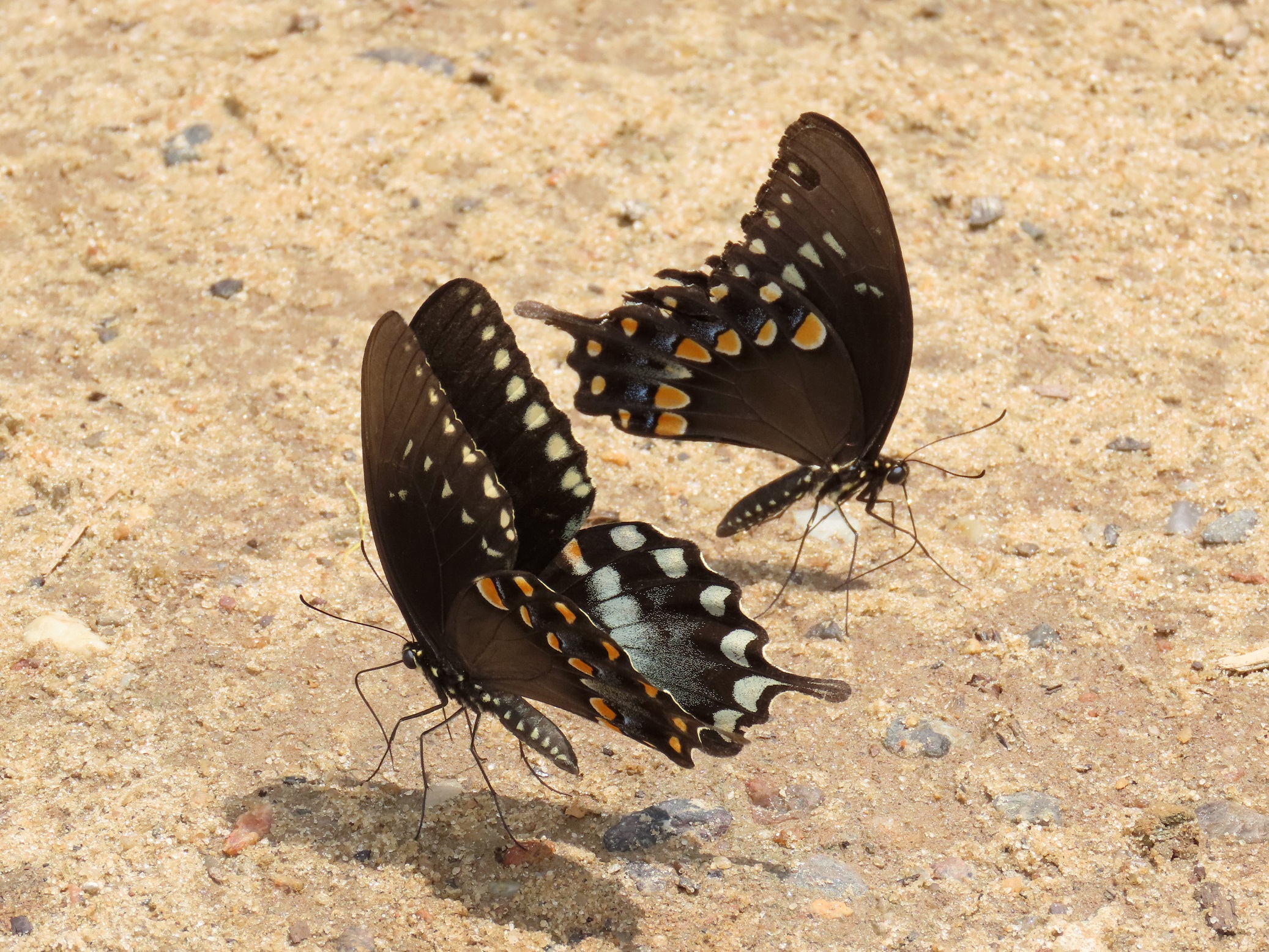
This week for Flora and Fauna Friday, we’re getting wise to the ways of the butterfly master of disguise, the Spicebush Swallowtail (Papilio troilus).
The Spicebush Swallowtail can be found across the Carolinas and much of the Eastern United States. It flies from March through October. Although one of our largest butterflies, it’s about mid-sized for our State’s eight Swallowtails species. They can also be tricky to tell apart from our other dark Swallowtail species. Spicebush Swallowtails are mainly black across their body and wings. Above they have a single row of pastel-yellow spots spanning the border of all four wings, a pair of small orange wing spots right behind the abdomen, and a blue patch covering most of the hindwings. In males this blue patch is larger and of a more powder-blue. In females it’s less expansive but a richer sky-blue. Below both sexes appear much the same, with mostly black on the forewing and the hindwing bearing two concentric arches of orange spots sandwiching a band of blue. Unique to the Spicebush Swallowtail, on the inner arch of spots, there is a gap between the fourth and fifth spot that is punctuated by a “rocket” of blue shooting through towards the body.
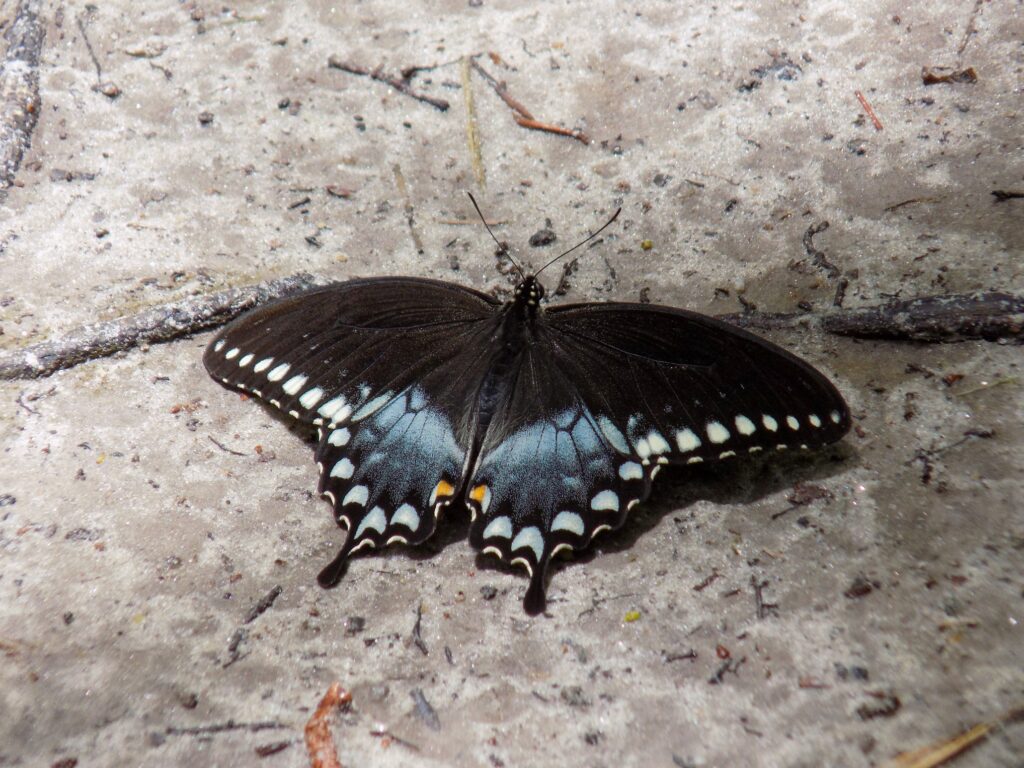
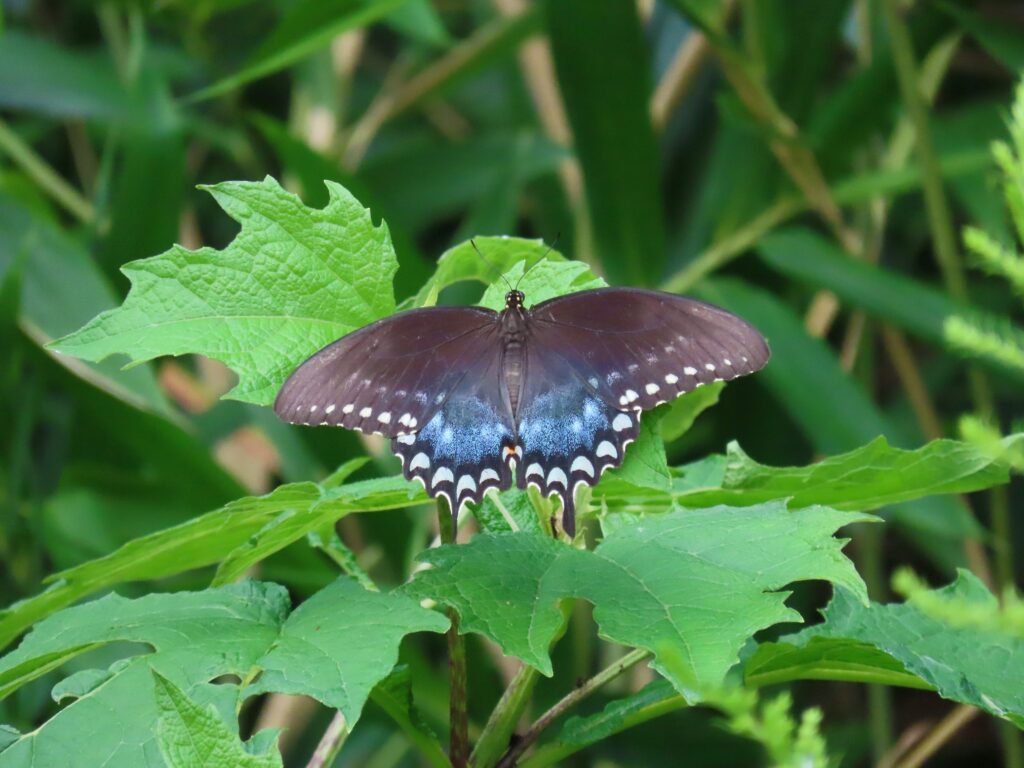
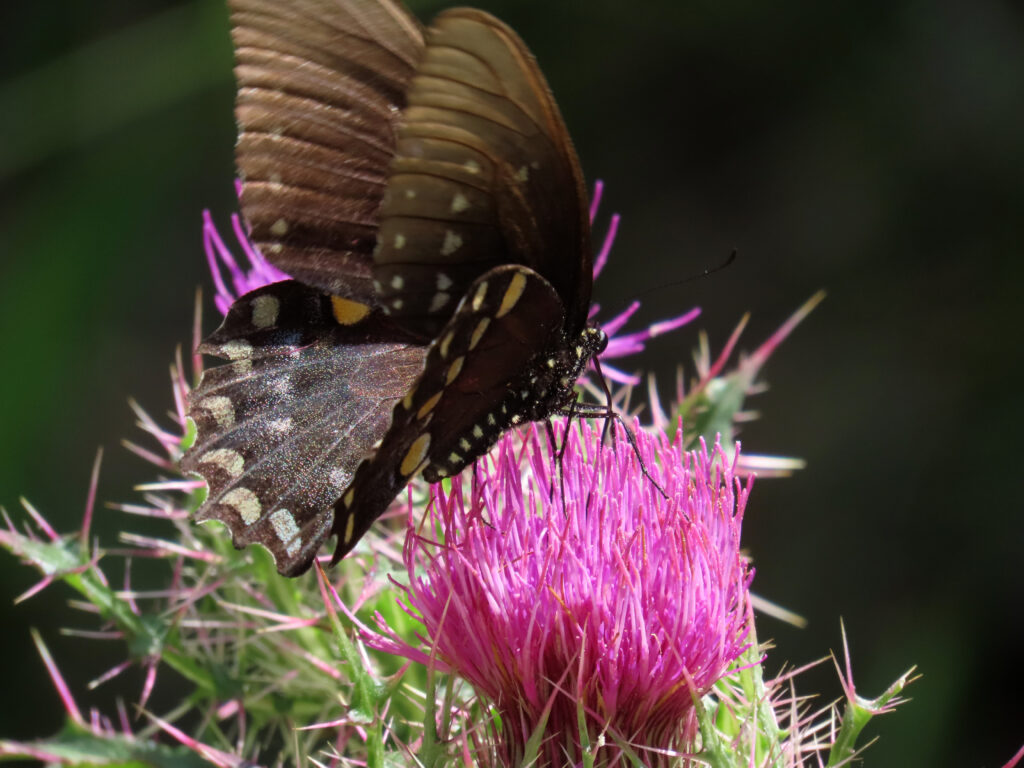
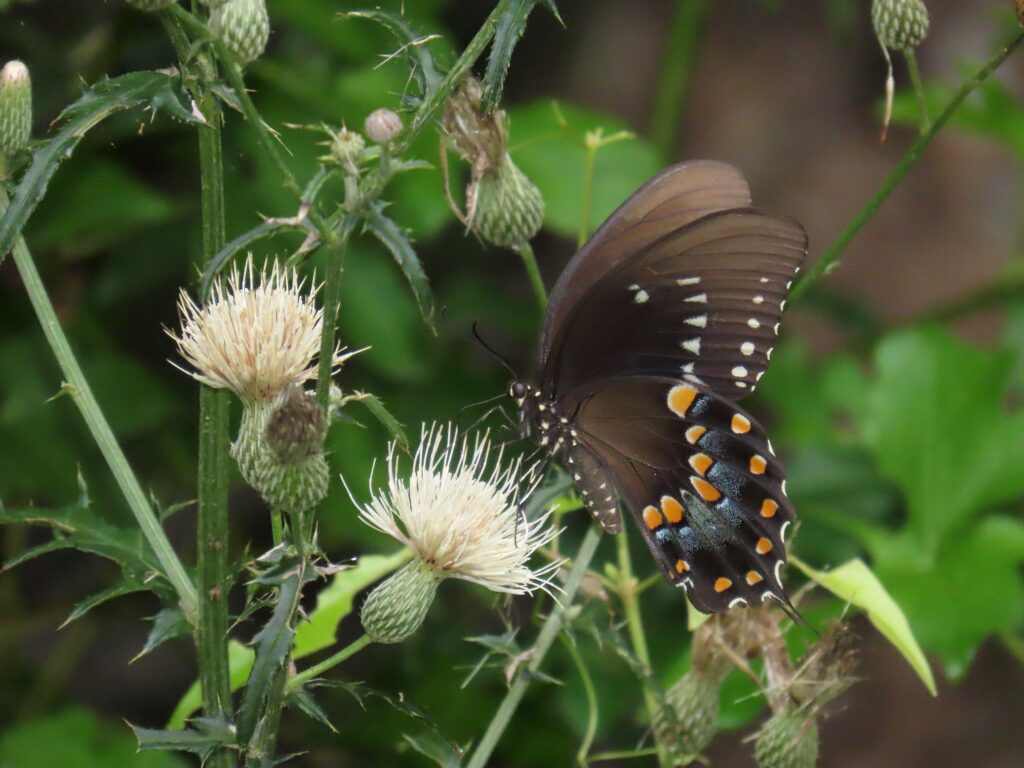
The wing patterns and colors of the Spicebush Swallowtail deliberately mimic another butterfly, the Pipevine Swallowtail (Battus philenor). The Pipevine Swallowtail looks much the same, but with deeper blue, darker black, and less yellow. The Pipevine Swallowtail hosts its caterpillars on, predictably, Pipevines (Aristolochia spp.). This is a clade of plants containing toxic aristolochic acid, which causes severe kidney damage in vertebrates and wards off most insects. Pipevine Swallowtail caterpillars are highly resistant to this toxin and even concentrate it into their bodies, to provide them a chemical defense against predators. This toxicity persists to adulthood and, as a butterfly, their striking blue and black colors serve as a warning to any would-be predators. This is called aposematic coloration. Spicebush Swallowtails, however, are not toxic. Yet they look much like their poisonous Pipevine parallel. This is called Batesian Mimicry, where a harmless animal pretends to be a different dangerous one for protection. The Spicebush Swallowtail also flutters its wings incessantly when drinking nectar, a characteristic shared with the Pipevine to maximize visibility.
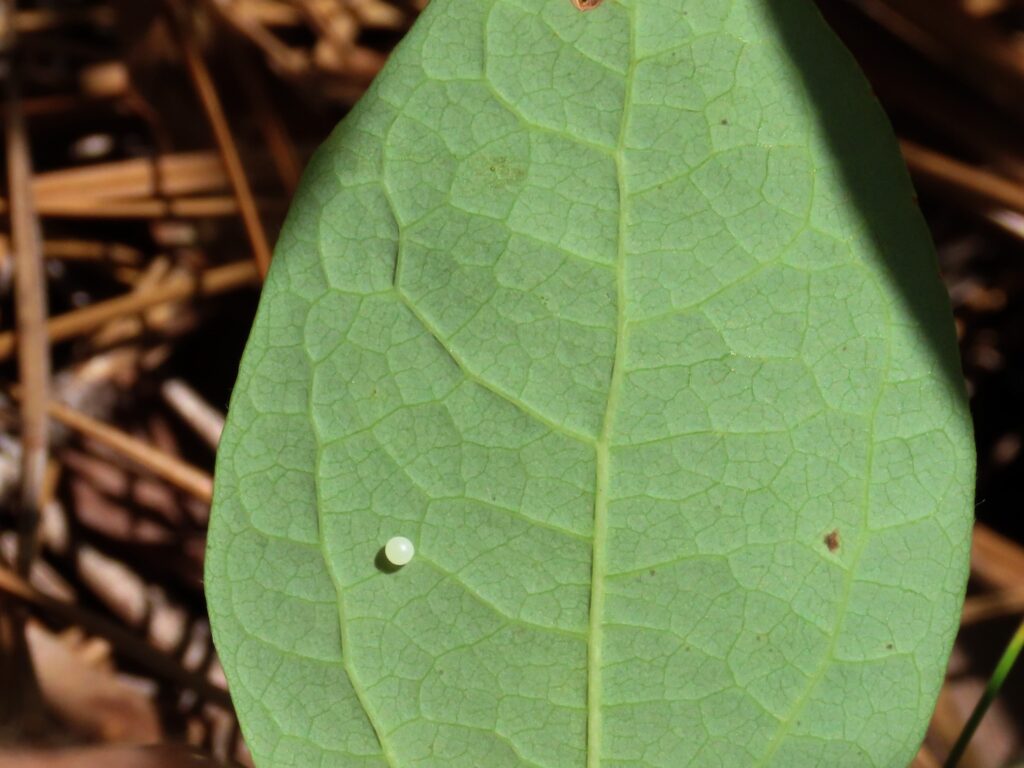
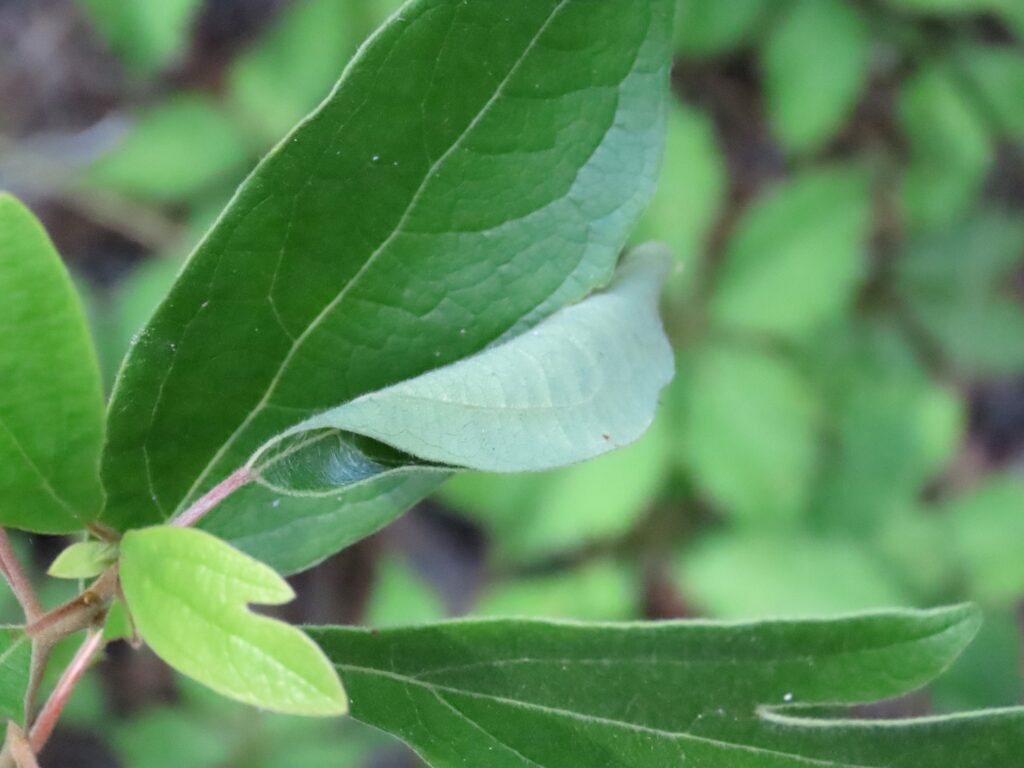
Spicebush Swallowtails host on a number of deciduous shrubs in the laurel family, Lauraceae, including Northern Spicebush (Lindera benzoin), Sassafras (Sassafras albidum), Sweetbay Magnolia (Magnolia virginiana). Their eggs are laid singly and their caterpillars are leaf folders. They spin silk from one edge of a leaf to the other. That silk then dries, contracts, and starts to bend the leaf upward. The caterpillar then bridges the gap across the top of the leaf, finishing the lengthwise fold and completing their new “leaf taco” home. They can then eat inward from the edge of this folded foliage while remaining hidden and secure. When young, Spicebush Swallowtail caterpillars are a mottled greenish-brown above and white below, to camouflage themselves as bird droppings. But once they grow into their final instars, they take on a solid emerald-green color and, just before pupating, turn a vibrant yellow-orange.
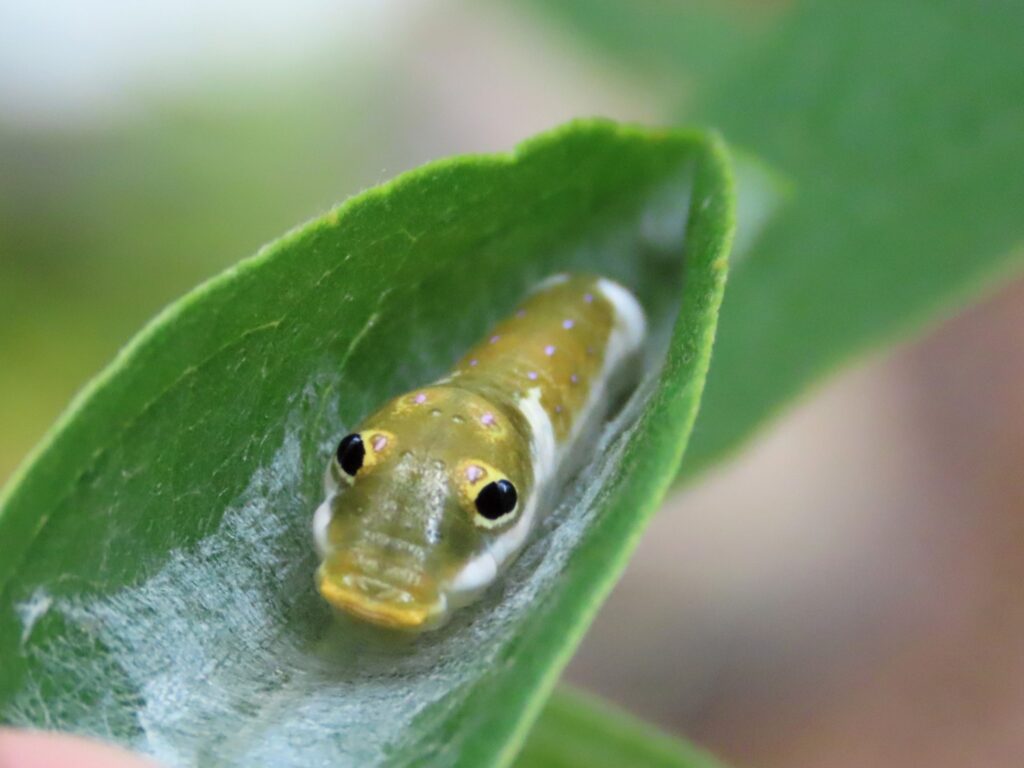
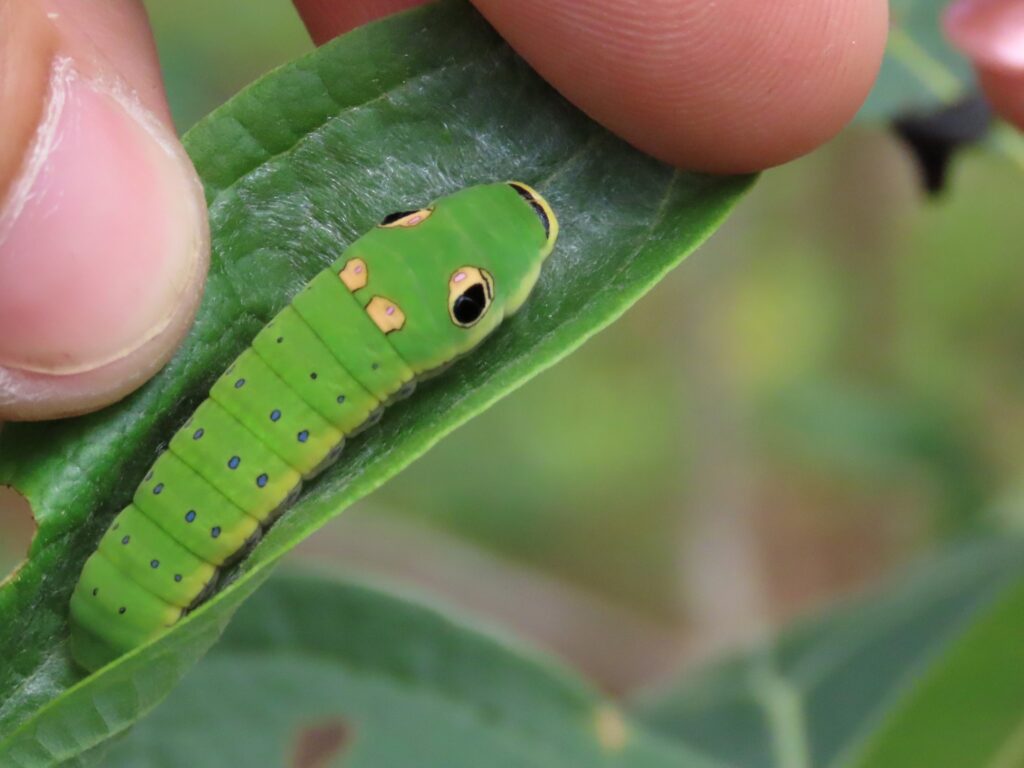
Each phase of the caterpillar’s development sports a pair of large black and yellow eyespots behind its head and a smaller set of yellow eyespots behind those. When disturbed, Spicebush Swallowtail caterpillars will lift their head slightly and swell the front of their abdomen between their eyespots, emphasizing those eyespots and giving their body an arrowhead shape. When harassed, they will unfurl a forked, foul-smelling orange osmeterium from just behind their head and will attempt to rub its stink on their aggressor. This whole display seems odd in a vacuum but is actually a brilliant form of mimicry. When in a defense posture, a green-phase Spicebush Swallowtail caterpillar is a dead ringer for a Rough Green Snake’s head, down to the right eye color and a correctly colored forked tongue! If you’re a songbird or a lizard swooping in for an easy meal and come face to face with the facade of a snake, you’re going to panic and skedaddle, no doubt.
Although the Spicebush Swallowtail’s caterpillar is quite distinct, its larva is very similar in appearance to the Palamedes Swallowtail (Papilio palamedes). The two differ in appearance subtly, with the silvery “eyebrow” of the Palamedes Swallowtail caterpillar sitting on the edge of its yellow eye-ring, while that brow is fully enveloped for the Spicebush Swallowtail, plus some other minute deviations. However, the two differ boldly in behavior. Palamedes Swallowtail caterpillars rest boldly, in fully display, upon the upper surface of a leaf just daring a bird to test their mettle. Conversely, Spicebush Swallowtail caterpillars cower and hide, quite wisely, within their leafy security blanket.
The Swallowtails, family Papilionidae, get their common name from the pointed projection trailing from the bottom edge of both their hindwings. These “tails” are reminiscent of the long, forked tails of Barn Swallows, which lent the family its name. Yet rather than being used for aerial acrobatics, butterfly tails are used for distraction and diversion. These tails are like visual chaff to any attacking bird, dragonfly, or spider. As the ambush commences, the predator comes in for the kill with a mere split-second to make a decision regarding a face full of fluttering wings. In that instant, these tails present an obvious target. The dangling tails resemble an insect’s antennae, where the head is, the kill shot. But the attacker instead only ends up with a mouthful dusty, papery wing. These tails, and the trailing edge of the wings they attach to, are quite fragile and break off easily, to ensure a clean escape if grabbed. Letting the butterfly live to flutter by another day.





© 2026 Edisto Island Open Land Trust.
Built by Colophon