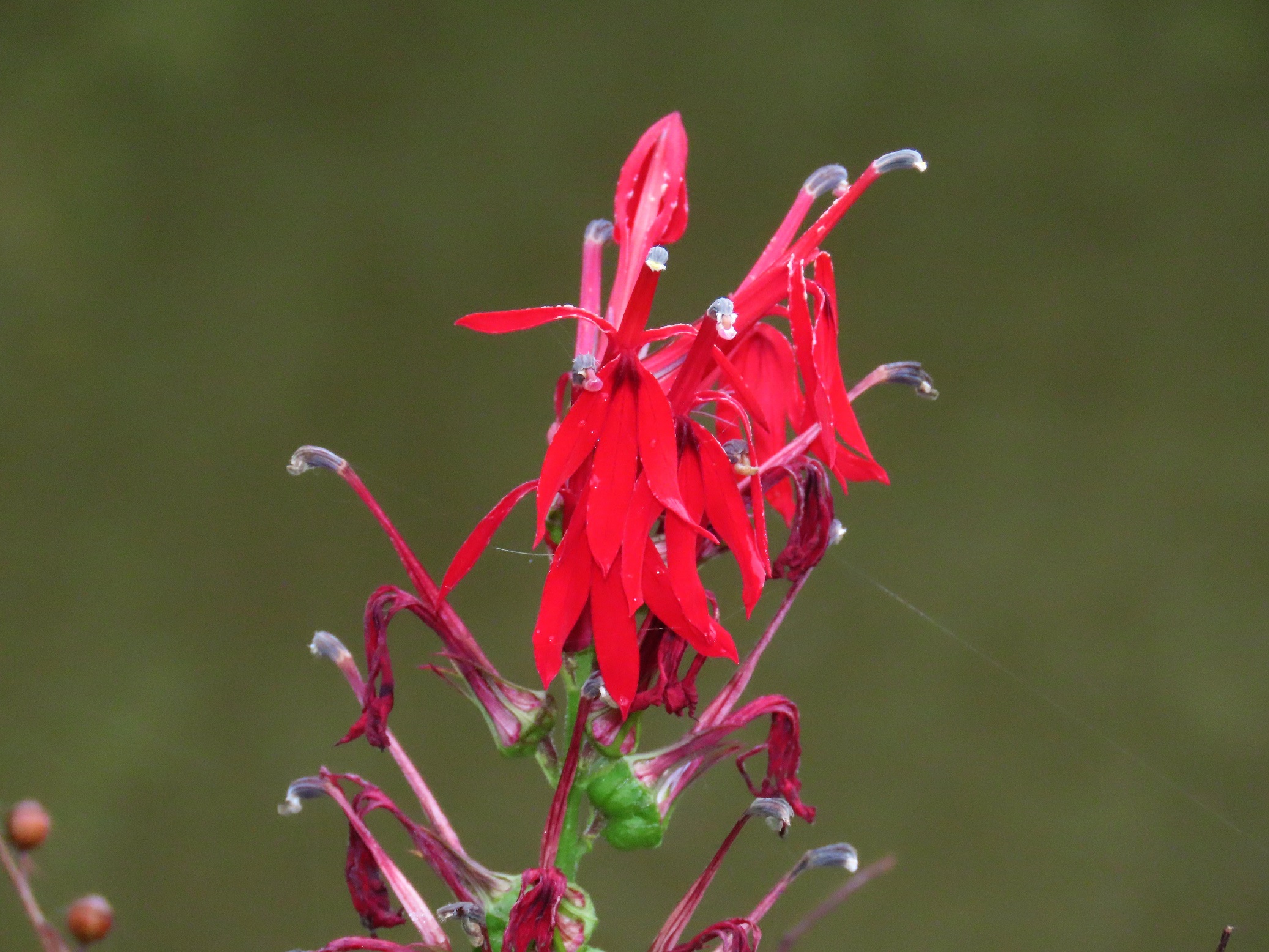
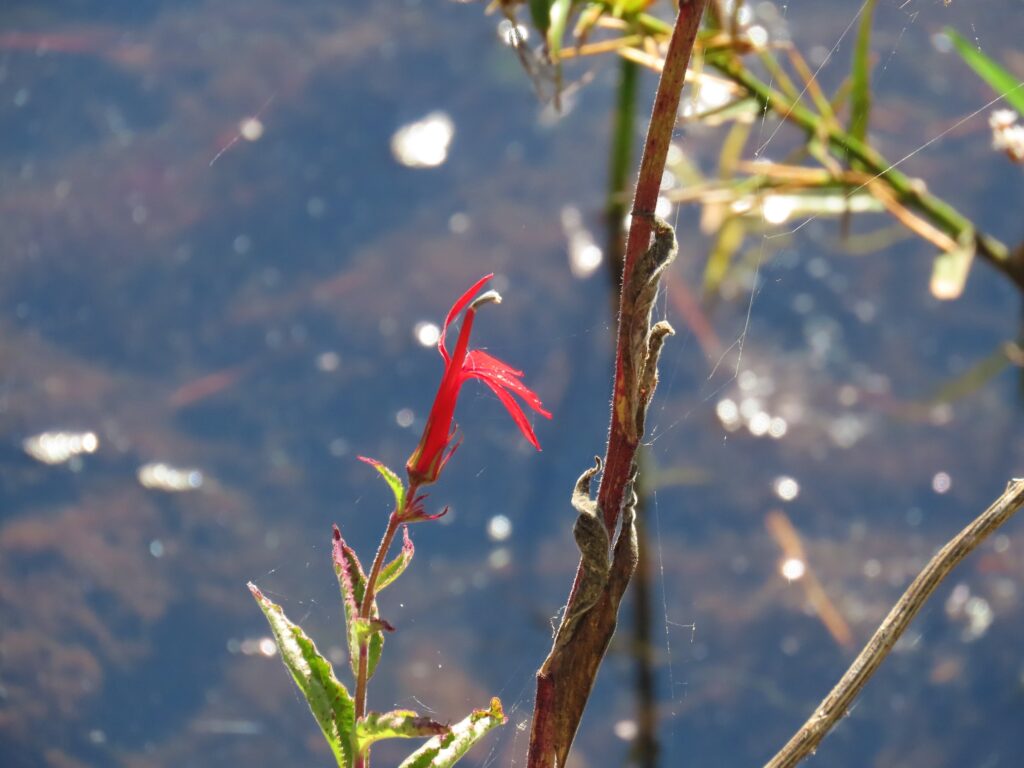
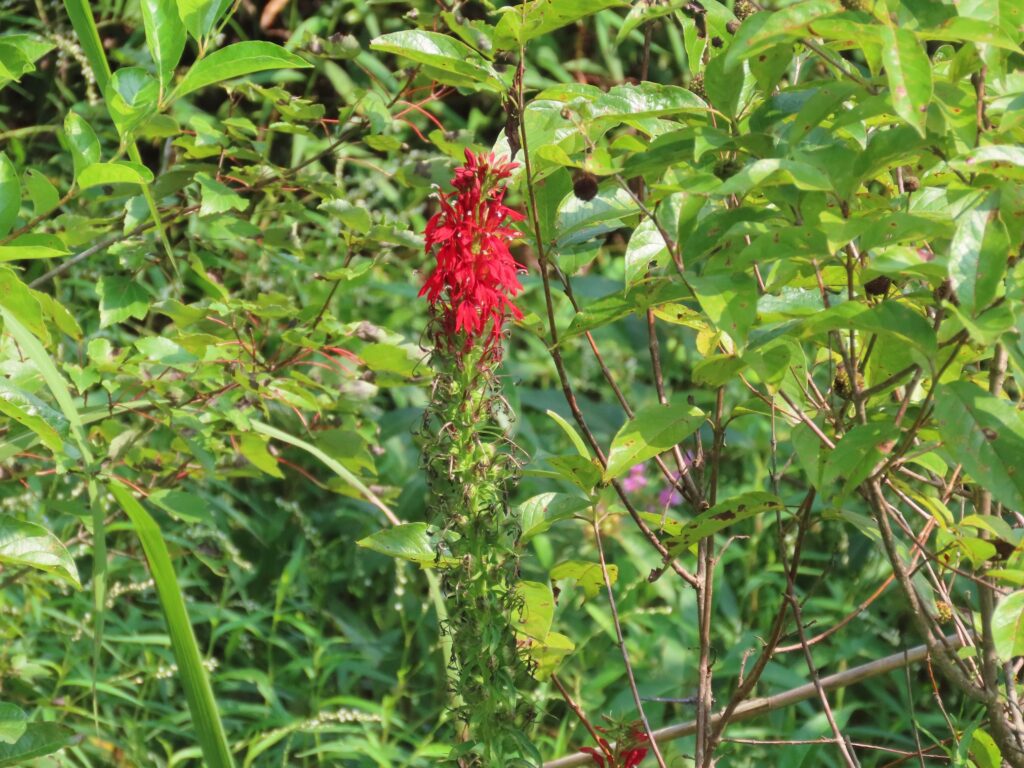
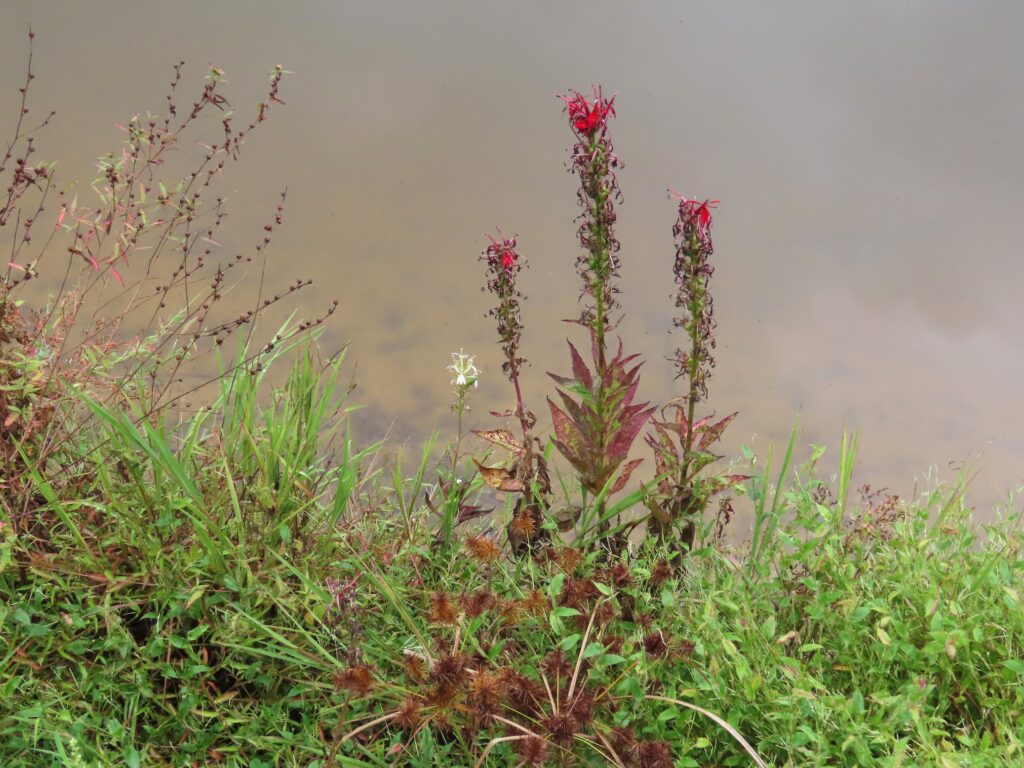
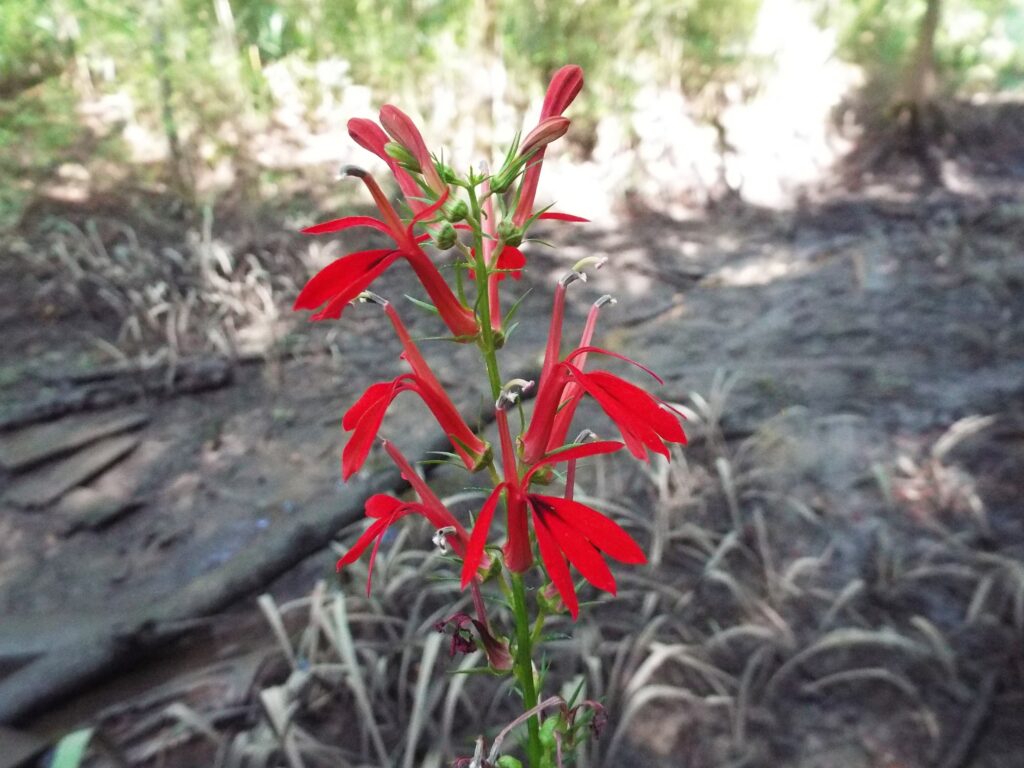
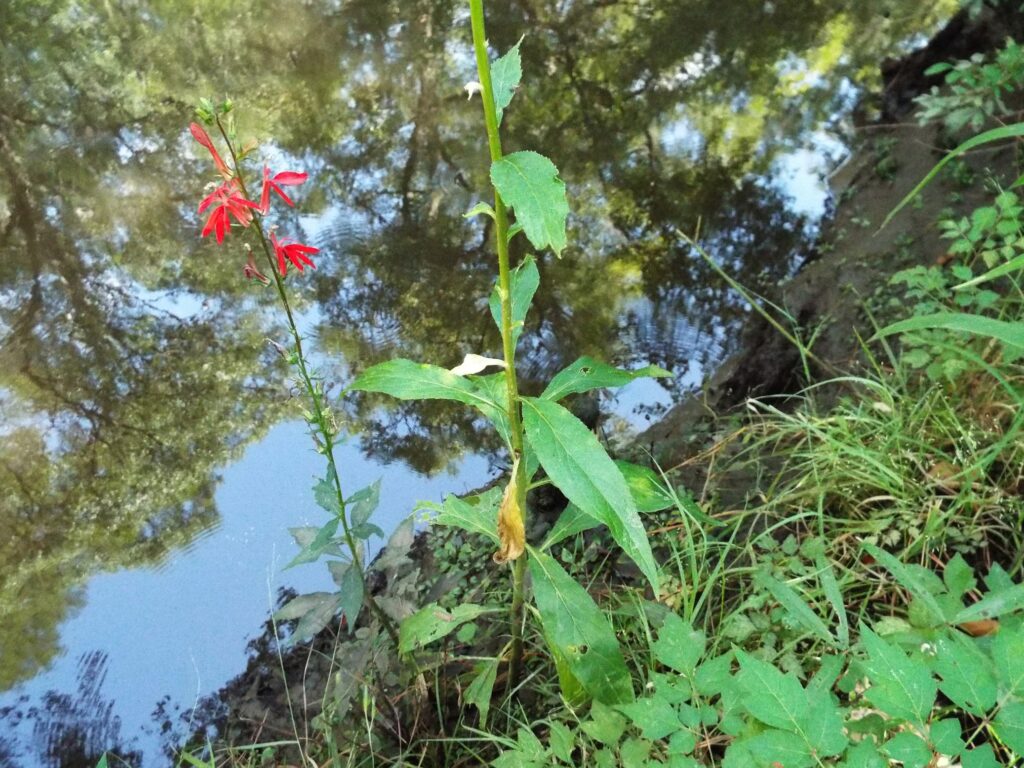
This week for Flora and Fauna Friday, we’ll admire the scarlet spire of stream and mire, Cardinal Flower (Lobelia cardinalis).
Cardinal Flower is one of about eleven species of Lobelia native to South Carolina and is the widest ranging Lobelia in the United States. Of those eleven, it is the easiest to identify by a mile! Most Lobelias grow to about two feet high, have a single thin stem, have but a few small leaves, and produce small blue or purple flowers, with many species having pale-purple flowers. Cardinal Flower on the other hand towers up to four feet tall, has abundant long and fairly broad leaves, a lone stout stem, and large, brilliant scarlet-red tubular flowers. There’s nothing else like it!
The primary pollinator for Cardinal Flower is the Ruby-throated Hummingbird, which their flower is specially shaped to accommodate. Brilliant red flowers are like neon lights for hummingbirds, and their tubular shape ensures only the largest of pollinators can reach the abundant pool of sugary nectar nestled deep within. Each flower has five narrow petals, with three pointing downward and the other two pointing to either side. It’s a shape that forces pollinators to approach from above and makes the flower hard to land on. That’s a difficult task for a bee or wasp, but child’s play for a Hummingbird. Standing at the top of this flower is a pillar that’s tipped with its anthers and stigma, one appearing before the other, respectively. These are perfectly positioned to tickle the back of a hummingbirds head when it buries its bill in the bloom to gulp down nectar. As that buzzing bird bobs between blossoms and systematically sips from stems along the side of a stream, it moves pollen around with ease and efficiency between the isolated patches of Cardinal Flower. This ensures cross-pollination for that local Cardinal Flower population and a more diverse gene pool for its descendants. Apart from Hummingbirds, assorted sphinx moths and some longer tongued butterflies, like swallowtails, Cloudless Sulphurs, and Clouded Skippers, will also frequently visit Cardinal Flowers to sneak a sip of nectar.
Here in South Carolina, Cardinal Flower is most abundant in the Appalachian Foothills down through the Piedmont to the Fall Line. Although rarely found on the Sea Islands, it can still be found here and there across the wider Lowcountry. It grows best in the wild along flowing freshwater streams, creeks, and rivers, especially on sunny stream banks and bars. You don’t normally find it in stagnant swamps or sloughs, nor isolated dug ponds, but it will line the shores of lakes and ponds created by impounding the natural flow of streams. It can also do well when planted in a wetland garden or peppered into the periphery of a freshwater pond or canal.