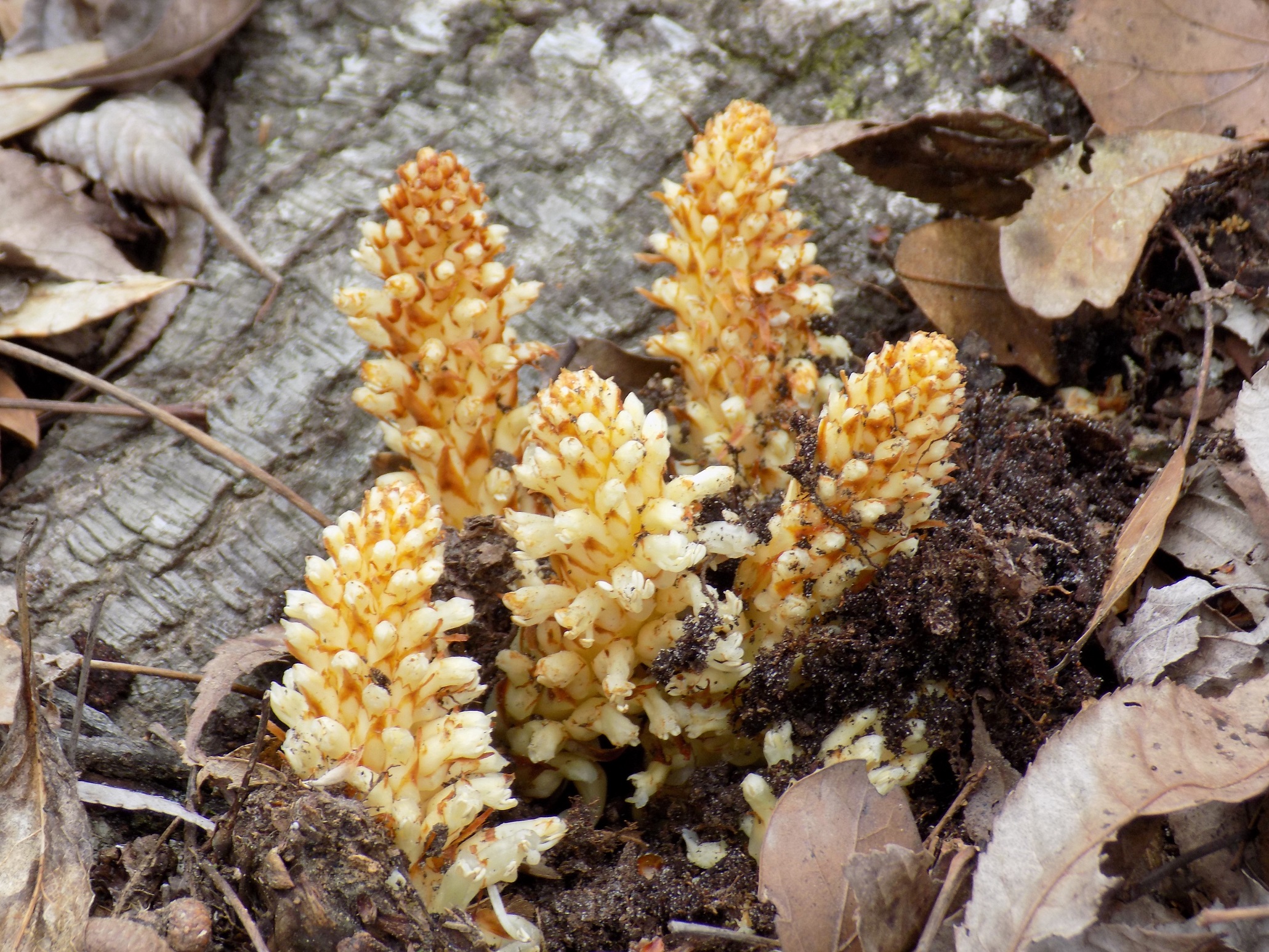
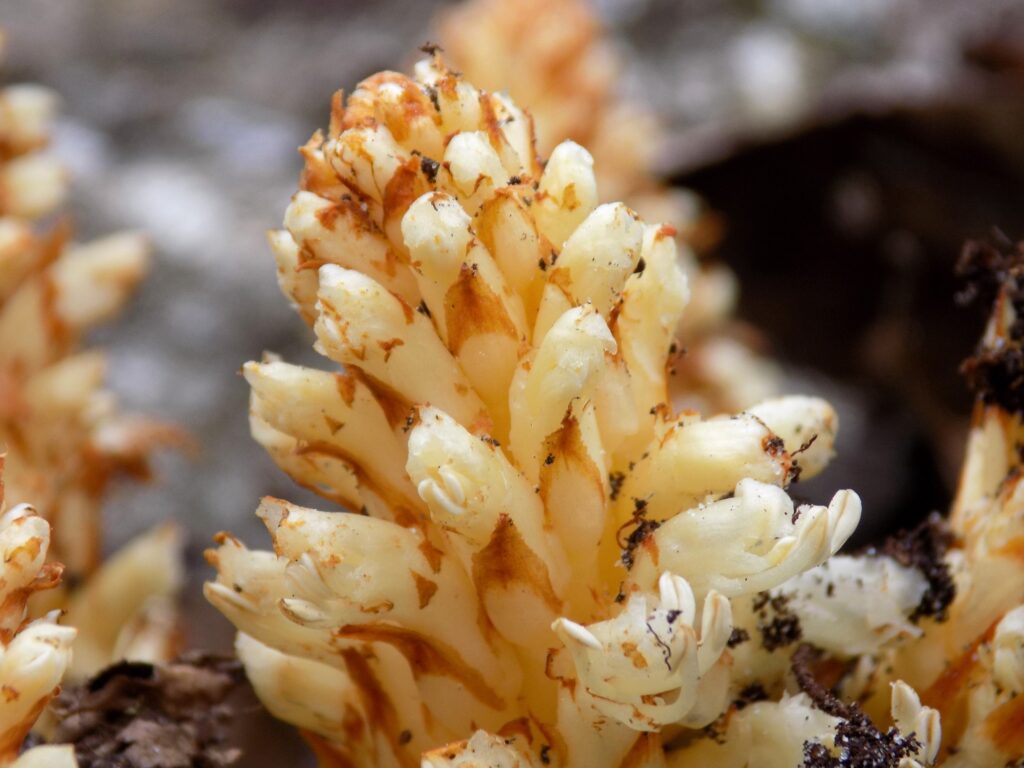
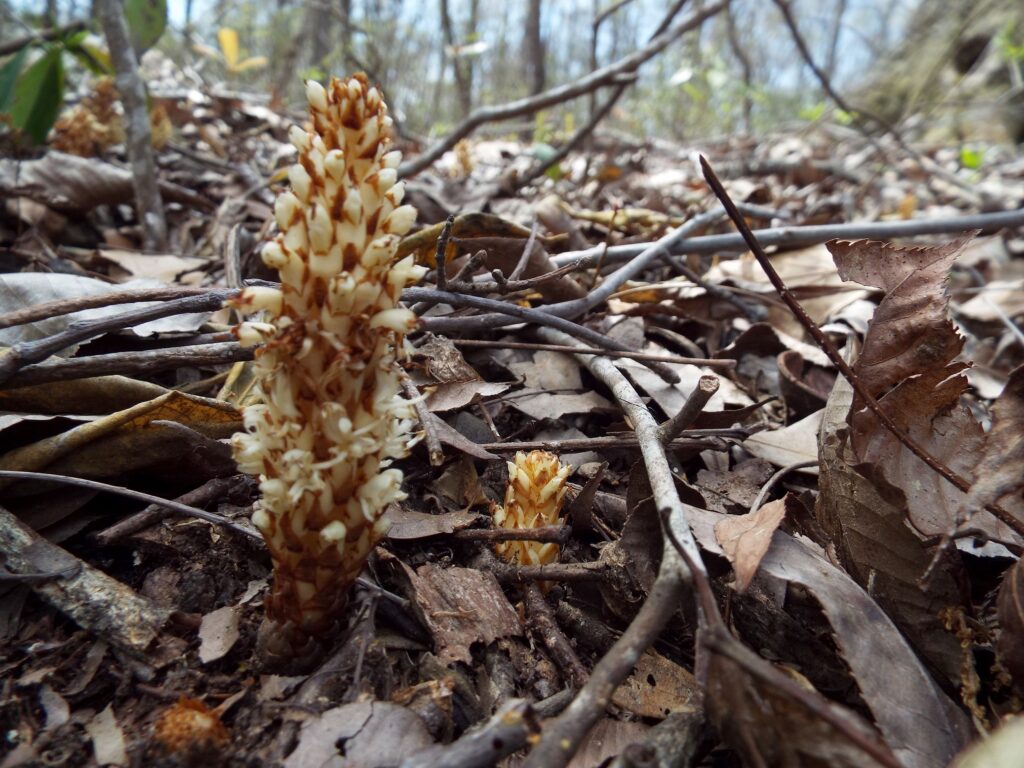
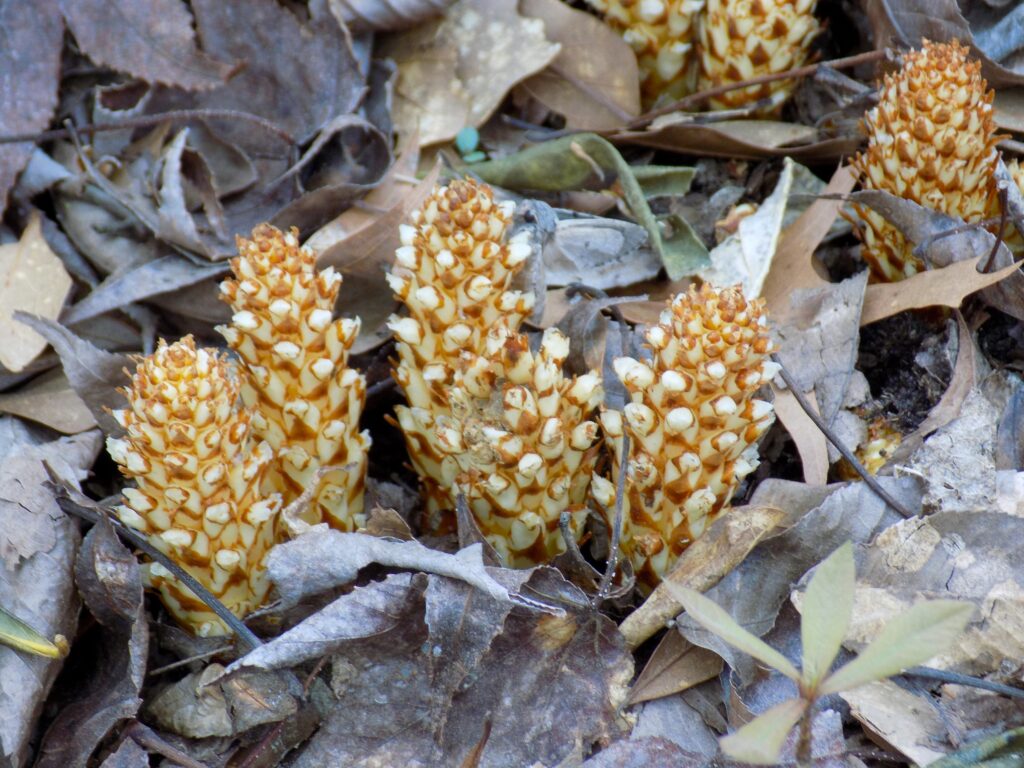
This week for Flora and Fauna Friday it’s another subterranean parasitic plant, Bearcorn (Conopholis americana).
Bearcorn, AKA Squawroot or American Cancer-Root, is a non-photosynthetic, parasitic, subterranean angiosperm. Much like Indian Pipe, which I’ve written about before, it lives its life entirely underground and is only visible when it blooms. However, unlike Indian Pipe, Bearcorn blooms in spring rather than fall and it belongs to a different family of plants, Orobanchaceae. This family of plants is well known for their ability to parasitize the roots of other plants, Bearcorn being no exception. Bearcorn is holoparasitic, meaning it survives entirely from parasitism and its cells contain no chlorophyll. However, unlike Indian Pipe, it parasitizes other plants directly rather than indirectly through the mycorrhizae. Bearcorn taps directly into the roots of an Oak tree, specifically one of the Red Oaks, and siphons off both calories and nutrition while forming a root gall underground. In early spring, Bearcorn blooms with a cluster of flower spikes, thick and creamy-yellow in color. These flower stalks are short and cone-shaped. Their resemblance to tiny corn cobs and palatability to wildlife earned them that common name of “bear corn”. The flower stalks can persist for several months and eventually wither into a dry brush-like shape. This makes it easier to detect for several months after but the flower’s full display is only short-lived.