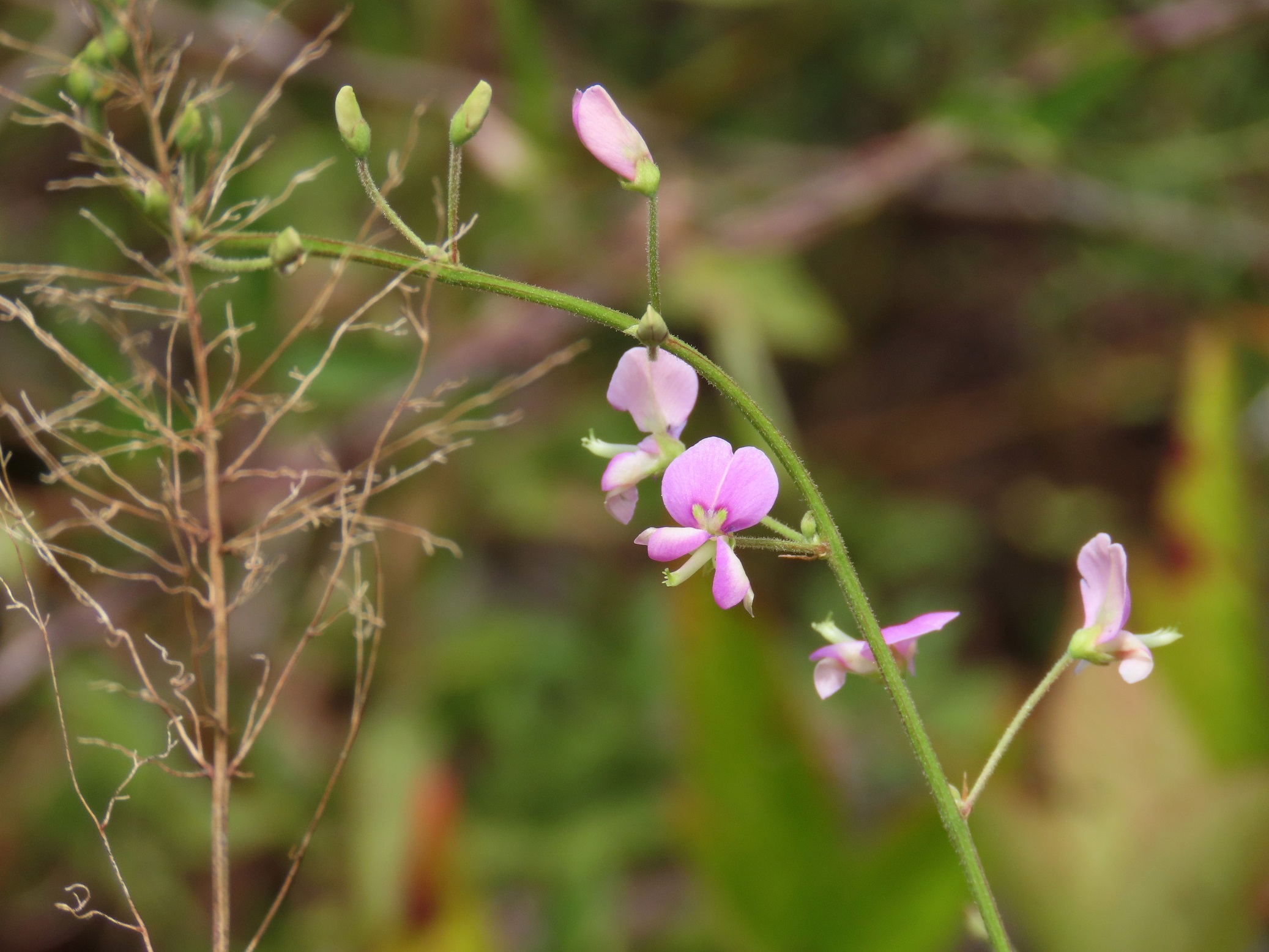
This week for Flora and Fauna Friday, we’re picking up hitchhikers from the Tick-trefoils (Desmodium spp.).
Here is South Carolina we have roughly eighteen species of Tick-trefoil found around the state. All of them share several traits that make them readily identifiable to genus. Yet to get one down to species, I hope you enjoy dichotomous keys! I won’t leave y’all entirely high and dry today though. There are three Tick-trefoil species I encounter pretty often around the Edisto area, which are relatively easy to identify and worth highlighting: Panicled Tick-trefoil (Desmodium paniculatum), Sand Tick-trefoil (Desmodium lineatum), and Twisted Tick-trefoil (Desmodium tortuosum).
Overall, Tick-Trefoils are small herbaceous legumes that grow up to around knee height. They typically thrive on drier soils. They have trifoliate compound leaves and small, quarter-inch hot-pink pea-flowers. Their seedpods are long, flat, fuzzy, and jointed. Like a Toblerone viewed from the side, just hairier. The shape and profile of these seedpods varies between Tick-trefoil species and can be quite useful in telling similar looking species apart.
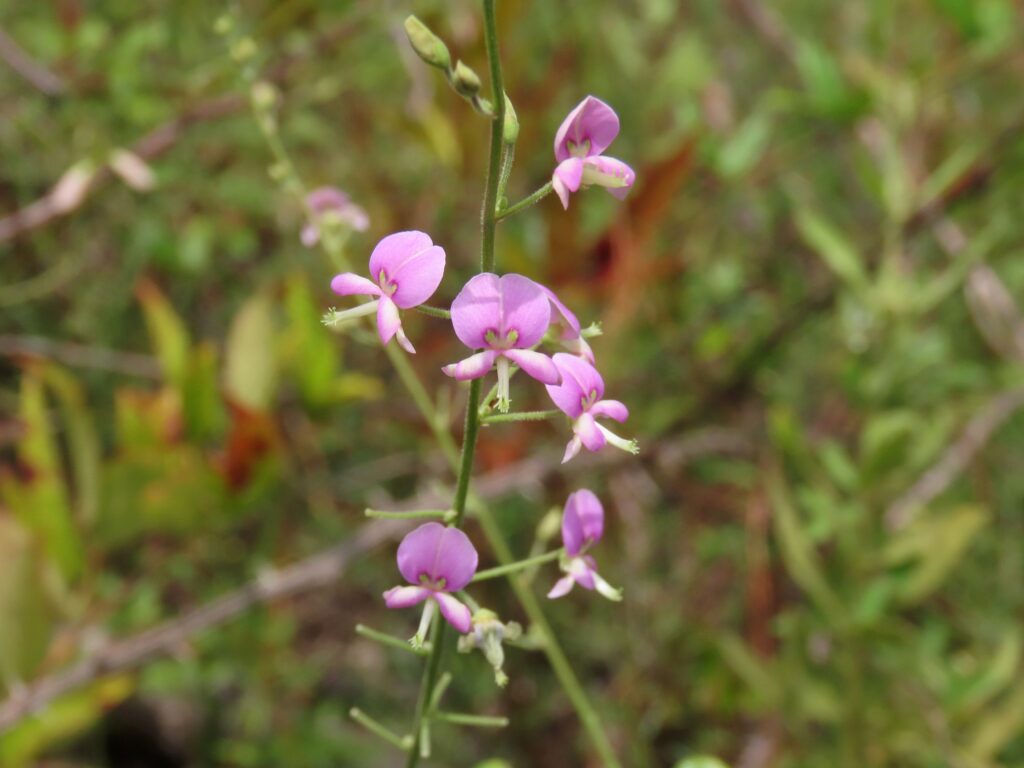
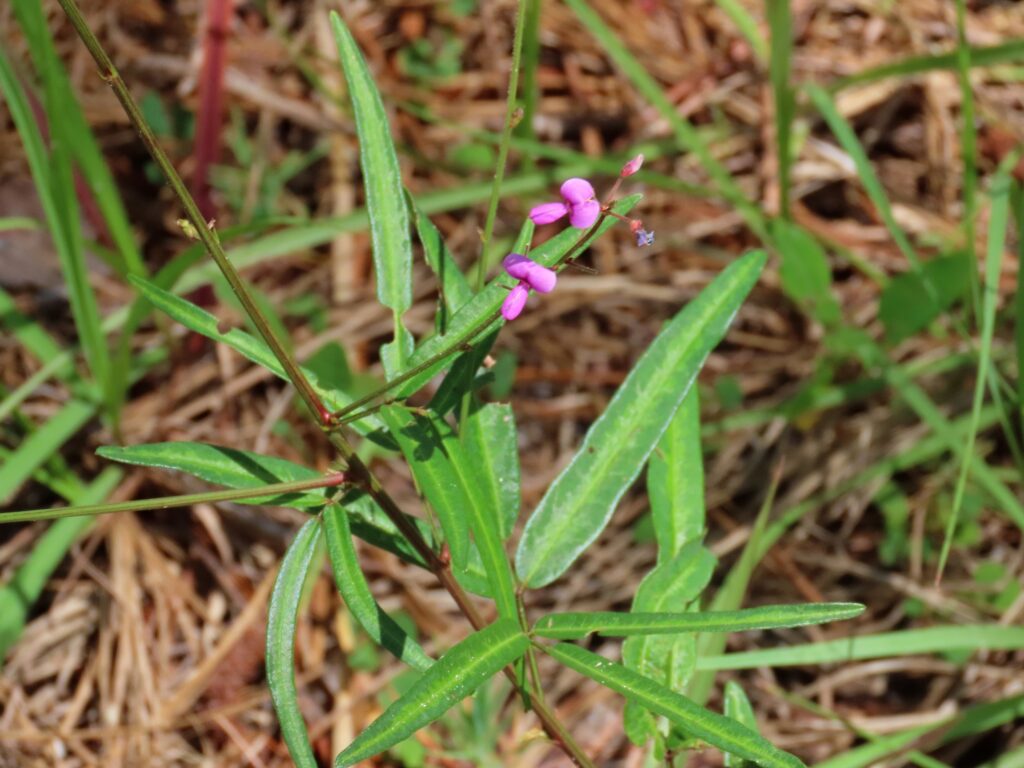
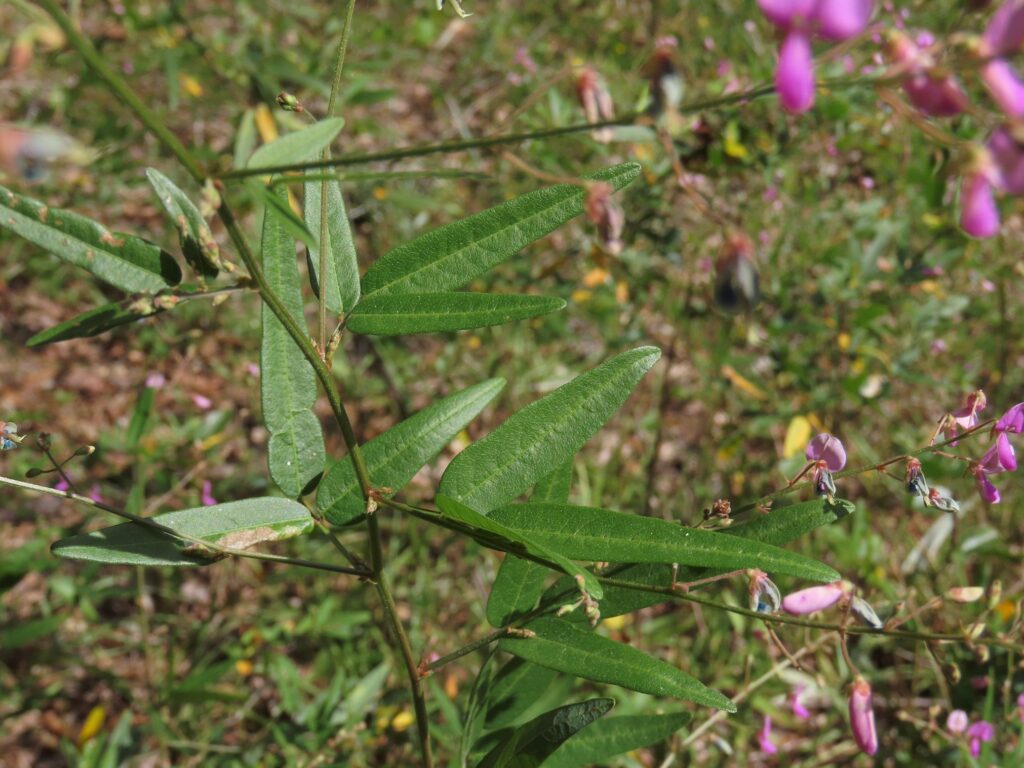
Panicled Tick-Trefoil is one of the most widespread Tick-trefoils in the Eastern United States, is found across South Carolina, and in my mind is the proto-typical species I imagine for this genus. It is perennial and grows abundantly in pine savannas, forest openings, roadsides, and old fields. It reaches to between knee and waist height and has thin, wiry stems. Its leaflets are fairly narrow, often pointed, are a deep green above sometimes with a faint streak of pale variegation down the midvein, and have a slightly cupped, recurved margin. It produces a panicled flower stalk bearing roughly a half-dozen flowers at once. These flowers are a quarter-inch wide, hot-pink with two yellow spots towards the center, and have that typical pea-flower shape of most legumes. Its seedpods are normally three seeds long, each with a right triangle in shape.
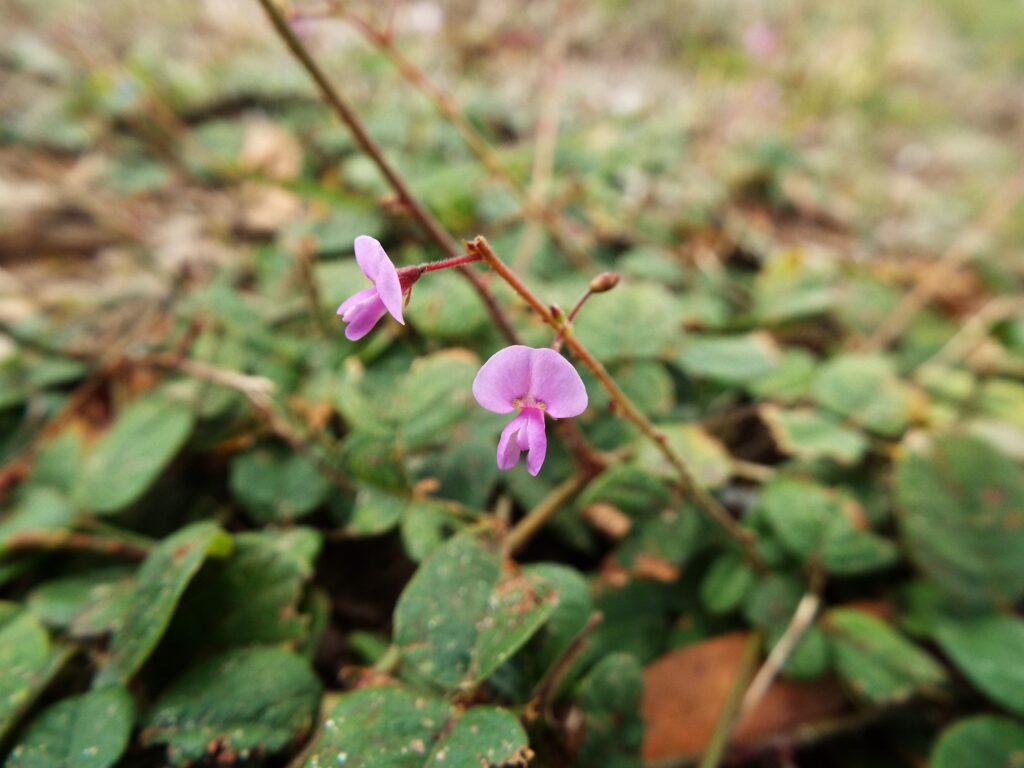
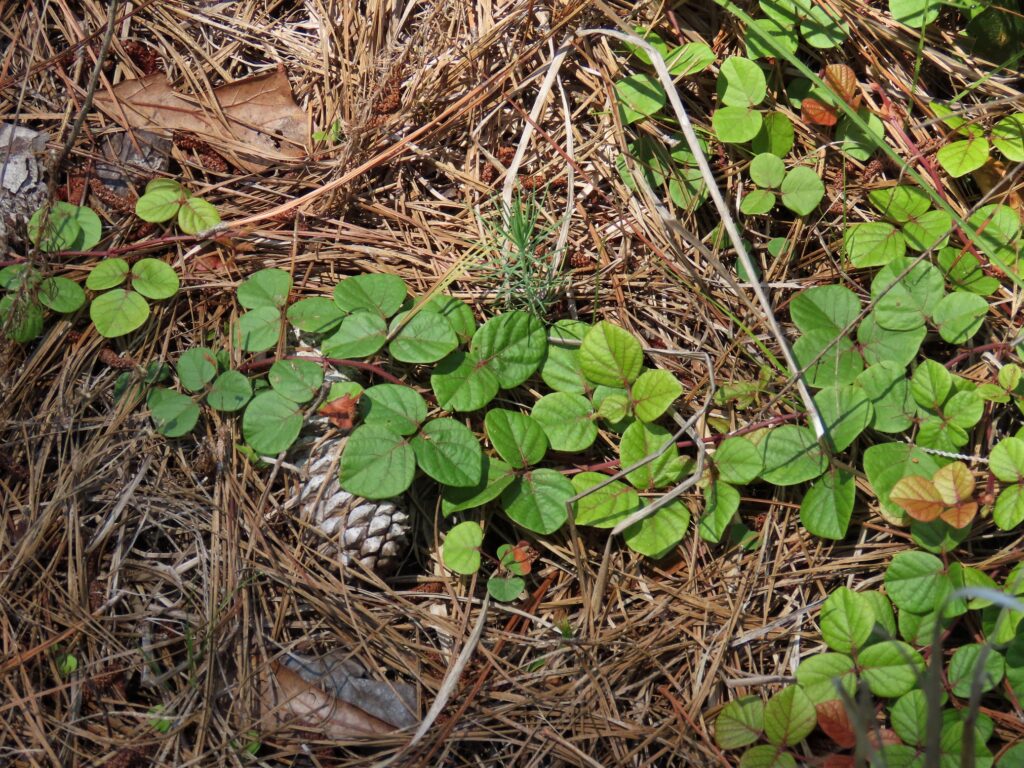
Sand Tick-Trefoil is mainly found in the Coastal Plain and Sandhills of South Carolina in dry pine savannas and coastal sand ridges. It grows as a prostrate groundcover, making it more resilient to fire, mowing, and herbivore browse. It has rounded leaflets, each about the size of your thumbnail, and of an emerald-green color with sunken veins. It bears upright flower stalks, reaching around a foot high, capped with a panicle of quarter-inch hot-pink pea-flowers, looking much like the inflorescence of Panicled Tick-Trefoil. Its seedpods are three to four seeds long and each rounded in shape.
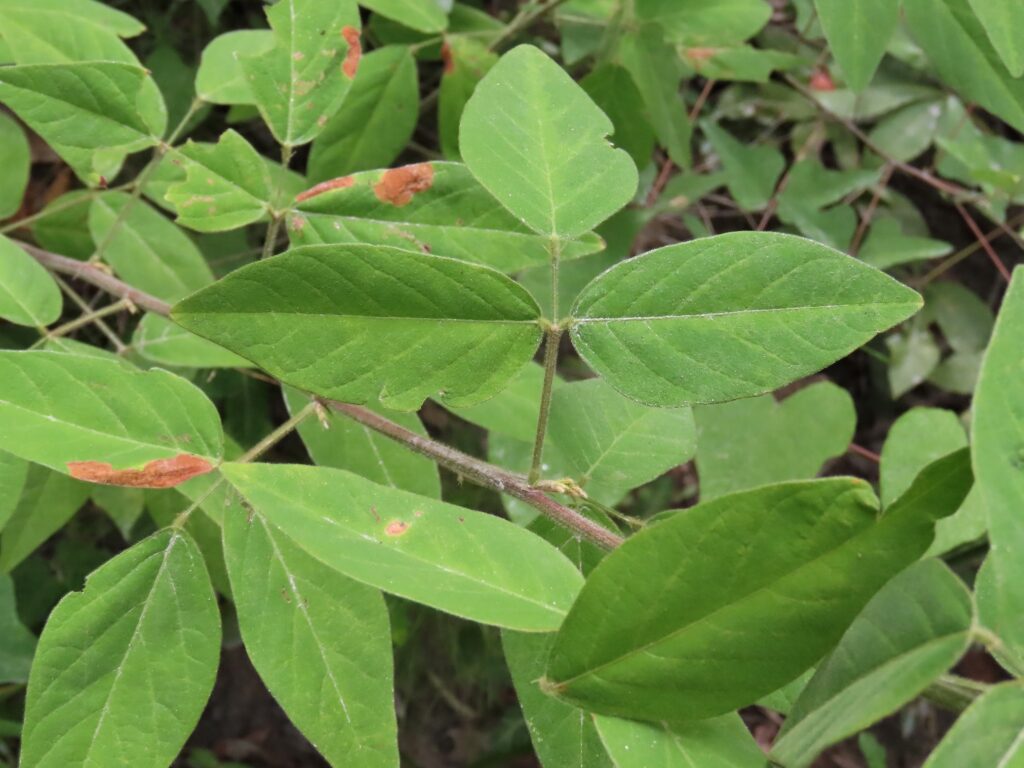
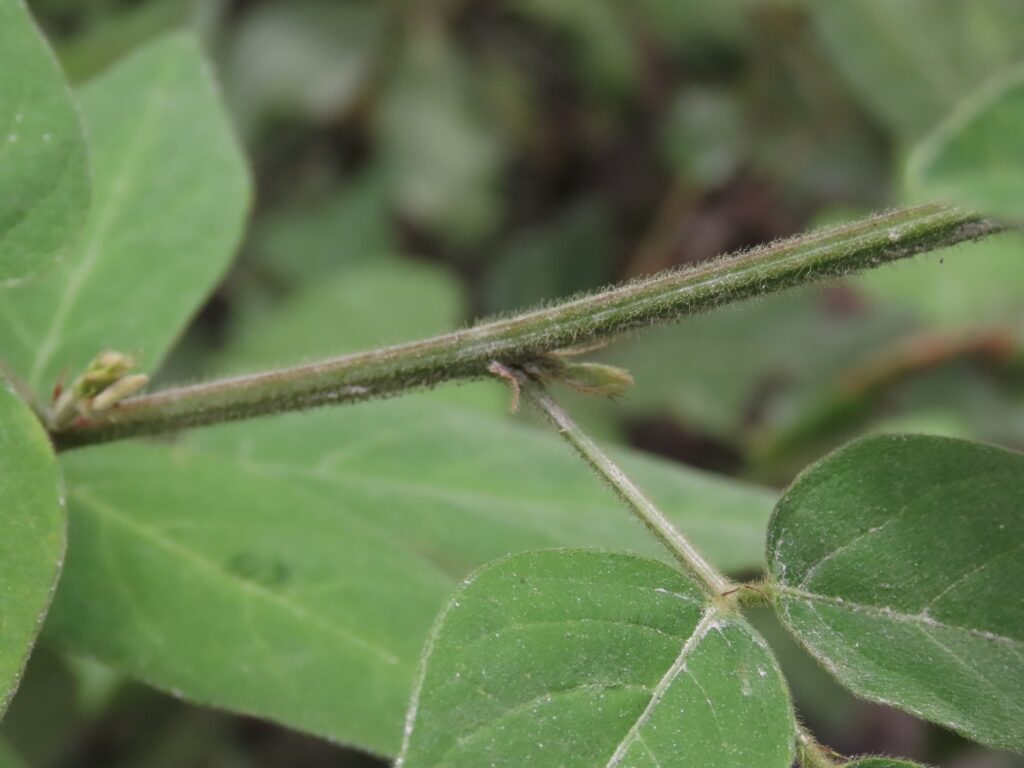
Twisted Tick-Trefoil is found mostly below the Fall Line in South Carolina, mainly in disturbed areas, fields, and along roadsides. It’s not certain to botanists whether it’s native to Florida and the wider Southeast, or if it was a stowaway from Mesoamerica. Regardless, it is here now, is abundant throughout the state, and gets around as a common component in many food plot seed mixes. Twisted Tick-Trefoil grows waist to head high in good conditions on a fairly heavy stem showing prominent nodes and covered in fine hairs. It tends to be an annual but will sometimes persist as a shot-lived perennial. It is quite leafy for a Tick-trefoil and has large, velvety, diamond-shaped leaflets that sometimes show small purplish spots. It will flower at the top of its leading stems with a tight knit panicle of (say it with me) quarter-inch hot-pink pea-flowers. These flowers mature into seedpods with a distinct wavy, twisted shape. Each section is almost spherical and six to seven seeds long.
Tick-trefoils get their common name from their seedpods. These seedpods fracture at their joints when mature and the short, stiff hairs covering them function like Velcro. They’ll adhere to any passing mammal’s fur that brushes against them, hitchhiking far afield. If you’ve ever trekked through a pine savanna in fall, or had a dog that can’t help but follow its nose, you know what these seedpods look like and how well they can stick! This is an effective seed dispersal strategy as it hijacks the motility of mammals to move around its offspring, allowing their seeds to be larger without the parent plant needing to invest in a calorie rich fruit bribe. Yet, Tick-trefoils might actually be doing both.
As a protein rich legume, the leaves of Tick-trefoils are some of the most highly desirable forage to herbivores, especially White-tailed Deer. Deer think with their stomachs, and their gut instinct is to eat every Tick-trefoils they encounter! This might seem like a death sentence for our little legume, but it might actually be part of their master plan. Tick-trefoils don’t have any special herbivory defenses against vertebrates, no prickles, spines, nor nauseating toxins. They just leave their guard down and tolerate the consequences. They bear few leaves overall, and will regenerate foliage quickly if browsed. But, that also means they are training the local deer population to go out of their way to visit them regularly. What a perfect ploy to saddle these four-legged interlopers with their triangular seeds. Rather than investing energy in coating their seeds in a delectable fruit or defending their foliage with point and poison, the Tick-Trefoil simply saves those resources to regrow its leaves on a whim. A character trait that also confers great resilience to fire.