


This week for Flora and Fauna Friday we’re trying to find and divine the secrets of a native vine, Peppervine (Nekemias arborea).
Peppervine is a hardy, perennial vine found throughout the Southeast and the Coastal Plain of South Carolina. It’s most often found on damp soils in open sunny areas, such as pond banks and dams, fence lines, hedges, brush piles, clearcuts, and ditches. But it may pop up just about anywhere that’s sunny with sufficient water. The plant is overall hardy and long-lived, and can survive regular fire, mowing, and grazing without much issue. Peppervine is a member of the grape family, Vitaceae, and so shares a few common characters with grapes.
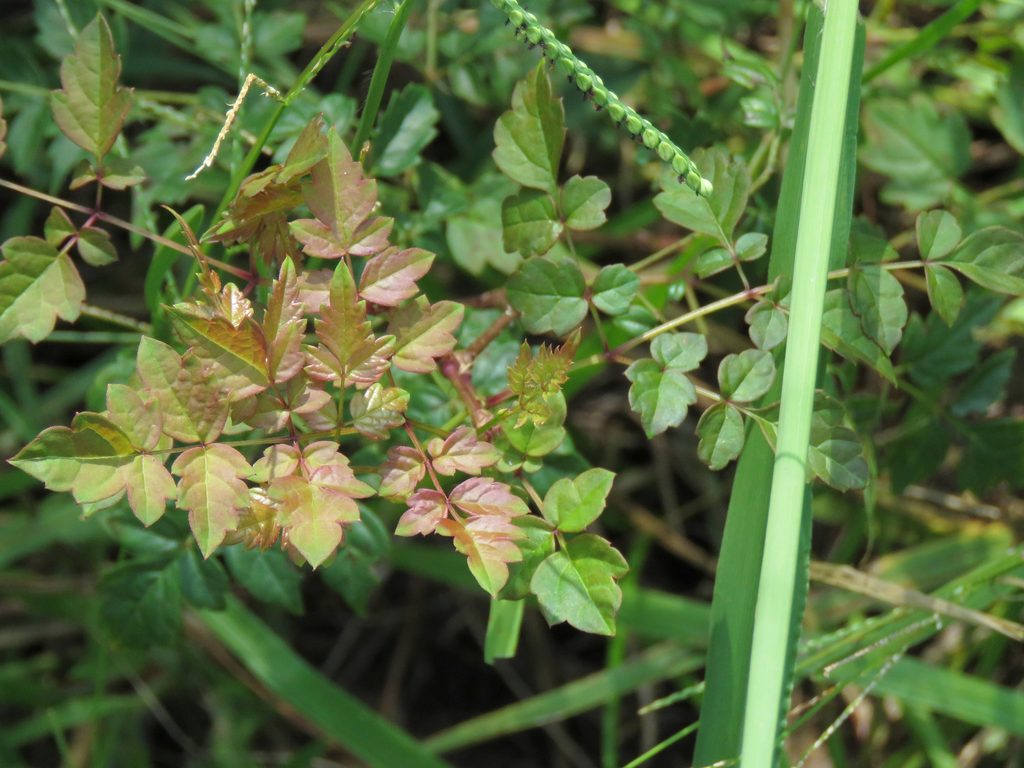
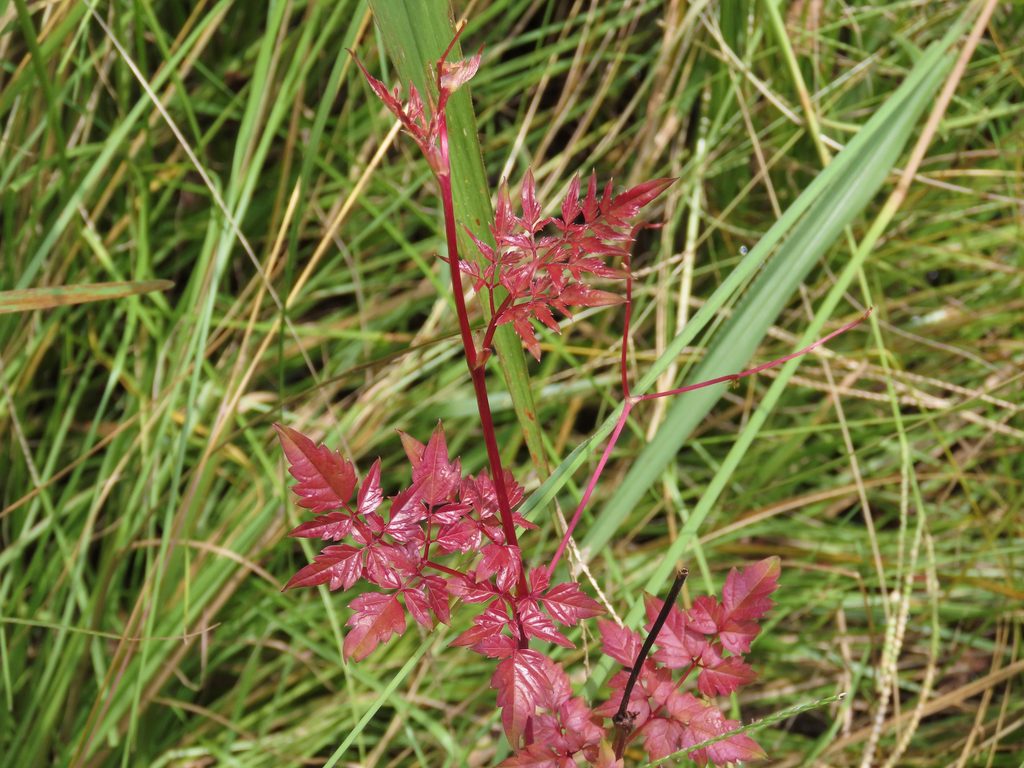
Peppervine’s vines are woody and tough, they often zig-zag between each node, and their bark is a warm gray-brown with small corky lenticels. Peppervine often stays low, around head height. Yet it can climb far higher if the occasion calls for it and will climb over fences, woody shrubs, and debris with ease. Peppervine climbs with tendrils, which wrap around, dry, and set, like a zip-tie pulled tight, to anchor the vine to its surroundings. Its tendrils are modified leaves, which have been essentially reduced to just a petiole. These tendrils always appear opposite of a true leaf. Thus the leaves of Peppervine are technically oppositely arranged, but in practice they appear alternate. (However, sometimes they can have two leaves opposite each other.) The leaves of Peppervine are quite distinct being large, triangular, and tri-pinnately lobed. Young leaves unfurl with a shiny burgundy or coppery color, dyed with pigments to protect them from the harshest of the sun’s rays, which fade to a glossy deep-green with reddish petioles as the leaves mature.
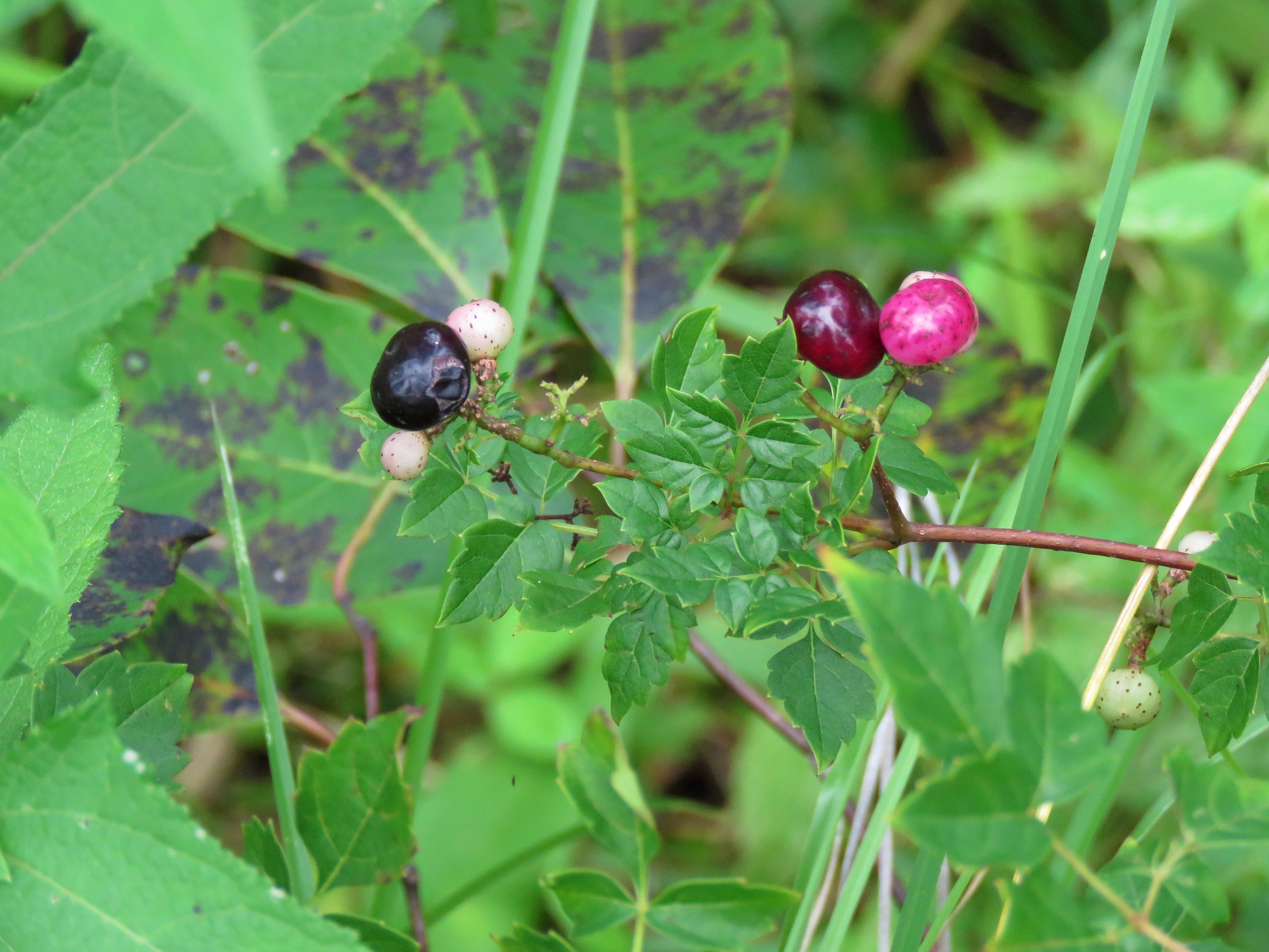
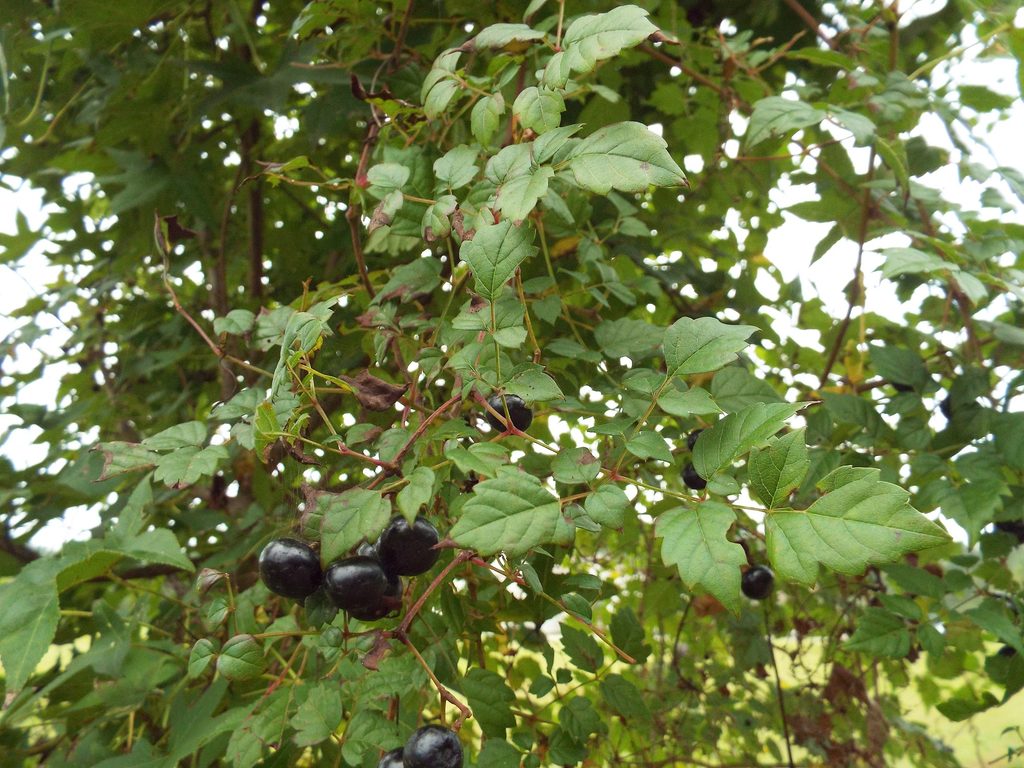
Peppervine blooms at the end of April, but can sometimes produce a second flush at the end of summer. Its blooms are a compact burst of tiny pale green flowers. These blooms are exceedingly subtle and very hard to notice, except for when they are abuzz with bees! Peppervine flowers are extremely attractive to our native bees and wasps, and are often swarmed with insect activity. These flowers will mature over summer into bunches of spherical berries, which start out white before changing to magenta, red, and then black when ripe. These berries are highly sought after by birds, who stuff them down their gullet with glee. Those birds then fly to far flung places and leave the Peppervine seeds behind, distributing the plant across the landscape.
Although they may look enticing, be warned, Peppervine berries are not recommended for human consumption! These berries contain high concentrations of insoluble calcium oxalate crystals, which are like microscopic glass needles. So popping a raw berry in your maw is like chowing down on fiberglass. This causes instant tingly, stinging pain, and irritation to the mouth and throat as those needles piece your mouth and cause chemical burns. That teaches a swift lesson and folks rarely do it again. So there is no serious health risk to eating the berries, apart from the agony and all. Long term consumption of calcium oxalate can lead to painful kidney stones. Despite this, there are methods for preparing the berries to remove the calcium oxalate crystals. Even so, the berries apparently vary tremendously in flavor from plant to plant. Some have a sweet, peppery, spicy taste to them. Others are tasteless and others more are horrendously bitter. So I personally don’t recommend eating them. (There are much better things to forage for in early fall.) Unrelated to the fiberglass fruits, Native Americans purportedly used the foliage as part of a cold remedy.





© 2026 Edisto Island Open Land Trust.
Built by Colophon