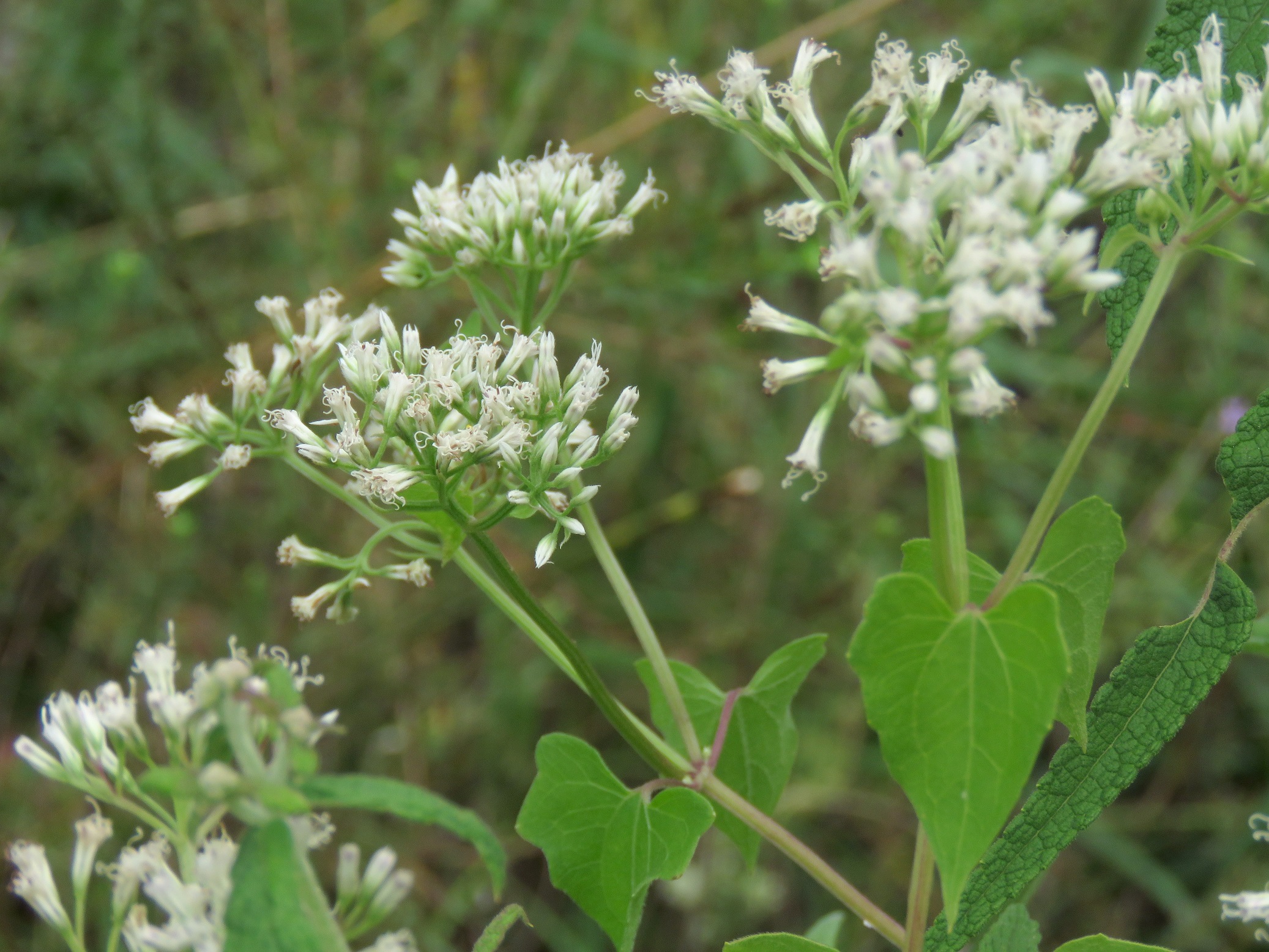
This week for Flora and Fauna Friday, we have a pair of plants on which pollinators dance, the Hempvines (Mikania spp.).
Here in the Lowcountry, we have two species of native Hempvine, Climbing Hempvine (Mikania scandens) and Florida Keys Hempvine (Mikania cordifolia). The former is a well-known species found throughout all of South Carolina and most of the East Coast. The latter is a more secretive species locally, with a disjunct population in South Carolina centered here in the Lowcountry on Beaufort and Edisto Island. (It’s main populations are in Florida and the Mississippi Delta.) These two Hempvine species look quite similar, but differ visually in a few subtle ways while occupying slightly different habitats. Yet both are perennial vines with a love of wetland edges and are themselves well loved by pollinators.
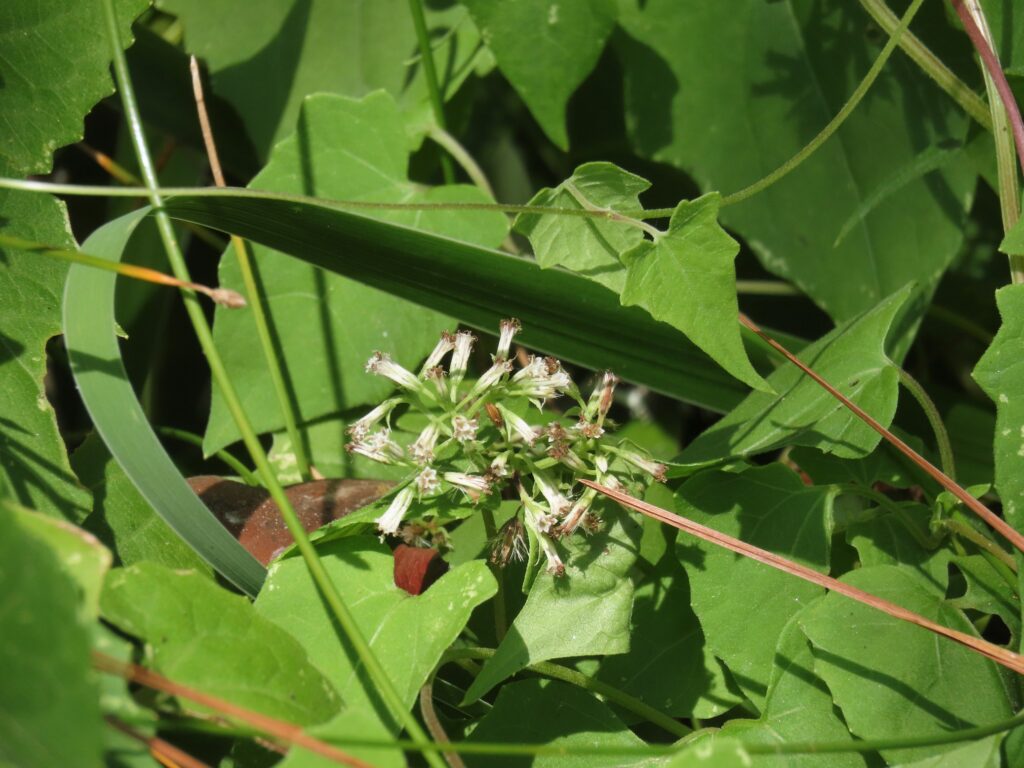
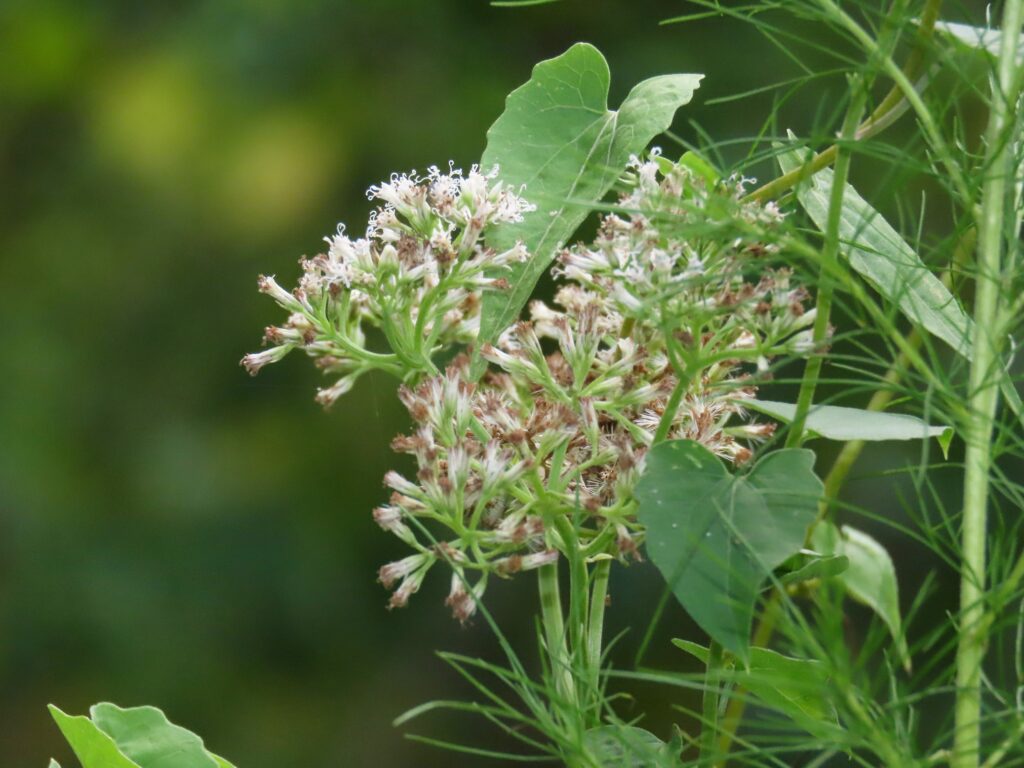
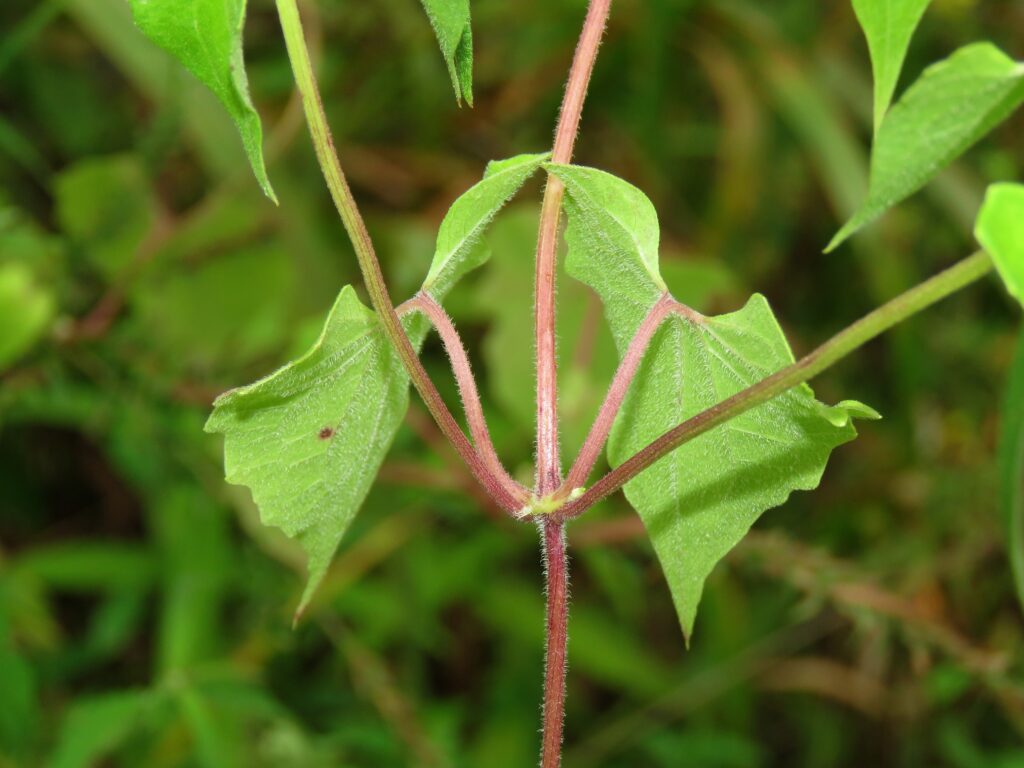
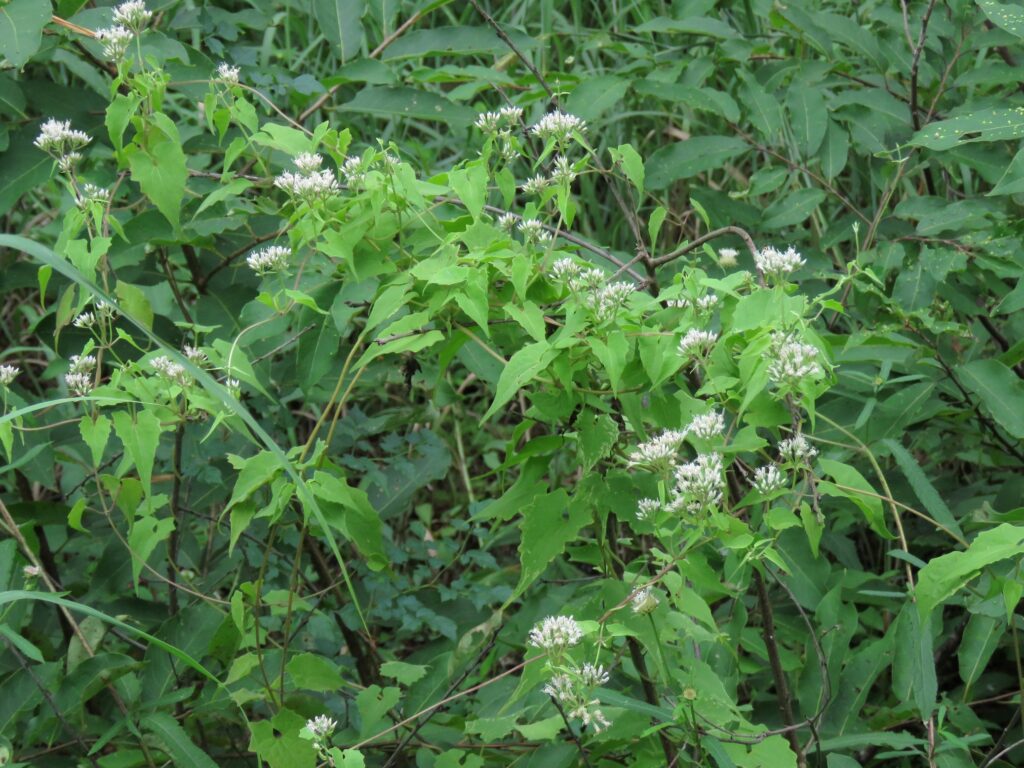
Climbing Hempvine is an herbaceous twining vine that grows up into any surrounding shrubs, usually to no more than head height. It has opposite, palm-sized leaves that are triangular to heart-shaped with slightly sunken veins and a margin of rounded, coarse teeth. The vine itself is about an eighth-inch wide, round, green to burgundy in color, and slightly hairy to smooth. From August through September it blooms with fist-sized clusters of small white to off-pink flowers hung all across the vine. These flower clusters look a lot like a Boneset (Eupatorium spp.). Climbing Hempvine is most often found with wet feet on rich organic soils here in the Lowcountry, clamoring up bushes on the margins of ponds, stranded atop sunny hummocks in freshwater marshes, and draped over branches above stagnant roadside ditches.
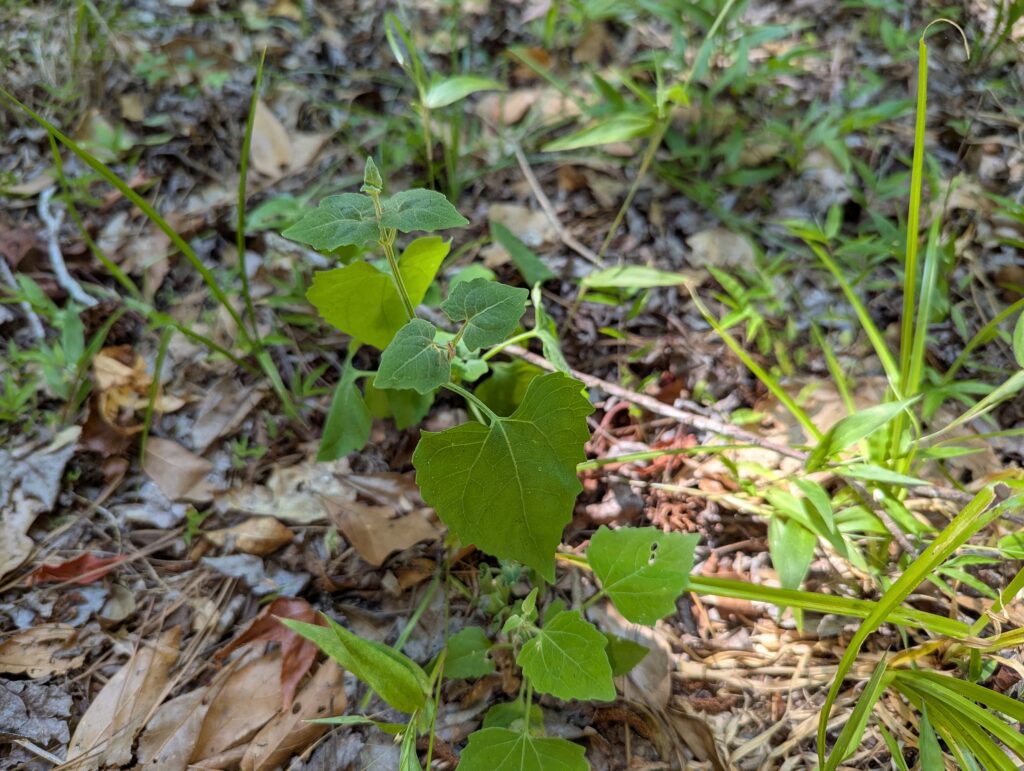
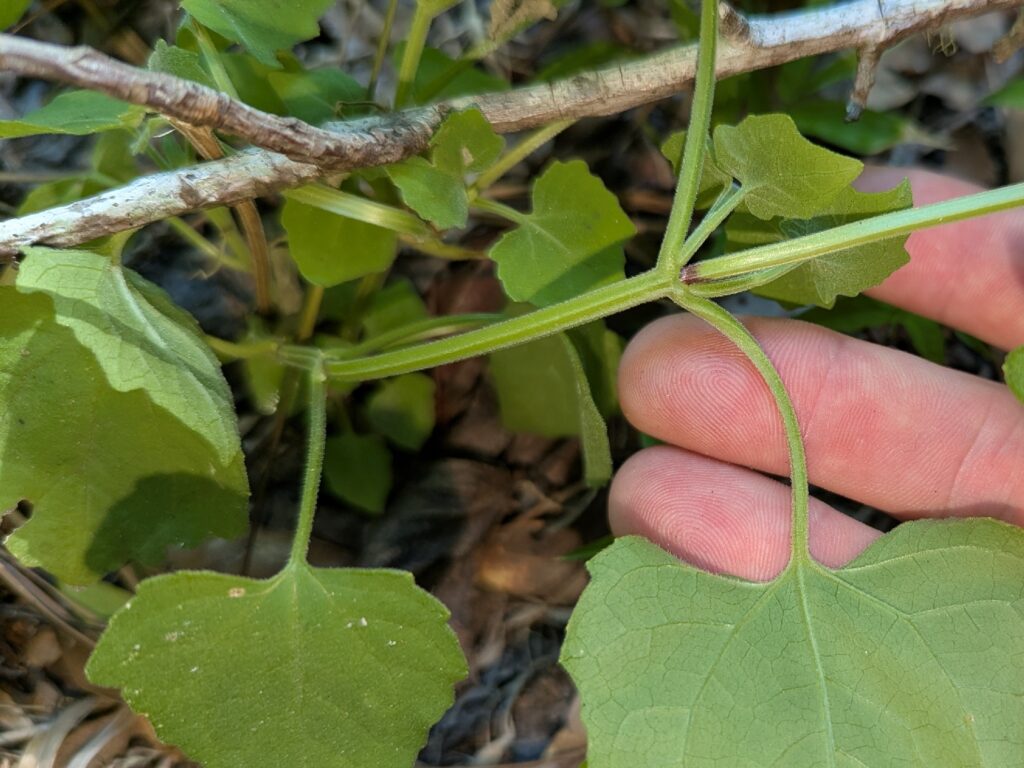
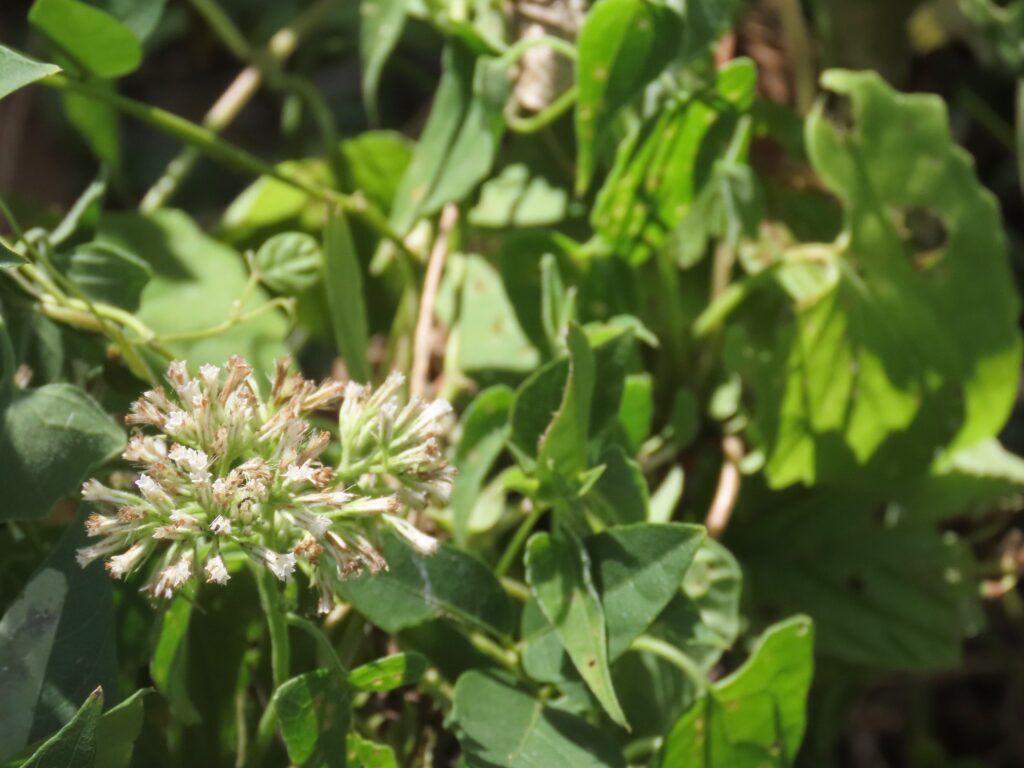
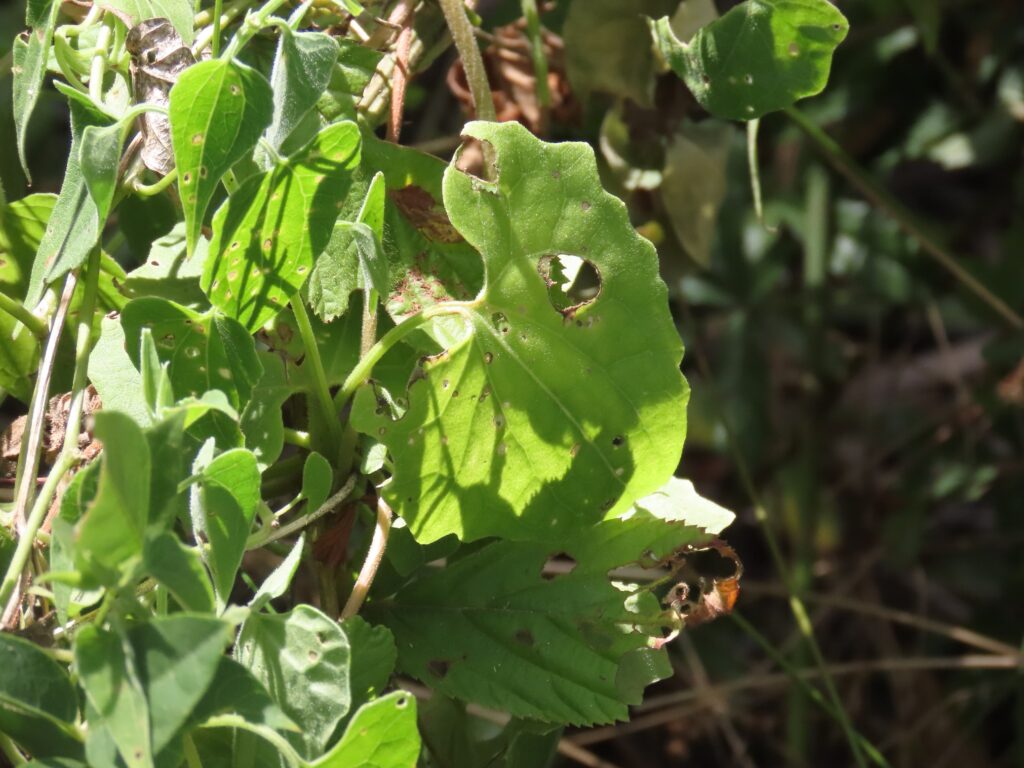
Florida Keys Hempvine is also found near water, but prefers the sandy and shell seasoned coastal soils of dune systems, sand ridges, and midden sites, where the soil is thinner and full of calcium. It is far less abundant here than Climbing Hempvine. Yet, the range of Florida Keys Hempvine is not well known in South Carolina and it appears to be confined to the lower ACE Basin and Port Royal watersheds. As far as appearances go, the two species look much the same but there are a few subtle anatomical features that distinguish the two. Florida Keys Hempvine most often has stems and leaves covered in a thorough coat of fine hairs. Its leaves are a little thicker, more yellow-green or gray-green, a bit more angular or wavy, and often have a deeper cleft to their base. Its stems have six ridges running down them longitudinally, with a row of fine hairs following that ridge. At each stem node there is a crosswise brush of fine hairs between the leaves, as opposed to a fringed membrane in Climbing Hempvine. Lastly, the flowers of Florida Keys Hempvine are consistently white and, below the flowers, its involucre of bracts (the “basket” of little leaves that cups the base of a flower) is about twenty-five percent longer than in Climbing Hempvine. It also tends to bloom earlier and longer, peaking more in October. You really need to develop an eye for identifying between these two species!
Collectively, Hempvines get their common name from their tough stringy vines, which can be dried and processed, like hemp, to create a natural cordage for making sacks and other coarse textiles. Although the individual flowers of Hempvines are barely an eighth-inch across, each is stuffed full of nectar and pollen. When in bloom, Hempvines are always abuzz with pollinator activity, and are especially attractive to bees, wasps, beetles, and Hairstreak butterflies. A Hempvine’s small root footprint, perennial nature, and tolerance of full sun, and love of wet feet make them a great addition to rain gardens, pond buffers, and fence lines to add some height and summer color to a visual palette while also benefiting native wildlife.